US Tariff Developments and Global Trade Reactions

US Tariff Developments and Global Trade Reactions

Further to our recent update on the major changes to US tariffs (link), the global trade landscape remains highly fluid, with the situation evolving rapidly.

Last Wednesday, 2nd April, President Donald Trump announced a comprehensive tariff strategy, imposing a universal 10% tariff on all imported goods, effective from the 5th April.

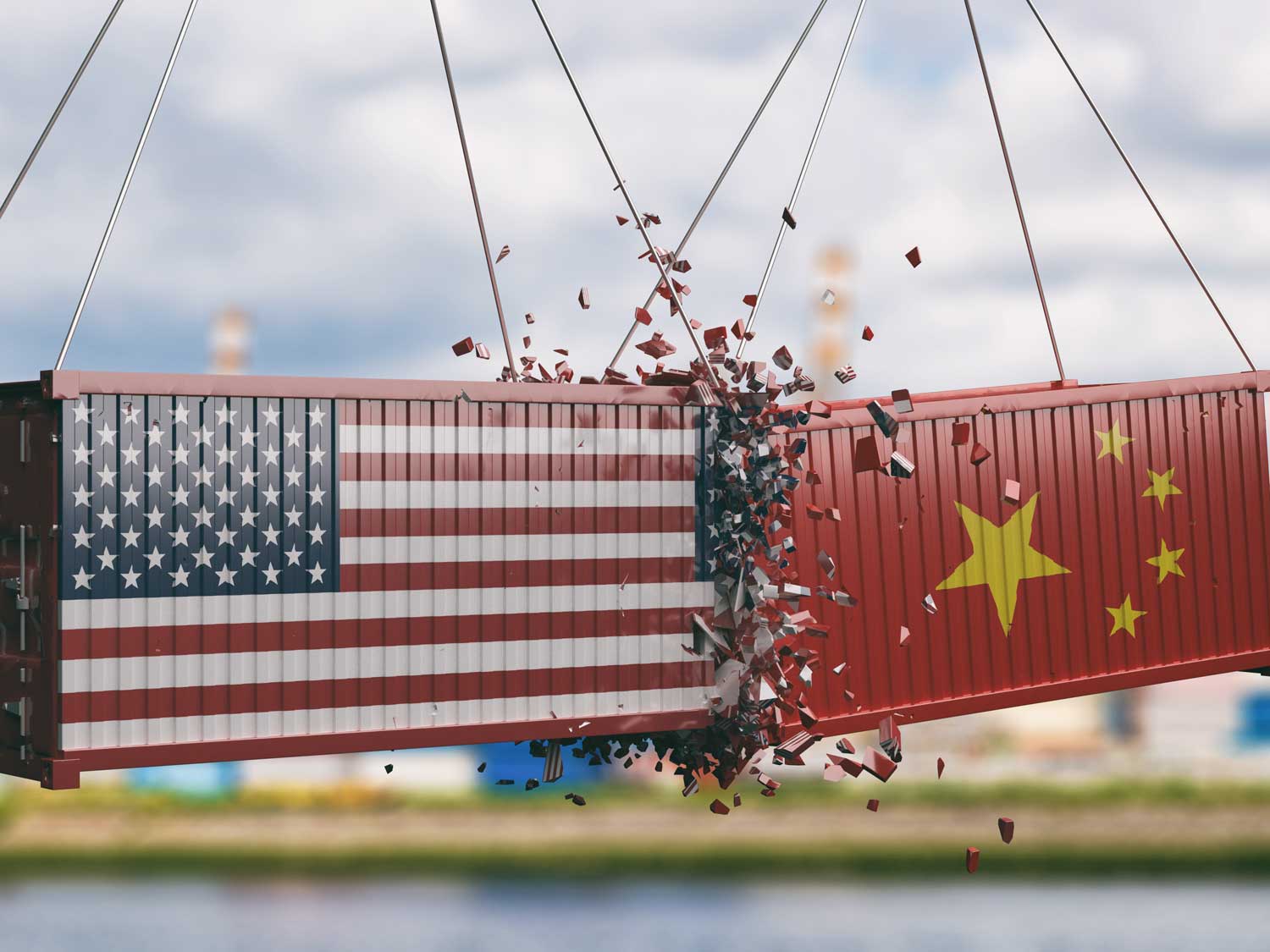
Additionally, as of today, 9th April, a second wave of higher “reciprocal” tariffs has been implemented, targeting specific countries with rates ranging from 11% to 50%, based on perceived trade imbalances and barriers. Notably, China which now faces a tariff rate of 104% on its exports to the US, combining previous and new duties.

The UK, Australia, Indonesia, Singapore, Vietnam, and Taiwan have confirmed they will not introduce countermeasures at this stage. Notably, both Vietnam and Taiwan have expressed willingness to negotiate with the US and explore zero-tariff agreements.

In contrast, China responded with retaliatory tariffs of up to 34% on US goods, which has seen President Trump follow through with his threatened escalation of an additional 50% duty on Chinese imports. As a result, US importers now face an unprecedented degree of uncertainty around landed costs.

The European Union has proposed a zero-tariff arrangement on autos and industrial goods, which was rejected by the US. So far, the EU’s potential response appears limited to steel and aluminium, though speculation persists around broader negotiations and potential shifts in trade policy.

This environment puts US importers in a difficult position: ship now and risk overpaying if tariffs are reversed, or delay and risk facing even higher costs if further duties are imposed. Many are opting to pause shipments where possible, disrupting vessel utilisation, bookings, and spot market rates.

Early indicators suggest the impact on global logistics is already being felt. Sea freight container bookings into the US from China have dropped a massive 67% in the past 7 days compared to the week prior, with export bookings also down 40%. If these figures are anywhere near accurate, this marks an extremely large and immediate disruption to trade flows into the US.

If this slowdown continues, significant blank sailings from the carriers are inevitable, and signs of this are already emerging. Yesterday, Ocean Network Express (ONE) announced that the Premier Alliance PN4 Pacific service, scheduled to begin in May, has been suspended until further notice—an early indication of broader cancellations to come.

There are several mechanisms that can be utilised to temporarily avoid duties for exports into the USA including Free/ Foreign Trade Zones, customs regimes, bonded facilities, temporary import bonds (TIB’s), carnets and more. There are options to carry on shipping goods to USA and not clear them until it is absolutely clear whether commodity tariff rates will be reduced or withdrawn as, or if, deals are agreed between countries.

From an objective standpoint, it remains unclear what concessions the US is seeking in exchange for easing these tariffs, particularly since the justification of “tariffs imposed on the US” lacks clarity in many cases.

For shippers and carriers the coming days and weeks will require vigilance and adaptability. The tariff landscape may shift dramatically and without warning, both upward and downward.

We continue to monitor developments closely and will issue further updates as more information becomes available, particularly concerning potential EU countermeasures and UK trade policy responses.

If you would like to review your specific supply chain impact, assess your exposure, or explore strategic alternatives, please don’t hesitate to get in touch. Metro is well-positioned to support you, bolstered by our expanded US presence and strong focus on North American trade flows.

Expect further insights in the coming days as the situation unfolds and if you have any questions please give me a call, or drop a message, and we will ensure that you receive immediate attention and advice.

Road freight market update and Metro review

Road freight market update and Metro review

The road freight market in the UK and Europe is grappling with structural cost challenges, evolving regulations, and capacity constraints, while Metro’s road freight division continues to expand, delivering innovative solutions and outperforming market trends.

In the UK and Europe, road freight rates have remained under pressure due to structural cost drivers. The market stabilised in Q3 as softer short-term demand provided some relief. However, higher costs associated with fuel, tyres, insurance, and maintenance are sustaining elevated freight prices.

New truck registrations in Europe have fallen by 7.5% year-to-date, limiting capacity growth. As a result, many carriers are extending vehicle lifespans, with the average truck age now at 14.2 years. This decline in fleet renewal, combined with new EU regulations banning non-compliant rubber imports by year-end, has further tightened capacity and increased costs.

The TEG Road Transport Index showed a slight month-on-month decline but remains 4.4 points higher than the same period last year. Similarly, the haulage price index rose marginally in November but has seen a 10.4-point increase year-on-year.

Consumer demand around Black Friday offered a brief boost to the sector, with UK retail destinations seeing an 11% rise in footfall compared to the previous Friday. However, this temporary spike is unlikely to offset the ongoing challenges posed by inflationary pressures and volatile diesel prices, which continue to drive rates higher.

Metro’s road freight performance
Metro has made significant strides in its road freight division, upgrading its groupage services to France and Germany to deliver greater speed, efficiency, and customer satisfaction. These enhanced services ensure regular, reliable departures and seamless distribution throughout key regions.

France: Metro’s groupage services remain a standout feature, offering efficient, dependable shipping across the country.

Germany: Metro has expanded its presence, particularly in the Ruhr area, a vital industrial hub. Frequent departures ensure swift distribution through a trusted partner network.

Metro’s commitment to excellence extends beyond speed and cost. By prioritising communication, reliability, and trust, the company has built a reputation for hassle-free European shipping. Features such as GPS-tracked vehicles, dedicated routes, and door-to-door solutions ensure customers benefit from transparency and timely updates throughout the process.

Metro’s growth and outlook for 2025
The road freight division has seen exceptional growth, outpacing the market. While many competitors have experienced flat volumes, Metro has achieved over 50% year-on-year expansion, with a 60% increase in team size in the last year alone. The division is projected to grow by a further third in 2025, targeting an additional 40% volume increase.

Key priorities for 2025 include:
New groupage services: Recently launched lanes to the Netherlands, Poland, and Iberia are expected to play a significant role in Metro’s growth strategy.

French and German services: Continued development of these high-demand routes will remain a focus, with plans to enhance service frequency and efficiency.

Pan-European LTL and FTL services: The bulk of Metro’s volume is expected to come from its less-than-truckload (LTL) and full-truckload (FTL) offerings, supporting both inbound and outbound trade across Europe.

The road freight market faces continued pressure from rising costs and capacity constraints, but Metro’s proactive approach and investment in innovative solutions position it as a leader in the sector. By prioritising customer satisfaction and expanding its services, Metro is set to maintain its strong growth trajectory in 2025, even as the broader market navigates challenging conditions.

To explore the potential and benefits of our road freight services EMAIL Richard Gibbs to begin a conversation.

Strengthening Global Network to Address Supply Chain Challenges

Strengthening Global Network to Address Supply Chain Challenges

Metro’s strategic partner network is central to delivering market-leading logistics services, especially as global supply chains face ongoing challenges. With the appointment of Peter Orange as head of global network development, Metro is deepening its commitment to building robust partnerships worldwide, enhancing collaboration, and strengthening its network’s resilience to meet customer needs.

Highlighting the significance of Metro’s partner network, managing director Grant Liddell and chief commercial officer Andy Smith recently completed a ten-day trip across Asia. During the visit, they met with key partners, carriers, and customers to strengthen relationships and gain valuable insights into regional market dynamics.

This focus on building connections comes at a time when supply chains are under persistent pressure, making agile, strategic partnerships essential to delivering reliable service.

Peter Orange’s new role: Deepening global partnerships
With over three decades of experience spanning airlines and logistics firms across diverse regions—including Australia, Singapore, UAE, and the UK—Peter Orange brings a global perspective to his role as head of global network development. His mandate is clear: to enhance Metro’s engagement with existing partners and explore potential new alliances, particularly those that bring specialised expertise in verticals like automotive and high-tech.

Peter’s appointment reflects Metro’s commitment to fostering like-minded partnerships that prioritise value, service reliability, compliance, and transparent communication. As part of this role, Peter is reviewing existing partner relationships, assessing shared business strategies, and aligning efforts across transport modes—whether air, ocean, or combinations—to ensure Metro’s global partnerships are primed to adapt to dynamic market demands. He is also leading a continuous evaluation process with core partners, holding regular reviews to assess market opportunities and align on growth objectives.

Building on this foundation, Metro plans to expand Peter’s team with route development managers who will focus on key regions, including Asia Pacific and EMEA, alongside the current emphasis on North America. This team will work closely with Metro’s partners to drive sales, share market intelligence, and set clear growth targets, reinforcing Metro’s strategy of data-informed and relationship-driven expansion.

Insights from Metro’s Asia trip
In September, Grant Liddell and Andy Smith travelled to Singapore, Shanghai, and Hong Kong to meet with Metro’s Asian partners, customers, and major carriers. The trip provided valuable insights into the region’s logistics landscape, particularly with regard to the effects of eCommerce growth on airfreight demand and the impact of ocean capacity adjustments driven by regional geopolitical issues.

A notable takeaway from their discussions was the continued strength of eCommerce in driving airfreight demand, particularly on routes from Asia to Europe and North America. This trend is keeping rates elevated and creating heightened capacity needs. In ocean freight, major trade routes are seeing increased rates due to strong demand and capacity constraints, with factors like the Red Sea diversions further tightening supply. The expectation is that these pressures will persist into Q4, reinforcing the need for strong partnerships and agile strategies.

Metro’s commitment to building a resilient partner network ensures that customers benefit from agile, robust global supply chains, capable of adapting to shifts in demand and overcoming potential disruptions.

With Peter Orange leading this effort, alongside Metro’s strengthened ties in Asia, we’re dedicated to adding value and positioning our customers for success in today’s dynamic logistics landscape.

To explore how Metro’s partnerships can support your business needs, please EMAIL Peter Orange for more information.

Europe may experience its own near-shoring boom

Europe may experience its own near-shoring boom

As planes descend into Monterrey airport, an expanse of warehouses and manufacturing complexes stretches out for miles, exemplifying the near-shoring boom that has swept through Mexico in recent years, as Asian companies and their supply chains move closer to the United States.

Drivers of Mexican Industrial Growth
One might argue that this surge in Mexican industrial production and exports to the US is part of a 30-year evolution, initially driven by the North American Free Trade Agreement (NAFTA), which established a free trade area among Canada, the US, and Mexico.

However, additional factors have recently propelled Mexico to replace China as the US’s most important trading partner.

1. US-China Trade War: Trade has shifted from China to countries like Mexico due to the ongoing trade conflict
2. Biden Administration’s Supply Chain Strategy: Emphasis on near-shoring has highlighted Mexico’s role in the China+1 strategy
3. Production-Sharing Schemes: Mexico’s longstanding expertise in these schemes makes it a valuable partner in regional manufacturing and trade
4. Low Labor Costs: Average manufacturing wages in Mexico are lower than those in China

Ironically, many of the companies that are being set up for manufacturing and transition to Mexico are actually owned by Chinese entities and companies. It is a migration of Chinese manufacturing to Mexico and this also has the benefit of lowering supply chain and shipping costs and the big one – reducing some of the duty and anti-dumping duty that has been, and will likely continue to be, levied on Chinese origin goods and raw materials.

Lessons for Europe
A critical element is the presence of a long-standing free trade agreement, because near-shoring thrives in an environment that fosters supply chain relationships and networks over time and effective near-shoring relies on a regulatory and trading environment that supports such activities. 

Expecting near-shoring to emerge without a developed and supportive environment is unrealistic. The EU, with its well-developed internal free trade and regulatory framework, together with external trade agreements with countries like Egypt and Morocco is well-positioned to adopt near-shoring strategies.

In Europe, geopolitical relations with China are a concern, but recent supply chain disruptions are increasingly driving the adoption of China+1 strategies. Europe has been shifting its manufacturing and supply chain activities eastward and into North Africa.

Opportunity
Countries like Turkey, Hungary, Egypt, Morocco, Poland, and Romania offer compelling near-shoring opportunities due to their lower wage rates and higher productivity compared to Western Europe.

The EU is well-positioned to capitalise on near-shoring activities and so too is the UK, with its close EU ties and inherited trade agreements. This has already been highlighted by the new UK government, as a goal to re-negotiate trade agreements with the EU and could make closer sourcing a more prevalent and cost effective strategy going forward in the next few years.

We are seeing regular migration of manufacturing and sourcing closer to the UK and EU and this has many benefits, as long as the material price is comparable with Far East manufacturing costs, which have been the big incentive.

Metro and our associate companies, are well positioned to give advice, recommendations and adapt supply chains regardless of the areas that you are sourcing from or selling to.

We have a variety of services and solutions covering overland trucking, rail freight, short-sea containerised solutions on our own vessels and local warehousing and distribution at most industrial hubs throughout Europe and North Africa. 

Please arrange a call/meeting and we can go through the current and future options, to add value to your global development strategy. We can guarantee that it will not be time wasted!

Stable, well-regulated trading environments and cost-effective, high-productivity production locations in Central and Eastern Europe and North Africa provide a strong foundation for supporting near-shoring initiatives.

Metro’s integrated transport services are designed to support JIT manufacturing requirements across the EU, North Africa and Turkey and are ideally positioned to support new near-shoring requirements.

Our partner network, multi-modal transport solutions and MVT supply chain platforms are all geared towards supporting an evolving sourcing programme and on-boarding new suppliers. 

If you would like to learn how we can boost your ability to source from alternative manufacturing regions, EMAIL our Chief Commercial Officer, Andrew Smith, to arrange a consultation and scoping discussion.