Cathay tailfins 1440x1080 1

Asia air freight enters autumn with momentum intact

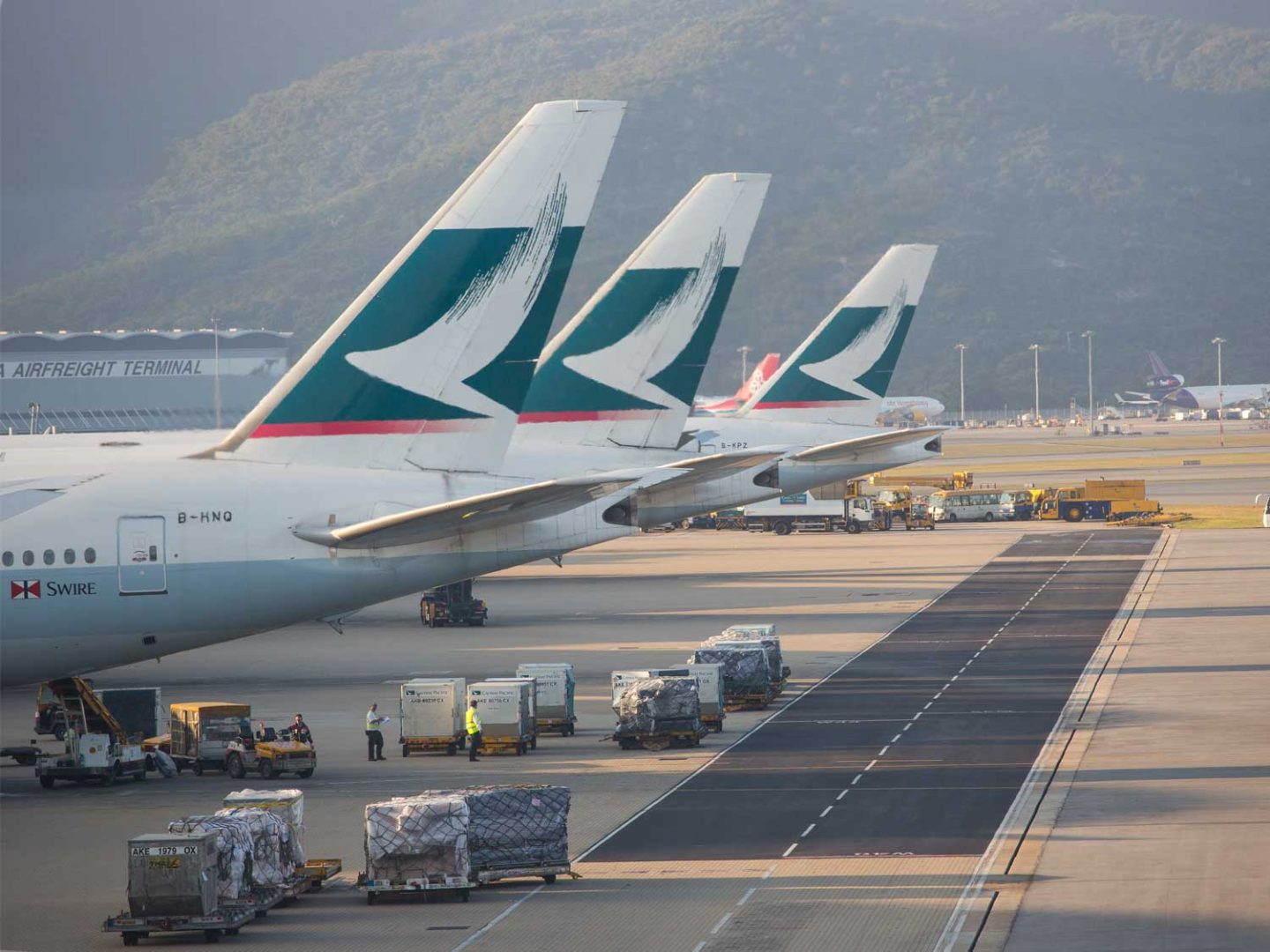
Air cargo’s traditional summer slowdown has failed to significantly loosen the market, with resilient demand, constrained capacity and renewed growth on key ex-Asia lanes keeping pressure on space and pricing as autumn begins.

Global air cargo volumes were 6% higher year on year in August, following 5% growth in July. More recent data shows that momentum continuing into September, with worldwide chargeable weight in week 36 still 7% above the same period last year.

Asia remains central to that strength. High-tech exports, AI and data-centre equipment, manufacturing activity and e-commerce continue to support demand, while available lift has struggled to grow at the same pace.

The result is an ex-Asia market that is increasingly defined by individual origins and trade lanes rather than a single regional trend.

Capacity remains the critical constraint

Global air cargo capacity was flat year on year during August, pushing capacity utilisation three percentage points above August 2025 levels. Dedicated freighters are carrying much of the additional demand, with freighter traffic having increased almost 14% year on year in July.

Adding substantial new lift remains difficult. Delayed new aircraft deliveries and passenger-to-freighter conversion programmes are restricting expansion, while carriers have been quick to redeploy freighters towards stronger markets.

That flexibility became particularly visible following changes to European low-value import rules. Falling e-commerce traffic initially weakened China and Hong Kong–Europe volumes, prompting some freighter capacity to move towards the stronger transpacific market.

However, the European picture is now showing signs of stabilisation. China–Europe volumes returned to modest week-on-week growth during August, while Hong Kong–Europe traffic increased 6% in week 36, its third consecutive weekly rise. Mainland China volumes have also been growing by low single-digit percentages since early August.

This recovery is significant as the market moves beyond the summer period and towards the traditional fourth-quarter peak.

Ex-Asia pricing reflects a tighter market

Although global spot pricing has gradually eased from its earlier highs, it remained 24% above last year during August. The latest weekly figures also point to renewed upward pressure from Asia.

In week 36, Asia Pacific spot rates increased 3% week on week to Europe and 2% to the US. China and Thailand to Europe both rose 6%, while Taiwan increased 7%.

Across Asia Pacific as a whole, pricing to Europe stood 15% above last year, while rates to the US were 40% higher.

High-tech manufacturing hubs remain particularly firm. Recent year-on-year increases included around 25% from South Korea and Taiwan, 22% from Vietnam, 32% from Thailand and 42% from Malaysia.

The transpacific remains especially strong. AI-related equipment and other technology exports continue to support demand from Northeast and Southeast Asia, while China and Hong Kong volumes to the US have remained resilient despite significant changes to low-value import rules.

There are also signs that the initial shock from Europe's new e-commerce rules may be passing. China’s low-value exports to Europe fell sharply after the July changes, but the subsequent improvement in China and Hong Kong tonnage suggests the market is beginning to find a new balance.

That does not necessarily mean a conventional peak season is developing. Instead, shippers face a more fragmented market in which capacity can move quickly between corridors and individual origins can tighten independently.

Further pressure could come from fuel. Rising oil prices are increasing aviation fuel costs, creating the prospect of higher surcharges just as autumn demand begins to build.

For businesses moving time-sensitive cargo from Asia, the combination of resilient demand, limited capacity growth and rapidly changing trade-lane conditions makes early planning increasingly important.

Metro combines local expertise across Asia with global air freight buying power and real-time market intelligence to identify pressure before it reaches your supply chain. 

Whether you need secured capacity, alternative gateways, flexible routings or support through the autumn peak, our air freight specialists can build the right solution around your priorities and keep critical cargo moving.

Metro model truck 1440x1080 1

Road freight resilience starts before the truck arrives

UK haulage is entering a period in which access to the right vehicle, route and transport option could become increasingly important. For shippers, that makes planning and flexibility just as important as the rate agreed for an individual movement.

More than half of UK HGV drivers are aged between 50 and 65, while fewer than 2% are under 24. Replacing an ageing workforce brings recruitment, training, insurance and employment costs at the same time as operators manage wider pressure on vehicle operating expenses.

That does not mean the UK is heading inevitably towards a nationwide shortage of trucks. But it is going to make availability more variable by location, vehicle type and periods of peak demand.

For shippers, the response is to look beyond simply finding a truck when one is needed for UK or international movements and consider the strength, flexibility and resources behind their transport solution.

More ways to keep freight moving

Access to multiple transport options provides an important buffer when individual parts of the market tighten.

Metro combines its own commercial fleet with a wider UK and European road freight network, giving customers access to dedicated domestic transport, groupage, less-than-truckload (LTL) and full-truckload (FTL) solutions.

Dedicated vehicles can operate on fixed routes, with GPS tracking providing visibility throughout the journey. Different equipment, security and service options also allow the transport solution to be matched more closely to the cargo, delivery environment and required transit time.

Metro’s UK road freight teams are strategically located close to major manufacturing and transport hubs, supporting both domestic movements and international connections.

That capability extends across Europe, with established groupage services connecting customers with France and Germany, including the industrially important Ruhr region, with further services into the Netherlands, Poland, Iberia and Turkey. Frequent departures and established partner networks provide further options for both inbound and outbound freight.

This breadth matters when availability changes. Rather than depending on one mode of road transport or a narrow pool of vehicles, shippers can combine dedicated, groupage, LTL and FTL services according to shipment size, urgency and destination.

Plan capacity, not individual movements

The other side of road freight resilience is using available capacity efficiently.

Booking transport at the final stage of a shipment can leave logistics teams with fewer choices if the required vehicle or departure is already constrained. Earlier visibility of inbound and outbound requirements creates more opportunity to plan collections, consolidate freight, secure equipment and select alternative services.

It can also help businesses avoid treating domestic or European haulage as an isolated final step.

A container arriving at a UK port, an urgent movement into Germany or several smaller consignments moving into continental Europe all create different transport requirements. Connecting those movements with the wider supply chain makes it easier to choose the right solution before capacity becomes critical.

That could mean consolidating smaller shipments into groupage, moving time-sensitive cargo on a dedicated vehicle, using LTL where greater flexibility is available or securing FTL capacity earlier for larger movements.

The objective is not simply to source the lowest rate for today’s shipment. It is to create enough options to keep freight moving efficiently as demand, availability and operating costs change.

For UK and European shippers, the resources behind a road freight provider are therefore becoming increasingly important. Its own fleet, access to additional capacity, range of service options, network coverage and ability to adapt routes when circumstances change.

Metro combines its own commercial fleet with an extensive UK and European road freight network, giving customers the flexibility to move from dedicated vehicles to groupage, LTL and FTL solutions as requirements change. 

With strategically located teams, MVT supply chain management platform, GPS-tracked services and strong connections across key European markets, we can build road freight solutions around your cargo, keeping goods visible, capacity accessible and supply chains moving.

Survey EU

Businesses target European growth despite customs barriers

UK businesses remain positive about their prospects in Europe, but customs complexity, compliance costs and uncertainty over future trading arrangements may limit the potential for faster growth.

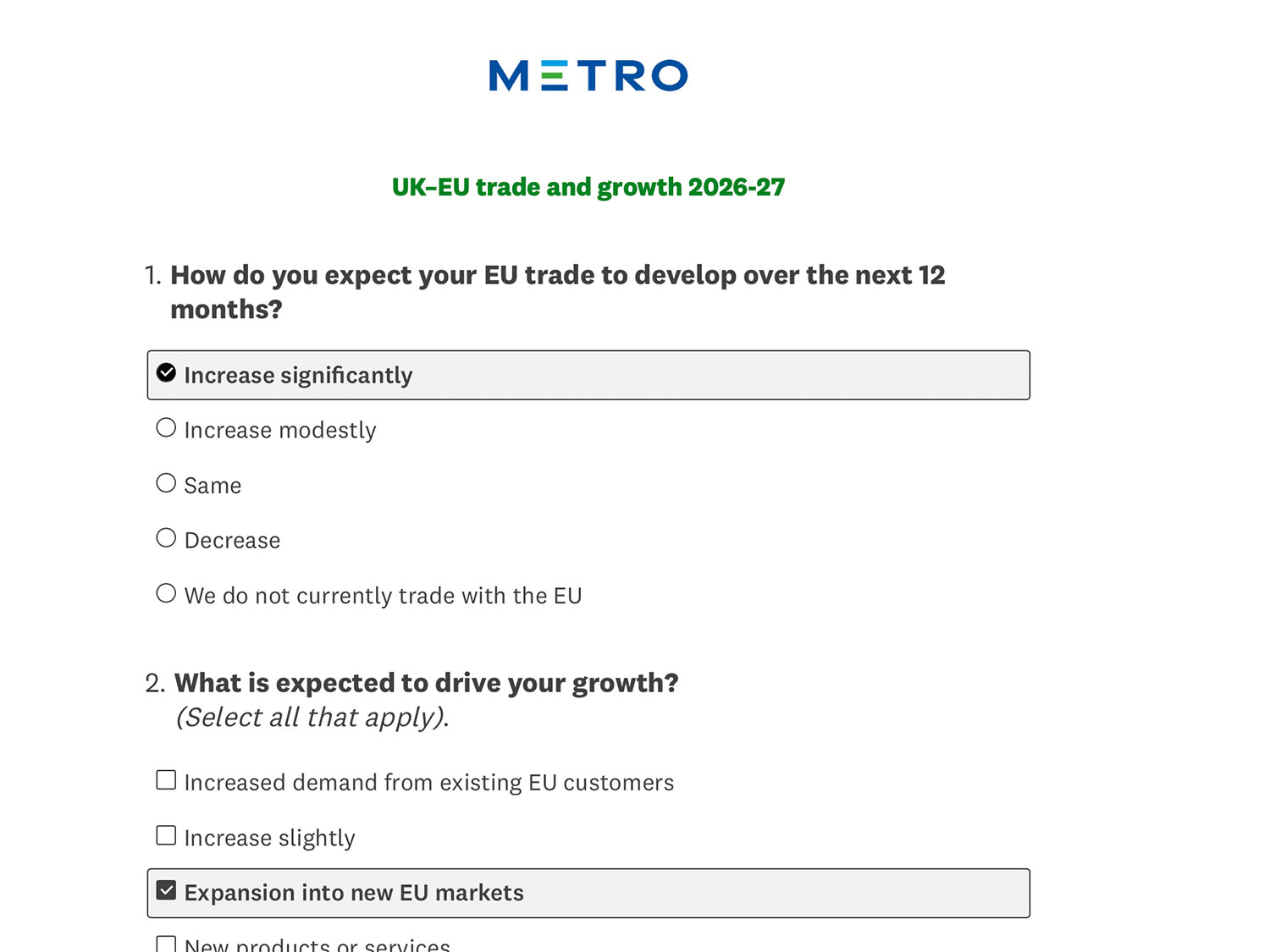
That is the picture emerging from Metro’s latest customer survey, which asked businesses how they expect their EU trade to develop during 2026-27 and what would make cross-border trade easier.

The survey followed Metro’s recent review of the UK’s evolving international trade relationships, including ongoing discussions designed to improve elements of the UK-EU trading environment.

While negotiations between the UK and EU continue, the responses suggest businesses are not waiting for political agreements before pursuing growth. Instead, many are already looking at new products, markets and logistics strategies, while seeking practical ways to reduce the friction associated with European trade.

Almost three quarters expect EU trade to grow

The strongest signal from the survey is confidence.

More than 72% of respondents expect their EU trade to increase over the next 12 months, evenly divided between those anticipating significant growth and those expecting a more modest increase.

This is significant because the relationship has not become operationally simple. Companies continue to deal with customs declarations, VAT considerations, border processes and differing regulatory requirements, but these obstacles do not appear to have materially weakened their appetite to trade.

Respondents expecting growth are not primarily relying on established customers buying more.

Almost two-thirds identified new products or services as a growth driver, making this by far the most selected response. That distinction matters.

European growth appears increasingly linked to active business development rather than organic increases in existing trade. New products and markets can create more complex supply chains, placing greater emphasis on customs, VAT, transport and inventory planning.

Road remains dominant, but businesses are open to alternatives

Accompanied road freight remains the most widely used option, with 80% of respondents currently using it, but they are also using or considering a much broader mix of solutions.

Short-sea shipping already has over 60% penetration, while unaccompanied road freight is established among almost 50% of respondents. Rail and intermodal stand out because interest in considering these services (35%) is considerably higher than the current 18% usage.

Accompanied road freight may remain the default solution for many UK-EU movements, but businesses increasingly benefit from being able to switch between modes and accompanied or unaccompanied, depending on cost, capacity, urgency and border conditions.

Customs friction dominates customer concerns

When respondents were asked what would most improve their ability to trade efficiently with the EU, one issue stood well above the others, with 82% selecting fewer customs formalities and border delays.

Cost and regulatory certainty were the next largest concern, with 55% selecting lower transport and compliance costs, while the same proportion wanted greater clarity over future UK-EU trade rules.

More than a third highlighted simpler VAT and fiscal-representation arrangements.

Together, these findings suggest businesses are less concerned about whether European opportunities exist than about the administrative and financial complexity involved in exploiting them.

That includes avoiding customs errors, preventing unnecessary delays, establishing the correct VAT arrangements and understanding how regulatory changes will affect future supply chains.

More than a quarter of respondents identified simpler food and drink certification requirements as one of the changes that would improve EU trade.

Negotiations over sanitary and phytosanitary standards are intended to reduce some of the inspections, certificates and border requirements affecting agri-food movements.

Compliance support is the service customers value most

Perhaps the most decisive result came when businesses were asked which logistics services would make it easier to grow or operate within the EU. 80% selected customs clearance and compliance support.

Alternative road, short-sea or intermodal transport solutions ranked second at 40%, followed by fiscal representation at 30%.

If customs formalities are the principal obstacle, businesses naturally place the greatest value on expertise capable of removing that obstacle.

For a company entering a new EU market, getting classification, declarations, origin, documentation, VAT and fiscal obligations right from the outset can be just as important as selecting the right transport service.

What the findings mean for successful European trading

Taken together, the survey points towards several practical priorities for businesses targeting EU growth.

Build customs into the commercial strategy. Consider classification, origin, documentation and importer responsibilities before entering a market, rather than when goods are ready to move.

Look at total landed cost. Freight is only one component; customs administration, VAT, compliance, inventory and border delays can all affect profitability.

Maintain modal flexibility. Accompanied road remains important, but unaccompanied, short-sea and intermodal alternatives can provide valuable options as cost, capacity and requirements change.

Plan expansion market by market. New products and new markets can introduce different customs, VAT, regulatory and logistics requirements that need to be understood from the outset.

Watch UK-EU negotiations, but do not wait for them. Future agreements may reduce friction, but businesses can already improve European trade through better customs management, routing and supply-chain planning.

Customs, compliance, cost and regulatory uncertainty remain prominent concerns. Businesses best positioned for growth will be those that treat logistics and customs as part of their European market strategy rather than simply an operational requirement.

Metro combines European freight solutions with customs expertise and supply-chain support, helping businesses assess routes, manage cross-border requirements and build flexible solutions as their European trade develops.

As UK-EU arrangements continue to evolve, that combination of compliance, flexibility and forward planning can help turn confidence in European markets into sustainable growth.

EMAIL Andrew Smith, Metro’s Managing Director.

ULD on tarmac

Air freight market tightens ahead of autumn peak

Air freight enters the traditional peak-season build-up with a finely balanced market, as capacity reductions and resilient pricing create the potential for rapid tightening when Asian export demand accelerates.

The usual late-September surge may still be several weeks away, but UK importers have good reason to start planning now.

Asia–Europe demand softened during August, yet rates have shown little corresponding weakness. Airlines and freighter operators are adjusting capacity as cargo flows change, while higher fuel costs and stronger demand on alternative trade lanes are providing additional support.

That leaves limited spare capacity to absorb the traditional autumn increase – particularly if ocean freight disruption pushes urgent shipments towards air.

Softer demand is not delivering cheaper capacity

Asia Pacific–Europe chargeable weight fell 5% week on week and 14% year on year in week 33, continuing the softer trend evident since late June.

Changing e-commerce flows have contributed to the decline. China–Europe volumes were 8% lower year on year in week 32, while Hong Kong–Europe traffic fell 29%.

Despite that weakness, Asia Pacific–Europe spot rates remained flat in week 33 after rising 1% the previous week. China was particularly resilient, recording a 6% increase despite lower volumes.

The explanation lies partly on the supply side. Asia Pacific capacity contracted 2% in week 33 after declining 1% the previous week, limiting the downward pressure on rates.

Freighter deployment may tighten the market further. Stronger transpacific demand provides operators with an incentive to allocate aircraft towards the US, potentially reducing the capacity available for European cargo as peak season approaches.

China shows how quickly conditions can change

Recent disruption around Shanghai illustrates the vulnerability of available capacity.

Typhoon Dolphin caused more than 1,000 flight cancellations and contributed to an 8% weekly reduction in chargeable weight from Shanghai, while Shanghai–Europe volumes fell 7%.

The immediate disruption has eased, but severe weather and congestion across Chinese ocean gateways remain relevant to the air freight outlook. When container schedules become unreliable, urgent and time-sensitive cargo can quickly switch from ocean to air.

Even a relatively small modal shift can have a disproportionate effect on air freight capacity and pricing.

Golden Week could mark the turning point

The next significant test comes around China's Golden Week.

Factories traditionally accelerate production before the holiday, followed by another increase as operations resume and backlogs clear. October also brings the start of the main pre-Christmas replenishment cycle.

Demand then typically intensifies through November as retailers and e-commerce businesses prepare for Black Friday, Cyber Monday and Christmas.

This year, however, the market enters that period with capacity already responding closely to demand. That could make the transition from today's relatively balanced conditions to a tighter market particularly rapid.

Fuel costs, severe weather, changing freighter deployment and disruption to ocean services provide additional variables.

The opportunity is before the peak

For shippers, softer August volumes could offer a useful planning window rather than a reason to wait for lower rates.

Businesses with visibility of their autumn requirements can secure allocations earlier, consider alternative origins and gateways, and decide which shipments genuinely require premium air services.

Booking ahead of cargo-ready dates will become increasingly important as demand builds, particularly from China and other major Asian export markets. Flexible routing can also provide valuable alternatives when individual gateways or direct services tighten.

The key consideration is not simply today's air freight rate, but the availability of the right capacity when cargo needs to move.

Metro combines extensive Asian origin coverage with global airline relationships, flexible routing and multiple service levels to keep UK supply chains moving when peak-season capacity tightens. 

Share your autumn forecasts with Metro now and we can secure the capacity, routing and service strategy your cargo needs before the peak takes hold.

EMAIL Andrew Smith, Metro’s Managing Director.