steel in car manufacturing

UK steel tariff changes reshape import costs

The UK’s incoming steel trade measures are set to reshape import dynamics almost overnight, with significant cost and compliance implications for manufacturers, construction firms, and industrial supply chains.

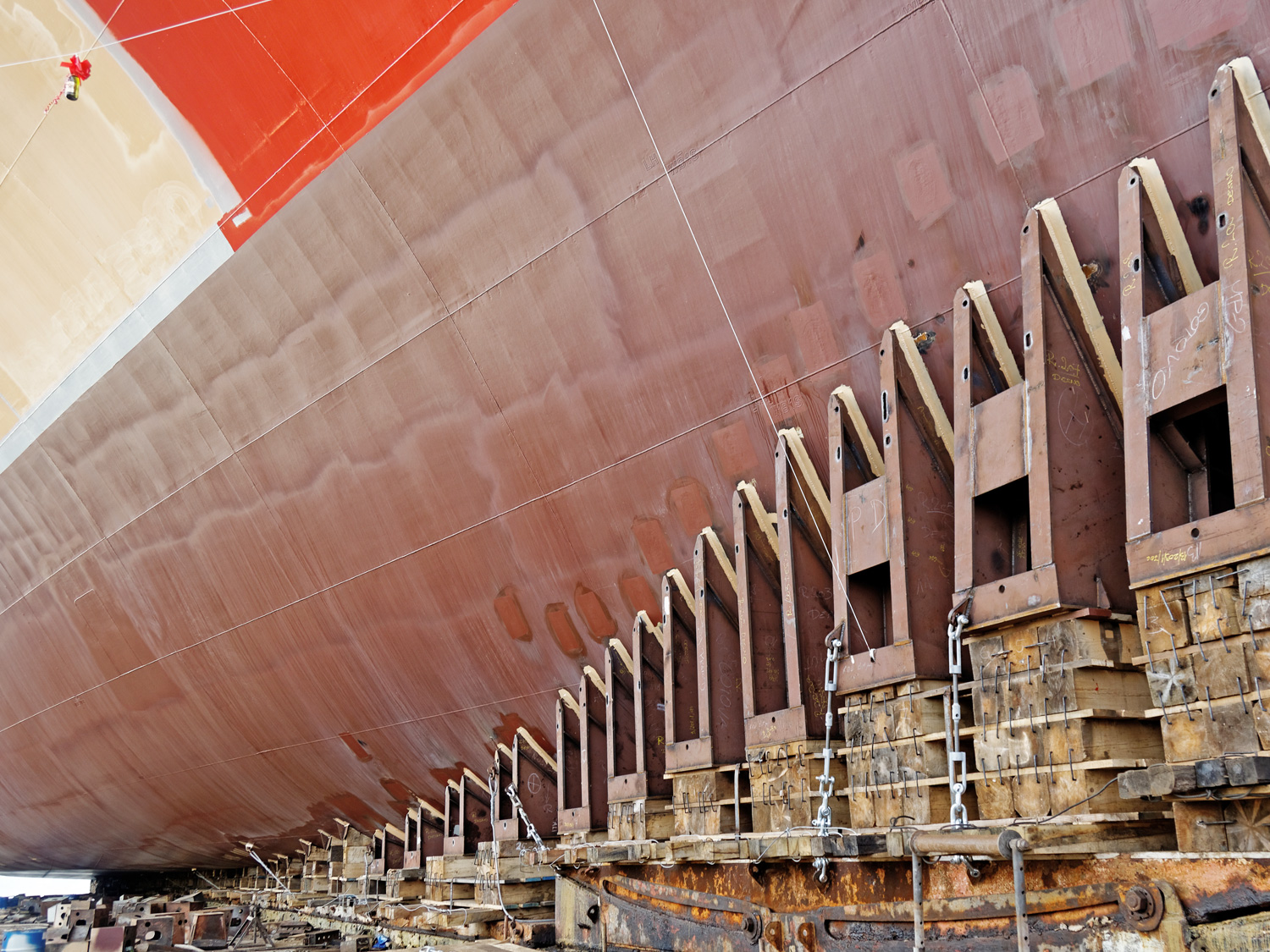
From 1 July 2026, the UK will replace its current steel safeguards with a far more restrictive tariff rate quota (TRQ) system. Tariff-free quotas will be cut by around 60% overall, with some key product categories seeing reductions of up to 90%. At the same time, the duty applied to volumes above quota will double to 50%.

The measures apply across approximately 20 steel product categories, including flat products, bars, and pipes, and notably apply regardless of origin, including imports from EU and other trade agreement partners.

While positioned as a move to protect domestic steel production, the reality for importers is a much tighter and more punitive operating environment.

Why this matters for importers

For UK businesses reliant on imported steel, including automotive, machinery, construction, and engineering, the changes introduce both immediate cost risk and ongoing supply uncertainty.

The most significant shift is how quickly quotas are expected to be exhausted. With volumes sharply reduced, many categories could run out within days or weeks of each quarter opening, rather than lasting the full period. Once quotas are filled, any additional imports will face a 50% duty, creating a substantial and potentially unmanageable cost increase.

At the same time, domestic supply is unlikely to fill the gap. Many manufacturers rely on specific grades or forms of steel that are not readily available in the UK, meaning substitution is not always viable.

Rising costs and supply chain pressure

Industry bodies are already warning of widespread disruption. Higher input costs are expected to ripple through supply chains, increasing production costs and reducing competitiveness for UK manufacturers.

There is also growing concern around material availability. In sectors such as construction, limited domestic capacity combined with tighter import restrictions could lead to shortages of key products, delaying projects and adding further cost pressure.

For exporters, the impact is twofold: higher input costs at home and increased competition from overseas producers who are not subject to the same tariff burden.

Operational complexity increases

Beyond cost, the new regime introduces a more complex and time-sensitive import process.

The TRQ system will continue to operate on a first-come, first-served basis, with quarterly allocations managed through HMRC. This puts significant pressure on timing, both in terms of shipment planning and customs entry.

If a shipment is declared after a quota has been exhausted, it will immediately fall into the higher duty bracket, regardless of when it was shipped. This makes accurate forecasting, documentation, and coordination between supply chain partners critical.

Importers will need to pay close attention to:

  • Entry timing versus quota availability.
  • Correct tariff classification and documentation.
  • Coordination between forwarders, brokers, and internal teams.
  • Monitoring quota usage in near real time.

Even small missteps could result in substantial, avoidable duty exposure.

Behavioural shifts already underway

In response, many importers are already adjusting their strategies. There are signs of front-loading shipments ahead of the July deadline, alongside contingency planning based on higher landed cost scenarios.

Some businesses are modelling worst-case pricing as a baseline, while others are reviewing sourcing strategies or considering inventory increases to mitigate risk.

However, these are short-term responses. Longer term, the market may see shifts in sourcing patterns, pricing structures, and even production locations if cost pressures 

persist.

With additional measures such as the UK’s Carbon Border Adjustment Mechanism (CBAM) due to follow in 2027, importers face a longer-term trajectory of rising complexity and cost.

The new steel regime will penalise those who don’t plan ahead and prepare. Metro’s customs and compliance experts are already supporting clients with quota planning, tariff classification, and import strategy to minimise risk and control costs.

For tailored guidance on how these changes will affect your business, EMAIL Andy Fitchett, Metro’s Head of Customs & Compliance.

SMMT summit

EU urged to keep British auto supply chains within “Made in Europe” framework

The UK automotive industry is urging the European Union to preserve close manufacturing integration with Britain as Brussels advances new industrial policies designed to strengthen European supply chains and accelerate domestic electric vehicle production.

The Society of Motor Manufacturers and Traders (SMMT) has warned that proposed EU “Made in Europe” measures could unintentionally damage one of the world’s most integrated automotive manufacturing relationships if UK operations are excluded from future incentives and industrial support mechanisms.

The concerns centre on the EU’s proposed Industrial Accelerator Act (IAA), a key part of the bloc’s wider “Made in Europe” strategy aimed at strengthening European manufacturing, accelerating decarbonisation and improving competitiveness against the US and China.

UK and EU automotive manufacturing remains deeply interconnected

The SMMT recently met EU representatives in Brussels to discuss how the proposed legislation could affect cross-border automotive manufacturing and whether UK operations would remain eligible for support linked to the “Made in Europe” framework.

The industry body argues that the UK and EU automotive sectors remain fundamentally interdependent despite Brexit, with the EU exporting over €9bn worth of automotive components to UK manufacturers every year, making Britain the largest single export market globally for EU automotive parts.

These flows include battery systems, electric motors, traditional powertrain components, electronics, body panels and high-value engineered parts that move repeatedly between the UK and EU during the manufacturing cycle.

The wider UK–EU automotive relationship is now estimated to be worth around €80bn annually, while UK factories remain the EU’s largest export market for passenger vehicles, worth almost €40bn per year to European manufacturers.

SMMT chief executive Mike Hawes said, “Brexit put the resilience of our shared industry under enormous stress, but manufacturers have overcome those challenges to grow our trade in electrified vehicles alone to record levels.

The organisation argues that excluding UK operations from future “Made in Europe” incentives could weaken both UK and EU manufacturing competitiveness by disrupting deeply integrated supply chains that have evolved over decades.

Industrial policy becoming increasingly tied to supply chain geography

The proposed Industrial Accelerator Act forms part of a broader shift towards more interventionist industrial policy across major global economies.

The EU’s objective is to accelerate decarbonisation, strengthen domestic manufacturing capability and reduce strategic dependence on overseas supply chains, particularly in areas linked to electric vehicles, batteries and advanced technologies.

The concern for UK manufacturers is whether British suppliers, assembly operations and associated supply chains would qualify for the same incentives and support structures as EU-based competitors.

The SMMT has warned that excluding UK operations from the framework could create new friction across automotive supply chains at precisely the moment manufacturers are trying to accelerate investment into electrification, battery production and low-emission vehicle technology.

Global trade pressure adds further complexity

The debate also comes as the automotive industry adapts to increasingly fragmented global trade conditions.

Following the 2025 UK–US trade agreement, the United States became the UK’s largest export market for cars, with more than 101,000 UK-built vehicles shipped to the US during 2024, worth around £7.6bn. The agreement reduced US tariffs on British-built vehicles from 27.5% to 10% within a quota of 100,000 vehicles, providing important support for premium and luxury manufacturers serving the American market.

At the same time, European automotive manufacturers continue pushing for progress on EU–US trade negotiations amid concerns that tariff disputes and industrial competition could create further instability across international manufacturing networks.

Despite these global shifts, UK automotive leaders continue to stress that Europe remains operationally critical from a manufacturing, sourcing and logistics perspective.

Metro supports automotive manufacturers, suppliers and aftermarket businesses with integrated freight forwarding, customs support and multimodal logistics solutions designed for highly time-sensitive international supply chains. 

From UK–EU customs coordination and inbound production logistics to time-critical component distribution and international freight management, Metro helps automotive customers maintain continuity across complex manufacturing networks operating under changing regulatory and trade conditions.

EMAIL Managing Director, Andrew Smith, today to learn more.

EU UK negotiations 2

UK–EU reset could ease border friction for importers and exporters

On 13 May 2026, the King's Speech set out the government's plans for the next Parliamentary session, including efforts to reset post-Brexit relations, forge closer economic ties with the EU and reduce unnecessary barriers to trade.

The reset is not a return to the single market or customs union. Instead, it is being presented as a targeted attempt to stabilise the trading relationship through closer alignment in specific areas where the government believes reduced friction could support growth, cut costs and improve supply chain efficiency. 

SPS alignment could simplify GB–EU border processes

The government intends to pass legislation by the end of 2026 to enable an SPS agreement with the EU to take effect by mid-2027. The agreement would cover animal and plant health, food safety and related agri-food rules, with the UK aligning to relevant EU legislation in order to ease border procedures.

SPS controls have been among the most disruptive post-Brexit trade barriers, creating additional documentation, inspection, certification and timing challenges at the GB–EU border.

A veterinary-style agreement could reduce the need for some routine checks and help make border movements more predictable. For exporters, this may improve access into EU markets. For importers, it could reduce delays, compliance costs and uncertainty when bringing goods into Great Britain.

Emissions trading alignment could reshape supply chain costs

Alongside the SPS agreement, the government is also negotiating closer alignment between the UK and EU emissions trading schemes (ETS), designed to reduce regulatory divergence and support longer-term industrial and energy cooperation. 

For businesses involved in manufacturing, energy-intensive production, transport and international trade, the implications could extend well beyond environmental policy.

A linked or more closely aligned ETS framework could help reduce friction for exporters trading into Europe, particularly as the EU continues expanding carbon-related trade measures and compliance requirements. It may also provide greater long-term certainty for businesses operating across both UK and EU markets.

Dynamic alignment brings certainty but also new compliance considerations

The proposed reset relies on dynamic alignment in selected areas, meaning UK rules would keep pace with relevant EU law as it evolves. This is central to the government’s ambition to reduce border friction, because smoother trade processes depend on both sides recognising equivalent standards.

For logistics and supply chain teams, this could provide greater medium-term certainty over the regulatory framework affecting GB–EU trade. However, it also means businesses will need to monitor changes in EU rules that may flow into UK requirements over time.

The wider political debate remains active. Critics argue that dynamic alignment could reduce UK regulatory flexibility, while others want the government to go further and pursue a customs union. 

What this means for UK traders

The direction of travel may point toward a less burdensome GB–EU trading environment, but the more realistic reading is:

  • Customs declarations are not going away simply because an SPS deal is agreed.
  • Rules of origin issues are not being removed by the reset as described in this briefing.
  • What may improve is the regulatory layer sitting on top of customs processes for certain categories of goods, especially agri-food.

That distinction matters, because a truck can still need customs processing even if SPS checks become lighter or less frequent.

So the likely benefit is not “no border”, but a border with fewer SPS-related interruptions, fewer compliance mismatches and a lower chance that a shipment is delayed because UK and EU technical rules have drifted apart.

Importers and exporters should now review where SPS controls, border checks, certification or documentary requirements are creating cost, delay or uncertainty in their supply chains. They should also assess whether current customs and compliance processes are flexible enough to adapt as the UK–EU framework develops.

As the UK–EU reset develops, Metro is helping customers assess how changing customs procedures, SPS requirements and evolving regulatory alignment could affect their supply chains, transit times and compliance obligations. 

Through integrated freight forwarding, customs support and cross-border logistics expertise, Metro helps businesses prepare for changing GB–EU trade conditions and maintain efficient cargo flow across European supply chains.

EMAIL Managing Director, Andrew Smith, today to learn more.

Truck in Switzerland

A tougher European road market and a UK edging back towards it

For years, the road freight market has been under sustained pressure, shaped by a combination of post-Brexit structural change, rising costs and geopolitical disruption. 

At the same time, there are early signs that the UK may begin to move closer to Europe in practical, trade-focused ways, in a shift that could have meaningful implications for cross-border logistics.

For now, however, the market remains challenging.

Since Brexit, UK–EU road freight has been defined by increased friction. New customs processes, regulatory checks and border systems have added cost, complexity and delay, particularly for groupage and mixed loads.

The impact is clear in the data. Road freight volumes are estimated to be down by over 10% since Brexit, reflecting weaker trade flows and reduced demand. UK exports to the EU have also taken a structural hit, with studies pointing to a decline of around 16%.

At the same time, the number of operators has fallen sharply. Between 2021 and 2025, 2,051 UK road haulage companies became insolvent, which is almost double the 1,068 recorded in the previous five-year period. That equates to nearly eight hauliers exiting the market every week.

This combination of lower volumes and higher costs has fundamentally reshaped the sector. Capacity has tightened, margins have come under pressure, and the market has consolidated around stronger, more resilient operators.

Rising costs and the impact of the Iran war

The Iran conflict has added a new layer of pressure at a time when the sector was only just stabilising. Fuel costs, which can account for up to 30% of operating expenses, have risen sharply, with industry bodies warning this represents a structural shift rather than a temporary spike.

Across Europe, operators are now dealing with sustained fuel volatility, tightening supply and increasing financial strain. The knock-on effects are being felt across the entire road freight ecosystem, from pricing and capacity to investment decisions and fleet utilisation.

At the same time, additional cost pressures continue to build. Driver shortages remain unresolved, pushing up wages and limiting flexibility. New tolling regimes are increasing the cost of operating across key European markets. Regulatory changes, including evolving border systems on both sides of the Channel, are adding further administrative burden.

This is not just a UK issue. Across Europe, the road freight market remains fragile, with growth limited to just 0.5%, with many key markets recording declines.

The short-term outlook is closely tied to energy markets, geopolitical developments and spiking fuel costs. In this environment, many operators are focused on protecting margins and maintaining utilisation rather than expanding. Investment is being delayed, networks are being rationalised, and risk appetite remains low.

Signs of a closer UK–EU relationship

Against this backdrop, there are early signs of a shift in the UK–EU relationship. As the Trade and Cooperation Agreement comes up for review, both sides are exploring ways to reduce friction and improve trade flows.

Potential developments include veterinary and SPS agreements to streamline border checks, deeper customs cooperation and more structured alignment on energy and climate policy. For road freight, these are not abstract political discussions, they directly influence transit times, costs and reliability.

Even incremental improvements could have a meaningful impact, helping restore confidence, support volume recovery and reduce operational complexity.

Metro’s European division bucks the trend

While much of the market is under pressure, Metro’s European road freight division is moving in the opposite direction.

The division has been growing at 40% per year, making it Metro’s fastest-growing business unit. This performance stands in sharp contrast to the wider market, where volumes are flat or declining and operators are exiting the sector.

This growth has been driven by a clear and deliberate strategy. Metro has invested in building a strong European network, with high-quality groupage services into key markets including the Netherlands, Turkey, Poland and Iberia, alongside established strengths in France and Germany.

The business offers a balanced mix of less-than-truckload (LTL) and full-truckload (FTL) solutions, with a range of equipment, security and service options, giving customers flexibility as demand patterns shift. Crucially, the focus is on tailored, customer-led solutions, adapting routing, transit times and documentation processes to meet specific requirements.

In a more complex post-Brexit environment, this approach is proving highly effective. Rather than avoiding complexity, Metro is helping customers navigate it, smoothing customs processes, reducing risk and maintaining flow across European supply chains.

As the European road freight landscape continues to evolve, Metro provides the expertise, network strength and proactive approach needed to keep goods moving. Helping customers manage complexity, control cost and unlock opportunity across UK–EU trade. 

EMAIL our Managing Director Andy Smith to learn how we can secure your European supply chains.