The Suez strikes back

Suez returns as Middle East shipping risks intensify

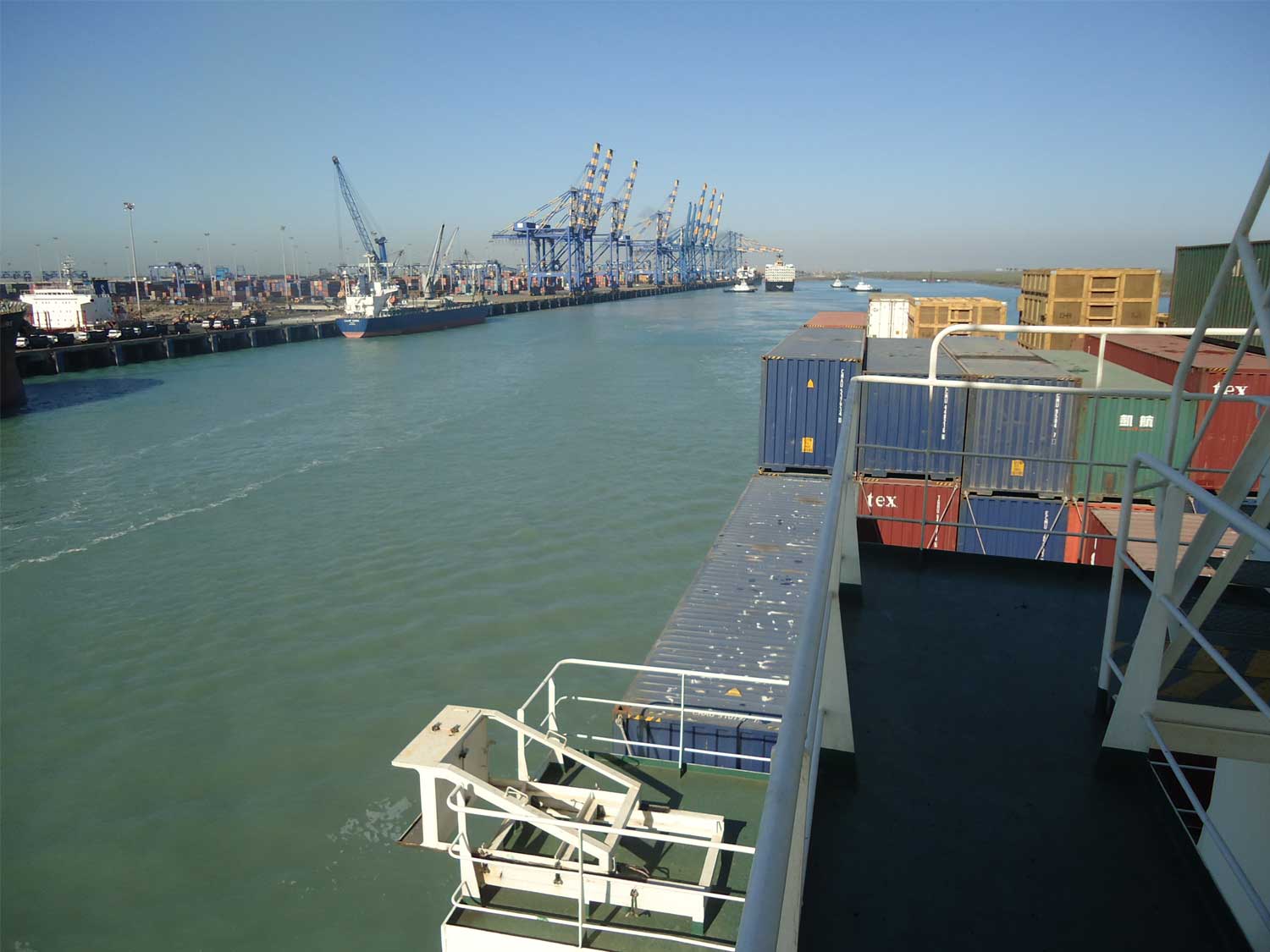
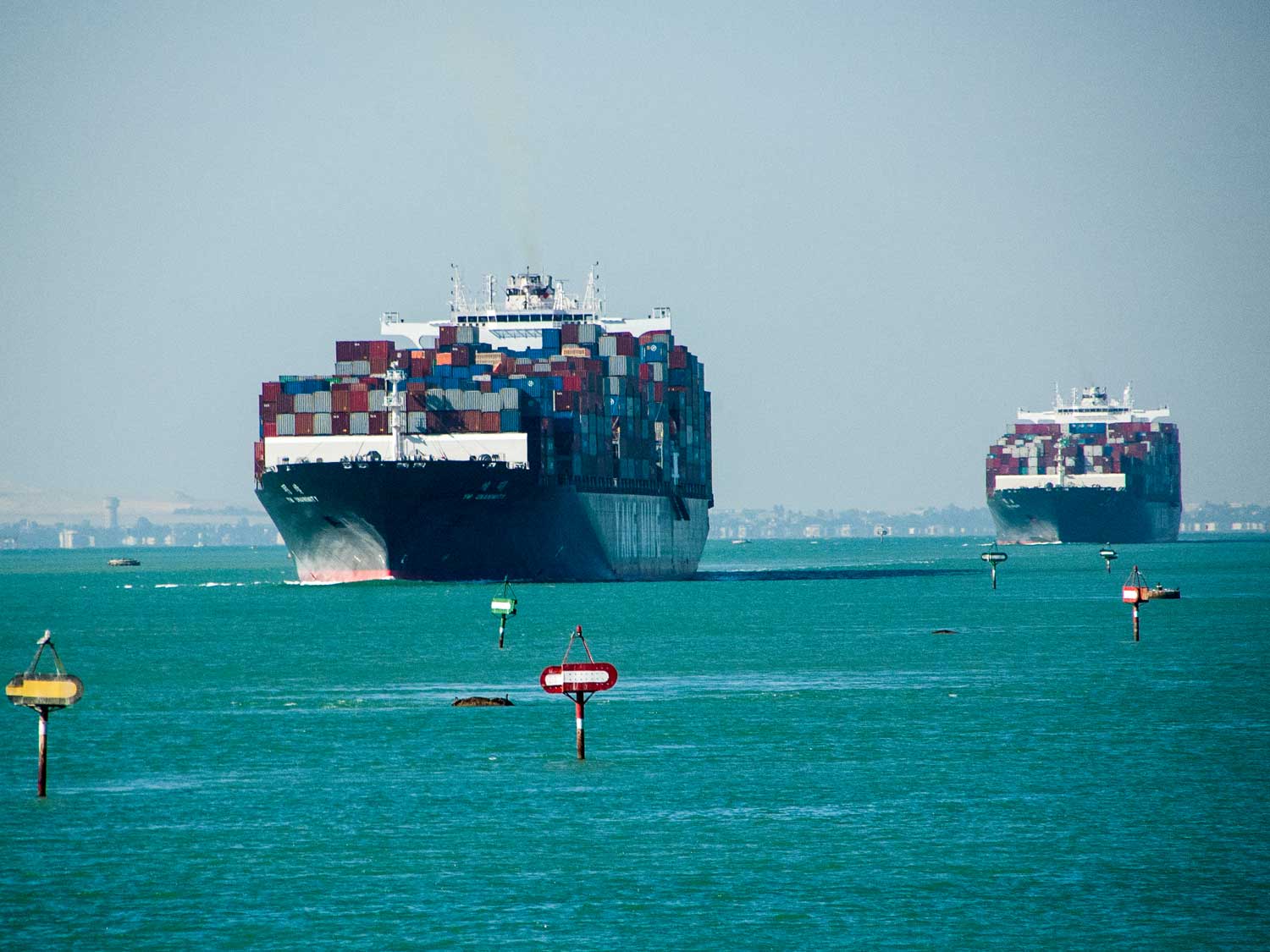
Container lines are restoring services through the Red Sea and Suez Canal, promising shorter Asia–Europe transits and more effective capacity. But the security picture around the Middle East’s critical shipping chokepoints is becoming more complicated, not less.

More Asia–Europe services are returning to Suez after almost three years of widespread diversions around the Cape of Good Hope. Yet a successful Houthi land offensive has expanded the group’s control along Yemen’s Red Sea coastline and the Bab el-Mandeb Strait.

At the same time, the Strait of Hormuz remains effectively closed to regular container services, conflict continues across the region and alternative Gulf supply chains are operating at significantly higher cost.

For shippers, this is not a straightforward return to normal. It is a more fragmented Middle East shipping environment in which routes can reopen, tighten or change at short notice.

Suez is reopening but the risk has not gone away

Container lines have steadily increased their use of the Red Sea during 2026. Almost a quarter of deep-sea capacity originally diverted around southern Africa has returned to Suez, with around 213,000 TEU of weekly capacity now moving through the waterway.

The shift is particularly advanced between Asia and the Mediterranean. More than a third of September headhaul capacity on this trade is expected to use the Red Sea, compared with around 6% between Asia and North Europe.

That transition is accelerating. Maersk and Hapag-Lloyd are moving another four Gemini Cooperation services from the Cape route to Suez during September, while other major carriers have also restored selected services.

The attraction is clear. Suez cuts substantial distance from Asia–Europe voyages, shortening transit times and allowing carriers to use vessels more efficiently. A widespread return could ultimately release the equivalent of 8% of global containership capacity currently absorbed by longer Cape routings.

That additional effective capacity is already contributing to softer Asia–Europe pricing, particularly into the Mediterranean.

However, the strategic picture at the southern entrance to the Red Sea has changed.

Recent Houthi advances have extended the group’s territorial control along Yemen’s Red Sea coastline and include Mayyun Island, which sits in the Bab el-Mandeb Strait. This gives the Houthis an even stronger position around the gateway connecting the Gulf of Aden with the Red Sea.

For now, the group has indicated that international traffic can continue unimpeded, with its restrictions focused on Saudi shipping. Container vessels have also largely avoided direct attacks for more than a year, allowing carriers to conclude that selected Red Sea transits are currently viable. 

So Suez normalisation continues. But the underlying vulnerability has arguably increased. The Houthis have retained and potentially strengthened their ability to interfere with traffic through Bab el-Mandeb should their intentions or the wider conflict change.

Shippers forum question the return

That contradiction is causing concern among cargo owners, with The Global Shippers Forum questioning whether carriers are returning too quickly given the continuing instability and the Houthis’ close relationship with Iran.

GSF director James Hookham described the increasing number of Red Sea transits as potentially a “reckless gamble”, arguing that shippers need more information about the security assessments underpinning carriers’ decisions.

Carriers maintain that safety remains the determining factor and that decisions to transit the Red Sea follow extensive security assessments informed by international and regional security organisations, with a commitment to stop transiting if there were indications that container vessels were again being targeted.

The absence of attacks on container ships for more than a year provides some reassurance. But a renewed threat could quickly send services back around the Cape, absorbing vessel capacity and extending transit times. A sudden reversal during the September and October shipping period could also disrupt cargo moving ahead of Black Friday and Christmas.

Further east, the picture is very different

The Strait of Hormuz remains severely restricted for container shipping after more than six months of disruption. Container ships have represented only around 6% of recorded inbound and outbound vessel transits during the conflict, with regular liner services largely avoiding the waterway.

Recent developments have added to the uncertainty. Iran has expanded a vessel blacklist that can potentially expose designated ships to fines, detention or confiscation, while vessels involved in transhipment with listed tonnage could also face restrictions.

Attacks on vessels have reinforced the risks, while diplomatic efforts to establish a framework for future shipping through Hormuz have stalled.

For Gulf importers, this has already reshaped supply chains.

Cargo is increasingly using alternative gateways such as Jeddah and Khor al Fakkan before moving overland. Demand for these alternatives has pushed China–Jeddah spot rates around 256% higher than before the conflict, while China–Khor al Fakkan rates have increased almost 480%.

Overland transport is consequently becoming a more important part of regional logistics. Greater use of the TIR trucking system through Iraq is opening additional options for upper Gulf markets, with some journeys between Europe, Turkey, Iraq and the Gulf dramatically reducing transit times compared with disrupted maritime routes.

But landbridges are not a direct substitute for ocean capacity. They add handling, road transport and border requirements, while growing demand is putting pressure on available trucking capacity and costs.

The wider conflict also matters far beyond Middle East cargo. Rising oil and bunker prices have the potential to feed into fuel surcharges and shipping costs across global trade lanes.

For shippers, the question is no longer simply whether a particular route is open. It is how dependable that route will remain, what alternatives exist if conditions change and how quickly cargo can be switched when they do.

Metro monitors carrier networks, regional gateways and changing conditions across the Middle East to identify emerging risks before they reach your supply chain. 

With global ocean freight expertise, alternative routing options and joined-up origin-to-destination management, we can help you balance cost, transit time and resilience, to keep your cargo moving when routes or risk change.
Cathay tailfins 1440x1080 1

Asia air freight enters autumn with momentum intact

Air cargo’s traditional summer slowdown has failed to significantly loosen the market, with resilient demand, constrained capacity and renewed growth on key ex-Asia lanes keeping pressure on space and pricing as autumn begins.

Global air cargo volumes were 6% higher year on year in August, following 5% growth in July. More recent data shows that momentum continuing into September, with worldwide chargeable weight in week 36 still 7% above the same period last year.

Asia remains central to that strength. High-tech exports, AI and data-centre equipment, manufacturing activity and e-commerce continue to support demand, while available lift has struggled to grow at the same pace.

The result is an ex-Asia market that is increasingly defined by individual origins and trade lanes rather than a single regional trend.

Capacity remains the critical constraint

Global air cargo capacity was flat year on year during August, pushing capacity utilisation three percentage points above August 2025 levels. Dedicated freighters are carrying much of the additional demand, with freighter traffic having increased almost 14% year on year in July.

Adding substantial new lift remains difficult. Delayed new aircraft deliveries and passenger-to-freighter conversion programmes are restricting expansion, while carriers have been quick to redeploy freighters towards stronger markets.

That flexibility became particularly visible following changes to European low-value import rules. Falling e-commerce traffic initially weakened China and Hong Kong–Europe volumes, prompting some freighter capacity to move towards the stronger transpacific market.

However, the European picture is now showing signs of stabilisation. China–Europe volumes returned to modest week-on-week growth during August, while Hong Kong–Europe traffic increased 6% in week 36, its third consecutive weekly rise. Mainland China volumes have also been growing by low single-digit percentages since early August.

This recovery is significant as the market moves beyond the summer period and towards the traditional fourth-quarter peak.

Ex-Asia pricing reflects a tighter market

Although global spot pricing has gradually eased from its earlier highs, it remained 24% above last year during August. The latest weekly figures also point to renewed upward pressure from Asia.

In week 36, Asia Pacific spot rates increased 3% week on week to Europe and 2% to the US. China and Thailand to Europe both rose 6%, while Taiwan increased 7%.

Across Asia Pacific as a whole, pricing to Europe stood 15% above last year, while rates to the US were 40% higher.

High-tech manufacturing hubs remain particularly firm. Recent year-on-year increases included around 25% from South Korea and Taiwan, 22% from Vietnam, 32% from Thailand and 42% from Malaysia.

The transpacific remains especially strong. AI-related equipment and other technology exports continue to support demand from Northeast and Southeast Asia, while China and Hong Kong volumes to the US have remained resilient despite significant changes to low-value import rules.

There are also signs that the initial shock from Europe's new e-commerce rules may be passing. China’s low-value exports to Europe fell sharply after the July changes, but the subsequent improvement in China and Hong Kong tonnage suggests the market is beginning to find a new balance.

That does not necessarily mean a conventional peak season is developing. Instead, shippers face a more fragmented market in which capacity can move quickly between corridors and individual origins can tighten independently.

Further pressure could come from fuel. Rising oil prices are increasing aviation fuel costs, creating the prospect of higher surcharges just as autumn demand begins to build.

For businesses moving time-sensitive cargo from Asia, the combination of resilient demand, limited capacity growth and rapidly changing trade-lane conditions makes early planning increasingly important.

Metro combines local expertise across Asia with global air freight buying power and real-time market intelligence to identify pressure before it reaches your supply chain. 

Whether you need secured capacity, alternative gateways, flexible routings or support through the autumn peak, our air freight specialists can build the right solution around your priorities and keep critical cargo moving.

Metro model truck 1440x1080 1

Road freight resilience starts before the truck arrives

UK haulage is entering a period in which access to the right vehicle, route and transport option could become increasingly important. For shippers, that makes planning and flexibility just as important as the rate agreed for an individual movement.

More than half of UK HGV drivers are aged between 50 and 65, while fewer than 2% are under 24. Replacing an ageing workforce brings recruitment, training, insurance and employment costs at the same time as operators manage wider pressure on vehicle operating expenses.

That does not mean the UK is heading inevitably towards a nationwide shortage of trucks. But it is going to make availability more variable by location, vehicle type and periods of peak demand.

For shippers, the response is to look beyond simply finding a truck when one is needed for UK or international movements and consider the strength, flexibility and resources behind their transport solution.

More ways to keep freight moving

Access to multiple transport options provides an important buffer when individual parts of the market tighten.

Metro combines its own commercial fleet with a wider UK and European road freight network, giving customers access to dedicated domestic transport, groupage, less-than-truckload (LTL) and full-truckload (FTL) solutions.

Dedicated vehicles can operate on fixed routes, with GPS tracking providing visibility throughout the journey. Different equipment, security and service options also allow the transport solution to be matched more closely to the cargo, delivery environment and required transit time.

Metro’s UK road freight teams are strategically located close to major manufacturing and transport hubs, supporting both domestic movements and international connections.

That capability extends across Europe, with established groupage services connecting customers with France and Germany, including the industrially important Ruhr region, with further services into the Netherlands, Poland, Iberia and Turkey. Frequent departures and established partner networks provide further options for both inbound and outbound freight.

This breadth matters when availability changes. Rather than depending on one mode of road transport or a narrow pool of vehicles, shippers can combine dedicated, groupage, LTL and FTL services according to shipment size, urgency and destination.

Plan capacity, not individual movements

The other side of road freight resilience is using available capacity efficiently.

Booking transport at the final stage of a shipment can leave logistics teams with fewer choices if the required vehicle or departure is already constrained. Earlier visibility of inbound and outbound requirements creates more opportunity to plan collections, consolidate freight, secure equipment and select alternative services.

It can also help businesses avoid treating domestic or European haulage as an isolated final step.

A container arriving at a UK port, an urgent movement into Germany or several smaller consignments moving into continental Europe all create different transport requirements. Connecting those movements with the wider supply chain makes it easier to choose the right solution before capacity becomes critical.

That could mean consolidating smaller shipments into groupage, moving time-sensitive cargo on a dedicated vehicle, using LTL where greater flexibility is available or securing FTL capacity earlier for larger movements.

The objective is not simply to source the lowest rate for today’s shipment. It is to create enough options to keep freight moving efficiently as demand, availability and operating costs change.

For UK and European shippers, the resources behind a road freight provider are therefore becoming increasingly important. Its own fleet, access to additional capacity, range of service options, network coverage and ability to adapt routes when circumstances change.

Metro combines its own commercial fleet with an extensive UK and European road freight network, giving customers the flexibility to move from dedicated vehicles to groupage, LTL and FTL solutions as requirements change. 

With strategically located teams, MVT supply chain management platform, GPS-tracked services and strong connections across key European markets, we can build road freight solutions around your cargo, keeping goods visible, capacity accessible and supply chains moving.

factory emissions

EU supply-chain rules may be easing but shipper expectations are changing

The EU is reducing some sustainability and due-diligence obligations, but that does not necessarily mean businesses will need less supply-chain information. For shippers, the capabilities of their logistics partners could become increasingly important.

For years, businesses have been preparing for a more demanding era of European supply-chain regulation, with greater emphasis on sustainability, due diligence and visibility beyond their immediate suppliers.

Now Brussels is changing direction. The EU’s Omnibus simplification programme is reducing the scope of some requirements, delaying implementation and cutting the amount of sustainability information companies must report.

For shippers, particularly those outside the revised thresholds, that should reduce the direct administrative burden.

But something important has already changed. Large organisations have invested in systems and processes to understand their supply chains in far greater detail, while sustainability, procurement and logistics teams have become accustomed to collecting information that was rarely requested a decade ago.

Those expectations are unlikely simply to disappear.

Brussels reduces the regulatory burden

The Corporate Sustainability Due Diligence Directive (CSDDD) has been substantially scaled back, focusing requirements on the largest businesses (>5,000 employees and net t/o >€1.5bn) and pushing implementation back to July 2029.

Sustainability reporting is also being simplified, with significant reductions in mandatory datapoints intended to lower reporting costs.

Importantly for supply chains, the EU has sought to limit the extent to which large organisations can pass excessive reporting demands down to smaller suppliers.

That should reduce unnecessary bureaucracy, but there is an important distinction between information companies are legally required to collect and the information they choose to obtain to manage risk, sustainability and supply-chain performance.

The demand for supply-chain data is already established

Early sustainability reporting provides an indication of how far corporate practices have already moved.

Deloitte’s analysis of 200 early adopters found particularly extensive reporting among consumer businesses. More than 90% disclosed emissions associated with purchased goods and services, while 94% reported emissions from upstream transport and distribution.

Industrial businesses were also incorporating Scope 3 emissions into climate targets and transition planning.

That matters for logistics because much of the information required to understand those emissions sits outside the shipper's own organisation.

Consider a manufacturer outsourcing European distribution to a freight forwarder. The forwarder may use several regional carriers, which could in turn subcontract individual movements to smaller hauliers.

The shipper may have a commercial relationship with one logistics provider while the physical movement involves several organisations.

Increasingly, businesses want to understand what happens further down that chain.

Which carrier moved the shipment? Which route and transport mode were used? Were subcontractors involved? What emissions were generated? Are appropriate compliance checks in place? Can the underlying information be verified?

Those questions have value beyond regulatory reporting. They can support procurement, corporate governance, customer commitments, risk management and decisions about how supply chains should be designed.

The forwarder's role is changing

This has implications for how shippers select logistics partners.

Price, capacity and service will remain fundamental, but increasingly they may form only part of the assessment, as visibility, data and compliance become more critical.

Price + capacity + service + visibility + data + compliance

A forwarder that can move cargo efficiently but struggles to provide reliable information about the underlying movement may become less attractive to businesses with sophisticated governance or sustainability requirements.

The strongest logistics partners will increasingly connect physical freight management with technology, supplier oversight and usable data.

That changes the forwarder's role from simply arranging transport to helping customers understand and control increasingly complex supply chains.

Better data can support better decisions

There is also a danger that greater transparency simply creates more information. The real value comes when shippers can use that information.

Emissions data provides a good example. Knowing the carbon footprint of an individual shipment supports reporting, but consistent data across modes, routes and origins can also help businesses compare alternatives and identify where operational changes could reduce emissions.

Metro's MVT ECO platform measures CO₂ equivalent emissions at consignment level across transport modes and routes, using recognised logistics emissions methodologies.

This gives customers the ability to examine emissions across their freight activity rather than relying solely on broad estimates, supporting Scope 3 reporting as well as longer-term supply-chain planning.

The same principle applies more broadly: forwarder technology should not simply produce data because somebody has asked for it. It should help shippers make better decisions.

Procurement may move faster than regulation

Perhaps the most important change will therefore come through procurement rather than legislation.

Large businesses do not need regulation to require particular standards from logistics providers. They can incorporate them into RFQs, supplier codes, operating procedures and contracts.

Requirements developed by multinational businesses can then spread through the market as other organisations adopt similar procurement standards.

It means even companies unaffected by CSDDD or CSRD requirements may ultimately benefit from logistics infrastructure originally developed in response to them.

Better carrier governance, reliable emissions measurement, stronger data and improved visibility have operational value whether or not a regulator asks for them.

Choosing logistics partners for what comes next

The EU's simplification programme should make compliance more proportionate for many European businesses.

But reducing regulation does not reverse the broader movement towards more transparent and accountable supply chains.

For shippers, that makes the capabilities sitting behind a freight rate increasingly important.

The forwarders best equipped for the future will not simply provide competitive transport. They will combine networks and operational expertise with the systems, processes and data that give customers greater visibility and control.

For businesses reviewing logistics partners, the question may therefore be shifting from “Can you move our freight?” to “Can you help us understand, control and demonstrate how our freight is moved, while reporting on emissions?”

Metro combines international freight expertise with supply-chain technology and emissions visibility through solutions including MVT ECO, helping customers turn increasingly sophisticated data requirements into practical supply-chain insight.