The Suez strikes back

Suez returns as Middle East shipping risks intensify

Container lines are restoring services through the Red Sea and Suez Canal, promising shorter Asia–Europe transits and more effective capacity. But the security picture around the Middle East’s critical shipping chokepoints is becoming more complicated, not less.

More Asia–Europe services are returning to Suez after almost three years of widespread diversions around the Cape of Good Hope. Yet a successful Houthi land offensive has expanded the group’s control along Yemen’s Red Sea coastline and the Bab el-Mandeb Strait.

At the same time, the Strait of Hormuz remains effectively closed to regular container services, conflict continues across the region and alternative Gulf supply chains are operating at significantly higher cost.

For shippers, this is not a straightforward return to normal. It is a more fragmented Middle East shipping environment in which routes can reopen, tighten or change at short notice.

Suez is reopening but the risk has not gone away

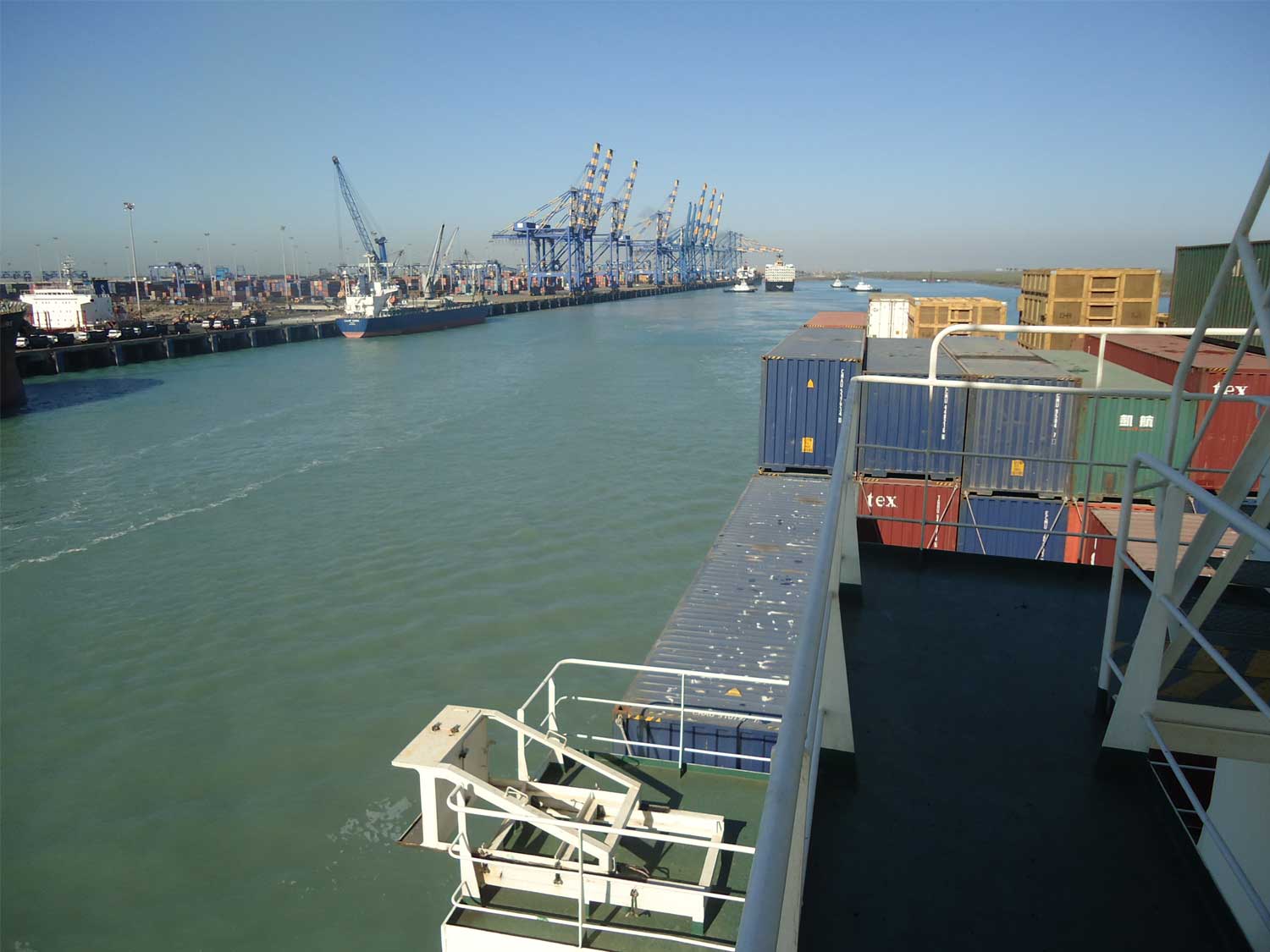
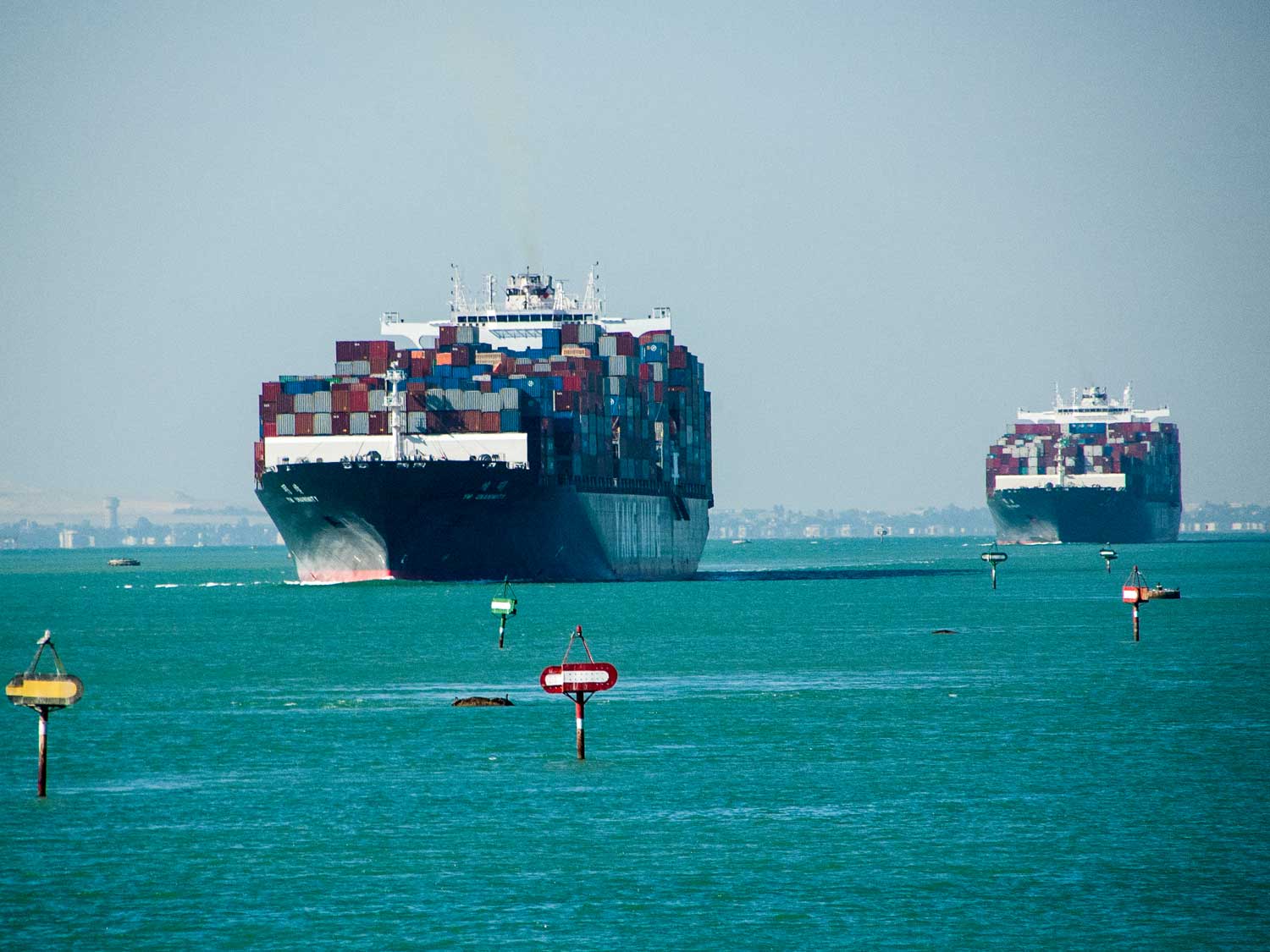
Container lines have steadily increased their use of the Red Sea during 2026. Almost a quarter of deep-sea capacity originally diverted around southern Africa has returned to Suez, with around 213,000 TEU of weekly capacity now moving through the waterway.

The shift is particularly advanced between Asia and the Mediterranean. More than a third of September headhaul capacity on this trade is expected to use the Red Sea, compared with around 6% between Asia and North Europe.

That transition is accelerating. Maersk and Hapag-Lloyd are moving another four Gemini Cooperation services from the Cape route to Suez during September, while other major carriers have also restored selected services.

The attraction is clear. Suez cuts substantial distance from Asia–Europe voyages, shortening transit times and allowing carriers to use vessels more efficiently. A widespread return could ultimately release the equivalent of 8% of global containership capacity currently absorbed by longer Cape routings.

That additional effective capacity is already contributing to softer Asia–Europe pricing, particularly into the Mediterranean.

However, the strategic picture at the southern entrance to the Red Sea has changed.

Recent Houthi advances have extended the group’s territorial control along Yemen’s Red Sea coastline and include Mayyun Island, which sits in the Bab el-Mandeb Strait. This gives the Houthis an even stronger position around the gateway connecting the Gulf of Aden with the Red Sea.

For now, the group has indicated that international traffic can continue unimpeded, with its restrictions focused on Saudi shipping. Container vessels have also largely avoided direct attacks for more than a year, allowing carriers to conclude that selected Red Sea transits are currently viable. 

So Suez normalisation continues. But the underlying vulnerability has arguably increased. The Houthis have retained and potentially strengthened their ability to interfere with traffic through Bab el-Mandeb should their intentions or the wider conflict change.

Shippers forum question the return

That contradiction is causing concern among cargo owners, with The Global Shippers Forum questioning whether carriers are returning too quickly given the continuing instability and the Houthis’ close relationship with Iran.

GSF director James Hookham described the increasing number of Red Sea transits as potentially a “reckless gamble”, arguing that shippers need more information about the security assessments underpinning carriers’ decisions.

Carriers maintain that safety remains the determining factor and that decisions to transit the Red Sea follow extensive security assessments informed by international and regional security organisations, with a commitment to stop transiting if there were indications that container vessels were again being targeted.

The absence of attacks on container ships for more than a year provides some reassurance. But a renewed threat could quickly send services back around the Cape, absorbing vessel capacity and extending transit times. A sudden reversal during the September and October shipping period could also disrupt cargo moving ahead of Black Friday and Christmas.

Further east, the picture is very different

The Strait of Hormuz remains severely restricted for container shipping after more than six months of disruption. Container ships have represented only around 6% of recorded inbound and outbound vessel transits during the conflict, with regular liner services largely avoiding the waterway.

Recent developments have added to the uncertainty. Iran has expanded a vessel blacklist that can potentially expose designated ships to fines, detention or confiscation, while vessels involved in transhipment with listed tonnage could also face restrictions.

Attacks on vessels have reinforced the risks, while diplomatic efforts to establish a framework for future shipping through Hormuz have stalled.

For Gulf importers, this has already reshaped supply chains.

Cargo is increasingly using alternative gateways such as Jeddah and Khor al Fakkan before moving overland. Demand for these alternatives has pushed China–Jeddah spot rates around 256% higher than before the conflict, while China–Khor al Fakkan rates have increased almost 480%.

Overland transport is consequently becoming a more important part of regional logistics. Greater use of the TIR trucking system through Iraq is opening additional options for upper Gulf markets, with some journeys between Europe, Turkey, Iraq and the Gulf dramatically reducing transit times compared with disrupted maritime routes.

But landbridges are not a direct substitute for ocean capacity. They add handling, road transport and border requirements, while growing demand is putting pressure on available trucking capacity and costs.

The wider conflict also matters far beyond Middle East cargo. Rising oil and bunker prices have the potential to feed into fuel surcharges and shipping costs across global trade lanes.

For shippers, the question is no longer simply whether a particular route is open. It is how dependable that route will remain, what alternatives exist if conditions change and how quickly cargo can be switched when they do.

Metro monitors carrier networks, regional gateways and changing conditions across the Middle East to identify emerging risks before they reach your supply chain. 

With global ocean freight expertise, alternative routing options and joined-up origin-to-destination management, we can help you balance cost, transit time and resilience, to keep your cargo moving when routes or risk change.
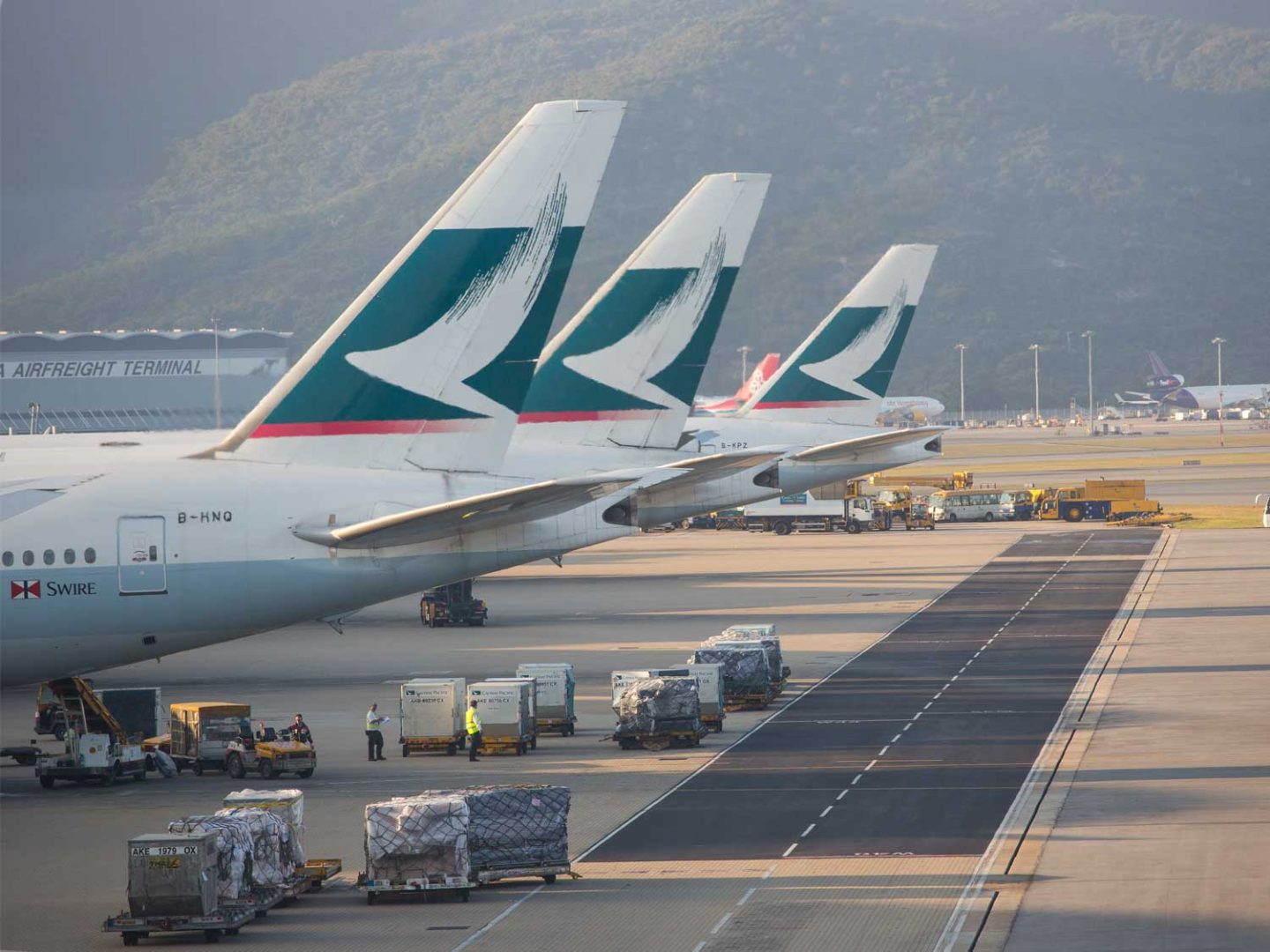

Cathay tailfins 1440x1080 1

Asia air freight enters autumn with momentum intact

Air cargo’s traditional summer slowdown has failed to significantly loosen the market, with resilient demand, constrained capacity and renewed growth on key ex-Asia lanes keeping pressure on space and pricing as autumn begins.

Global air cargo volumes were 6% higher year on year in August, following 5% growth in July. More recent data shows that momentum continuing into September, with worldwide chargeable weight in week 36 still 7% above the same period last year.

Asia remains central to that strength. High-tech exports, AI and data-centre equipment, manufacturing activity and e-commerce continue to support demand, while available lift has struggled to grow at the same pace.

The result is an ex-Asia market that is increasingly defined by individual origins and trade lanes rather than a single regional trend.

Capacity remains the critical constraint

Global air cargo capacity was flat year on year during August, pushing capacity utilisation three percentage points above August 2025 levels. Dedicated freighters are carrying much of the additional demand, with freighter traffic having increased almost 14% year on year in July.

Adding substantial new lift remains difficult. Delayed new aircraft deliveries and passenger-to-freighter conversion programmes are restricting expansion, while carriers have been quick to redeploy freighters towards stronger markets.

That flexibility became particularly visible following changes to European low-value import rules. Falling e-commerce traffic initially weakened China and Hong Kong–Europe volumes, prompting some freighter capacity to move towards the stronger transpacific market.

However, the European picture is now showing signs of stabilisation. China–Europe volumes returned to modest week-on-week growth during August, while Hong Kong–Europe traffic increased 6% in week 36, its third consecutive weekly rise. Mainland China volumes have also been growing by low single-digit percentages since early August.

This recovery is significant as the market moves beyond the summer period and towards the traditional fourth-quarter peak.

Ex-Asia pricing reflects a tighter market

Although global spot pricing has gradually eased from its earlier highs, it remained 24% above last year during August. The latest weekly figures also point to renewed upward pressure from Asia.

In week 36, Asia Pacific spot rates increased 3% week on week to Europe and 2% to the US. China and Thailand to Europe both rose 6%, while Taiwan increased 7%.

Across Asia Pacific as a whole, pricing to Europe stood 15% above last year, while rates to the US were 40% higher.

High-tech manufacturing hubs remain particularly firm. Recent year-on-year increases included around 25% from South Korea and Taiwan, 22% from Vietnam, 32% from Thailand and 42% from Malaysia.

The transpacific remains especially strong. AI-related equipment and other technology exports continue to support demand from Northeast and Southeast Asia, while China and Hong Kong volumes to the US have remained resilient despite significant changes to low-value import rules.

There are also signs that the initial shock from Europe's new e-commerce rules may be passing. China’s low-value exports to Europe fell sharply after the July changes, but the subsequent improvement in China and Hong Kong tonnage suggests the market is beginning to find a new balance.

That does not necessarily mean a conventional peak season is developing. Instead, shippers face a more fragmented market in which capacity can move quickly between corridors and individual origins can tighten independently.

Further pressure could come from fuel. Rising oil prices are increasing aviation fuel costs, creating the prospect of higher surcharges just as autumn demand begins to build.

For businesses moving time-sensitive cargo from Asia, the combination of resilient demand, limited capacity growth and rapidly changing trade-lane conditions makes early planning increasingly important.

Metro combines local expertise across Asia with global air freight buying power and real-time market intelligence to identify pressure before it reaches your supply chain. 

Whether you need secured capacity, alternative gateways, flexible routings or support through the autumn peak, our air freight specialists can build the right solution around your priorities and keep critical cargo moving.

White House 1440x1080 1

US tariff uncertainty is becoming a permanent supply chain challenge

US importers face another period of significant trade policy change as the Trump administration expands its use of tariffs across countries, commodities and industries.

The immediate challenge is understanding which measures apply and how they interact. The wider issue is more fundamental: Section 301 is developing into a broad mechanism for imposing additional tariffs, while stricter customs enforcement increases the financial consequences of getting classification, valuation or origin wrong.

For importers, tariff exposure can no longer be treated as a temporary disruption. It increasingly needs to form part of sourcing, landed-cost and customs compliance decisions.

New tariffs broaden importer exposure

The latest changes follow the expiry of temporary Section 122 tariffs introduced in February 2026 after the Supreme Court overturned the administration’s earlier use of emergency powers for its ‘Liberation Day’ tariffs.

On 24 July, the administration introduced new tariffs on 59 countries and the European Union following a Section 301 investigation into goods allegedly produced using forced labour. The measures effectively restored a 10%–12% minimum tariff across economies responsible for around 99% of US imports, although significant product exemptions remain.

The UK was placed in the 10% group rather than the 12.5% tier applied to many other countries. There are product-specific exemptions under the UK-US Economic Prosperity Deal, so the 10% does not apply universally.

UK automotive exports benefit from a 10% tariff within the agreed 100,000-vehicle quota, aerospace goods have preferential treatment, and UK pharmaceutical exports secured 0% tariffs in April 2026. Different Section 232 or other measures can also apply depending on the commodity.

These duties can also stack on top of existing measures, helping push the estimated overall US effective tariff rate to approximately 10.8%.

Some individual measures go considerably further. Selected Brazilian goods face additional tariffs of 25%, while certain Canadian products have been targeted with duties of 50%. From 31 July, some pharmaceutical imports also became subject to tariffs reaching 100%.

More measures could follow. An investigation into excess industrial capacity covers 16 economies, including China, India, Japan and the EU, while further action targeting digital policies and specific industries remains possible.

The near-term outlook therefore points towards continued volatility rather than simplification. Importers should expect tariffs to change by country, product and policy objective, making total landed-cost calculations increasingly important when comparing suppliers and sourcing locations.

Enforcement raises the cost of getting customs wrong

Tariffs are only one part of the financial exposure. US Customs and Border Protection is also moving towards more aggressive enforcement.

Importers face increased scrutiny of the three areas fundamental to duty assessment: tariff classification, customs valuation and country of origin. Errors can result not only in additional duty assessments but potentially penalties where authorities believe tariffs have been avoided.

The scope for mitigating penalties may also be narrowing. Industry analysis indicates that reductions which historically could reach 90% are becoming less readily available, with mitigation potentially limited to around 50% for trusted traders able to demonstrate effective written controls and robust compliance procedures.

This makes customs governance increasingly important. Importers should review classifications, origin determinations and valuation methodologies before goods arrive rather than relying on retrospective corrections.

Procurement contracts also deserve attention. Businesses may need clearer provisions determining which party absorbs new tariffs and what happens if government action materially changes the economics of an existing sourcing agreement.

Tariffs are likely to remain part of the landscape

Legal challenges continue, including action involving 25 US states, but importers should be cautious about building their strategy around the prospect of tariffs disappearing.

Section 301 has expanded well beyond its previous association with China and is increasingly being used across different countries and policy objectives. Further investigations are expected, suggesting additional tariff announcements remain possible.

Even successful legal challenges may not deliver lasting certainty if the administration replaces overturned measures using alternative statutory authority.

For importers, this changes the emphasis from reacting to individual tariff announcements to building greater resilience into customs and sourcing strategies. That means modelling landed costs under different tariff scenarios, reviewing alternative origins and suppliers, maintaining accurate customs data and identifying opportunities to use legitimate duty-management mechanisms.

Metro’s growing US footprint combined with customs brokerage capability at every US gateway gives importers the support they need as tariff and enforcement requirements become more complex. Our teams can review classification, valuation, origin and duty exposure before cargo moves, identify potential customs risks and help you understand how changing tariffs affect your true landed cost.

With US trade policy changing quickly, don’t wait for a new tariff or customs intervention to expose a problem. Talk to Metro now about reviewing your imports, customs compliance and duty exposure. EMAIL Managing Director Andrew Smith.

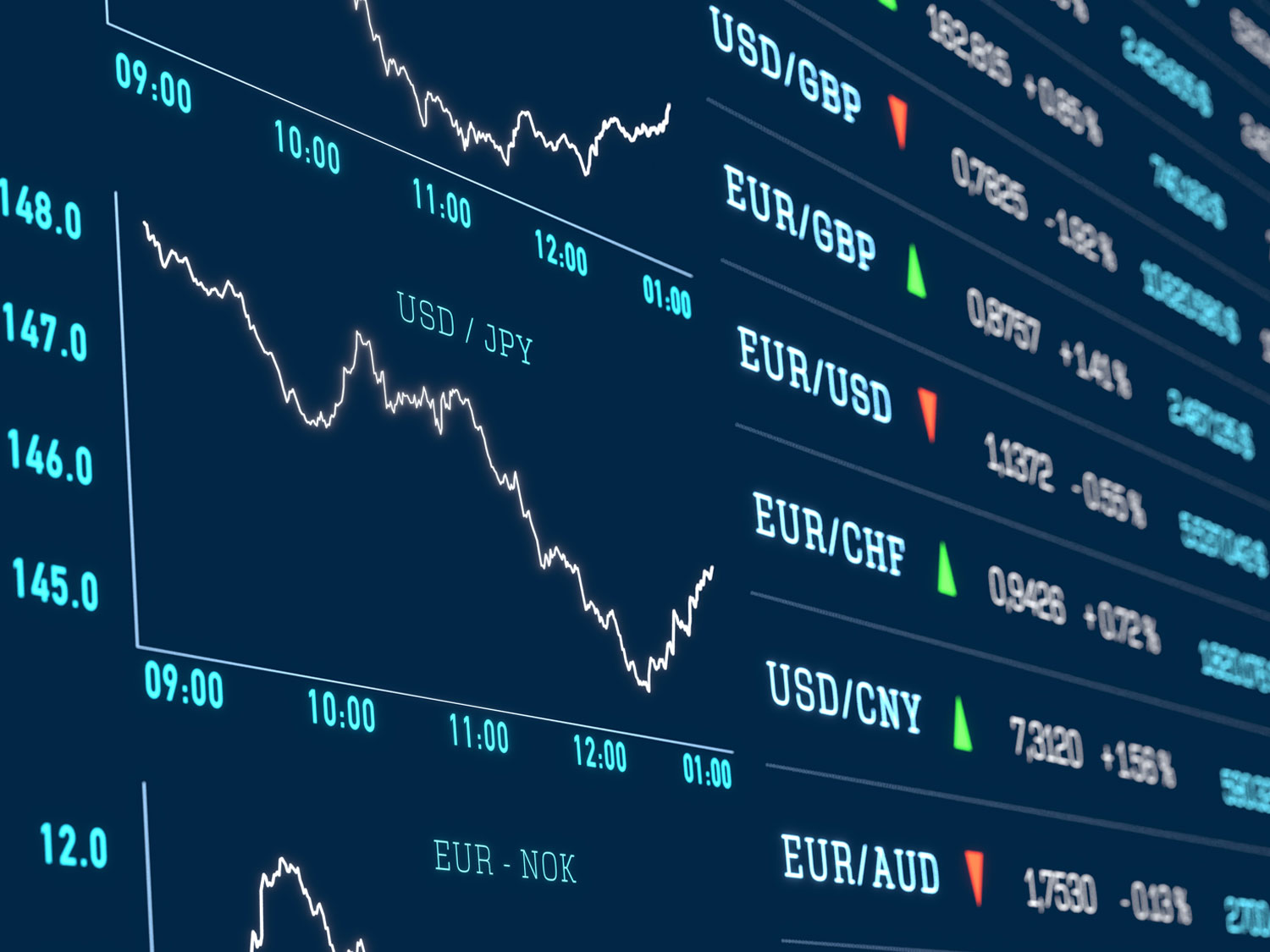
currency screen

Sterling strengthens against the US dollar; what it means for importers and exporters

The pound has been strengthening against the US dollar, improving sterling buying power for many UK businesses purchasing goods and services priced in dollars.

For importers, that's welcome news. A stronger pound can reduce the sterling cost of overseas purchases, international freight, fuel and other dollar-linked expenses. However, exchange rates are only one part of the equation.

The recent rise in GBP/USD has been driven largely by a weaker US dollar rather than a dramatic improvement in the UK economy.

Several factors have combined to support sterling:

Markets expect US interest rates to fall

Investors increasingly believe the US Federal Reserve could begin cutting interest rates sooner than previously expected as economic growth moderates.

Lower interest rates generally make the dollar less attractive to investors, reducing demand for the currency.

The Bank of England remains more cautious

Although UK growth remains subdued, inflation—particularly in wages and services—continues to influence Bank of England policy.

With UK interest rates expected to remain higher for longer than US rates, sterling has become relatively more attractive.

Investors are taking less defensive positions

During periods of global uncertainty, investors typically move money into the US dollar because it is viewed as a safe-haven currency.

As market sentiment has improved, some of that demand has eased, allowing sterling to recover.

The UK economy has proved more resilient than expected

Economic growth remains modest, but the UK has avoided some of the more severe downturns previously anticipated.

That has helped maintain confidence in sterling despite ongoing economic challenges.

Yet, the pound could weaken again

Foreign exchange markets can move quickly and remain highly sensitive to:

  • US employment figures
  • Inflation data
  • Federal Reserve and Bank of England announcements
  • Geopolitical events
  • Changes in investor confidence

Exchange rates can reverse rapidly as market expectations change.

What this means for your business

For companies involved in international trade, a stronger pound creates opportunities, but also some important considerations.

Purchasing goods in US dollars

If your suppliers invoice in US dollars, sterling now buys more dollars than it did only a few weeks ago.

This can reduce the cost of imported products, raw materials and overseas services.

However, savings may not appear immediately if:

  • purchases are already hedged
  • contracts are fixed at earlier exchange rates
  • suppliers review prices only periodically

Freight and fuel costs

Many international transport costs are linked directly or indirectly to the US dollar.

These include:

  • ocean freight
  • air freight
  • bunker fuel
  • aviation fuel
  • fuel surcharges
  • equipment charges

A stronger pound can reduce these costs in sterling terms.

However, exchange-rate gains can easily be offset by rising oil prices, emergency carrier surcharges or changes in freight market capacity.

Export revenues

Businesses selling into dollar markets face the opposite effect.

Each dollar of revenue converts into fewer pounds when sterling strengthens, potentially reducing margins unless prices are adjusted or currency exposure is managed.

Budgeting and pricing

Periods of exchange-rate movement are a good opportunity to review:

  • customer pricing
  • freight assumptions
  • tender calculations
  • landed-cost models
  • cost recovery mechanisms

Rather than relying on a single exchange-rate assumption, businesses should consider a range of scenarios when preparing longer-term quotations or contracts.

Practical steps to consider

Businesses with significant US dollar exposure should consider:

  • Reviewing how much of their purchasing and sales activity is linked to the US dollar.
  • Checking whether pricing mechanisms reflect current exchange-rate movements.
  • Understanding whether freight costs are based on spot exchange rates, fixed pricing or published conversion indices.
  • Considering hedging or fixed-rate arrangements where currency exposure is significant and predictable.
  • Regularly updating budgets and tenders to reflect changing market conditions rather than relying on outdated assumptions.

Understanding how changing exchange rates could affect your freight costs or supply chain. Metro's finance experts can help you assess the wider logistics impact and identify opportunities to improve cost control across your international shipments.

EMAIL Laurence Burford, Chief Financial Officer.