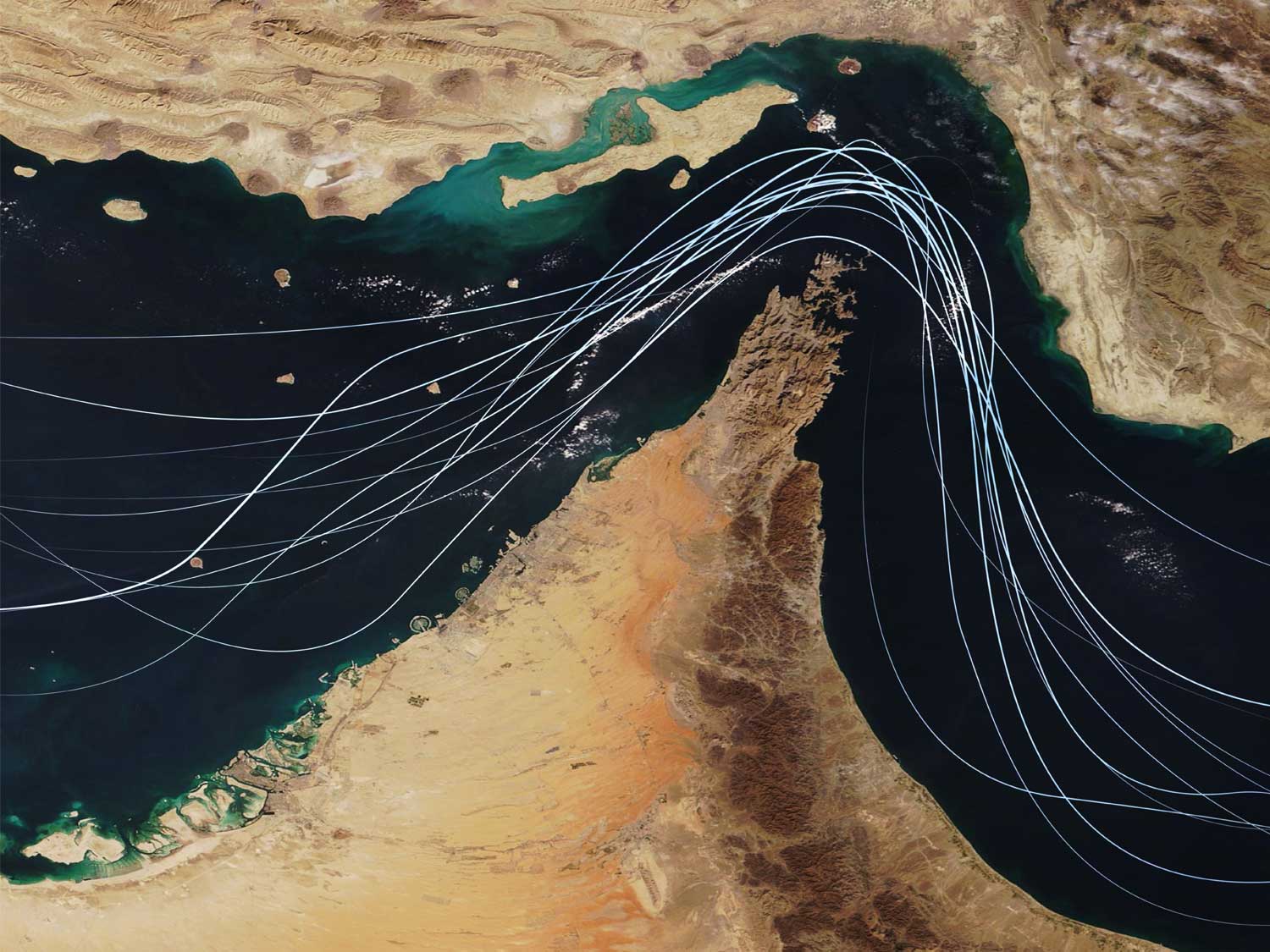
Hormuz satellite

Middle East conflict is reshaping global shipping once again

Commercial shipping in the Strait of Hormuz and Red Sea is facing renewed disruption with 14 Iranian attacks on vessels since June 25th, the breakdown of the US-Iran ceasefire and a Houthi threat to target Saudi-linked shipping in the Bab al-Mandab.

The tanker Kavomaleas, initially reported on fire in the Strait of Hormuz, has since been confirmed as the target of an attack on Monday. Its crew abandoned the vessel, which remained adrift and on fire. UK Maritime Trade Operations also reported that another tanker in the Strait’s southern transit corridor had been attacked and set alight, with its crew also abandoning ship.

These incidents have further weakened confidence in the safety of the Strait, which has historically carried around one fifth of the world’s crude oil and liquefied natural gas.

Traffic has fallen sharply during the latest period of escalation, with only six vessels crossing the Strait in a day, the lowest level in five weeks, while hundreds remained at anchor outside the waterway.

For shippers, the concern extends well beyond regional security. Rising fuel costs, higher insurance premiums, longer voyage times and reduced network capacity all have the potential to increase transport costs and reduce schedule reliability across global supply chains.

Hormuz remains the world's most important energy chokepoint

The attacks on Kavomaleas and a second tanker follows earlier incidents in July involving three vessels, including a Qatari-flagged LNG carrier.

Iran subsequently accused vessels of transiting without its permission, using its interpretation of the MoU agreement to assert control over passage through the Strait.

While the United States insists the waterway remains open to commercial traffic and has deployed a naval blockade, Iran's Islamic Revolutionary Guard Corps (IRGC) threat to execute attacks on unauthorised vessels cannot be ignored.

The impact extends far beyond the Gulf itself. Because such a significant proportion of the world's crude oil and LNG exports move through Hormuz, even relatively limited disruption can trigger sharp movements in energy markets as traders price in the risk of prolonged restrictions.

Brent crude briefly climbed above US$90 per barrel following the latest escalation, increasing expectations of higher bunker costs and transport surcharges across both ocean and air freight markets.

Red Sea uncertainty threatens container shipping

While Hormuz is primarily an energy concern, the Red Sea remains critical to global container shipping.

Recent threats to Saudi-linked shipping in the Bab al-Mandab Strait have renewed concerns that carriers may once again reduce Red Sea transits or suspend recently restored Suez services.

Maersk recently returned its Gemini AE15 service to the Suez route and planned to add Jeddah from August. Its MECL service also calls at the port.

CMA CGM operates several Asia-Europe services through Suez. Recent schedules show some Jeddah calls omitted on the MEX and BEX2 services, although not all calls have been removed.

Should security risks increase again, those services could once more be rerouted around southern Africa.

Such diversions add thousands of nautical miles to Asia-Europe voyages, increasing fuel consumption, extending transit times and reducing the effective capacity of the global container fleet. Even though no vessels are removed from service, longer round voyages mean fewer sailings can be completed each year, tightening capacity and placing upward pressure on freight rates.

Marine insurance remains available for vessels transiting the Gulf, but at substantially higher prices.

War risk hull premiums reportedly stood at a fraction of 1% of insured vessel value before the crisis began in February. They have since risen to between 3% and 10%.

For a tanker valued at US$100 million, this could increase the premium for a single transit from around US$250,000 to as much as US$10 million.

The Lloyd’s Market Association has stated that the decline in traffic is not primarily the result of insurance being unavailable. It said owners are choosing not to transit because of safety concerns.

These costs ultimately feed through to supply chains via emergency surcharges, bunker adjustment factors and higher freight rates.

Although neither the Strait of Hormuz nor the Red Sea is theoretically closed, commercial conditions remain highly fluid.

Container carriers continue to review sailing schedules, tanker operators are assessing voyage risks on a daily basis and insurance markets remain volatile. Further attacks or additional security measures could quickly alter routing decisions across both regions.

Visibility turns uncertainty into control

Geopolitical events cannot be prevented, but their impact can be managed with real-time visibility and timely data.

Metro combines global freight expertise with advanced digital visibility through our MVT platform, providing customers with real-time shipment tracking down to SKU level across all transport modes. Metro helps businesses identify disruption early, make informed decisions and keep products flowing through increasingly complex global supply chains.

To learn how Metro can strengthen the resilience and visibility of your international supply chain, EMAIL Managing Director Andrew Smith today.
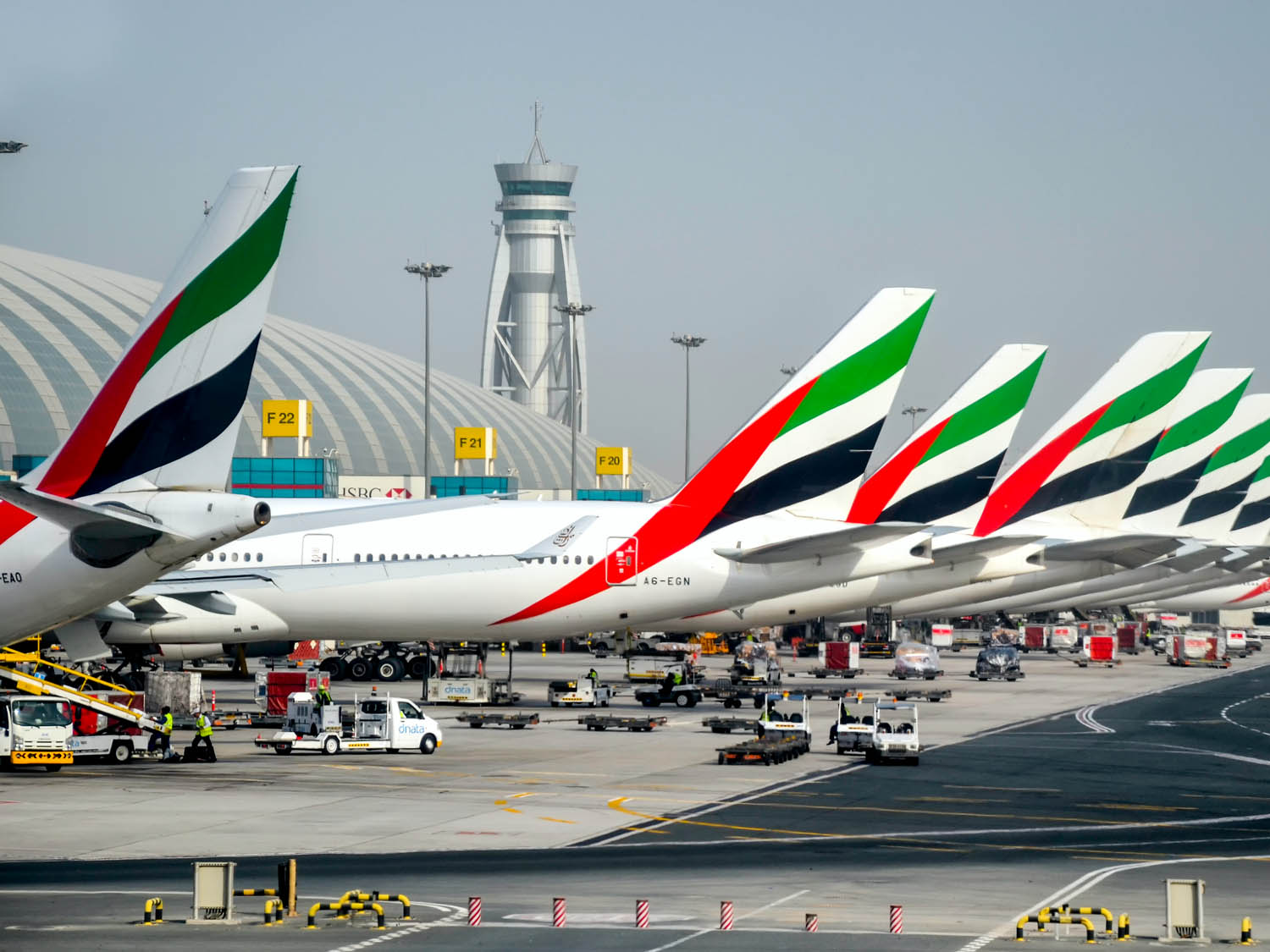
Emirates Dubai

Air freight remains resilient despite Middle East tensions

Global cargo volumes remained strong throughout June, finishing 9% higher than the same month last year and building on steady growth seen throughout the first half of 2026. 

While capacity has gradually returned to the market following the disruption caused by the Iran-US conflict, pricing remains significantly above last year's levels as airlines continue to operate in a more complex and uncertain environment. 

Although the ceasefire had allowed airlines to restore many services across the Gulf, it is proving to be very fragile and the market is far from returning to normal.

The European Union Aviation Safety Agency on 7 July extended guidance advising airlines to avoid Iranian, Iraqi and Lebanese airspace until the end of August following renewed exchanges between the US and Iran. While restrictions affecting several Gulf states have been relaxed, airlines operating between Europe and Asia continue to face longer routings around conflict zones, increasing both flight times and operating costs. 

Many Gulf carriers have rebuilt schedules and returned aircraft to service, helping overall capacity recover. However, operational planning remains heavily influenced by evolving security assessments, insurance requirements and regulatory guidance, meaning disruption can quickly return if regional tensions escalate. 

Capacity is improving but rates remain elevated

Global air freight capacity has increased by around 3% over recent weeks, with Middle East capacity now marginally above the same period last year. Despite this recovery, average freight rates during June remained approximately one-third higher than a year earlier, underlining how the market continues to price in operational risk as well as strong underlying demand. 

Rates into the Middle East remain particularly elevated compared with pre-conflict levels, although they have eased from the exceptional highs seen during the height of the disruption as more capacity returns to affected trade lanes. 

AI is replacing eCommerce as the growth engine

For several years, cross-border eCommerce drove much of the growth in global air cargo. Today, semiconductor manufacturing, AI infrastructure and high-value technology products have become the primary drivers of demand.

Strong exports from Taiwan and South Korea continue to generate significant volumes across global air freight networks, helping offset weaker eCommerce activity following changes to low-value import rules in both the US and Europe. Overall, air cargo demand continues to outperform expectations despite these changing market dynamics. 

New regulations are reshaping eCommerce

The European Union has now removed de minimus duty-free treatment for low-value imports, introducing additional customs charges on individual shipments from outside the bloc. The immediate result has been a sharp reduction in direct freighter capacity between China and Europe as eCommerce operators assess the commercial impact and adapt their distribution strategies.

While experience in the US suggests volumes are likely to recover over time, many businesses are expected to shift towards larger consolidated consignments rather than individual parcel movements, changing the mix of cargo moving through international air freight networks. 

While capacity is gradually returning and some pricing pressures have eased, the combination of geopolitical risk, regulatory change and evolving demand means air freight remains a market where agility and forward planning continue to deliver a competitive advantage.

Metro's air freight specialists monitor market developments daily, helping customers secure reliable capacity, identify the most effective routings and respond quickly as conditions evolve.

To discuss your international air freight requirements and build greater resilience into your supply chain, EMAIL Andrew Smith, Metro’s Managing Director.

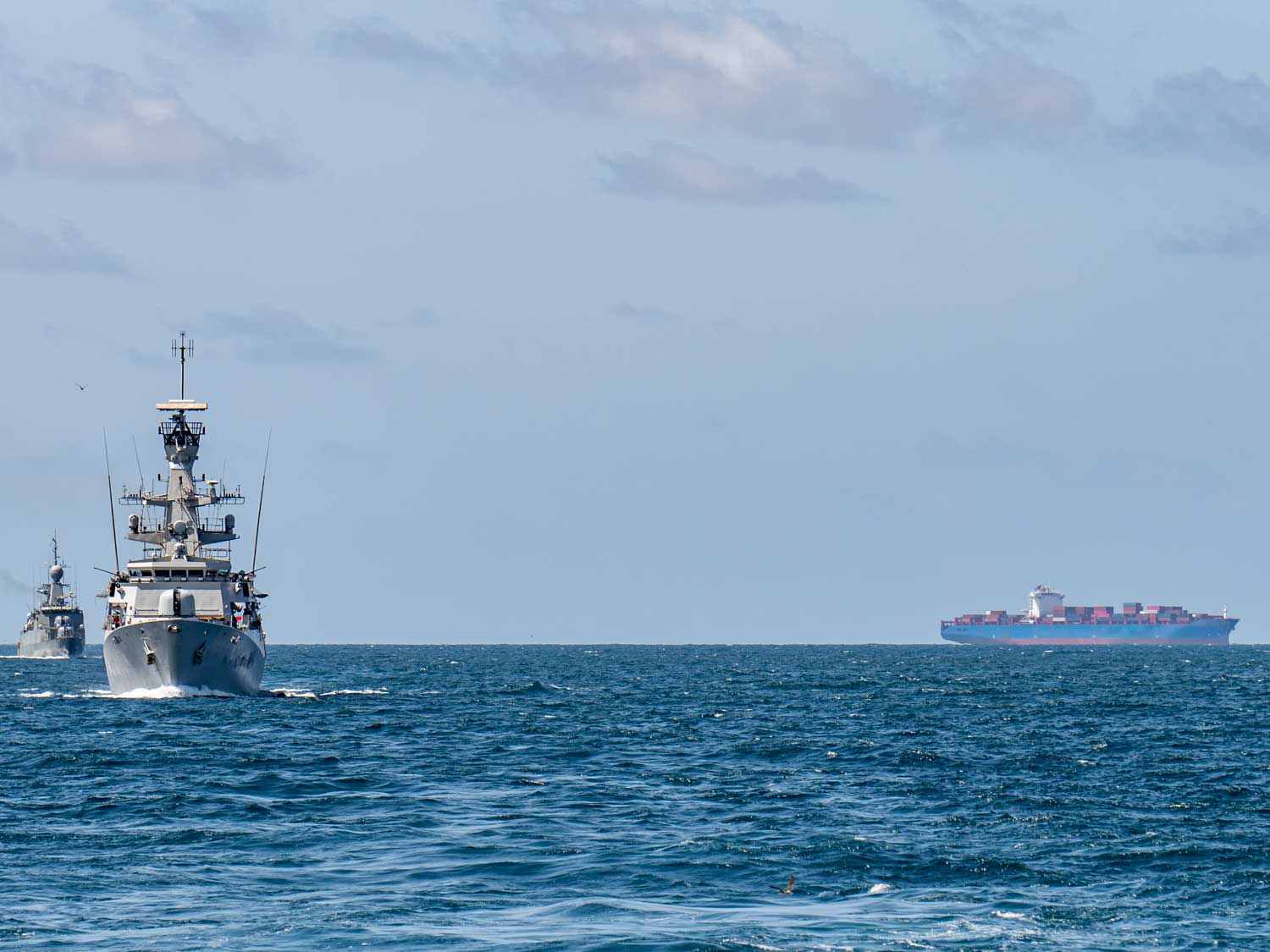
container ship and naval escort

Iran/US ceasefires bring relief, but supply chains still face a long road back

The latest ceasefire agreement between Israel and Hezbollah, alongside the broader US/Iran framework aimed at ending months of regional conflict, has improved sentiment across energy and freight markets. 

Oil prices have retreated, financial markets have stabilised and hopes are growing that the Strait of Hormuz could gradually reopen to normal commercial traffic. Yet for supply chains, the crisis is entering a recovery phase rather than reaching a conclusion.

While diplomats work to turn temporary agreements into lasting settlements, the operational reality remains far more complicated. Shipping lines, insurers and logistics providers are preparing for a lengthy and uneven normalisation process rather than a swift return to pre-crisis conditions.

Diplomacy has moved faster than logistics

The new ceasefire between Israel and Hezbollah removes one of the biggest threats to wider regional stability and supports the broader US-Iran agreement. However, restoring confidence across global transport networks will take far longer than negotiating peace terms.

Although limited vessel movements have resumed, hundreds of ships remain affected by months of disruption and maritime authorities continue to treat the Strait of Hormuz with caution. Mine clearance operations, traffic management measures and elevated insurance requirements mean normal trading conditions remain some way off. Even where vessels are moving, transit remains slower and more tightly controlled than before the conflict.

Gulf supply chains face months of adjustment

Importers and exporters serving the GCC area, including major markets such as Saudi Arabia and the UAE, should not expect an immediate return to normal operations.

Regional carriers, feeder operators and overland transport providers have spent months redesigning networks around restrictions and delays. As cargo begins flowing again, ports and transhipment hubs are likely to experience congestion as stranded containers and equipment gradually work their way through the system.

Schedule reliability will improve, but only progressively. Backlogs accumulated over several months cannot be unwound in a matter of weeks, and businesses serving Gulf markets should continue planning for volatility through the summer.

Energy costs remain a major risk

Even though oil prices have fallen on hopes that hostilities are easing, energy markets remain highly sensitive.

Around one-fifth of global oil supply normally moves through the Strait of Hormuz. Any delays to reopening, security incidents or setbacks in ceasefire negotiations could quickly reverse recent gains.

Bunker fuel prices remain well above pre-crisis levels, while jet fuel and diesel markets continue to reflect constrained supply and cautious inventories. Fuel costs remain one of the largest components of transport pricing, meaning surcharges and cost pressures are unlikely to disappear quickly.

Airlines are closely monitoring fuel costs as they finalise winter schedules. Higher operating costs could place further pressure on passenger capacity, with consequences for belly-hold airfreight space.

Road freight operators face similar concerns. Diesel prices remain vulnerable to energy market swings, while ongoing uncertainty continues to influence transport costs across Europe and Asia.

Meanwhile, supply chains that have adapted to months of disruption are unlikely to reverse course overnight. Alternative routings, additional inventories and diversified sourcing strategies developed during the crisis are likely to remain part of many companies' long-term risk management plans.

Stability may return, but gradually

The ceasefires between Israel and Hezbollah and the wider US-Iran framework represent meaningful progress, despite the postponement of direct talks between the US and Iran. 

However, diplomacy has moved faster than physical supply chains.

Shipping schedules, equipment availability, insurance markets and energy supplies all require time to normalise. The coming months are likely to bring gradual improvement rather than an immediate reset.

Businesses that continue to secure capacity early, maintain inventory visibility and build flexibility into their transport strategies will be best positioned to complete the transition from crisis management to recovery.

Metro's teams are monitoring developments across ocean, air and road markets in real time. As conditions evolve, we help customers stay ahead of disruption, secure capacity and adapt quickly to changing circumstances. 

In volatile markets, resilience comes not from reacting faster than everyone else, but from being prepared before disruption arrives. EMAIL our Managing Director, Andrew Smith to learn more.

Jebel Ali

Middle East disruption continues

The ongoing conflict across the Middle East continues to exert major pressure on global supply chains, with the effective closure of the Strait of Hormuz creating sustained disruption across ocean freight, air cargo, energy markets and regional transport networks.

Conditions across the region remain highly constrained as carriers, ports, airlines and logistics providers continue adapting to a freight environment shaped by rerouting, congestion, fuel volatility and severe operational bottlenecks.

The consequences are now being felt far beyond the Gulf itself, with delays, higher transport costs and capacity disruption rippling across Asia-Europe and intra-Asia supply chains.

Strait of Hormuz disruption keeps energy and shipping markets under pressure

The Strait of Hormuz remains the single most critical pressure point within the global logistics system.

With the waterway effectively closed to normal commercial operations and heavily impacted by military activity, shipping lines, tanker operators and insurers continue facing severe operational and financial challenges.

Insurance premiums remain exceptionally elevated, while tanker movements through the region are heavily restricted, delayed or rerouted entirely. The result is ongoing disruption to global energy flows and sustained volatility across bunker fuel, jet fuel and wider transport costs.

Ocean carriers continue absorbing longer routings, unpredictable schedules and significant operational inefficiencies, while air cargo operators are also facing increased costs and reduced network flexibility linked to airspace restrictions and fuel price volatility.

Regional port congestion spreads across alternative gateways

As carriers avoid the highest-risk areas, cargo flows are being redirected through alternative regional hubs, creating secondary congestion across ports outside the direct conflict zone.

Jebel Ali has seen vessel calls fall sharply as operators reduce exposure to the Gulf, while alternative hubs including Salalah, Colombo, Jeddah and Khor Fakkan are now experiencing growing transhipment pressure and vessel bunching.

At India’s Nhava Sheva (JNPA) port, unexpected surges in Middle East transhipment cargo have created substantial congestion, with vessel waiting times extending to several days and terminal operations struggling under rising yard density and inland transport pressure.

Truck queues, delayed container evacuation, rollover cargo and missed vessel connections are all becoming more common as ports attempt to absorb volumes displaced from traditional Gulf routings.

Red Sea land-bridge options come under strain

The traditional Red Sea land-bridge model into the Gulf is also becoming increasingly difficult to operate.

Congestion linked to diverted cargo volumes, seasonal Hajj-related demand and overloaded customs and port administration systems has significantly reduced operational reliability through Jeddah and other Red Sea gateways.

Carriers including Maersk and Hapag-Lloyd have now suspended certain cross-border carrier haulage solutions via Jeddah for Upper Gulf cargoes, instead shifting traffic towards Arabian Sea gateways including Salalah, Khor Fakkan and Sharjah.

Containers previously routed through Saudi Arabian land-bridge solutions are increasingly being transhipped through alternative ports before moving inland or reconnecting to feeder services into Gulf destinations.

While these workarounds help maintain cargo flow, they also introduce additional handling, longer transit times and greater operational complexity.

What this means for supply chains

The Middle East situation is becoming a structural supply chain challenge affecting routing decisions, carrier networks, fuel pricing, inventory planning and transport reliability across multiple regions.

Importers and exporters are now operating in an environment where flexibility, contingency planning and proactive routing management have become essential.

Alternative gateway strategies, inland transport options and earlier booking windows are all becoming increasingly important as traditional network assumptions continue to break down.

Metro helps customers overcome volatile market conditions through flexible routing strategies, multimodal transport solutions and proactive supply chain management across Asia, Europe and the Middle East.

To discuss your supply chain planning, routing options or contingency strategies, EMAIL Managing Director Andrew Smith.