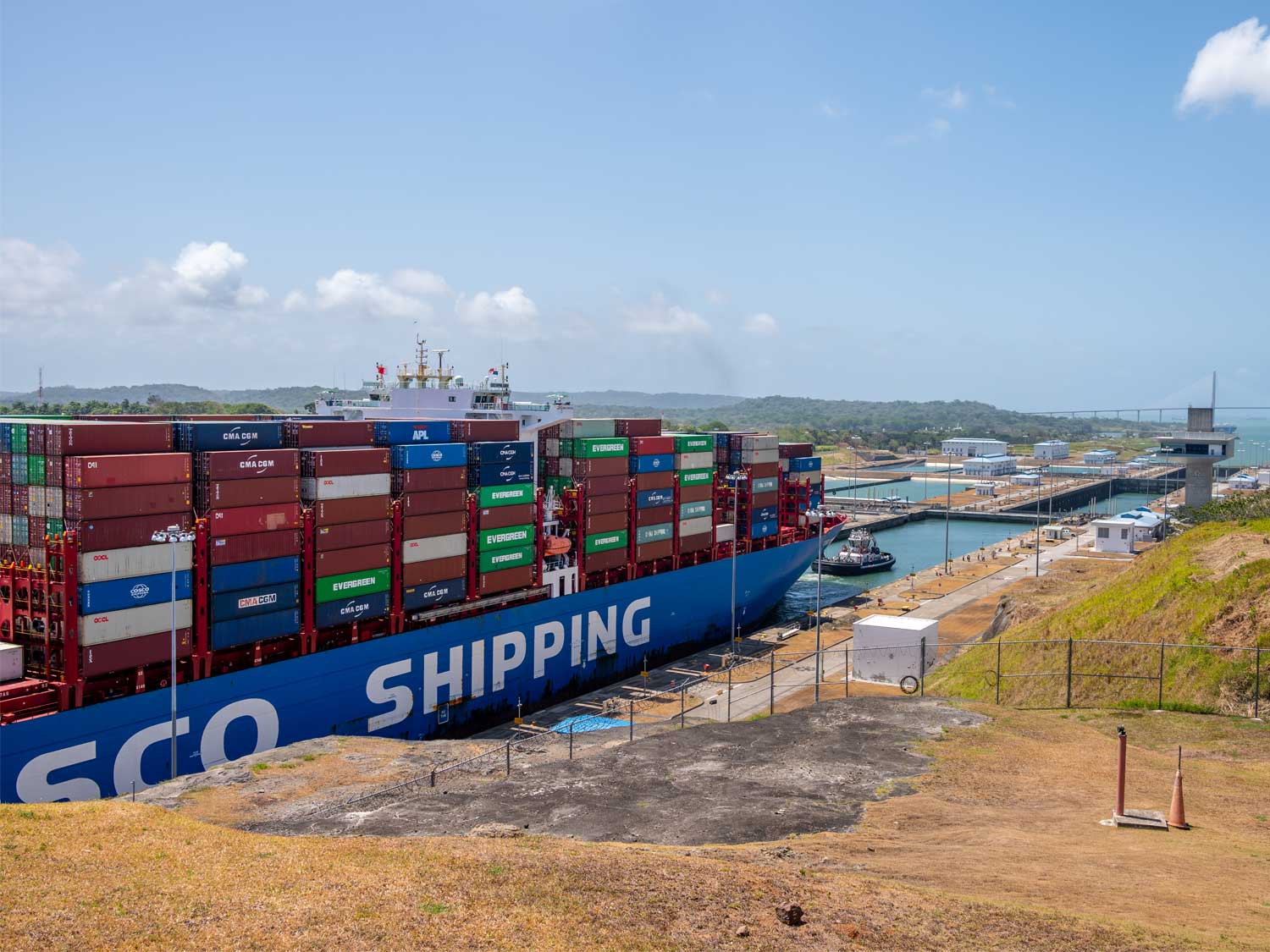
Typhoon HKG 1440x1080 1

Typhoon Bavi exposes fragility in global supply chains

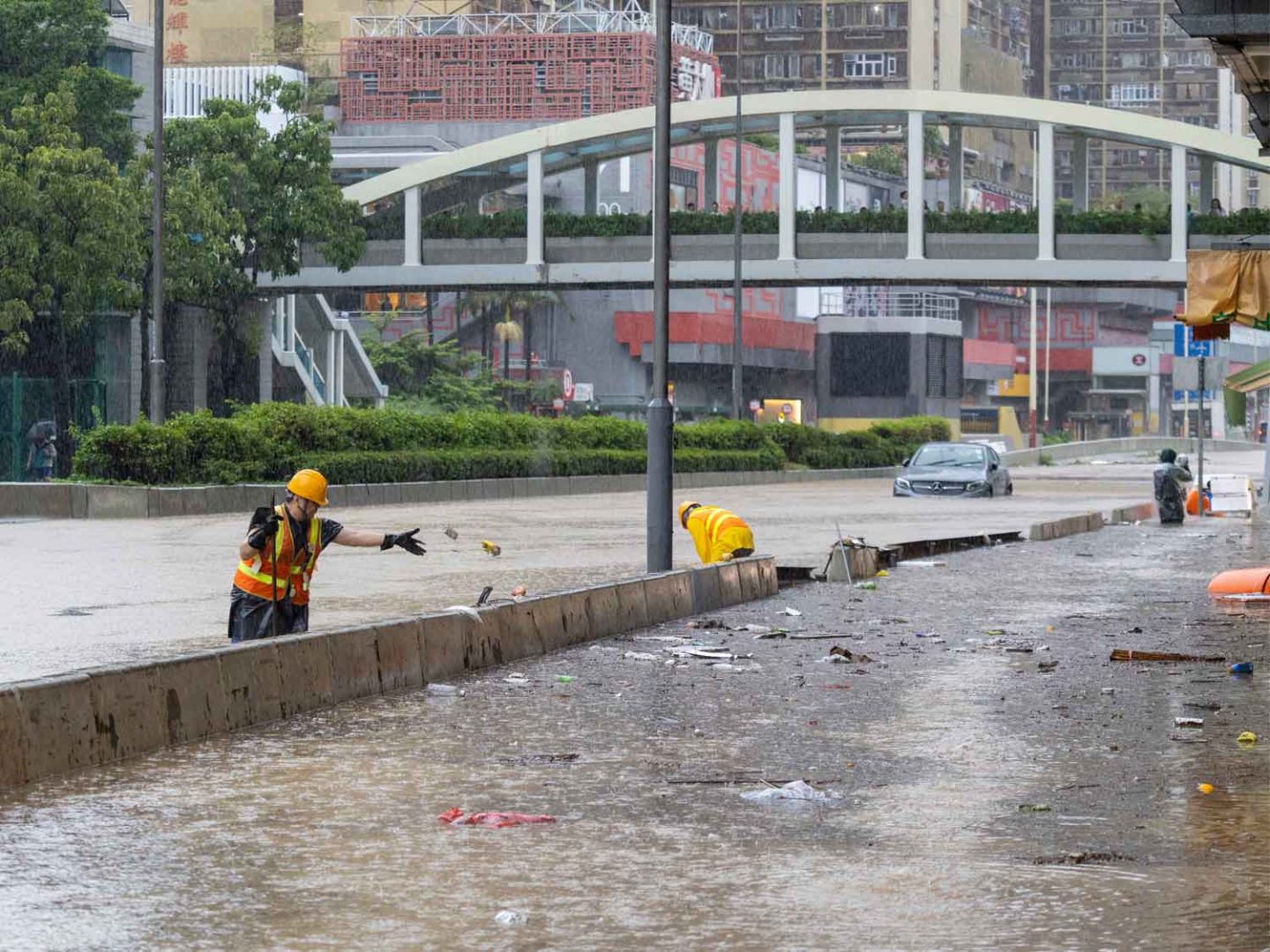
Typhoon Bavi, an exceptionally powerful and large tropical cyclone that tore through the Western Pacific last week may have passed, but its impact on global supply chains will linger for at least another week. 

After forcing the temporary closure of several of China's most important container gateways, the storm has left shipping lines, ports and shippers facing weeks of disruption as vessel schedules recover and freight networks work through mounting backlogs.

The Category 5-equivalent super typhoon swept across eastern China in mid-July, bringing winds exceeding 140 km/h and affecting an area almost 1,000 kilometres wide. As the storm approached, ports suspended operations, vessels were ordered to leave exposed berths and inland feeder terminals closed as a precaution. Although terminals have now reopened, the disruption created during just a few days of closures is continuing to ripple through global logistics networks.

For importers and exporters, the lesson is becoming increasingly clear. Modern supply chains are no longer disrupted only by geopolitical events or capacity shortages. Severe weather is now capable of creating global consequences that last long after the skies have cleared.

China's busiest ports face weeks of recovery

Shanghai and Ningbo, the world's first and third busiest container ports respectively, bore the brunt of the disruption. Together they handle tens of millions of containers every year and sit at the heart of manufacturing supply chains serving Europe, North America and the rest of Asia.

As Typhoon Bavi approached, container terminals suspended operations, vessels left deep-water berths and truck movements were halted. Along the Yangtze River, feeder ports linking inland manufacturing centres with Shanghai also closed, temporarily severing one of China's most important export corridors.

Operations resumed once the storm had passed, but reopening terminals is only the first stage of recovery. Every delayed vessel must still be berthed, unloaded and reloaded before shipping schedules can begin returning to normal.

Industry analysts estimate that almost two million TEU of container capacity was delayed by the disruption, with North Asia accounting for more than half of all global port congestion during the immediate aftermath. Current forecasts suggest ports may require at least two weeks to work through the accumulated backlog.

Vessel queues continue to grow

The operational impact became visible almost immediately after ports reopened.

The queue of vessels waiting outside Shanghai more than doubled within a week, rising from fewer than 60 ships before the closures to well over 120. Ningbo experienced a similar pattern, with waiting vessels increasing by almost 70%, while congestion also spread north to Qingdao following precautionary closures there.

Waiting times have lengthened accordingly. Some vessels are now experiencing delays of several days before securing a berth, while carriers operating certain services face considerably longer waits as terminals prioritise arrivals and reorganise schedules.

The disruption extends well beyond the ports themselves. Warehousing, customs processing, container yards and trucking operations all require time to absorb the surge in cargo released once terminals reopen. As containers accumulate, equipment availability tightens, truck demand rises and inland transport networks come under increasing pressure.

Delays are spreading across global shipping networks

The consequences are now extending far beyond eastern China. Shipping lines have omitted calls at Shanghai and Ningbo on several international services, instead diverting cargo through alternative hubs including Hong Kong, Singapore and Busan before arranging onward transhipment. Other vessels have been forced to skip scheduled ports entirely or adjust voyage rotations to recover lost time.

These changes inevitably create further disruption downstream. Delayed vessels arrive at subsequent ports outside their planned windows, leading to berth congestion elsewhere, missed feeder connections and revised cut-off times for exporters. Cargo originally booked on one sailing may be rolled to another, while importers face growing uncertainty over arrival dates.

The cumulative effect is that disruption continues travelling through global shipping networks long after the original weather event has ended.

Extreme weather is becoming a strategic supply chain risk

Typhoon Bavi is the latest reminder that climate-related disruption is becoming an increasingly significant operational challenge for global trade.

Maritime transport carries more than 80% of world merchandise trade, making the resilience of major ports critical to international supply chains. Yet severe weather events are becoming both more frequent and more disruptive, with tropical cyclones already responsible for months of cumulative port disruption each year.

For shippers, this changes the nature of supply chain risk. Weather-related disruption can no longer be viewed simply as a short-term operational inconvenience. Increasingly, it affects inventory planning, manufacturing schedules, customer service and working capital across international supply chains.

Building resilience now requires more than securing freight capacity. Businesses also need timely visibility into where products are, how disruption is developing and which shipments require immediate intervention.

Visibility is becoming a competitive advantage

When disruption occurs, the biggest challenge is often not the delay itself but understanding exactly how individual shipments are affected.

Metro's MVT platform provides end-to-end shipment visibility down to SKU level, allowing customers to monitor cargo movements, identify disruption early and make informed decisions before delays impact production, inventory or customer commitments. Combined with Metro's global freight expertise, MVT transforms complex supply chain data into actionable intelligence, helping businesses maintain control when international logistics become increasingly unpredictable. EMAIL Managing Director Andrew Smith today.

graph rising

Global trade powers towards a record 2025 with 2026 looking stronger

With the flow of goods providing the real momentum, global trade closed 2025 at record levels, with the outlook for an even more robust 2026. 

Despite geopolitical tension, shifting trade policy and lingering supply-chain risk, the movement of physical goods continues to expand, reinforcing the central role of logistics, freight forwarding and international distribution in the global economy.

Latest analysis from UNCTAD shows that global trade values reached unprecedented highs in 2025, driven primarily by growth in merchandise trade rather than services. Manufacturing output, consumer goods and industrial products have all contributed to the uplift, underlining how resilient goods-led supply chains have become after years of disruption.

Strong demand for manufactured products and critical raw materials has supported higher trade volumes across Asia, Europe and North America. Supply chains have adapted to volatility, with shippers diversifying sourcing, rebalancing inventories and building more flexible transport strategies.

A more constructive outlook for 2026

Forecasts point to continued expansion in global goods trade, supported by easing inflationary pressure, stabilising interest rates and renewed confidence among manufacturers and retailers.

For shippers, this means planning for growth rather than contraction. For logistics providers, it reinforces the need to invest ahead of demand: in people, systems, networks and international coverage.

As trade volumes rise, so does the need for globally connected logistics partners. End-to-end visibility, local market expertise and seamless coordination across borders are becoming prerequisites rather than differentiators. Businesses need partners that can support expansion into new markets without adding complexity or risk.

This is where international network strength becomes critical. Not just in headline trade lanes, but across secondary markets and emerging corridors where growth is accelerating fastest.

Supporting growth through global expansion

Metro’s own international expansion reflects these structural shifts in global trade. As goods flows increase and supply chains become more geographically diverse, Metro continues to invest in new offices both nationally and internationally, strengthening its ability to support customers wherever their trade takes them.

By expanding its global footprint, Metro is aligning its services with the realities of modern goods trade: faster decision-making, stronger local execution and closer proximity to customers and suppliers.

Whether you are entering new markets, reshaping sourcing strategies or scaling established flows, our teams combine local expertise with global reach to keep your goods moving reliably and competitively.

EMAIL Andrew Smith our Managing Director today to see how our expanding international footprint can support your global trade ambitions.

factory emissions

CSRD: Turning Mandatory Reporting into a Competitive Edge

The European Union’s Corporate Sustainability Reporting Directive (CSRD) makes sustainability disclosures mandatory for thousands of companies. Deloitte’s recent assessment of 200 early adopters reveals both compliance challenges and an emerging opportunity to use reporting as a strategic differentiator.

The CSRD sets new standards for transparency, requiring businesses to detail environmental and social impacts throughout their value chains. According to Deloitte’s analysis, supply chain and procurement teams are adapting rapidly, embedding sustainability tracking into every facet of operations.

Consumer-facing industries lead the charge, actively mapping suppliers and reporting indirect, Scope 3 emissions. Nearly all consumer businesses (over 90%) now disclose emissions linked to purchased goods and services, and 94% report on emissions from upstream transport and distribution. Circular economy commitments are also on the rise, with disclosures commonly covering product lifecycle improvements, such as recyclability and the use of secondary materials.

Companies in technology, media, and telecommunications are incorporating further disclosures on labour standards and responsible data use, with around 60% reporting on workers within their value chain. Industrial firms, meanwhile, are setting ambitious targets for climate transition and resource conservation, with 30 firms disclosing explicit net zero targets for Scope 3 emissions, 73% reporting on biodiversity and ecosystems, and 51 publishing climate transition plans.

In financial services, 90% of banks now disclose specific targets for financed emissions, though there’s still a reliance on estimates rather than direct supplier or counterparty data. 

Demand for Robust Data Systems

Deloitte’s study makes one challenge clear: the shift from voluntary reporting to regulated, finance-grade disclosure is demanding robust IT solutions and integrated platforms.

Accurate measurement and granular, actionable insights are now essential, not just for compliance, but to drive better decision-making and strategic change.

Metro’s MVT ECO platform supports the complexities of CSRD and wider ESG regulations, combining real-time data capture, carbon footprint analytics, and transparent reporting for every shipment across all modes and origins.

Metro delivers scalable IT capability so sustainability teams can easily track, drill down, and export the relevant emissions data needed for formal disclosure, climate planning, and offset strategies.

Scope 3 Emissions, Circularity, and Beyond

In line with CSRD’s requirements, Metro’s cloud-based system measures and reports CO₂ equivalent emissions for every consignment by mode and route, making Scope 3 tracking efficient and actionable.

The software is accredited to leading sustainability standards, providing trustworthy data for both internal and third-party audits and ensuring conformance with the Global Logistics Emissions Council (GLEC) and EN 16258 frameworks.

As circular economy practices, such as material recyclability and durability, become integral to supply chain design, MVT ECO gives businesses the data they need to embed these strategies and assess their environmental performance.

Verified Offset and Transparent Action

A unique feature of the MVT ECO platform is the ability for customers to participate in verified carbon offset programmes, supporting projects from renewable energy delivery to rainforest conservation. This not only helps eradicate residual emissions but also offers advantages aligned with UN Sustainable Development Goals, strengthening community, social, and biodiversity outcomes.

Continuous technological improvement means Metro customers can anticipate regulatory change, report with confidence, and make sustainability the cornerstone of performance and growth.

Empowering the Future of Sustainable Supply Chains

As CSRD raises the bar for supply chain sustainability, companies must move beyond compliance to proactive, data-driven improvement. With Metro’s MVT ECO platform, supply chain managers and sustainability teams gain the measurement, reporting, and offsetting capabilities needed for rigorous CSRD disclosure, and the competitive agility required in a rapidly changing market.

EMAIL Andrew Smith, Managing Director, today to learn more.

conservation 1440x1080 1

EU Deforestation-Free Product Law Faces Further Delays

The EU Regulation on Deforestation-Free Products (EUDR), which defines compliance obligations for businesses trading with the European market, is facing further implementation delays.

Designed to prevent the sale and export of goods linked to deforestation and forest degradation, EUDR applies to a wide range of commodities, including wood, paper, palm oil, rubber, coffee, cocoa, soy, and livestock.

On 23 September 2025, the European Commission announced it is considering another one-year delay to EUDR enforcement—postponing the application of the law from December 2025 for large companies to December 2026, and for smaller firms from June 2026 to June 2027.

This marks the second official delay as EU authorities struggle to roll out the IT infrastructure needed to handle due diligence statements and monitor supply chain transactions at scale.

Defining the EUDR

The EUDR is a core plank of the EU Green Deal, aiming to sever the link between Europe’s consumption and global forest loss. Companies placing relevant products on the EU market or exporting them from the bloc will be required to prove those goods are legal, traceable, and entirely deforestation-free.

To comply, businesses must maintain paperwork and geolocation data showing that commodities are sourced from land that has not been deforested after December 2020.

Due diligence statements will need to demonstrate negligible risk and trace every relevant batch from origin to final sale. Third-party certifications like FSC can help streamline compliance but do not serve as automatic proof; additional geolocation mapping and risk assessment remain mandatory for full EUDR compliance.

The latest delays are being linked with concerns over potential system “slowdowns” and disruptions that could stall trade and make compliance impossible for thousands of businesses.

The risk of further simplifications or legislative changes has also emerged, with some political groups pushing to amend the law’s benchmarking system and even introduce a “zero-risk” exemption for certain countries.

Implications for Metro Customers

  • The delay gives economic operators slightly more time to adapt their sourcing and compliance systems but increases uncertainty for businesses who have already invested in EUDR preparation.
  • Large and small companies alike must now track shifting requirements, especially as the regulation could change further in parliamentary negotiations.
  • Businesses sourcing affected commodities (timber, coffee, soy, cocoa, etc.) should continue mapping supply chains, aligning procurement strategies with deforestation-free criteria, and strengthening traceability processes, particularly around geolocation data and documentation.
  • If companies use FSC certification, extra steps are now needed: ensuring plot-level traceability and robust risk evaluation, not just certification documents.

What Comes Next?

The European Commission’s latest proposal is not yet final. Metro customers trading with or into the EU should stay up to date as legislative details and IT infrastructure roll out, and be ready to pivot quickly if further changes to EUDR emerge.

As enforcement eventually resumes, the EUDR is set to become a defining feature of UK–EU supply chain management and trade compliance, shaping how Metro supports customers in navigating new environmental obligations and regulatory risks.

EMAIL Andrew Smith, Managing Director, today to explore how we can support EUDR compliance and reporting.