Jebel Ali

Middle East disruption continues

The ongoing conflict across the Middle East continues to exert major pressure on global supply chains, with the effective closure of the Strait of Hormuz creating sustained disruption across ocean freight, air cargo, energy markets and regional transport networks.

Conditions across the region remain highly constrained as carriers, ports, airlines and logistics providers continue adapting to a freight environment shaped by rerouting, congestion, fuel volatility and severe operational bottlenecks.

The consequences are now being felt far beyond the Gulf itself, with delays, higher transport costs and capacity disruption rippling across Asia-Europe and intra-Asia supply chains.

Strait of Hormuz disruption keeps energy and shipping markets under pressure

The Strait of Hormuz remains the single most critical pressure point within the global logistics system.

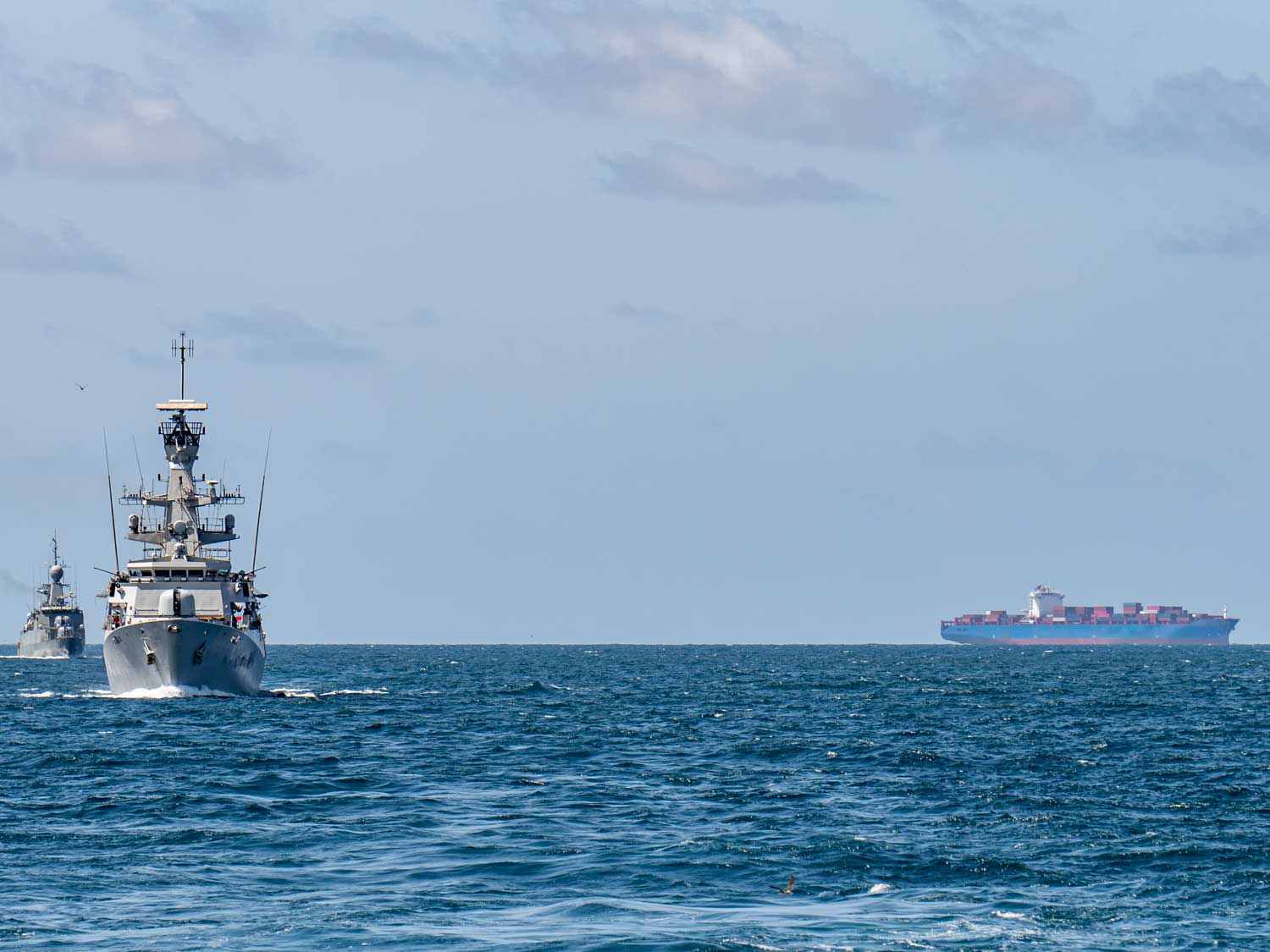
With the waterway effectively closed to normal commercial operations and heavily impacted by military activity, shipping lines, tanker operators and insurers continue facing severe operational and financial challenges.

Insurance premiums remain exceptionally elevated, while tanker movements through the region are heavily restricted, delayed or rerouted entirely. The result is ongoing disruption to global energy flows and sustained volatility across bunker fuel, jet fuel and wider transport costs.

Ocean carriers continue absorbing longer routings, unpredictable schedules and significant operational inefficiencies, while air cargo operators are also facing increased costs and reduced network flexibility linked to airspace restrictions and fuel price volatility.

Regional port congestion spreads across alternative gateways

As carriers avoid the highest-risk areas, cargo flows are being redirected through alternative regional hubs, creating secondary congestion across ports outside the direct conflict zone.

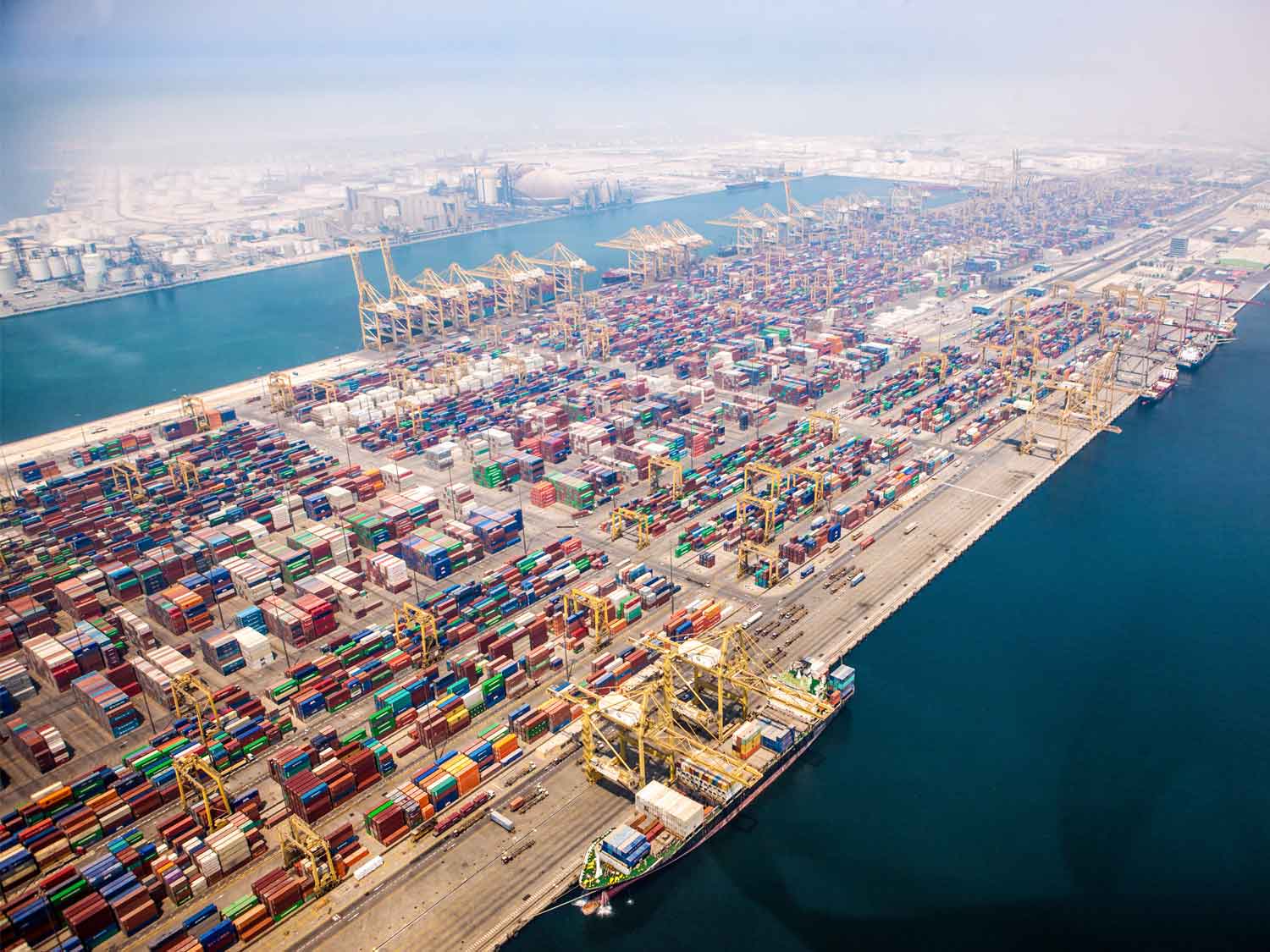
Jebel Ali has seen vessel calls fall sharply as operators reduce exposure to the Gulf, while alternative hubs including Salalah, Colombo, Jeddah and Khor Fakkan are now experiencing growing transhipment pressure and vessel bunching.

At India’s Nhava Sheva (JNPA) port, unexpected surges in Middle East transhipment cargo have created substantial congestion, with vessel waiting times extending to several days and terminal operations struggling under rising yard density and inland transport pressure.

Truck queues, delayed container evacuation, rollover cargo and missed vessel connections are all becoming more common as ports attempt to absorb volumes displaced from traditional Gulf routings.

Red Sea land-bridge options come under strain

The traditional Red Sea land-bridge model into the Gulf is also becoming increasingly difficult to operate.

Congestion linked to diverted cargo volumes, seasonal Hajj-related demand and overloaded customs and port administration systems has significantly reduced operational reliability through Jeddah and other Red Sea gateways.

Carriers including Maersk and Hapag-Lloyd have now suspended certain cross-border carrier haulage solutions via Jeddah for Upper Gulf cargoes, instead shifting traffic towards Arabian Sea gateways including Salalah, Khor Fakkan and Sharjah.

Containers previously routed through Saudi Arabian land-bridge solutions are increasingly being transhipped through alternative ports before moving inland or reconnecting to feeder services into Gulf destinations.

While these workarounds help maintain cargo flow, they also introduce additional handling, longer transit times and greater operational complexity.

What this means for supply chains

The Middle East situation is becoming a structural supply chain challenge affecting routing decisions, carrier networks, fuel pricing, inventory planning and transport reliability across multiple regions.

Importers and exporters are now operating in an environment where flexibility, contingency planning and proactive routing management have become essential.

Alternative gateway strategies, inland transport options and earlier booking windows are all becoming increasingly important as traditional network assumptions continue to break down.

Metro helps customers overcome volatile market conditions through flexible routing strategies, multimodal transport solutions and proactive supply chain management across Asia, Europe and the Middle East.

To discuss your supply chain planning, routing options or contingency strategies, EMAIL Managing Director Andrew Smith.

NYC 1440x1080 1

U.S. Supply Chains Grapple Cost Pressures and Uncertainty

Heading into the second half of 2026 shippers face, a politically charged USMCA review, an early tightening on the trans‑Pacific, and war‑driven fuel costs pushing up inland transport prices across North America. 

Together, they are rewriting the assumptions many companies use for peak‑season planning, pricing and inland network design.

USMCA stability at stake for North American production

The United States–Mexico–Canada Agreement (USMCA) reaches its first scheduled “joint review” on 1 July 2026, six years after it took effect. The three governments must decide whether to confirm the deal through 2042, seek adjustments, or signal opposition that could trigger renegotiation and, in the worst case, open the door to an eventual sunset in 2036 if no resolution is found.

Manufacturing across North America, and especially in the automotive sector, has a lot riding on the outcome. Automotive trade accounts for roughly 20–25% of total USMCA trade flows, making it the single largest sectorial user of the agreement. Since 2020, higher regional content requirements and labour‑value rules have already reshaped sourcing patterns for OEMs and tier suppliers, driving more production and component sourcing into Mexico, the U.S. and Canada.

Industry groups on all sides of the border are pushing for a stable, growth‑oriented review that preserves tariff‑free access and gives long‑term visibility to investors. At the same time, policymakers are signalling that the review will not be a formality. Areas likely to come under scrutiny include automotive rules of origin and tracing, enforcement of labour and environmental commitments, energy and state‑owned enterprise disputes, digital trade and data rules, and the role of Chinese investment and components in North American supply chains.

For U.S. manufacturers and importers, this means the next 12–18 months are a critical window to:

  • Verify that products truly qualify under current USMCA rules and identify any borderline cases.
  • Model how tighter regional content or new tracing requirements could change compliance status and cost.
  • Stress‑test footprint and sourcing decisions, particularly where there is high China content flowing via Mexico or Canada into the U.S.

Trans‑Pacific signs of an early peak

Eastbound trans‑Pacific trades are already showing signs of an early peak‑season, with container spot rates from Asia to the U.S. west and east coasts climbing sharply on the back of May general rate increases, as carriers tighten capacity and push through surcharges.

Recent data shows:

  • Spot rates from major South China ports to the U.S. west coast rising almost 100% on levels from only weeks earlier.
  • Asia–U.S. east coast spot rates climbing by 50–60% over a similar period, with some indices even higher.
  • Carriers rolling out peak season surcharges and emergency fuel surcharges ahead of the usual schedule, with higher amounts signalled for late June and 1 July.

Several dynamics are driving this early tightening:

  • Importers are front‑loading orders to get ahead of further cost increases later in the year, including potential tariff changes and bunker‑linked adjustments.
  • Vessel diversions around southern Africa to avoid Red Sea and Gulf of Aden risks, coupled with congestion at some Asian load ports, are absorbing capacity and disrupting schedules.
  • Capacity additions have lagged demand on key lanes, and carriers are using blank sailings and service adjustments to keep utilisation high.

We expect some rate relief later in the summer if additional capacity returns and front‑loaded volumes drop off, but the near‑term picture is one of elevated spot rates and tight space as peak‑season volumes converge with constrained supply.

Trucking and inland costs rise on fuel‑driven inflation

War‑driven fuel prices are pushing trucking and intermodal costs sharply higher, even before demand has fully recovered.

Since the escalation of conflict involving Iran, U.S. retail diesel prices have moved from just under USD 4 per gallon to around USD 5.60 per gallon on average, with some regions significantly higher. This jump has fed directly into trucking Producer Price Index (PPI) measures:

  • Truckload and LTL PPIs have risen markedly in recent months, reversing a multi‑year period of freight deflation;
  • Spot truckload rates on long‑haul lanes have climbed to their highest levels since 2022, with average per‑mile prices up more than 25% year‑on‑year in some benchmarks;
  • Higher fuel and capacity discipline are also starting to pull contract rates up, with increases spreading from truckload into LTL and intermodal.

It is worth noting that these increases are being driven largely by supply‑side constraints, reduced capacity, higher fuel costs and more disciplined carrier pricing, rather than by booming freight demand. For shippers, that means transport inflation can persist even if volumes remain only modestly above 2025 levels.

Metro’s CEO Grant Liddell and Managing Director Andrew Smith will be visiting U.S. offices and customers next week, to review operations and discuss these challenges on the ground, to help shape next‑step plans.

If you’d like to sense‑check your outlook for the second half of 2026 – from USMCA exposure and sourcing footprints to peak‑season capacity and inland cost pressures you can EMAIL Andrew directly or connect with the Metro Global USA team.

EU UK negotiations 2

UK–EU reset could ease border friction for importers and exporters

On 13 May 2026, the King's Speech set out the government's plans for the next Parliamentary session, including efforts to reset post-Brexit relations, forge closer economic ties with the EU and reduce unnecessary barriers to trade.

The reset is not a return to the single market or customs union. Instead, it is being presented as a targeted attempt to stabilise the trading relationship through closer alignment in specific areas where the government believes reduced friction could support growth, cut costs and improve supply chain efficiency. 

SPS alignment could simplify GB–EU border processes

The government intends to pass legislation by the end of 2026 to enable an SPS agreement with the EU to take effect by mid-2027. The agreement would cover animal and plant health, food safety and related agri-food rules, with the UK aligning to relevant EU legislation in order to ease border procedures.

SPS controls have been among the most disruptive post-Brexit trade barriers, creating additional documentation, inspection, certification and timing challenges at the GB–EU border.

A veterinary-style agreement could reduce the need for some routine checks and help make border movements more predictable. For exporters, this may improve access into EU markets. For importers, it could reduce delays, compliance costs and uncertainty when bringing goods into Great Britain.

Emissions trading alignment could reshape supply chain costs

Alongside the SPS agreement, the government is also negotiating closer alignment between the UK and EU emissions trading schemes (ETS), designed to reduce regulatory divergence and support longer-term industrial and energy cooperation. 

For businesses involved in manufacturing, energy-intensive production, transport and international trade, the implications could extend well beyond environmental policy.

A linked or more closely aligned ETS framework could help reduce friction for exporters trading into Europe, particularly as the EU continues expanding carbon-related trade measures and compliance requirements. It may also provide greater long-term certainty for businesses operating across both UK and EU markets.

Dynamic alignment brings certainty but also new compliance considerations

The proposed reset relies on dynamic alignment in selected areas, meaning UK rules would keep pace with relevant EU law as it evolves. This is central to the government’s ambition to reduce border friction, because smoother trade processes depend on both sides recognising equivalent standards.

For logistics and supply chain teams, this could provide greater medium-term certainty over the regulatory framework affecting GB–EU trade. However, it also means businesses will need to monitor changes in EU rules that may flow into UK requirements over time.

The wider political debate remains active. Critics argue that dynamic alignment could reduce UK regulatory flexibility, while others want the government to go further and pursue a customs union. 

What this means for UK traders

The direction of travel may point toward a less burdensome GB–EU trading environment, but the more realistic reading is:

  • Customs declarations are not going away simply because an SPS deal is agreed.
  • Rules of origin issues are not being removed by the reset as described in this briefing.
  • What may improve is the regulatory layer sitting on top of customs processes for certain categories of goods, especially agri-food.

That distinction matters, because a truck can still need customs processing even if SPS checks become lighter or less frequent.

So the likely benefit is not “no border”, but a border with fewer SPS-related interruptions, fewer compliance mismatches and a lower chance that a shipment is delayed because UK and EU technical rules have drifted apart.

Importers and exporters should now review where SPS controls, border checks, certification or documentary requirements are creating cost, delay or uncertainty in their supply chains. They should also assess whether current customs and compliance processes are flexible enough to adapt as the UK–EU framework develops.

As the UK–EU reset develops, Metro is helping customers assess how changing customs procedures, SPS requirements and evolving regulatory alignment could affect their supply chains, transit times and compliance obligations. 

Through integrated freight forwarding, customs support and cross-border logistics expertise, Metro helps businesses prepare for changing GB–EU trade conditions and maintain efficient cargo flow across European supply chains.

EMAIL Managing Director, Andrew Smith, today to learn more.

Hormuz satellite

Middle East disruption continues as Metro scales contingency solutions

The extension of the US–Iran ceasefire has done little to stabilise operating conditions in the region, with last week’s seizure of two MSC-managed container vessels by Iran’s Islamic Revolutionary Guard Corps in the Strait of Hormuz. 

The incident highlight the ongoing risk to commercial shipping and reinforces the reality that access through Hormuz remains severely constrained, with container flows through the Strait largely suspended.

Land-bridge solutions under pressure as demand surges

As traditional shipping routes have been disrupted, supply chains have shifted rapidly towards alternative solutions, particularly land-bridge routes across the Gulf.

However, these corridors are now under significant strain. Demand for trucking capacity has surged well beyond available supply, with rates on key lanes such as Jeddah to the UAE rising four to five times above pre-conflict levels.

Jeddah has become the primary gateway following security concerns at Khor Fakkan and Salalah, concentrating volumes into a single entry point and creating further bottlenecks. In some cases, demand for road capacity has reached multiples of available supply, driving sharp price escalation and limiting flexibility for shippers.

Operational disruption now outweighs capacity availability

One of the defining characteristics of the current market is that disruption is being driven less by a lack of physical assets and more by how networks are operating.

Ocean carriers are navigating around both the Red Sea and Hormuz, adding 15–20% to voyage distances, increasing fuel consumption and reducing effective capacity. At the same time, global port congestion has exceeded 3 million TEU, further impacting reliability. 

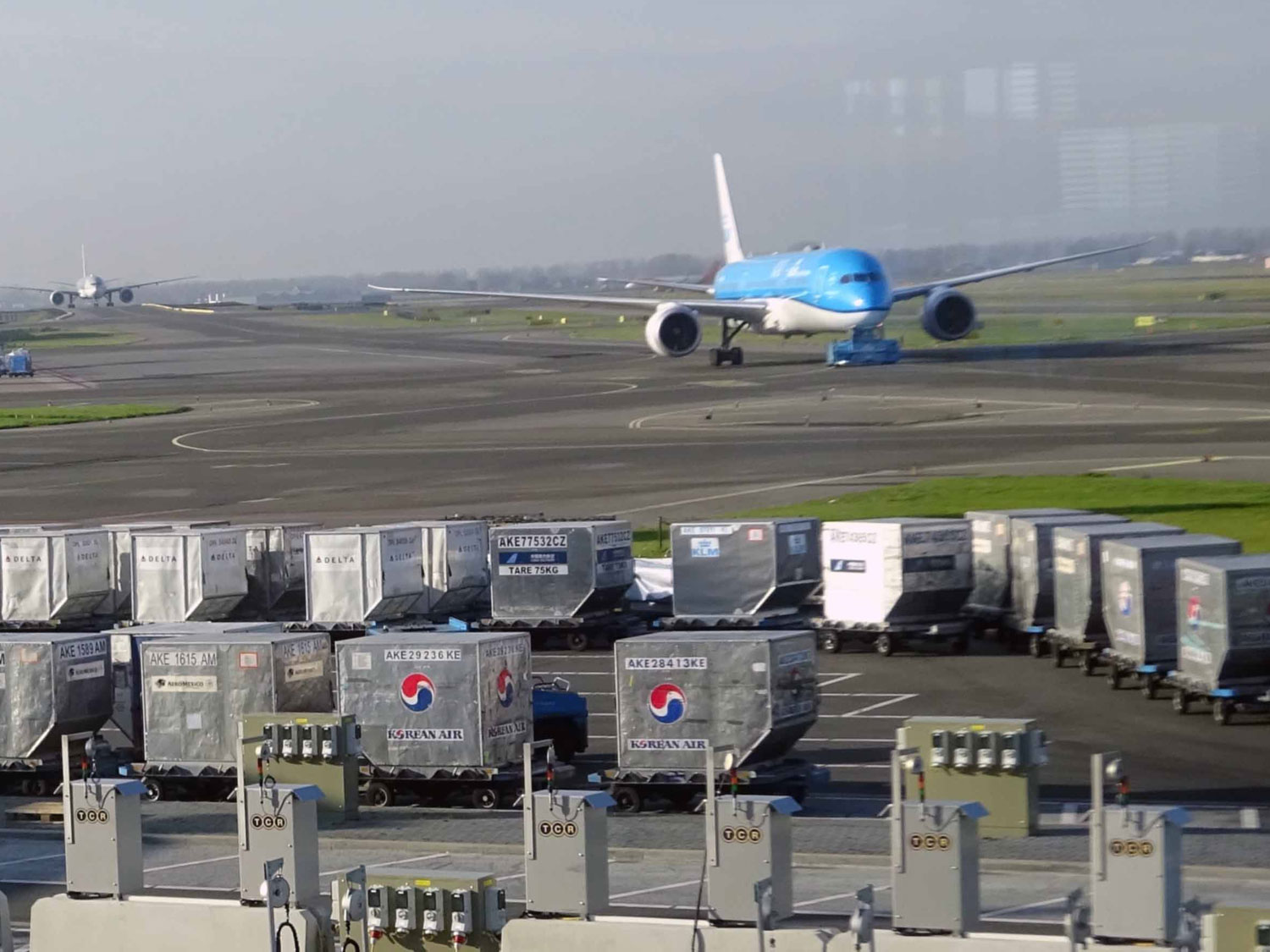
Airfreight networks are also adjusting to restricted airspace and reduced Gulf capacity, while road freight is absorbing increased volumes through regional corridors, adding complexity and extending transit times.

The result is a market where capacity exists, but is harder to access, less predictable and more expensive to deploy.

Pricing volatility accelerates as fuel and disruption outpace contracts

Freight pricing is struggling to keep pace with the speed of change.

Across ocean freight, emergency bunker surcharges are now widely applied, while traditional fuel adjustment mechanisms lag behind real-time cost increases. In airfreight, fuel surcharges are being revised more frequently as jet fuel prices continue to rise. In road freight, fuels costs typically represent over 30% of operator costs, placing short-term pressure on carriers and increasing the likelihood of further cost pass-through. 

The situation is further complicated by simultaneous pressure across multiple global chokepoints.

Disruption linked to the Strait of Hormuz is occurring alongside continued Red Sea instability and wider geopolitical friction across key corridors. This has created a structurally higher-risk operating environment, where any escalation can quickly remove capacity, extend transit times and increase costs across all modes. 

Scaling solutions to maintain cargo flow

In response, Metro has significantly increased its operational focus on the region, with time dedicated to resolving Middle East-linked problems rising by more than 1000%.

The focus is on execution: ensuring cargo continues to move and that shipments already in transit are delivered using the most effective available solution.

Metro is actively supporting customers through:

  • Dynamic re-routing of in-transit cargo, avoiding disruption hotspots
  • Alternative gateway strategies, identifying viable entry points outside high-risk zones
  • Airfreight deployment, where speed and reliability are critical
  • Land-bridge and multimodal solutions, maintaining flow where ocean routes are constrained

This flexible, hands-on approach is essential in a market where conditions are changing rapidly and pre-planned routes are no longer sufficient.

If you have cargo moving to, from or through the Middle East, or shipments currently held en route, Metro can help you identify and implement the most effective resolutions.

EMAIL Managing Director, Andrew Smith, today to secure capacity, protect transit times and keep your supply chain moving in a rapidly changing environment.