Jebel Ali

Middle East disruption continues

The ongoing conflict across the Middle East continues to exert major pressure on global supply chains, with the effective closure of the Strait of Hormuz creating sustained disruption across ocean freight, air cargo, energy markets and regional transport networks.

Conditions across the region remain highly constrained as carriers, ports, airlines and logistics providers continue adapting to a freight environment shaped by rerouting, congestion, fuel volatility and severe operational bottlenecks.

The consequences are now being felt far beyond the Gulf itself, with delays, higher transport costs and capacity disruption rippling across Asia-Europe and intra-Asia supply chains.

Strait of Hormuz disruption keeps energy and shipping markets under pressure

The Strait of Hormuz remains the single most critical pressure point within the global logistics system.

With the waterway effectively closed to normal commercial operations and heavily impacted by military activity, shipping lines, tanker operators and insurers continue facing severe operational and financial challenges.

Insurance premiums remain exceptionally elevated, while tanker movements through the region are heavily restricted, delayed or rerouted entirely. The result is ongoing disruption to global energy flows and sustained volatility across bunker fuel, jet fuel and wider transport costs.

Ocean carriers continue absorbing longer routings, unpredictable schedules and significant operational inefficiencies, while air cargo operators are also facing increased costs and reduced network flexibility linked to airspace restrictions and fuel price volatility.

Regional port congestion spreads across alternative gateways

As carriers avoid the highest-risk areas, cargo flows are being redirected through alternative regional hubs, creating secondary congestion across ports outside the direct conflict zone.

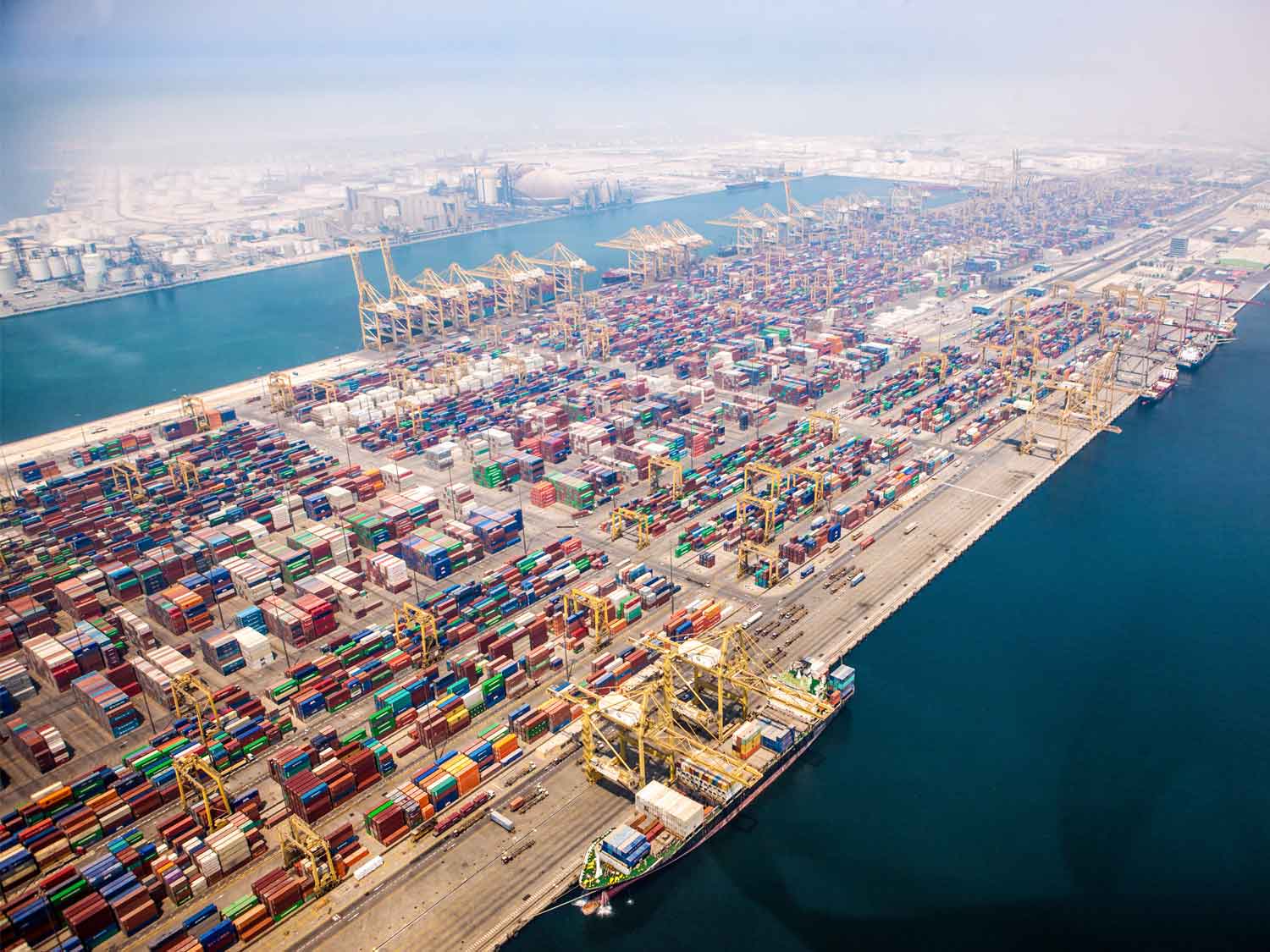
Jebel Ali has seen vessel calls fall sharply as operators reduce exposure to the Gulf, while alternative hubs including Salalah, Colombo, Jeddah and Khor Fakkan are now experiencing growing transhipment pressure and vessel bunching.

At India’s Nhava Sheva (JNPA) port, unexpected surges in Middle East transhipment cargo have created substantial congestion, with vessel waiting times extending to several days and terminal operations struggling under rising yard density and inland transport pressure.

Truck queues, delayed container evacuation, rollover cargo and missed vessel connections are all becoming more common as ports attempt to absorb volumes displaced from traditional Gulf routings.

Red Sea land-bridge options come under strain

The traditional Red Sea land-bridge model into the Gulf is also becoming increasingly difficult to operate.

Congestion linked to diverted cargo volumes, seasonal Hajj-related demand and overloaded customs and port administration systems has significantly reduced operational reliability through Jeddah and other Red Sea gateways.

Carriers including Maersk and Hapag-Lloyd have now suspended certain cross-border carrier haulage solutions via Jeddah for Upper Gulf cargoes, instead shifting traffic towards Arabian Sea gateways including Salalah, Khor Fakkan and Sharjah.

Containers previously routed through Saudi Arabian land-bridge solutions are increasingly being transhipped through alternative ports before moving inland or reconnecting to feeder services into Gulf destinations.

While these workarounds help maintain cargo flow, they also introduce additional handling, longer transit times and greater operational complexity.

What this means for supply chains

The Middle East situation is becoming a structural supply chain challenge affecting routing decisions, carrier networks, fuel pricing, inventory planning and transport reliability across multiple regions.

Importers and exporters are now operating in an environment where flexibility, contingency planning and proactive routing management have become essential.

Alternative gateway strategies, inland transport options and earlier booking windows are all becoming increasingly important as traditional network assumptions continue to break down.

Metro helps customers overcome volatile market conditions through flexible routing strategies, multimodal transport solutions and proactive supply chain management across Asia, Europe and the Middle East.

To discuss your supply chain planning, routing options or contingency strategies, EMAIL Managing Director Andrew Smith.

NYC 1440x1080 1

U.S. Supply Chains Grapple Cost Pressures and Uncertainty

Heading into the second half of 2026 shippers face, a politically charged USMCA review, an early tightening on the trans‑Pacific, and war‑driven fuel costs pushing up inland transport prices across North America. 

Together, they are rewriting the assumptions many companies use for peak‑season planning, pricing and inland network design.

USMCA stability at stake for North American production

The United States–Mexico–Canada Agreement (USMCA) reaches its first scheduled “joint review” on 1 July 2026, six years after it took effect. The three governments must decide whether to confirm the deal through 2042, seek adjustments, or signal opposition that could trigger renegotiation and, in the worst case, open the door to an eventual sunset in 2036 if no resolution is found.

Manufacturing across North America, and especially in the automotive sector, has a lot riding on the outcome. Automotive trade accounts for roughly 20–25% of total USMCA trade flows, making it the single largest sectorial user of the agreement. Since 2020, higher regional content requirements and labour‑value rules have already reshaped sourcing patterns for OEMs and tier suppliers, driving more production and component sourcing into Mexico, the U.S. and Canada.

Industry groups on all sides of the border are pushing for a stable, growth‑oriented review that preserves tariff‑free access and gives long‑term visibility to investors. At the same time, policymakers are signalling that the review will not be a formality. Areas likely to come under scrutiny include automotive rules of origin and tracing, enforcement of labour and environmental commitments, energy and state‑owned enterprise disputes, digital trade and data rules, and the role of Chinese investment and components in North American supply chains.

For U.S. manufacturers and importers, this means the next 12–18 months are a critical window to:

  • Verify that products truly qualify under current USMCA rules and identify any borderline cases.
  • Model how tighter regional content or new tracing requirements could change compliance status and cost.
  • Stress‑test footprint and sourcing decisions, particularly where there is high China content flowing via Mexico or Canada into the U.S.

Trans‑Pacific signs of an early peak

Eastbound trans‑Pacific trades are already showing signs of an early peak‑season, with container spot rates from Asia to the U.S. west and east coasts climbing sharply on the back of May general rate increases, as carriers tighten capacity and push through surcharges.

Recent data shows:

  • Spot rates from major South China ports to the U.S. west coast rising almost 100% on levels from only weeks earlier.
  • Asia–U.S. east coast spot rates climbing by 50–60% over a similar period, with some indices even higher.
  • Carriers rolling out peak season surcharges and emergency fuel surcharges ahead of the usual schedule, with higher amounts signalled for late June and 1 July.

Several dynamics are driving this early tightening:

  • Importers are front‑loading orders to get ahead of further cost increases later in the year, including potential tariff changes and bunker‑linked adjustments.
  • Vessel diversions around southern Africa to avoid Red Sea and Gulf of Aden risks, coupled with congestion at some Asian load ports, are absorbing capacity and disrupting schedules.
  • Capacity additions have lagged demand on key lanes, and carriers are using blank sailings and service adjustments to keep utilisation high.

We expect some rate relief later in the summer if additional capacity returns and front‑loaded volumes drop off, but the near‑term picture is one of elevated spot rates and tight space as peak‑season volumes converge with constrained supply.

Trucking and inland costs rise on fuel‑driven inflation

War‑driven fuel prices are pushing trucking and intermodal costs sharply higher, even before demand has fully recovered.

Since the escalation of conflict involving Iran, U.S. retail diesel prices have moved from just under USD 4 per gallon to around USD 5.60 per gallon on average, with some regions significantly higher. This jump has fed directly into trucking Producer Price Index (PPI) measures:

  • Truckload and LTL PPIs have risen markedly in recent months, reversing a multi‑year period of freight deflation;
  • Spot truckload rates on long‑haul lanes have climbed to their highest levels since 2022, with average per‑mile prices up more than 25% year‑on‑year in some benchmarks;
  • Higher fuel and capacity discipline are also starting to pull contract rates up, with increases spreading from truckload into LTL and intermodal.

It is worth noting that these increases are being driven largely by supply‑side constraints, reduced capacity, higher fuel costs and more disciplined carrier pricing, rather than by booming freight demand. For shippers, that means transport inflation can persist even if volumes remain only modestly above 2025 levels.

Metro’s CEO Grant Liddell and Managing Director Andrew Smith will be visiting U.S. offices and customers next week, to review operations and discuss these challenges on the ground, to help shape next‑step plans.

If you’d like to sense‑check your outlook for the second half of 2026 – from USMCA exposure and sourcing footprints to peak‑season capacity and inland cost pressures you can EMAIL Andrew directly or connect with the Metro Global USA team.

rail freight

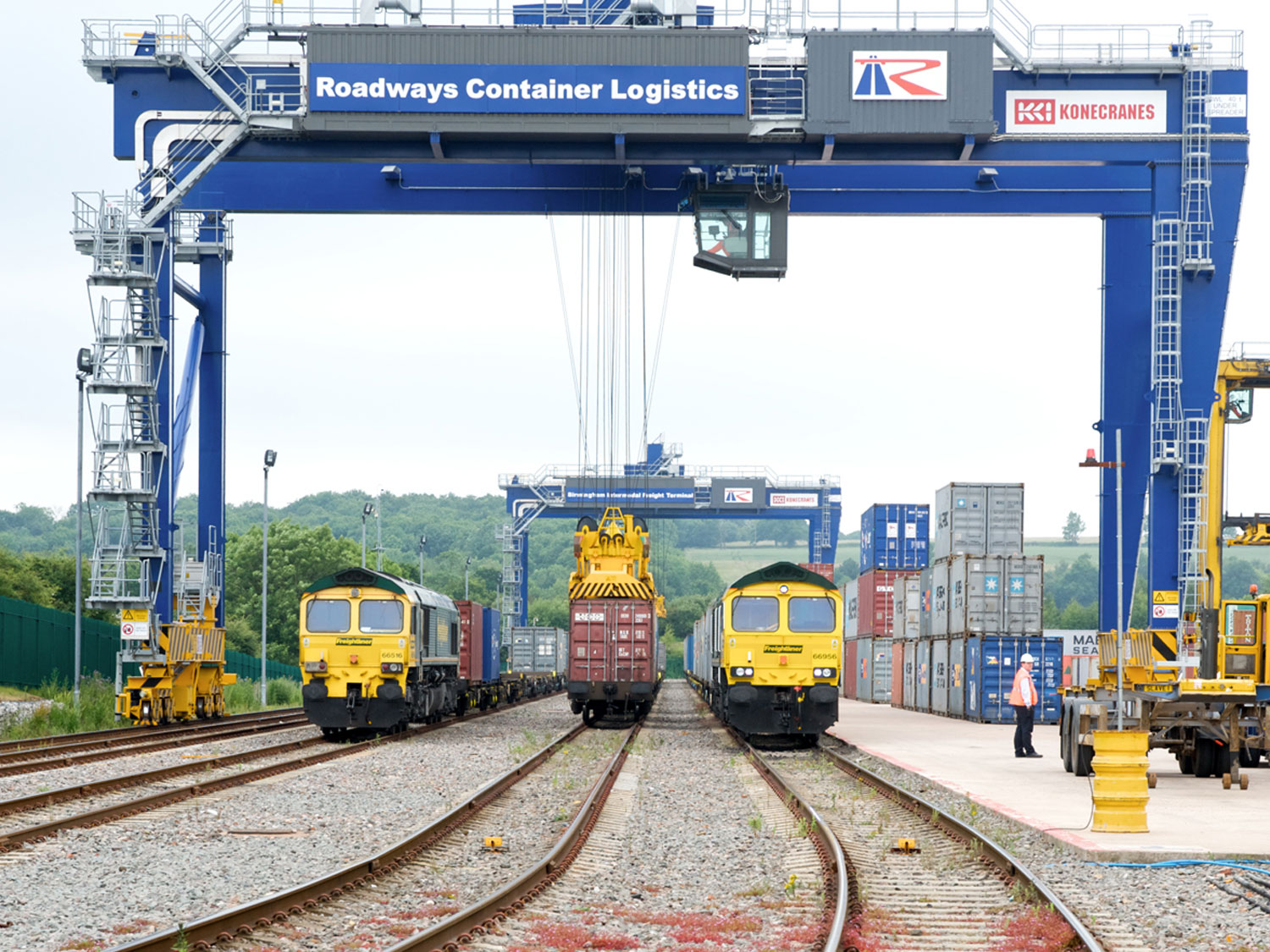
Cross-Channel rail freight set to strengthen UK–Europe intermodal links

Plans to reintroduce regular cross-Channel rail freight services are moving forward, signalling a potential shift in how goods move between the UK and mainland Europe. 

As investment in infrastructure gathers pace, rail is re-emerging as a viable complement to established road and sea routes.

A government-backed agreement to redevelop the Barking Eurohub in east London is expected to play a central role in restoring regular rail freight services through the Channel Tunnel.

The site is being positioned as an international logistics hub, supporting intermodal trains that can move containers seamlessly between rail, road and sea. This would enable more direct connections between the UK and key European markets including France, Germany, Italy and Spain.

Currently, only a limited volume of rail freight passes through the Channel Tunnel, with most UK–EU cargo continuing to rely on short sea crossings and onward road transport. 

The planned expansion of intermodal rail services is intended to rebalance that model and provide greater flexibility for cross-border supply chains.

Rail offers an alternative to congested road and port networks

The renewed focus on rail comes at a time when road and port infrastructure across the UK and Europe is under increasing pressure.

Shifting a greater share of freight onto rail has the potential to reduce congestion on key corridors in the south-east of England, while also improving transit predictability for certain flows. For shippers, this introduces an additional routing option that sits between road and sea in terms of both speed and cost.

Rail freight volumes have already been growing steadily, with increases of around 5% year on year and further gains in intermodal traffic. Forecasts suggest continued growth over the coming decade, supported by both infrastructure investment and policy commitments to expand rail’s role in the supply chain.

Unlocking new options for UK–Europe trade

The return of regular cross-Channel rail services could create new opportunities for both imports and exports.

For UK businesses, this includes more direct access to European markets for a wide range of goods, as well as improved inbound flows of time-sensitive products such as food and consumer goods. Intermodal rail also offers a more structured and predictable alternative for moving containerised cargo across borders.

However, realising this potential will depend on how effectively rail services are integrated into wider logistics networks. Efficient onward connections, competitive pricing and reliable scheduling will all be critical to making rail a commercially viable option at scale.

Rail is unlikely to replace road or sea, but it can play a valuable role as part of a broader intermodal strategy, particularly for flows that benefit from a balance of speed, cost and sustainability.

This is where coordination becomes critical. Moving containers efficiently between ports, rail terminals and final delivery points requires a joined-up approach across multiple modes and geographies.

Metro has extensive experience in pan-European intermodal transport, combining road, sea and rail solutions, alongside regular UK rail services connecting primary ports with inland destinations.

If you are looking to explore how cross-Channel rail could support your European flows, or how to integrate rail into your wider transport strategy, EMAIL Andrew Smith, Managing Director at Metro, for a practical discussion tailored to your network.

US winter storm

US winter disruption ripples through truck, rail and intermodal networks

Severe winter weather across the United States has triggered the sharpest short-term trucking spot rate spike in more than three years, with disruption now filtering upstream into inland rail and intermodal hubs.

Snow and ice blanketing large parts of the eastern US drove a 40% week-on-week increase in spot market load posts. Dry-van spot rates climbed 11 cents in seven days, the steepest weekly rise since early 2021, while temperature-controlled (reefer) capacity jumped 15 cents week over week as shippers scrambled for freeze protection.

Unlike previous disruption events, the system now has less “buffer” capacity. Market reaction to the latest storm has been more severe than that seen after Hurricane Helene in September 2024, when spot loads rose 17% and rates increased just 4 cents week over week.

With tighter latent capacity, even short-lived weather events are producing outsized pricing swings.

Structural factors could extend pressure

January manufacturing data from the Institute for Supply Management moved back above the 50 baseline into expansion territory for the first time in more than a year, fuelling speculation that the freight recession may be bottoming out.

At the same time, federal enforcement activity around non-domiciled commercial driver’s licences (CDLs) and English-language proficiency requirements is reportedly pushing shippers towards asset-based carriers with company drivers. That shift could reduce available independent capacity, adding structural support to contract and spot rate increases, particularly as the spring produce season approaches.

If reefer markets tighten sharply during produce season, rate pressure is likely to cascade into dry-van networks, making elevated pricing more durable through 2026.

Rail and intermodal congestion follows the storm

While Class I rail line-haul performance has largely normalised, disruption has migrated inland. Rail terminals including Memphis, Chicago and Cincinnati are now experiencing post-storm congestion.

At key inland hubs, container availability times have doubled from around one day to two days. Data from technology provider E-Dray shows that average availability at Union Pacific’s Memphis terminal rose from 0.7 days pre-storm to 2.9 days after the event.

Transit times between Kansas and Illinois spiked to nearly 80 hours before easing to around 35 hours. Mississippi–Illinois transits briefly doubled to 19 hours before settling closer to 10 hours.

Drivers report waiting up to five hours inside terminals, missing delivery windows and triggering demurrage exposure. The issue is not chassis shortages but crane and yard capacity constraints in freezing conditions.

Union Pacific’s decision to levy “flip fees” for lifting containers from stacks, a charge not typically applied by other North American Class I railroads or major US ports, has added further cost pressure for drayage providers, costs that are not being absorbed by cargo owners.

What this means for importers and exporters

For international shippers moving freight into and out of the US, the key risk lies in the inland leg:

  • Higher US trucking spot rates can quickly erode landed-cost assumptions.
  • Intermodal congestion extends container dwell time and increases demurrage and detention exposure.
  • Reefer market tightening during produce season could distort both temperature-controlled and dry-van pricing.
  • Inland rail volatility can delay export positioning, affecting vessel cut-offs and schedule integrity.

Weather-related disruption may ease, but reduced capacity buffers mean price and service volatility can persist longer than the storm itself.

How Metro supports shippers through US inland volatility

Metro works with importing and exporting customers to reduce exposure to short-term inland shocks through:

  • Pre-planned multimodal routing strategies
  • Secured trucking and intermodal capacity with vetted asset-based partners
  • Active dwell-time and demurrage monitoring
  • Early visibility of rail terminal congestion
  • Contingency planning ahead of seasonal inflection points such as produce season

In volatile inland markets, control and foresight matter as much as headline freight rates.

If your US supply chain is exposed to trucking or intermodal risk, EMAIL our managing director, Andrew Smith, to learn about building resilience into your routing strategy, before the next disruption hits.