Welcome screen 1440x1080 1

Exciting updates in Metro technology: What’s coming in 2025

At Metro, we’re continuously working to improve the tools and technology that support your supply chain operations.

Over the past year, we made significant updates to our platforms, including MVT, our proprietary supply chain management platform, and CuDoS, our automated customs brokerage tool powered by machine learning and AI.

Looking ahead to 2025, we’re introducing new applications and enhancing existing ones to help you better manage your processes, gain deeper insights, and streamline operations.

New Applications Launching in 2025
We’re excited to announce the development of several new applications designed to make your supply chain operations more efficient and transparent:

– Invoicing Application
– Shipment Booking Application
– Digital Customer Tariff Application
– Reporting & Analytics Application
– Online Quoting Application

Invoicing Application
Managing invoices and accounts receivable shouldn’t be a burden. That’s why we’re introducing an Invoicing Application to simplify these processes for both Metro and our customers.

Key Features:
– On-demand access to digital invoices and credit notes
– Real-time tracking of invoice status (paid, outstanding, or overdue)
– Dashboards offering spend insights by period and currency

Next Steps:
We’ll begin BETA testing in February, with a full rollout planned by the end of Q1. This application is designed to make invoicing easier and give you greater visibility into your financial interactions with us.

Enhancements to Existing Tools
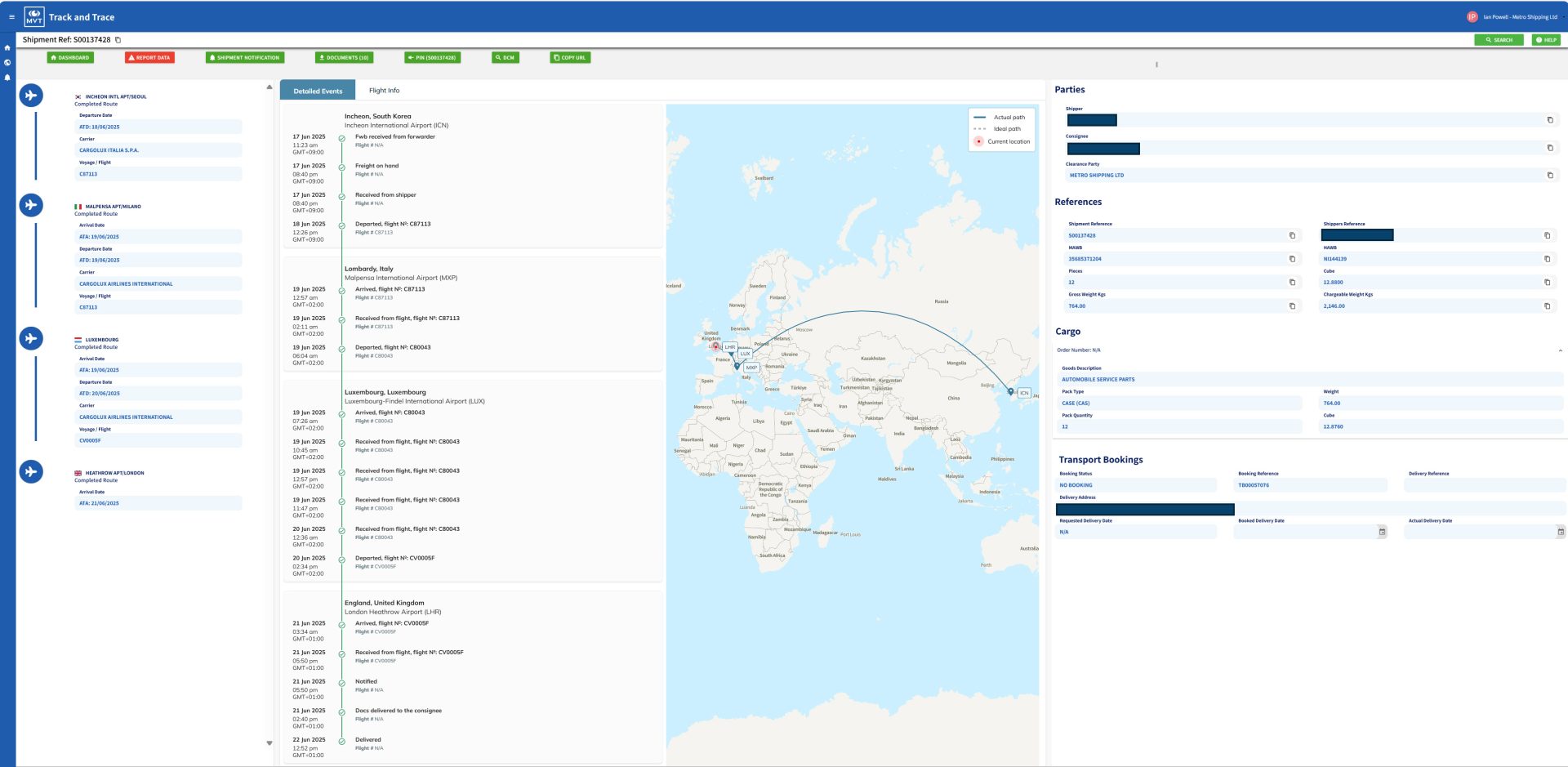
In addition to launching new applications, we’re committed to improving the tools you already use, such as Track and Trace, CuDoS, and DCM. We’ve adopted a more agile approach to product updates, ensuring frequent releases that bring:

– New functionality based on customer feedback
– Improved user interfaces for a more intuitive experience
– Compatibility and accessibility enhancements

You’ll notice these updates rolling out throughout the year, making the tools you rely on even more effective and user-friendly.

Redesigned Purchase Order Management
One of the biggest changes in 2025 is the launch of our redesigned Purchase Order Management Application. This upgrade is tailored to the unique needs of each customer, offering features that simplify and enhance your supply chain processes.

We’re coordinating the migration of over 700 suppliers and thousands of users across 25+ countries to the new platform. To ensure a smooth transition, we’ll provide training and support every step of the way.

Supporting Your Supply Chain Success
These updates reflect our commitment to building technology solutions that provide you with the visibility and control you need to manage your supply chain efficiently. Whether it’s through new applications, regular enhancements to existing tools, or tailored solutions, we’re here to support your business goals.

Want to learn more about MVT, CuDoS, or how our technology can help your operations? Have suggestions for how we can better meet your needs?

Email Ian Powell to start a conversation.

Visit Metro’s Website for more details and updates as we continue to enhance our platform to serve you better.

Antwerp

ICS2 Phase 2: What you need to know and how we can help

On 4th December 2024, Phase 2 of the Import Control System 2 (ICS2) was deployed, requiring maritime and inland waterways house-level filers, including Metro, to directly submit detailed safety and security data to EU customs authorities.

ICS2 is the EU’s advanced customs system designed to enhance supply chain security and facilitate smooth trade across its external borders. By collecting and analysing cargo data in advance, ICS2 allows customs authorities to identify risks early, ensuring efficient processing of low-risk goods while prioritising inspections for high-risk consignments.

Key benefits of ICS2

ICS2 streamlines customs procedures while securing the supply chain by:
Proactively identifying high-risk consignments for early intervention.
Reducing delays and costs through faster and smoother cross-border clearance.
Simplifying data exchange between Economic Operators (EOs) and customs authorities.

Enhanced data requirements
To comply with ICS2, all exporters and logistics providers must provide comprehensive data via the Entry Summary Declaration (ENS), including:

6-digit Harmonised System Code.
Commercial descriptions of goods.
EU-registered EORI numbers.

Complete details of the seller, buyer, and consignee.Prompt submission of this data enables accurate risk assessments, helping to avoid shipment delays.

ENS filing timelines

For maritime transport, ENS submissions must adhere to strict timelines:
1. Two hours before arrival at the first EU port of entry for goods from nearby regions (e.g., Greenland, Morocco, or the Mediterranean) with journeys under 24 hours.
2. Four hours before arrival for bulk cargo in other cases.
3. 24 hours before loading for containerised cargo on longer journeys.

Please note, some carriers may require submissions earlier, such as 24 hours before the estimated time of arrival (ETA) at the port of departure.

Implementation timeline
ICS2 is being deployed in three stages:

1.3rd June 2024: Maritime and inland waterways carriers.
2.4th December 2024: Maritime and inland waterways house-level filers.
3.1st April 2025: Road and rail carriers.

Since 4th December, Metro has been filing directly with EU customs authorities, ensuring compliance and early clearance of shipments. Non-compliance or incomplete ENS submissions can result in shipment delays, stops, and fines.

How we support your compliance

To simplify your compliance with ICS2 Phase 2, we’ve adapted our CuDoS customs brokerage platform to integrate seamlessly with the Shared Trader Interface (STI). This ensures your shipments are cleared early in the process, avoiding costly disruptions.

Our dedicated brokerage team is here to:
Guide you through ICS2 requirements.
Assist with data provision and ENS submissions.
Provide comprehensive support for import and export documentation across the EU.

Don’t let delays or penalties impact your operations. EMAIL Andy Fitchett today to learn how we can help ensure a seamless transition to ICS2 Phase 2 and keep your supply chain moving smoothly.

car mirror 1440x1080 1

2024: Reflecting on a Dynamic Year in Global Supply Chains

As 2024 comes to an end, we look back at a year filled with extraordinary events that shaped the global supply chain landscape. From geopolitical challenges to shifts in logistics trends, the past year has underscored the importance of resilience, adaptability, and innovation in our industry.

Here are just a few of the major supply chain developments we covered and that defined 2024:

Houthi attacks in the Red Sea: The crisis continues, forcing vessels to divert around the southern tip of Africa, creating new delays and challenges for global trade.

Global RoRo capacity shortages: The shipping of automobiles was heavily impacted as carriers grappled with fleet reductions from the pandemic.

Labour unrest: Strikes surged 42% year-over-year, including a six-week standstill at the Ports of Los Angeles and Long Beach.

Port of Baltimore closure: The collision and collapse of the Francis Scott Key Bridge caused a three-month disruption.

eCommerce growth: Air freight demand soared on Asia-North America lanes as online shopping reached new heights.

ILA strike: A three-day US East Coast dockworker strike in October highlighted ongoing tensions over automation, with another strike looming in January 2025.

Global reefer shortages: The demand for refrigerated containers remains unmet, impacting perishable goods transport.

Political shifts: The re-election of Donald Trump signals potential changes in trade policies, with protectionism and tariffs on the horizon.

Shipping alliances: New alliances reshaped container shipping routes, including Maersk’s departure from Felixstowe.

Metro’s Highlights

2024 was also a year of achievements for Metro Shipping:

Air Freight Business of the Year: We were proud to receive this accolade at the Logistics UK Awards.

Road freight expansion: Our growing road freight division continues to support our clients’ evolving needs.

Publishing sector portfolio launch: We introduced tailored logistics solutions for the publishing industry.

Great Place to Work: Metro was officially accredited, reflecting our commitment to a positive and empowering workplace culture.

As we get ready to step into 2025, we are prepared to face challenges head-on, supporting our customers with expert insights, seamless operations, and innovative solutions.

Thank you for your trust and partnership in 2024.

Wishing you a wonderful holiday season and a successful year ahead.

FTSE 1440x1080 1

FTSE 100 firms identify supply chain threats as a principal risk

A recent study by the Boston Consulting Group, reveals that 72% of FTSE 100 companies now identify supply chain threats as a principal risk to their operations.

This heightened concern follows significant disruptions such as the Suez Canal blockage, the COVID-19 pandemic, and the Red Sea shipping crisis, which have exposed vulnerabilities in global supply chains.

Despite widespread acknowledgment of these risks, only 54 of the FTSE 100 companies have provided shareholders with detailed information on their mitigation strategies. This lack of transparency underscores the need for more robust communication regarding risk management practices.

To address these challenges, companies are implementing various strategies:

  • Supplier engagement: Regular meetings with suppliers to monitor and share potential risks.
  • Risk documentation: Compiling and updating ‘risk registers’ to document supplier-specific risks.
  • Inventory management: Maintaining higher levels of ‘buffer’ stock to mitigate short-term crises.
  • Diversification: Expanding supply chain streams to prevent business interruptions.

Technological solutions are also being leveraged to enhance resilience. Companies are implementing robust cybersecurity measures, utilising artificial intelligence for supply chain design and monitoring, deploying algorithms to identify high-risk raw materials, and conducting comprehensive assessments of suppliers’ financial resilience and infrastructure.

Supply chain risks have now reached the boardroom, with discussions taking place within executive and audit committees. This elevation in priority reflects the critical importance of supply chain stability to overall business operations.

The findings emphasise the necessity for businesses to prioritise transparency, technological innovation, and strategic planning in their supply chain management. As risks continue to evolve, proactive risk management has become a vital component of corporate governance.

Metro’s advanced supply chain technology

Metro’s proprietary cutting-edge supply chain technology has been conceived and designed to enhance visibility, control, and efficiency. The AI-driven solutions provide real-time insights into supply chain operations, enabling companies to anticipate disruptions and respond swiftly. Features include comprehensive purchase order management, multi-modal track and trace capabilities, and consignment management tools. Additionally, the MVT ECO platform allows shippers to forecast, measure, and offset global supply chain emissions, supporting sustainability goals. By integrating these technologies, businesses can strengthen their supply chain resilience and maintain operational continuity in an increasingly complex global environment.

Metro is leading the industry in developing the technologies and platforms that simplify and support the development of resilient, agile and adaptable supply chains.

Visibility, control, environmental, and customs modules, blend together with integrations of critical digital trade documents, to provide an unparalleled supply chain platform.

EMAIL Ian Powell for further Information on our digital capabilities and how we can protect and enhance your global trade and business growth ambitions.