Bangladesh label

New Developing Countries Trading Scheme

The UK government launched a new preferential trading scheme, The Developing Countries Trading Scheme (DCTS) last year, to provide tariff concessions for developing countries exporting to the UK market.

The DCTS replaces the Generalised Scheme of Preferences (GSP) and extends tariff cuts to hundreds of products, including clothes and food, from specified developing countries, as part of the UK government’s efforts to replace similar EU schemes.

Like GSP, DCTS has three tiers of countries. On the first tier are LDCs; the second tier consists of countries classified by the World Bank as a low-income (LICs) or lower-middle income countries (LMICs); and the third tier includes countries that are economically vulnerable LICs or LMICs due to a lack of export diversification.

An expanded cumulation for LDCs, means they can have extended cumulation with other DCTS countries and countries with Economic Partnership Agreements with the UK and reduces trade barriers for LDCs in regional and global supply chains serving the UK.

The DCTS offers developing countries a simpler and more generous set of trading preferences and simplifies rules such as rules of origin, which dictate what proportion of a product must be made in its country of origin and removes some seasonal tariffs, in a bid to reduce red tape and lower costs, as an incentive to firms to import more goods from developing countries.

An additional 156 products are eligible for tariff reductions and more than 85% of eligible goods now benefit from zero-rated tariffs and the renaming of preference tiers from GSP to DCTS aligns with the UK's offerings in each tier, to reflect the progression of countries as their economies grow:

DCTS Comprehensive Preferences (previously GSP LDC Framework)
DCTS Enhanced Preferences (previously GSP Enhanced Framework)
DCTS Standard Preferences (previously GSP General Framework)

Under the comprehensive preference, 46 LDCs will get zero tariff facilities on all products except arms and ammunition, which means that LDC countries like Bangladesh will enjoy zero-duty tariff lines for its products until it graduates to the next level. 

After graduation from LDC, Bangladesh may be entitled to an enhanced preference regime as it is an "economically vulnerable" country based on the absence of export diversification criteria. 

Furthermore, the DCTS will allow qualifying countries like Bangladesh to access global supply chains for importing raw materials from 95 countries to export their final products to the UK duty-free under regional cumulation.

Bangladesh can also utilise the benefits of extended cumulation with UK-DCTS and UK-EPAs  (UK-Pacific economic partnership agreement with 95 countries). Cumulation with the UK, British Overseas Territories, EU, Norway, Switzerland, and group 2 countries (for intra-regional cumulation: SAARC countries except the Maldives and Afghanistan) — and in such a case, Bangladesh's tariff rates in the UK under EPA will apply. 

For such cumulation, the country must follow minimum processing rules to count as originating. For inter-regional cumulation, culminating with group 1 countries (Cambodia, Indonesia, Laos, Myanmar, and the Philippines — with Vietnam's FTA soon excluding it), a case-by-case application is needed.

DCTS is a bit more liberal than that of the EU GSP+. Under the EU's draft GSP proposal for 2024–34, Bangladesh's apparel products may face safeguard measures when the share of relevant products exceeds both 6% of total EU imports of those products as well as the product graduation threshold during that year. 

Under the new agreement, access to the enhanced preferences is based purely on the economic vulnerability of LICs and LMICs, which is considered to be a more generous approach, with eight countries becoming immediately eligible for enhanced preferences. 

The DCTS retains power to suspend any country that violates human rights or labour rights, including violations in relation to anti-corruption, climate change and environmental conventions.

Overall, the DCTS offers more generous benefits than the existing GSP and any business currently utilising GSP should review the application of the DCTS frameworks.

Our CuDoS customs brokerage platform is optimised continuously, in line with HMRC regime changes, automating and submitting customs declarations, for simple and compliant preference processing. 

To discuss your trading strategy, access to preferential tariffs and documentary requirements please EMAIL our customs expert, Andy Fitchett, who can talk you through your opportunities and options.


metro tech

Metro’s new LCL guru

With over 20 years' experience in freight and logistics, the majority of which has been in the ocean freight environment and specifically the LCL product, in the UK and overseas, we are pleased to introduce our new Senior LCL Commercial Manager, Jane Kenny, who is leading this critical service area.

Our comprehensive LCL services provide predictability and reliability at a competitive price. Flexible solutions, which are integrated within our global sea freight network to provide fully-managed, adaptable, reliable and customisable solutions, that meet the demands of the most demanding supply chains.

Talking about 'LCL Shipping' or 'Groupage Shipping’, when we literally group your goods with other consignments, that need to take the same route, to make up full containers, Jane said. “Our focus within LCL is on offering cost savings and sustainable solutions, especially where customers are shipping under-utilised containers.”

“We are always thinking outside of the box to keep our customers’ freight moving and rates low and because we constantly have consolidated containers moving on the major trade-routes, we are able to offer sailing schedules which meet critical transit deadlines to keep supply chains moving efficiently.“

“LCL has always been a true passion of mine, as it is such an adaptable solution for moving freight, especially when the market is facing challenges and it is the perfect choice for shippers when rate inflation and lack of space threatens traditional shipping”. 

“Geographically Metro have a powerful presence on all the major trade-routes and are particularly strong in the United States and China, with really well supported LCL services out of critical cities like Shanghai, Yantian, Shenzhen and Hong Kong, which is so important when regular FCL traffic is facing massive rate increases and service disruption.”

Metro’s global LCL solutions:

 - Dedicated pricing team for fastest quote turnaround
- In-house Metro control from load point to arrival point
- Regular LCL services covering all major trade lanes
- Fastest ocean services utilised for our consolidated containers
- LCL containers packed/unpacked at our dedicated facilities for speed and security
- Facilities linked to customs CuDoS system and our in-house specialists

Metro’s LCL services are the most cost-effective method of moving freight over long distances, offering immense cost and emission savings on air, with an exceptional number of weekly import and export departures, and the fastest transit times.

LCL services depart from all major ports worldwide and can be linked to upstream and downstream warehousing, consolidation and distribution support. We handle global customs brokerage and declarations through our CuDoS system and you can track your shipments with our AI-powered ocean visibility tools.

EMAIL Jane Kenny, to discuss your ocean freight requirements, to learn more about our LCL product, or to request a quote.

wing merro dusk

Supply chain; a year in review

2023 was supposed to be the year that global supply chains bounced back from pandemic lockdowns and factory shutdowns, trade wars, tariffs and war in Europe, but now container shipping is disrupted by attacks in the Red Sea and restrictions on the Panama Canal.

The COVID pandemic and its aftermath, with supply-side fluctuations, shipping delays and port congestion created a logistics storm so brutal that many wondered if supply chains would ever recover.

The dramatic increase in consumer spending during the pandemic that left shippers scrambling for air, road and sea space, quickly fell away at the beginning of the year as consumers faced potential recession and a cost of living crisis.

That fall in demand provided the breathing space for carriers and ports to resolve their capacity and performance issues, clear backlogs and reposition equipment effectively, with markets reverting to pre-pandemic levels in terms of capacity and pricing.

The uncertainties surrounding tariffs, trade wars and geopolitical tensions remain, but there has been no significant move away from China, though we are seeing some diversification of sourcing, with Vietnam and Bangladesh - among other origins - increasingly popular.

While container shipping demand fell away the global shortage of RoRo capacity for finished vehicle shipments led to some car manufacturers to acquire their own vessel assets, while others looked to our containerised shipping solutions, for cheaper sea freight movement and certainty of service.

On the air freight front, having joined the Air France, KLM, Martinair Cargo Sustainable Aviation Fuel (SAF) programme in 2022, we were extremely pleased to support their second sustainable flight challenge in the summer, which was followed a few months later by the first transatlantic SAF-powered crossing, accelerating the transition to a more sustainable airline industry.

Metro’s road freight division has grown significantly in 2023, with more team members joining our UK Birmingham HQ and new support operations located close by manufacturing hubs in Desford and Wythenshawe.

Under new leadership the road freight team have increased European FTL/LTL capability, adding more lanes and expanded our groupage offering, alongside the increasingly popular European Distribution (EU/DDP) solutions. 

As the UK deferred post-Brexit food checks for the 5th time, to avoid adding to food inflation, the EU expanded its Emissions Trading System to the container shipping sector, in a move that will cost carriers, and by extension shippers, $Billions from the start of 2024.

In a move that took the market by surprise (but shouldn’t have) the European Commission announced that it would not renew the container shipping sector’s Consortia Block Exemption to operating alliances in 2024.

Despite the initial panic, it is likely that the EC’s decision will have little real impact, particularly as the Maersk and MSC 2M alliance was already ending, with the others likely to reorganise into new structures.

With 2024 just weeks away, scheduled Trans-Pacific and Asia to North Europe container shipping capacity was up 30% and 10%, raising fears of a massive blank sailing program to try and support rates, but now, with the Suez Canal transit suspended and Panama Canal disruption, we may see increased rates and delays, with air freight’s popularity rising.

We are hopeful that the US and coalition navies can restore maritime security quickly, because the prolonged re-routing of vessels away from the Suez Canal, via the Cape of Good Hope will increase transit times and costs, with a massive reduction in available capacity and a return to equipment imbalances.

Whatever challenges 2024 may bring, you can rest assured that we will keep you informed and protected, because we always have your back covered.

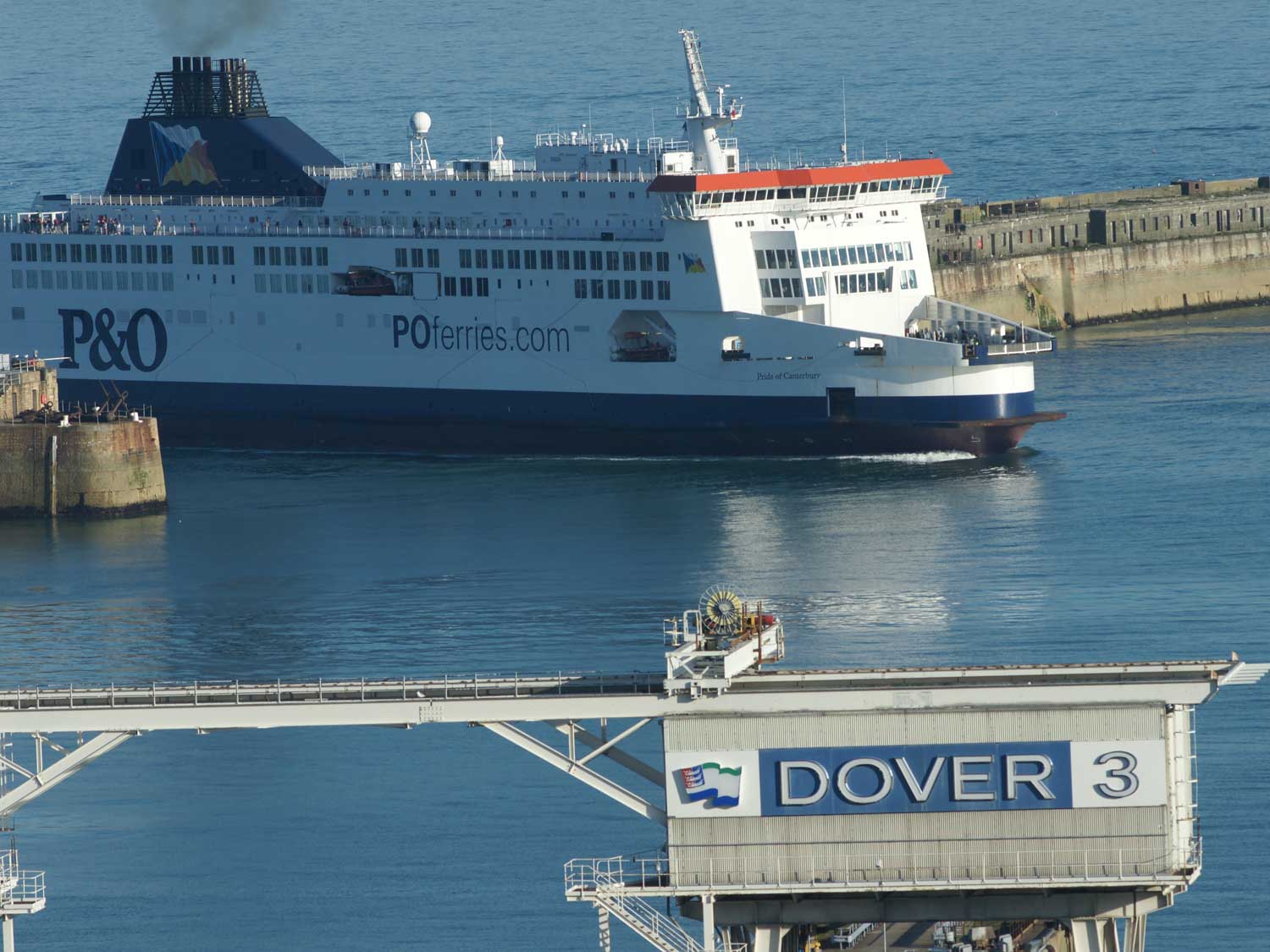
P and O

HMRC export deadline and rogue hauliers

With the deadline fast approaching for export declarations moving to the Customs Declaration Service HMRC are highlighting a worrying trend at the border, with misuse of valid documents leaving innocent exporters potentially non-compliant and exposed to penalties. 

In their latest Customs Declaration Service (CDS) update HMRC remind traders that all export declarations must move from their legacy Customs Handling of Import and Export Freight (CHIEF) system to CDS by Saturday 30th March 2024. 

We are continuing to work with our customers, setting them up on CDS for all export routes and the different types of export declaration submitted at the UK border, including Transit (TAD) and the Goods Vehicle Movement Service (GVMS).

It is these latter two that HMRC focused on, in highlighting Goods Movement Reference (GMR) errors by hauliers that are leading to issues at the UK and EU border.

Consistent misuse of valid export CDS documents where the transit document is being used for the convenience of the haulier means that shipments are not arrived in the correct manner.

Exporters have a legal obligation to pre-lodge declarations if they are moving their goods through a location using GVMS and pass evidence of this for a haulier to complete a GMR.

Hauliers have a legal obligation to carry evidence that pre-lodged customs declarations or reference numbers for Simplified Customs Procedure authorised traders are in place for all the goods they are moving.

This is met by hauliers completing a GMR which must include a declaration reference for each consignment as proof that a pre-lodged declaration has been made.

Carriers require a valid GMR to be presented at the port of departure before allowing the vehicle or trailer to board.

HMRC’s issue is that hauliers are inappropriately using TAD MRN (transit document) as suitable evidence for the export MRN reference, irrespective of what else is loaded to the trailer, which is not the case when a DUCR has been issued..

The correct use of DUCR or MUCR being advised to customs allows the authorities to “arrive” the customs entry, which means that there is a permanent record of the despatch of the goods so the VAT liability for the shipment is discharged and the zero rated document raised by the shipper becomes validated.

Incorrect GVMS entries by hauliers leads to missing data on exporters MSS reports, missing critical data in terms of managed Customs facilities such as stock records for CFSP locations, which leads to extra admin and inventory shortages, both serious matters.

These export process are incredibly complex and should be of no concern to exporters, but unfortunately many (non-Metro customers) are being caught out by the carriers’ non-compliance.

We work closely with our road transport partners to ensure they have the correct documentation and submit the correct information to GVMS through CDS.

Our CuDoS customs platform automatically monitors the status of export declarations and will flag potential non-compliance issues.

If you have any concerns or questions, regarding CDS or export compliance please EMAIL Andy Fitchett, Brokerage Manager.