LAX 1440x1080 1

Air Freight Market Review

The global air freight market in February and early March reflected moderate year-on-year (YoY) growth, with total worldwide tonnages up 5% in February and 2% higher YoY in early March.

However, market dynamics remain volatile, influenced by shifting trade policies, geopolitical factors, and eCommerce trends.

Asia-Europe air cargo showed strong demand recovery in March, with tonnages rising 4% week-on-week (WoW) and while average spot rates softened they remain 20% higher YoY. Meanwhile, transatlantic routes saw weaker demand from Europe, with London Heathrow and Frankfurt spot rates declining amid softer outbound trade.

Market Situation
Global air cargo tonnages rose 5% YoY in February, supported by an 8% surge from Asia Pacific and a 4% rise in North America and Europe. However, Middle East & South Asia (MESA) volumes declined by 6%, reflecting last year’s Red Sea-driven demand spike.

By early March (Week 10), Asia-Europe trade saw significant WoW volume gains:

  • China to Europe tonnages increased by 5%
  • Hong Kong to Europe volumes grew by 6%
  • Japan & Taiwan to Europe rose by 7%
  • Thailand & Singapore to Europe surged by 9%

Despite these volume increases, average spot price indices on Asia-Europe lanes declined by 3%. However, YoY spot rates remain significantly higher (+20%), supported by China (+14%), Hong Kong (+22%), Japan (+19%), and Thailand (+38%).

Global air cargo markets remained relatively stable through February and early March, with weekly demand fluctuations balancing out across key regions.

  • Asia-Europe: Despite a 4% WoW tonnage rebound in Week 10, rates dipped as supply-demand balances shifted.
  • Transatlantic (Europe to USA): Weaker outbound demand put spot rates under pressure at London Heathrow and Frankfurt.
  • Middle East to Europe: Demand weakened with Dubai-to-Europe tonnages falling 15% WoW.

Global air freight rates remained 6% higher YoY, though Asia-Europe pricing showed a mixed trend, with falls on all the major trade lanes, though rates remain significantly higher than last year.

  • Asia-Europe remains 20% higher YoY.
  • China to Europe still stands 14% higher YoY.
  • Hong Kong to Europe are up 22% YoY.

The Asia-Europe air cargo market rebounded in early March, with tonnage gains but slightly softer rates as market conditions adjusted. Meanwhile, transatlantic routes saw demand weakness, leading to rate declines from major European hubs. Moving forward, trade policies, geopolitical shifts, and capacity adjustments will continue to influence global air cargo pricing and volumes.

In a volatile air cargo market, securing capacity and competitive rates is critical. Metro’s air freight, charter, and sea/air solutions ensure your shipments move efficiently, even on the busiest trade lanes. With block space agreements (BSA) and capacity purchase agreements (CPA) in place, we guarantee space and stable pricing when you need it most.

Whether you’re shipping urgent, high-value, or sensitive cargo, our global expertise and strategic carrier partnerships keep your supply chain running on time and within budget.

EMAIL Elliot Carlile, Operations Director, today to explore how Metro’s air freight solutions can optimise your logistics.

strike at port

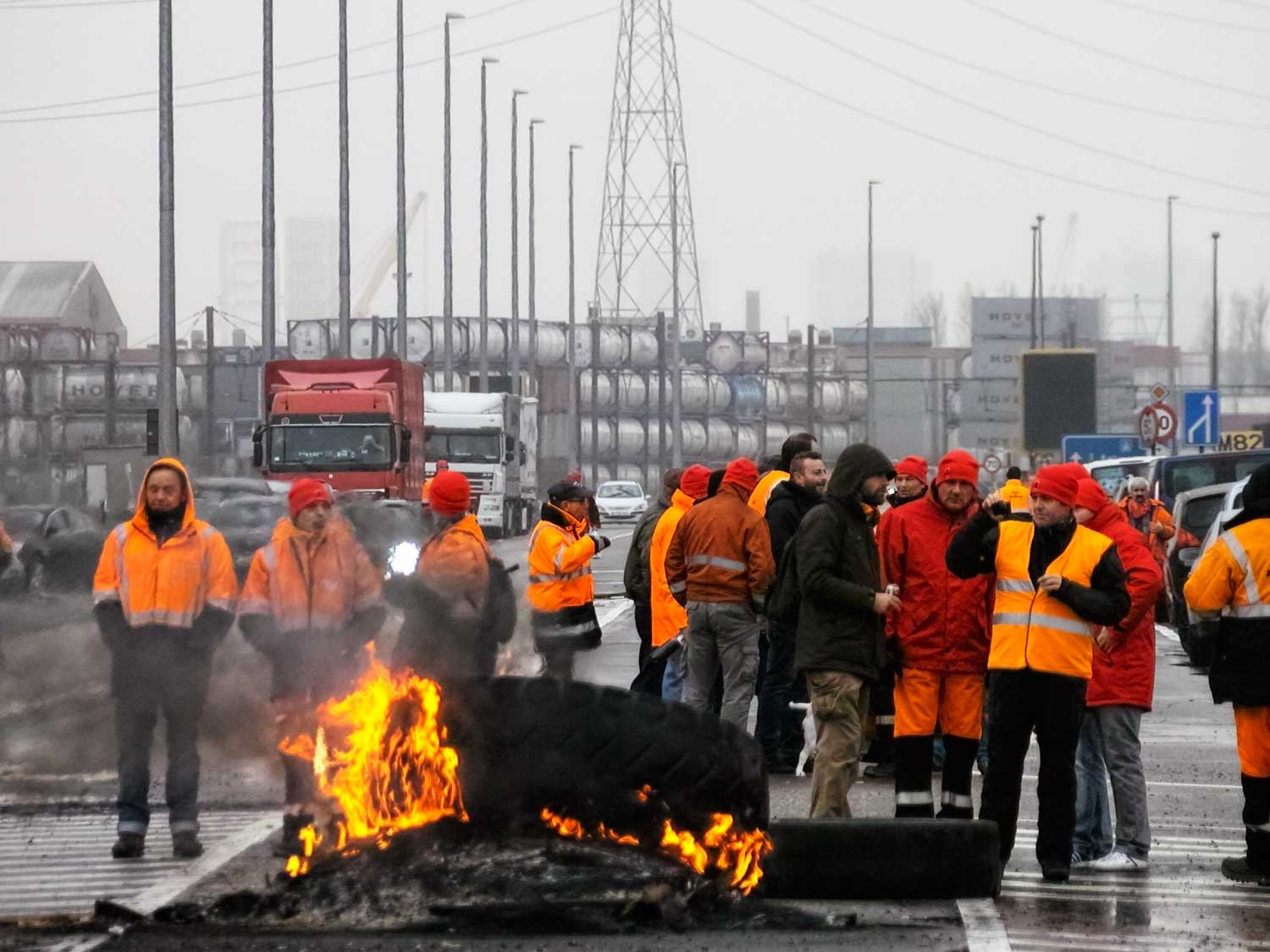
Labour disputes at European ports disrupt container shipping

Trade union action across major European ports, particularly in Rotterdam and France, are causing significant disruptions to container shipping, exacerbating existing supply chain challenges.

Strikes at Rotterdam’s Delta II terminal and ongoing industrial action at French ports have created congestion, delays, and logistical bottlenecks, prompting carriers to reroute vessels and seek alternative solutions.

Rotterdam turmoil and ripple effects
Contract negotiations that began in November have stalled, while the FNV Havens and CNV unions have been locked in dispute with employers since the second half of last year over port automation concerns. Dockworkers have been staging intermittent strikes that have severely impacted deep-sea vessel operations, feeder ship schedules, and inland-bound cargo movements. The situation has escalated with calls for solidarity action across Europe, urging other ports not to handle diverted vessels. While no widespread solidarity strikes have been reported, shipping lines remain on high alert, monitoring developments and adjusting vessel rotations as necessary.

Congestion at Rotterdam has intensified due to a combination of adverse weather, holiday-related backlogs, and surging cargo volumes from Asia. As a result, vessels are facing extended waiting times, with some opting to bypass the port altogether. The container yard capacity is nearing full utilisation, and precautionary measures, such as limiting empty container acceptance, have been implemented to manage the strain.

French port strikes deepen crisis
Meanwhile, industrial action at French ports is compounding the disruption. Dockworkers are protesting against pension reforms, with frequent work stoppages and a series of strikes planned throughout March. These actions have significantly impacted cargo handling operations at key ports, including Le Havre and Marseille-Fos, leading to increased transport costs and supply chain strain for businesses dependent on timely shipments.

The business community has voiced concerns over the economic fallout, citing rising supply chain costs, shipment delays, and a decline in sales due to the port closures. Calls for government intervention and a coordinated public-private response have been made in an effort to mitigate the impact and prevent further damage to trade and industry.

Wider European impact
As Rotterdam and French ports struggle with ongoing disruptions, other European hubs, such as Antwerp-Bruges, are facing additional pressure. With cargo diversions increasing, terminal congestion at Antwerp has reached critical levels, forcing operators to implement emergency measures. 

Import deliveries are being prioritised over exports, and yard space constraints are leading to restrictions on transshipment volumes. Barge and feeder operations are experiencing significant delays, further straining inland logistics networks.

With no immediate resolution in sight for either the Rotterdam or French port disputes, container carriers are bracing for continued volatility.

With escalating labour disputes at key European ports, including Rotterdam and France, container shipping is facing increasing delays, congestion, and logistical challenges. At Metro, we have contingency plans in place to bypass affected ports, leveraging alternative routes and entry points to keep your cargo moving.

To minimise disruptions, we encourage you to share your shipping forecasts as early as possible so we can proactively mitigate potential issues.

For tailored solutions and expert guidance on protecting your supply chain, 

EMAIL Andrew Smith, Managing Director, today.

Parliament blur

UK trade update

The UK continues to develop its global trade strategy, advancing negotiations with key partners while navigating post-Brexit relations with the EU.

With multiple trade discussions in progress and regulatory changes affecting movement between Great Britain and Northern Ireland, businesses should prepare for evolving trade conditions in the coming months.

Northern Ireland trade lane: transition deadline approaches

From 31st March 2025, updated processes for parcel movements between Great Britain and Northern Ireland will take effect, marking a significant transition for businesses.

  • Private individuals in Northern Ireland will continue to receive parcels from Great Britain without customs declarations, tariffs, or the need to present goods to customs, provided they are for personal use.
  • Business-to-business (B2B) parcel movements will follow freight procedures, with traders requiring authorisation under the UK Internal Market Scheme (UKIMS). Either the sender or recipient must be authorised to declare goods as ‘not at risk’, ensuring they qualify for duty-free movement under the Simplified Process for Internal Market Movements (SPIMM).
  • B2B goods that do not qualify for SPIMM will require a full customs declaration, reinforcing the importance of ensuring compliance with eligibility criteria.

With NIRMS, UKIMS, SPIMM, and IMMI frameworks creating a complex regulatory landscape, businesses are encouraged to seek guidance to ensure compliance. Metro offers support in navigating these schemes, including post-Brexit audit reviews to assess eligibility for retrospective duty reclaims.

UK trade negotiations: expanding global agreements

The UK is actively pursuing new and expanded trade agreements to strengthen its global economic position.

  • Comprehensive and Progressive Agreement for Trans-Pacific Partnership (CPTPP): The UK formally joined in December 2024, becoming the first European country to enter this major trade bloc, enhancing access to 11 key markets.
  • India and the Gulf Cooperation Council (GCC): Negotiations with India and the GCC are currently the highest priority, with discussions ongoing to finalise agreements.
  • South Korea, Switzerland, and Israel: The UK is working to deepen market access and streamline trade flows with these nations through revised agreements.

EU trade discussions: cautious expectations for change

Despite renewed diplomatic engagement between the UK and the EU, businesses should not expect imminent changes to existing trade arrangements.

Since the UK’s government change in July 2024, there has been a positive shift in UK-EU relations, yet uncertainty remains regarding what the UK seeks from a proposed trade ‘reset’. European officials have emphasised the need for clarity, particularly on youth mobility, but discussions remain in the early stages, with Brexit-related complexities still shaping the dialogue.

With UK-EU delegations set to meet in May, expectations are that the summit will establish a foundation for future talks rather than delivering immediate policy changes.

  • Supply chain operators should not anticipate short-term relief from Brexit-related challenges.
  • No significant changes to frontier processes appear likely, with both sides committed to fully implementing the current trade and cooperation agreement before considering modifications.
  • SMEs remain disproportionately affected by post-Brexit trade changes, with industry groups urging policymakers to prioritise reducing red tape.

As the UK’s trade strategy evolves, we will share important developments, particularly regarding EU discussions and the phased implementation of new trade agreements.

Navigating the complexities of international trade requires real-time insights and expert guidance. At Metro, we continuously monitor market influences and evolving regulations, to help you de-risk your supply chain and maximise opportunities.

With over 40 years of expertise in multimodal transport and customs brokerage, we lead the way with CuDoS, our automated customs declaration platform, ensuring swift compliance with UK and EU trade regimes.

Make informed decisions with Metro’s strategic support. For trade insights and risk management advice, EMAIL Laurence Burford, Chief Financial Officer. For customs and regulatory solutions, EMAIL Andrew Smith, Managing Director.

Beyondly 1440x1080 1

Metro & Beyondly are driving sustainable supply chains

Sustainability in logistics isn’t just a challenge—it’s an opportunity. An opportunity to rethink the way goods move, to reduce emissions, and to turn compliance into a competitive advantage.

At Metro, we’ve embraced this challenge head-on, becoming carbon neutral for five years, monitoring emissions across 250,000 shipments, and pioneering sustainable solutions that help our customers meet their environmental goals.

But sustainability doesn’t stop at logistics. It stretches across the entire supply chain ecosystem—from packaging regulations to waste reduction, from carbon foot-printing to compliance with global sustainability laws. That’s where Beyondly comes in.

Metro and Beyondly, both members of the GB Global Group, share a common goal: helping businesses navigate the complexities of sustainability while staying ahead of industry regulations. Together, we offer a holistic approach to sustainability, ensuring that every aspect of a company’s supply chain—from transport emissions to packaging compliance—is not just managed, but optimised.

Measuring and reducing carbon emissions
Reducing carbon emissions isn’t just about switching transport modes—it’s about understanding where the biggest environmental impacts lie.

Metro’s MVT ECO platform gives businesses the power to forecast, measure, avoid, or offset global supply chain emissions, with detailed, accredited emissions tracking across all transport modes.

Beyondly takes this further, ensuring businesses aren’t just reducing transport emissions but aligning their entire supply chain with sustainability regulations—from Extended Producer Responsibility (EPR) compliance to waste reduction strategies.

It’s one thing to measure carbon emissions; it’s another to actively reduce them.

Metro was the first UK freight forwarder to commit to Sustainable Aviation Fuel (SAF) and is continuously working on reducing carbon output across road, sea, and air freight.

Beyondly empowers businesses to take action beyond logistics, providing carbon footprint assessments, ESG strategy development, and Net Zero roadmaps—ensuring that sustainability is built into every decision, not just an afterthought.

From compliance to competitive advantage
Environmental regulations are evolving faster than ever, and businesses that fail to keep up risk falling behind their competitors.

Metro simplifies compliance, ensuring that every shipment is tracked, measured, and meets environmental standards, while continuing to invest in emission reduction technologies, digital visibility tools, and collaborative industry initiatives.

Beyondly ensures businesses stay compliant across the board and helps them develop long-term strategies, guiding them through B Corp certification, sustainability reporting, and corporate ESG leadership.

Sustainability is no longer a tick-box exercise—it’s a business imperative. Companies that embrace it don’t just reduce risk; they unlock new opportunities, enhance brand reputation, and future-proof their operations.

By partnering with Metro and Beyondly, businesses can integrate sustainability across their entire supply chain, from logistics and transport to packaging, compliance, and beyond.

Learn more about Metro’s sustainable logistics solutions.

Explore how Beyondly can help your business.

Together, let’s move beyond compliance—toward a truly sustainable future.