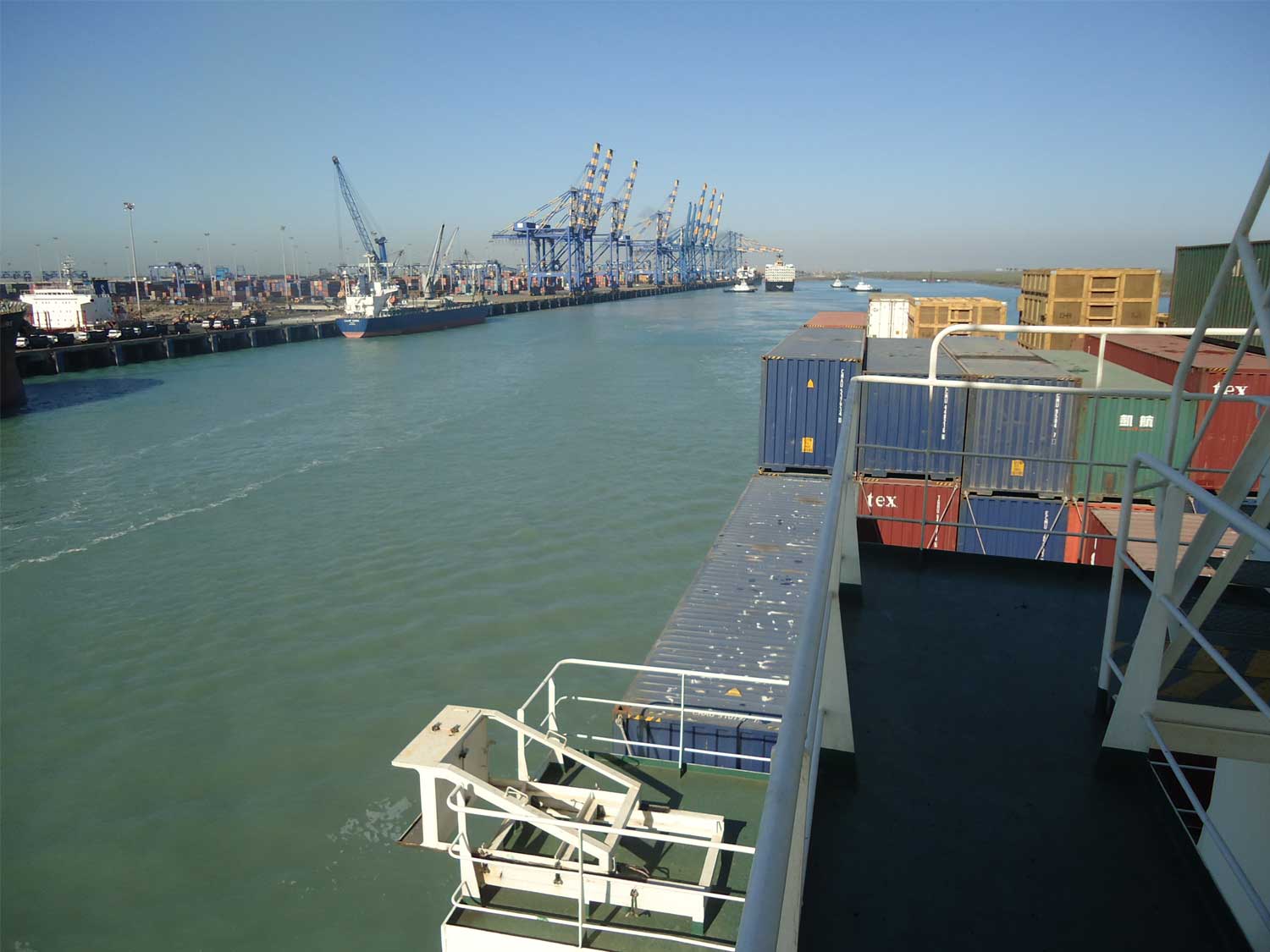
Indian port congestion looms

Cargo Rush Sparks Port Congestion and Equipment Shortages

The recent 90-day pause on US tariffs on Chinese imports has sparked a dramatic surge in demand, as American importers scramble to front-load shipments ahead of the 14 August deadline. The demand spike is now placing considerable pressure on supply chains across Asia and Europe, threatening to disrupt global freight flows into the traditional peak season.

Freight bookings from China to the US rocketed 300% in just one week, marking the highest volume levels of the year so far, as US importers use the temporary reprieve to push through previously delayed shipments.

While the tariff rate remains high at 30%, it is significantly lower than the 145% rates imposed earlier in the spring. Importers are moving quickly to take advantage of this limited window of cost certainty, but the consequences are already being felt far beyond China’s borders.

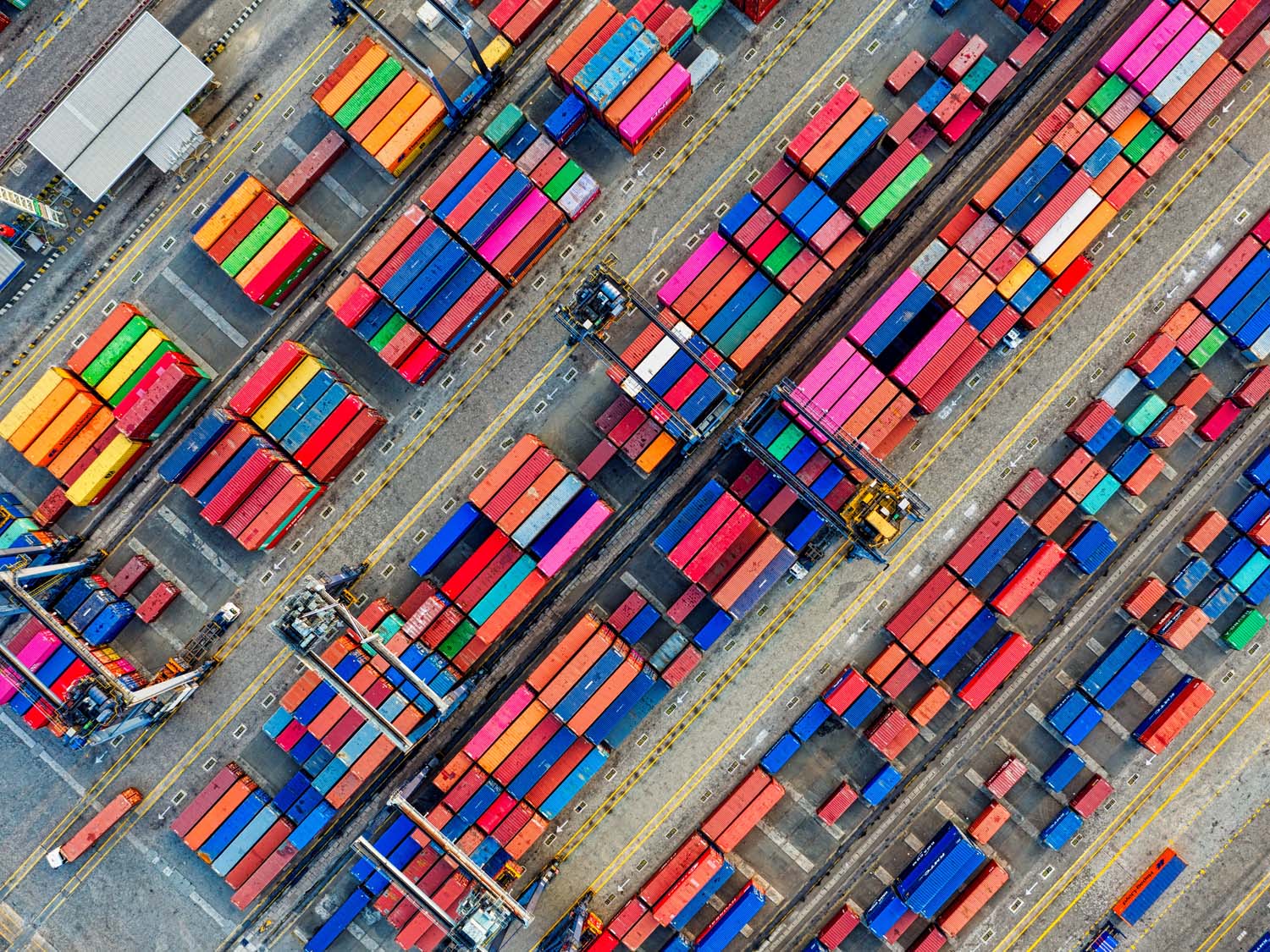
With ships now flooding back into Chinese ports, congestion has rapidly intensified:

  • Shanghai and Qingdao are experiencing berth waiting times of 24–72 hours.
  • Ningbo reports delays of 24–36 hours, while the congestion there is now worsening due to diverted volumes.
  • Busan is reporting 72-hour waits at the PNIT Terminal.
  • Singapore and Yokohama are also affected, with waiting times up to 36 and 24 hours, respectively.

Carriers are reporting widespread bunching and missed berths, forcing some vessels to skip port calls entirely. Simultaneously, container availability is tightening, especially in Shanghai and Ningbo, where carriers have begun rationing equipment based on rate levels and space commitments. Maersk and HMM are among those limiting container release in an attempt to balance capacity with available slots.

Further down the line, ports in southern China, Southeast Asia, and even intra-Asia trades are also reporting backlogs. Shenzhen, Hong Kong, Ho Chi Minh City, and Port Klang have all seen yard utilisation rise and service delays build.

Strain Spreads to Europe as Container Flows Disrupt
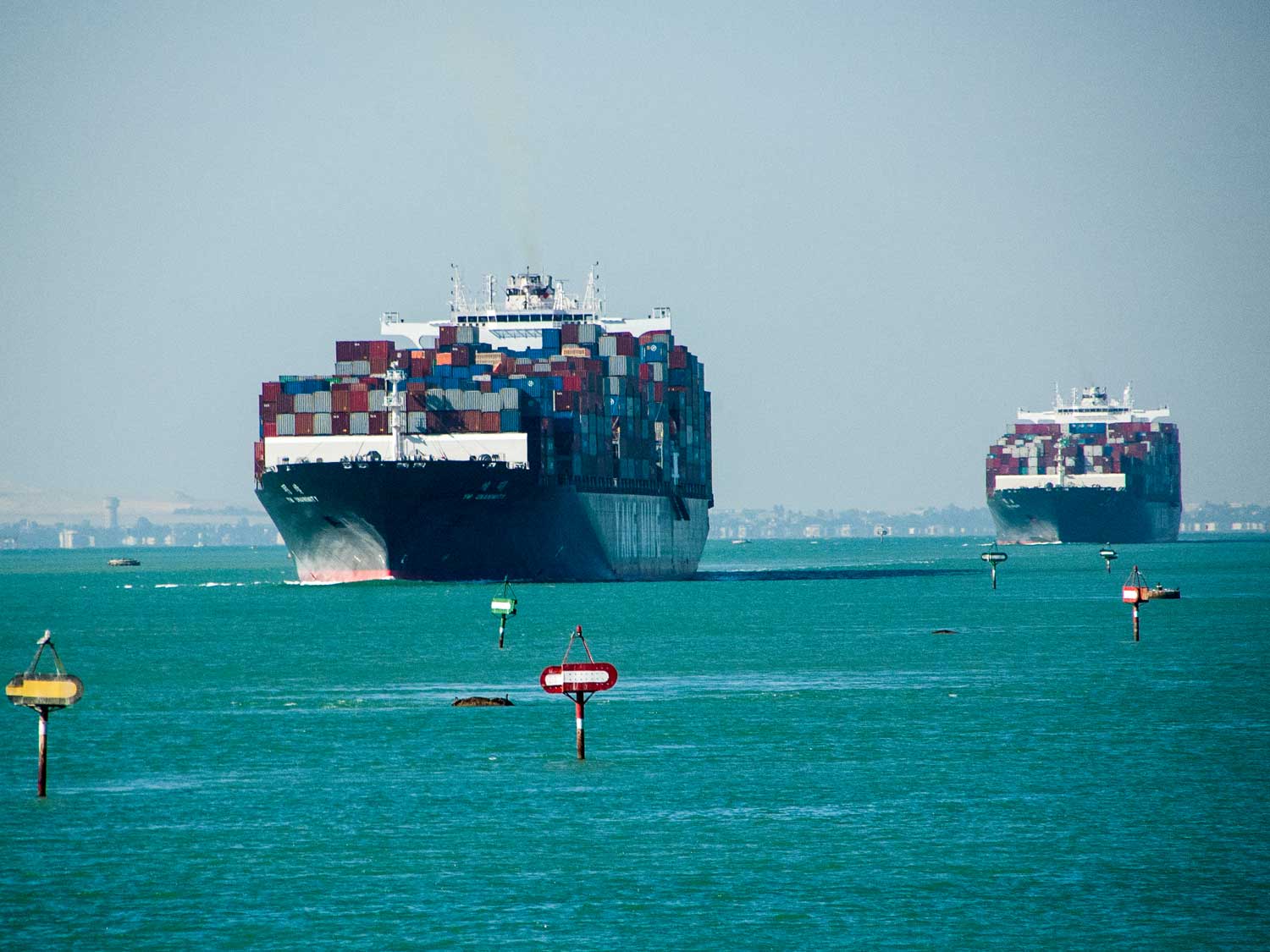
The congestion is not limited to Asia. As carriers reposition vessels and adjust service rotations to meet surging demand on eastbound transpacific routes, European ports are beginning to feel the knock-on effects.

In northern Europe:

  • Hamburg is facing 5–6½ days of berth delays,
  • Southampton and London Gateway are seeing 3-day waits,
  • Antwerp is experiencing severe disruption with delays extending to 15½ days,
  • Piraeus and Tangiers are also impacted, each facing waits of up to 4 and 3 days, respectively.

Labour shortages, reduced barge capacity on the Rhine, and tight schedules are compounding these delays. Meanwhile, rerouted vessels from Asia–Europe services are creating bunching at key transhipment hubs such as Bremerhaven and Hamburg, which in turn serve Scandinavia and the Baltic.

Equipment Shortages and Capacity Gaps Ahead of Peak Season
Container availability is expected to worsen in the coming weeks. With vessels already departing China at high utilisation levels, the return of empty containers and the repositioning of ships to Asia may not keep pace with demand.

If previously produced goods held in bonded warehouses are added to this surge in volumes during May, demand could increase by nearly 50%. A delay to June would ease the burden, but it could still be over 15%, which still represents a steep challenge ahead of the summer peak.

This front-loading of cargo to the US may lead to a sharp, compressed peak season starting now and stretching into mid-July, followed by potential equipment shortages and service volatility in August and beyond.

We are closely monitoring port performance, vessel schedules, and rate volatility across all major trade lanes, to support customers with:

  • Priority bookings and space management on transpacific and key routes
  • Equipment selection and container allocation strategies
  • Alternative routing and scheduling options to avoid bottlenecks
  • Global shipment visibility to SKU

EMAIL Managing Director Andrew Smith to discuss current conditions, risk mitigation, and booking options tailored to your business priorities.

Digger 1440x1080 1

Pressure Mounts on US Heavy Equipment Manufacturers

America’s machinery manufacturers have raised red flags over escalating tariff costs, reinforcing growing concern across the manufacturing sector.

With supply chains spanning the US, Europe, Mexico and China, heavy equipment manufacturers are experiencing firsthand how volatile trade policy is impacting cross-border operations, logistics flows and profitability.

Despite their strong domestic production footprints, manufacturers rely on global imports for key components—especially from Europe and China. These imports, once routine, have become financial pressure points in the wake of rising duties and retaliatory tariffs.

One leading manufacturer is forecasting up to $350 million in tariff expenses this quarter alone, while another expects annual tariff-related costs to top $500 million.

The problem isn’t just confined to import charges. Export volumes are also under pressure, as shifting trade dynamics alter demand patterns and reduce competitiveness in overseas markets.

North America-Centric, Globally Exposed
Two leading manufacturers source more than 75% of their components from within the United States, but their supply chains extend well beyond national borders. Equipment parts arrive from factories and suppliers across Canada, Europe and Latin America and a substantial proportion of inputs still come from Asia, most notably China.

With a growing share of international trade now subject to unpredictable tariffs, even these diversified sourcing strategies offer limited insulation. One manufacturer, for example, cited that half of its projected tariff costs stem from Chinese imports alone.

Even the recent 90-day tariff easing between the US and China, announced on 14 May, is unlikely to provide lasting relief. As one executive warned, the long-term environment remains uncertain: “Many mitigation strategies require clarity and certainty on tariffs, but the landscape is too volatile to act decisively.”

Sales are already reflecting these pressures. In the second quarter, one company reported a 16% drop in total revenue and a 23% fall in construction and forestry equipment sales. Its peer, reporting for Q1, posted a 10% decline in total revenue, with construction equipment hit hardest, down 19%.

Strategic Logistics Support from Metro
Metro works with world-leading manufacturers and understands the complexities of global equipment supply chains. Whether moving machinery from US heartlands like Illinois and Texas, or coordinating inbound component flows from Europe, Canada, Mexico or China, Metro helps manufacturers manage risk, maintain continuity, and adapt quickly.

We manage high-and-heavy, breakbulk and RoRo shipments across key corridors, with logistics and customs services designed specifically for industrial equipment movements. 

  • End-to-end customs expertise, including tariff classification, valuation, and compliance guidance
  • Integrated transport planning, enabling smarter decisions on routing, modal shifts, and consolidation
  • Support for North American, European and Asia-Pacific flows, backed by local teams and global visibility
  • Proactive trade advisory services, keeping clients informed and prepared as policies evolve

As political negotiations reshape tariff regimes and global supply chains remain under strain, manufacturers with international exposure need more than reactive logistics. They need strategic, agile partners that will future-proof their supply chains, reduce friction across borders, and protect performance in the face of mounting uncertainty.

EMAIL Managing Director, Andrew Smith, to discuss how Metro can support your global logistics strategy.

BKR 1440x1080 1

Unlock Savings and Strengthen Compliance with BKR Consultants

We’re always looking for ways to support our clients and that includes helping you stay on the right side of HMRC, while making the most of your duty spend. That’s why we’re proud to introduce BKR Consultants, a trusted member of our group and a specialist in customs compliance.

Based across the UK, BKR Consultants bring deep expertise in customs brokerage, health and regulatory affairs and international trade. Their team provides independent, professional advice that helps importers and exporters stay compliant – and uncover meaningful opportunities to save and reclaim money.

Even businesses with experienced in-house customs teams can find it challenging to keep up with evolving legislation or spot every error. That’s where BKR’s customs compliance auditing service adds real value.

Why Consider an Independent Customs Audit?
Even with a strong internal customs team, it’s easy for issues to slip through the cracks. Classification errors, unsupported preferential claims, and small inaccuracies can quietly add up to major costs, or worse, attract an HMRC audit.

That’s where BKR Consultants come in.

Their independent audits offer a second set of expert eyes on your customs activity, using your actual data to uncover risks, identify opportunities, and ensure your business is fully aligned with HMRC expectations. And this isn’t just theory: BKR have already recovered millions of pounds for clients through the identification of overpayments and incorrect classifications.

From reassessing the way your goods are declared, to helping you access duty-saving procedures, BKR’s audits are practical, actionable, and focused on results.

What’s more, BKR make a simple promise: to leave every client – no matter how big or small – in a better place.

That might mean improved internal knowledge and confidence, a measurable financial refund, or a more stable and compliant business overall.

Here’s what you can expect:

  • A detailed review of your customs declarations and documentation
  • Identification of compliance issues and corrective action plan
  • Retrospective duty reclaims and long-term cost reductions
  • Access to BKR’s trade analytics platform to explore trends and track progress

By engaging BKR, you can:

  • Eliminate risks before they become costly problems
  • Improve cash flow by reclaiming overpaid duties
  • Reduce administrative burden by outsourcing time-consuming checks
  • Strengthen your compliance posture ahead of any HMRC audits

Take the First Step — Book a Free Consultation
Whether you’re already questioning the accuracy of your declarations and duty payments, or simply want the reassurance of a compliance check, BKR’s audits are designed to leave your business in a stronger position – financially, operationally, and strategically.
EMAIL Lucy Hulston to Book your Free Consultation.

India office workers

Strategic Growth in India is Building a Platform for the Future

Over the past five years, Metro has significantly expanded its footprint in the Indian Subcontinent, creating a powerful dual-platform presence that continues to evolve as part of our wider global growth strategy.

Today, India stands as one of our most dynamic regions and is set to house more Metro colleagues than any other location worldwide by the end of 2025.

At the heart of this development are two key Metro operations:

  • Metro Indian Subcontinent (MISC): Our established Global Operations Centre, which provides critical operational, accounting, financial, commercial, and administrative support for Metro’s global network.
  • Metro Global India (MGI): Our newly acquired and merging business, which is focused entirely on serving Indian customers and expanding our service offering across the region.

Together, MGI and MISC represent a formidable combination – supporting both local client requirements and global Metro offices – with highly skilled, locally based teams. While MGI ensures physical handling capabilities and tailored solutions for Indian customers, MISC continues to power our global service model through cutting-edge technology and operational expertise.

To support this rapid expansion, we are enhancing our infrastructure in Chennai. In June 2025, Metro will open a second facility in the city, located centrally and designed to accommodate an additional 130 colleagues. This new site will reflect the look and feel of our existing Metro offices around the world and work in tandem with our established Chennai HQ. The two locations will operate collaboratively, sharing responsibilities as our operations scale.

Importantly, this growth does not alter our long-standing partnerships across India. On the contrary, it enhances them. By leveraging a stronger in-country platform, we are better positioned to offer agile, collaborative solutions that bring together the best in experience, expertise, and supply chain capability. In a country where local knowledge is paramount, our ability to tap into deep regional insight gives us a distinct advantage.

Our Indian expansion reflects Metro’s broader global trajectory. Just as we are scaling rapidly in Europe and the USA, our investment in the Indian Subcontinent is being driven by growing customer demand—both for sourcing from and selling into this vibrant market and its neighbouring territories.

Whether supporting our global operations or meeting the needs of local clients, our teams in India are delivering world-class solutions with unrivalled professionalism and commitment.

If you’re currently trading with India and Metro are not yet supporting your supply chain, we’d love to hear from you. Please contact us directly, and we’ll be delighted to show you how we can deliver cost-effective, efficient, and fully integrated services across the Indian Subcontinent.