
Asia–Europe peak season meets Chinese New Year

Asia–Europe peak season meets Chinese New Year

As the Asia–Europe trade moves deeper into peak season, Chinese New Year (CNY) is already reshaping pricing, capacity and execution risk. What was once a predictable seasonal slowdown has become a compressed, high-impact period where demand surges, capacity is tightly managed and disruption risks escalate quickly.

With carriers reporting strong bookings through December, into January and expectations that volumes could remain firm into February, the traditional pre-CNY rush is well underway. 

Although Chinese New Year officially begins on 17 February, with public holidays running from 15 to 23 February, its impact is felt weeks earlier as factories slow production and exporters pull cargo forward.

For Asia–Europe shippers, this creates a narrow and volatile planning window rather than a clearly defined seasonal pause.

Demand strength keeps rates elevated

Underlying demand on the Asia–Europe trade remains robust. Volumes reached nearly 22 million teu by the end of October, representing 8.6% year-on-year growth, giving carriers confidence to defend pricing as peak season converges with CNY planning.

This strength has translated into a fresh round of pricing actions at the start of the year. Peak season surcharges (PSS) and higher freight-all-kinds (FAK) levels are being used to reinforce rate floors as space tightens.

Market benchmarks reflect this momentum. Ahead of Christmas, Drewry’s World Container Index showed:

  • Shanghai–Genoa up 10%
  • Shanghai–Rotterdam up 8%, marking a third consecutive week of gains

Carrier initiatives followed quickly:

  • Maersk introduced a $1,500 per 40ft PSS on Asia–Mediterranean shipments from 5 January
  • CMA CGM applied a $250 per teu PSS on Asia–North Europe alongside new FAK rates from 1 January
  • MSC set new FAK levels of $3,700 per 40ft to North Europe and $5,500 per 40ft to the Mediterranean

Rates remain relatively steady heading into CNY, supported less by demand and disciplined capacity control.

Capacity front-loading raises execution risk

As factories prepare to slow production, carriers are once again turning to blanked sailings to protect utilisation. However, the way capacity is being managed this year marks a clear break from historical patterns.

Analysis from Sea-Intelligence shows that carriers have increasingly front-loaded capacity into late Q4 and early Q1, followed by plans for sharp withdrawals as the holiday approaches. This creates short bursts of intense volume flow, followed by sudden capacity gaps.

For shippers, this shift materially increases the risk of:

  • Rolled cargo
  • Missed cut-offs
  • Port and inland congestion during compressed loading windows

On Asia–Europe specifically:

  • Asia–North Europe has seen the largest absolute capacity expansion, with deployment projected to surge nearly 50% above baseline, reflecting aggressive inventory pull-forward into Europe
  • Asia–Mediterranean shows the greatest percentage volatility, with peak capacity more than 60% above baseline, highlighting heightened disruption risk even on secondary trades

Rather than smoothing demand, blank sailings are now amplifying disruption once volumes peak.

What happens after the holiday?

In the immediate run-up to CNY, pricing is likely to remain supported by strong demand, PSS and constrained capacity. The greater uncertainty lies in the post-holiday period.

Once factories reopen and deferred cargo returns to the market, rate volatility is likely to increase — particularly if demand rebounds faster than carriers reinstate withdrawn sailings. This could result in sudden space shortages, uneven service recovery and renewed congestion on Asia–Europe lanes.

For shippers, the real risk is not confined to the holiday itself, but to the broader six-to-eight-week window around CNY, when schedules, capacity and pricing are most fluid.

Planning priorities for Asia–Europe shippers

As peak season and CNY converge, successful shippers are focusing on:

  • Securing space early rather than chasing spot availability
  • Building contingency routing and sailing options
  • Allowing extra buffer in cut-offs and inland planning
  • Treating CNY as an extended risk period, not a single event

If you are planning ocean freight on the Asia–Europe trade through Chinese New Year and into 2026, Metro’s teams can help you secure space, manage blank-sailing risk and adapt your shipping strategy — so you stay ahead of disruption rather than reacting to it.
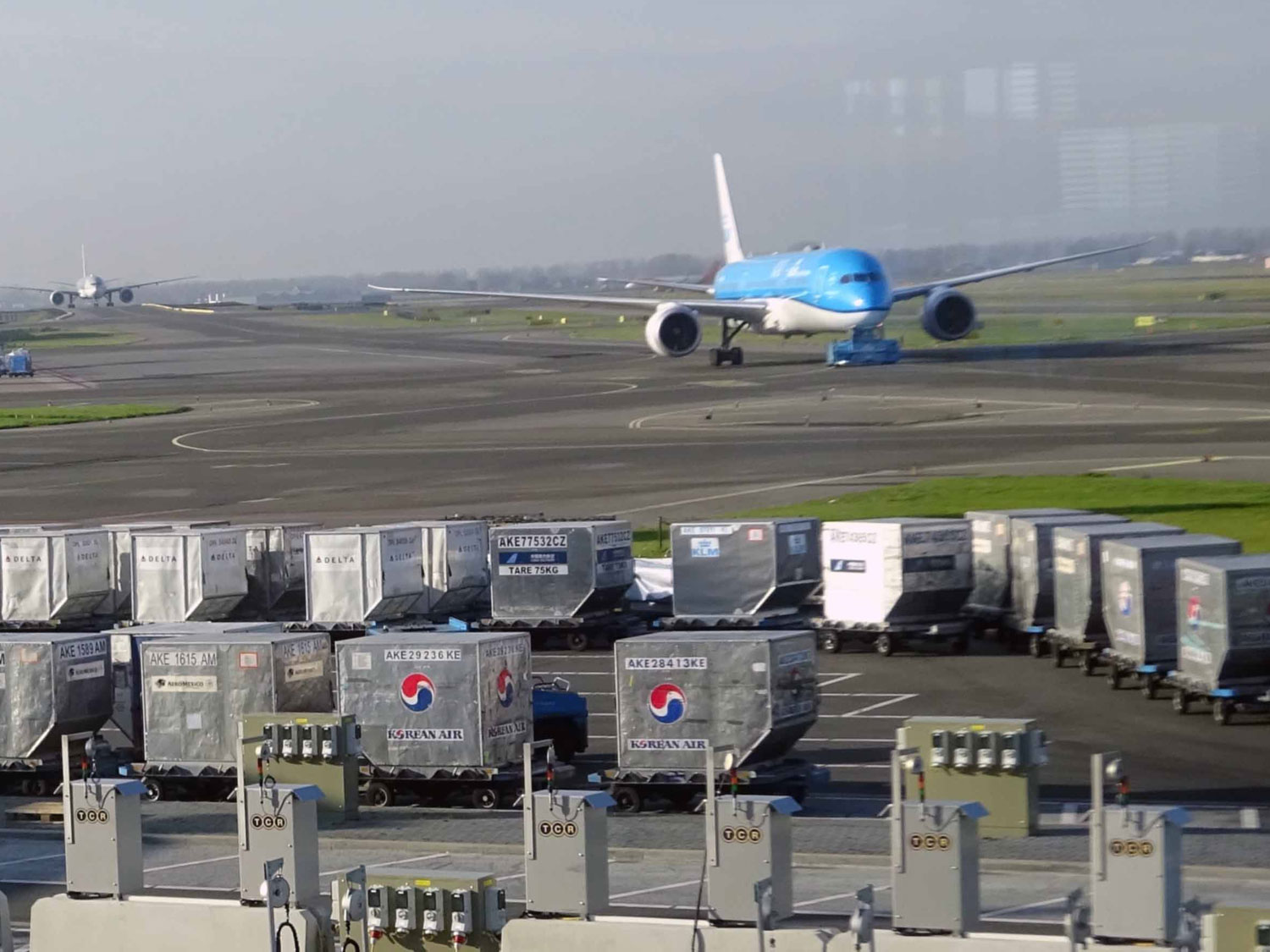
Continued Airfreight Growth Amid Emerging Challenges

Continued Airfreight Growth Amid Emerging Challenges

Global air freight markets have continued to post positive year-on-year growth through September and October, reinforced by stronger than anticipated build up to peak season volumes, but recent indicators point to a moderating pace and emerging challenges that merit close attention.

While recent data points to a slowdown in momentum, overall performance remains solid, underpinned by stable demand, improved belly capacity and expanding connectivity on Asia-Europe and Trans-Pacific routes.

September: Stronger Demand and Broad-Based Recovery

According to IATA’s latest data, global air cargo demand rose nearly 3% year-on-year in September, with international volumes up 3.2%. Capacity grew by roughly 3%, maintaining a healthy balance between supply and demand. The Asia-Pacific region led the expansion with a 6.8% increase in volumes, while Europe recorded a 2.5% rise and Africa posted double-digit growth.

Growth was especially strong on the Europe–Asia (up over 12%) and 10% up within Asia corridors, reflecting continued confidence among exporters and manufacturers leveraging airfreight for time-sensitive and high-value cargo. With global manufacturing activity steadying and cross-border trade recovering, September marked one of the most stable months of the year for international air logistics.

October: Consistent Throughput Amid Changing Conditions

Preliminary October data shows global air cargo volumes continuing to rise (around 4% higher than last year) indicating that demand remains robust heading into the traditional year-end peak. Industry analysts note that the pace of expansion is easing slightly as the market adjusts to higher passenger aircraft capacity and shifting economic conditions, but the overall picture remains positive.

Regional patterns are mixed: Asia continues to drive growth, supported by strong eCommerce flows and resilient intra-regional trade, while the transatlantic market remains steady. Importantly, network connectivity and schedule reliability have improved further, helping shippers achieve greater predictability and shorter transit times across major gateways.

Outlook: Stable, Predictable and Customer-Focused

While the pace of growth is slowing, there are reasons for optimism, including sustained peak season volumes, robust growth across key Asian and African corridors, and ongoing demand from eCommerce and modal shifts due to ocean shipping disruption.

The industry faces headwinds from weakening rate trends and demand imbalances, but steady year-on-year increases, even as momentum tapers, position air freight for a resilient conclusion to 2025.

Overall, air cargo remains on a positive trajectory, delivering growth despite moderating demand and evolving market challenges, with adaptability and strategic planning key for stakeholders navigating this dynamic landscape.

With demand steady and networks evolving, securing lift and predictability is all about smart planning. Metro’s air team proactively monitors capacity, fine-tunes routings, and works with trusted carrier partners to keep your cargo moving—reliably and on time.

Our platform adds real-time confidence with flight telemetry that delivers:

  • Live aircraft position and route mapping
  • Accurate departure/arrival confirmation
  • Time-stamped milestones, updated in real time

Plan with certainty, optimise inventory, and protect service levels—even when conditions change.

EMAIL Andrew Smith, Managing Director, to explore smarter, faster, and more resilient air-freight solutions powered by live data and long-standing carrier relationships.

When the Suez Canal Comes Back Online: Hidden Risks for Supply Chains

When the Suez Canal Comes Back Online: Hidden Risks for Supply Chains

With hopes rising of stabilising conflict in the Red Sea region, analysts are increasingly considering what it would mean if shipping lines resume full use of the Suez Canal route, and it’s not all good news. 

While the shorter route from Asia to Europe might seem like a logistical boon, the modelling suggests there are several material pitfalls ahead that shippers need to be aware of.

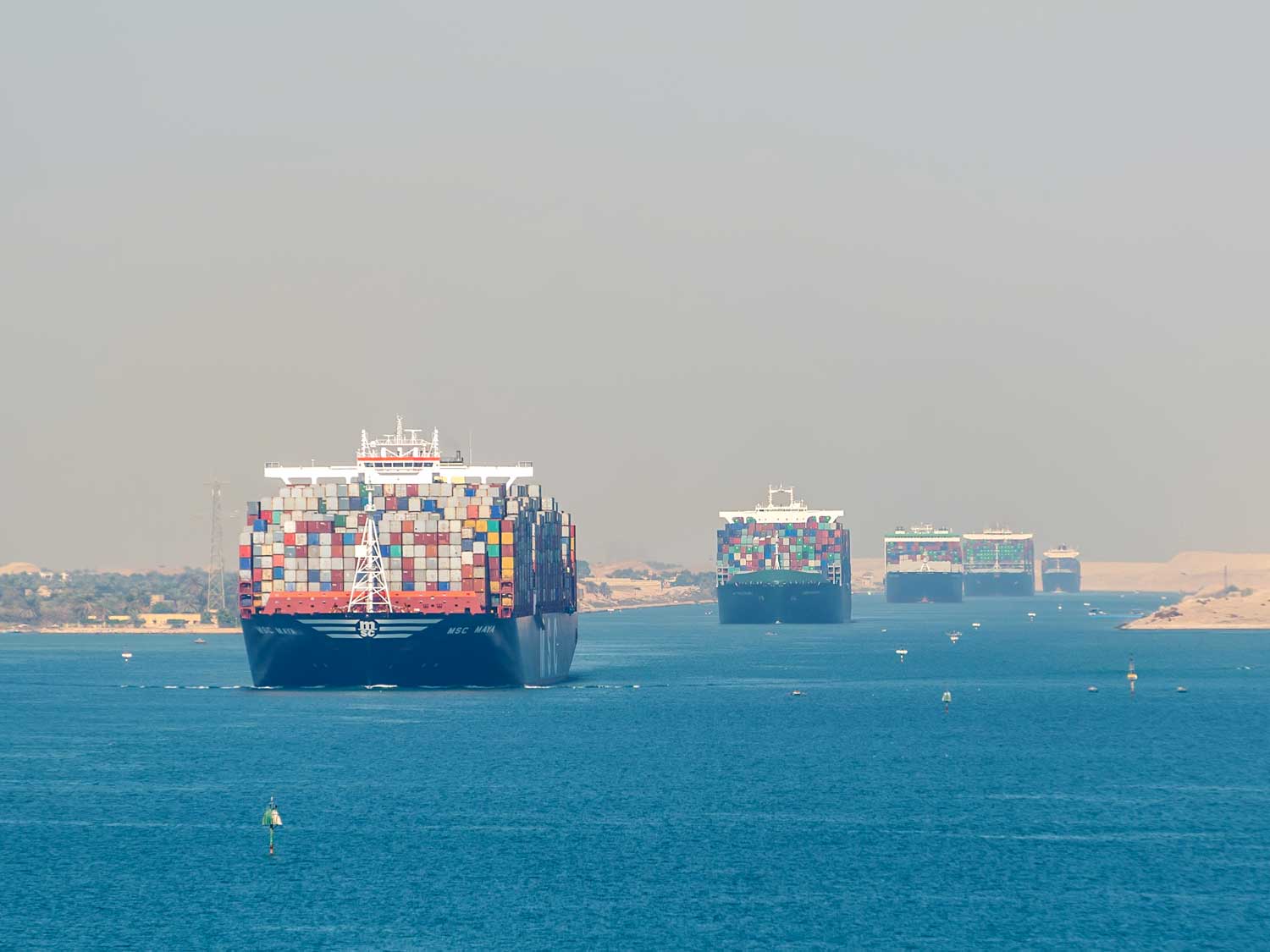
Since late 2023, container shipping lines operating on Asia–Europe and Asia–North America routes have avoided the Suez Canal, opting instead to sail around the Cape of Good Hope. This detour has extended transit times and absorbed a significant amount of global container capacity. According to Sea-Intelligence, a full and immediate return to the Suez Canal could release up to 2.1 million TEU of capacity, equivalent to around 6.5 % of the global fleet, back into circulation.

However, this sudden release would create a powerful surge of imports into Europe. Modelling suggests that if all carriers reverted to Suez routing at once, inbound volumes from Asia could double for a period of up to two weeks, pushing overall port handling demand almost 40 % higher than previous peaks. 

Even if the transition were more gradual, spread over six to eight weeks, European ports would still face throughput levels around 10 % above historical highs, straining terminal operations, inland connections, and storage capacity.

Key Areas of Risk

  • European Port Congestion and Hinterland Strain
    European ports are already under pressure. A sudden import surge could stretch terminal capacity, yard space, and inland networks, leading to delays, higher handling costs, and increased demurrage.
  • Short-Term Disruption Despite Long-Term Gains
    While the Suez route offers shorter transits and lower fuel use, the transition back is complex. Network structures have been rebuilt around the Cape, and reverting will require major re-engineering, with temporary schedule changes and service disruption.
  • Lingering Risk and Insurance Costs
    The security issues that diverted ships from Suez persist. Even after reopening, residual war-risk premiums and contingency measures could keep operating costs elevated.
  • Capacity Overshoot and Rate Pressure
    Releasing 2.1 million TEU of capacity is likely to swing supply–demand balance, pushing rates down and while shippers may benefit in the short-term, it is likely that carriers would take drastic action to protect margins.
  • Timing and Readiness
    The timing of a full return remains uncertain. Analysts stress that rushing back before networks and ports are ready could trigger fresh disruption rather than restoring stability.

Metro’s sea freight team are already modelling reopening scenarios to ensure capacity, routing, and contingency plans are ready when trade flows shift back through the Suez Canal. 

EMAIL Managing Director, Andrew Smith to arrange a strategic review of your shipping patterns, risk exposure, and options to protect service continuity and cost efficiency when routes realign.

Blank Sailings, GRIs and a Typhoon Disrupt Asia Shipping

Blank Sailings, GRIs and a Typhoon Disrupt Asia Shipping

Shippers moving goods out of Asia are bracing for the tightest space and schedule disruptions as the major container shipping lines accelerate blank sailings in the lead-up to China’s extended Golden Week holidays.

Following weeks of tentative planning, lines have now confirmed broad capacity withdrawals, cancelling between 14–17% of sailings on core Asia–Europe and Asia–US routes to offset softer demand amid seasonal and weather challenges.

The unprecedented combination of Golden Week and the Mid-Autumn Festival has pushed factory shutdowns to an eight-day stretch this year, pausing exports at the world’s manufacturing hub.

Just days before the holiday, Super Typhoon Ragasa hammered South China, triggering port closures, flight cancellations, and severe equipment shortages. Local experts now expect cargo backlogs and shipping delays to stack up for at least a week beyond the holiday’s official end, intensifying the regional congestion and supply chain volatility.

Carrier Alliances Adjust Rapidly

Analysis of carrier announcements reveals distinct strategies among the largest ocean alliances. Early movers blanked sailings soon after market signals softened, while others opted for aggressive, late-stage cuts in the final pre-holiday weeks. Whether by steady withdrawals or front-loaded cancellations, overall capacity reductions are now on par with historical Golden Week patterns, yet the scale and timing of adjustments this year dwarf previous years and reflect the urgent need for carriers to rebalance supply with dampened demand.

In parallel with capacity cuts, carriers are moving to restore profitability through new general rate increases (GRIs). One major line has announced GRIs effective from early October:

  • Far East–North Europe: $1,200 per 20ft and $2,000 per 40ft.
  • Far East–West Mediterranean: $1,750 per 20ft and $2,500 per 40ft.
  • Far East–East Mediterranean: $1,800–$2,150 per 20ft and $2,600–$2,700 per 40ft, depending on destination.

Meanwhile, another leading carrier has confirmed a peak season surcharge on the westbound transatlantic, at $400 per 20ft and $600 per 40ft.

These surcharges highlight how quickly pricing can swing when capacity is withheld and seasonal demand shifts.

Adding to the disruption, last week’s Typhoon Ragasa forced widespread factory closures and halted container movements across South China. Surges in trucking and equipment charges at origin have been exacerbated by the post-typhoon scramble.

Why Carriers Blank Sailings

Blank sailings, a carrier’s decision to skip or cancel specific port calls, or even entire voyages, are a crucial tool for controlling costs and freight market stability. These cancellations can occur due to falling demand, port congestion, storms, mechanical breakdowns, or as part of a calculated strategy to support freight rates in an oversupplied market.

Blank sailings happen for several reasons:

  • Low demand – such as after Chinese New Year or Golden Week.
  • Port congestion – strikes, bottlenecks, or canal delays.
  • Weather disruptions – storms or unsafe docking conditions.
  • Mechanical issues – urgent vessel repairs.
  • Market strategy – cutting supply to stabilise freight rates.
  • Regulatory or political disruption – new rules or regional instability.

The Shipper’s Challenge

Blank sailings mean longer lead times, unpredictable offloads, and more frequent cargo rollovers. Freight may get rerouted, remain at origin for extended periods, or be consolidated on later vessels, driving both and planning complexity up.

To keep shipments moving and mitigate delays, shippers should:

  • Build more time buffers into supply chain schedules during holiday and storm periods.
  • Use tracking and analytics tools for early indications of disruption.
  • Diversify carriers, prioritising reliability and fast rerouting capabilities.
  • Communicate proactively about possible delivery delays.
  • Explore alternative transport modes for urgent consignments.

With volumes likely to stay subdued until the seasonal year-end surge, further blank sailings could be triggered in response to lingering congestion and uneven recovery.

The weeks ahead demand vigilance, agility, and close collaboration.

At Metro, we work hand-in-hand with our network and carrier partners across China to keep your cargo moving, even when the market is disrupted. From time-sensitive shipments to sudden blankings, our sea freight team finds the capacity and alternative solutions you need.

By sharing forecasts on critical dates and volumes, you’ll help us secure the right space to safeguard your supply chains and shield you from looming GRIs.

EMAIL Andrew Smith, Managing Director, today to explore how we can protect your ex-Asia supply chains and insulate you from threatened GRIs.