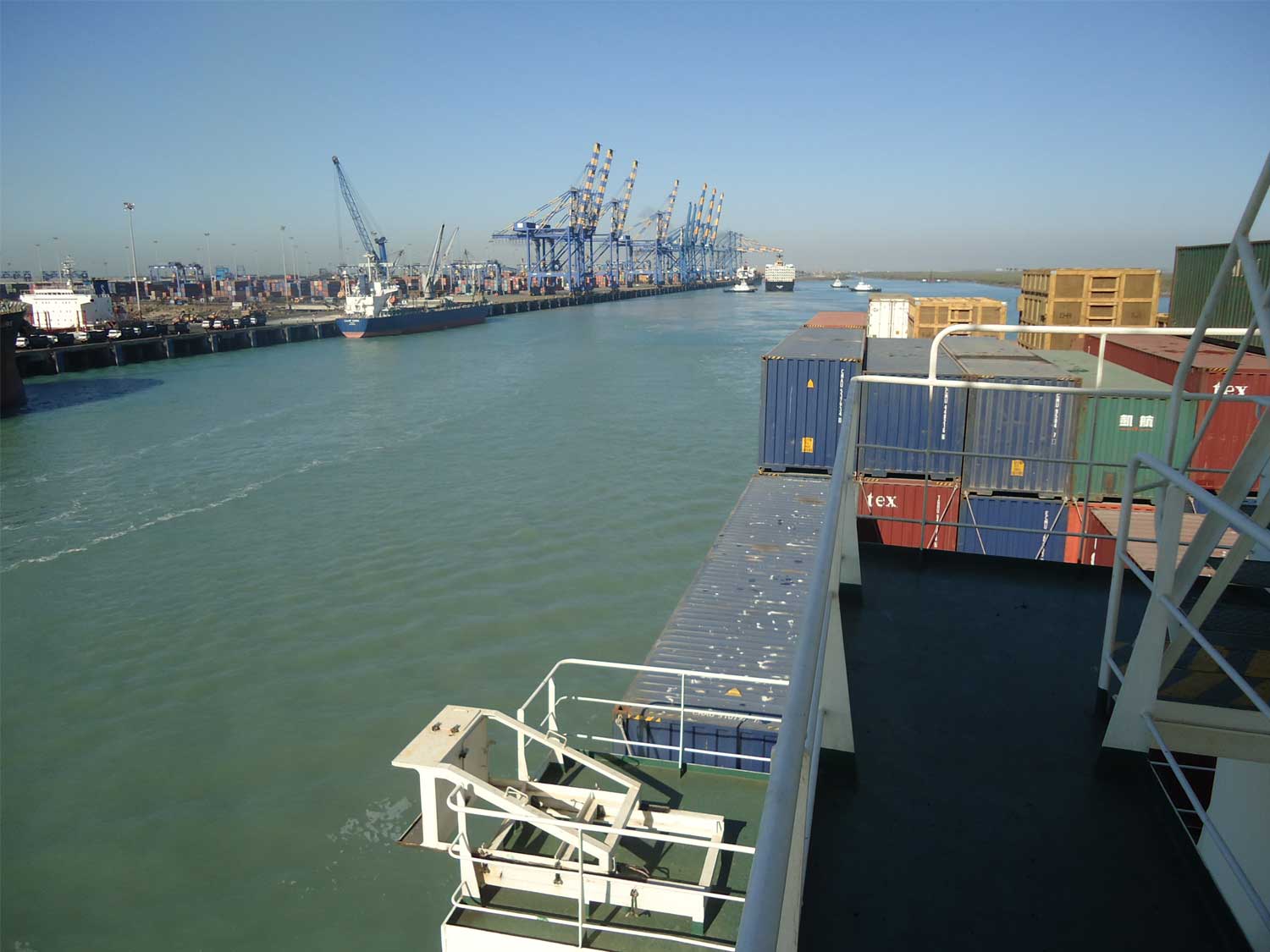
The Suez strikes back

2nd January; Suez Crisis Update

In our 2023 supply chain review we said that we were hopeful that the formation of a coalition naval task force to patrol the southern Red Sea and Gulf of Aden would restore maritime security quickly, but Sunday’s two attacks on the Maersk Hangzhou suggest it could be some time before the route is secure enough for container shipping.

Having halted Suez transits after Sunday’s attack Maersk has now announced that it will pause all sailings through the Red Sea until further notice.

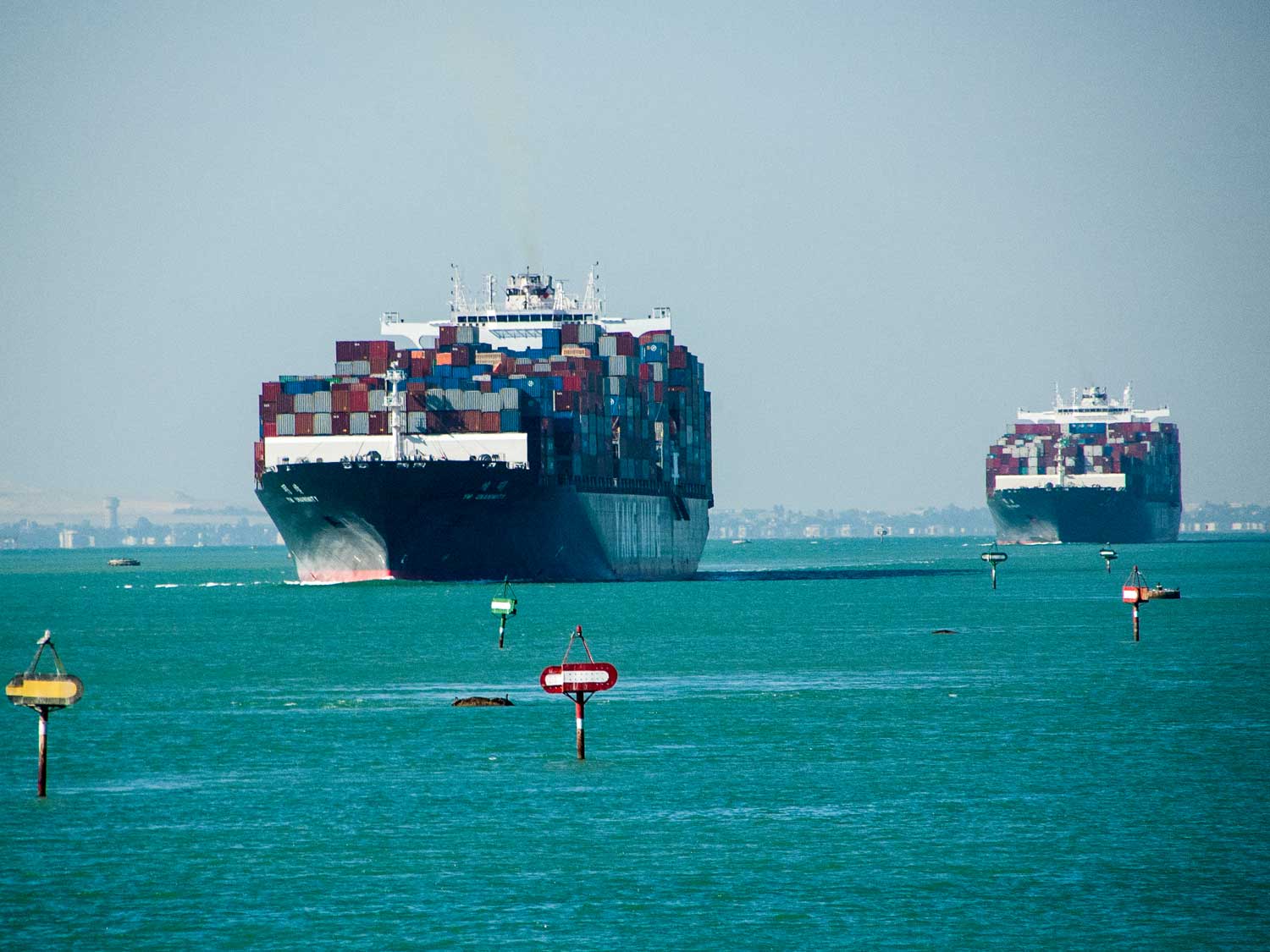
The earlier targeting of vessels tied to Israel has clearly ended, putting any ship, regardless of their nation status in danger and while the coalition forces are successful in intercepting air-based weapons, without a protection regime that guarantees freedom of navigation through the Gulf of Aden and Red Sea, container shipping lines will continue to divert around the Cape of Good Hope route, adding 3,500 miles and 10-14 days transit.

With Iran providing a steady supply of drones and missiles the Houthis can keep up the pace of attacks indefinitely, which means the cost of maintaining a naval presence will rapidly rise into billions of dollars, with spot rates for North Asia to Europe and the Med more than doubling over the past week.

The supply chain disruption being generated by this evolving situation is already spreading and extremely concerning, as we see many similarities with the recently experienced pandemic chaos. Some of the things to consider before they actually occur are as follows :-

With this crisis unfolding during the global slowdown and pause in working over the festive break, it will be interesting to see how businesses react, as the reality and additional costs become apparent.

Whats the impact going to be on air freight once shippers realise components, stock and inventory needed for is manufacturing running low, along with the clash with CNY, which starts early in February.

Both shipping lines and air carriers will increase rates to cope with increased demand from Asia to Europe and the USA, with a peak season to replace the subdued one last year.

If you have any questions for Metro or require advice and assistance on priority shipments in January and February please highlight these and we will put under scrutiny and advise all options available as we anticipate this situation will now extend for a minimum of three months, with the impact that has already occurred so it will be a challenge for some time.

Emerging issues include:

RATES

Spot rates and insurance costs are rising rapidly on all affected trades. However, rates on unrelated trades (eg Transatlantic or India to Australia) are also increasing as operational disruption and vessels being reallocated to fill schedule gaps ex-Asia squeezes available capacity.

SURCHARGES

The shipping lines have been steadily introducing a range of surcharges since November, with a large number of acronyms and mechanisms being employed including Red Sea surcharges, War Risk Surcharge, Emergency Risk Surcharge, War risk premium surcharge, Contingency Surcharge, Emergency Contingency Surcharge and Contingency Adjustment Charge. We work hard to protect our customers from these costs and challenge the lines on every occasion.

ETA

Vessels are turning off their AIS identifying locators, which means they can’t be targeted by baddies, but also means that they are difficult to track, though our AI-driven ocean tracking system continues to predict updated ETAs.

TRANSIT

Extending total service transit times by 20-25 days means that schedule reliability is going to fall off a cliff and the lines will be unable to maintain subsequent schedules, with massive delays and backlogs anticipated.

CAPACITY

With services extended by two weeks (and possibly longer) each way, the shipping lines are adding more vessels, but capacity will still be constrained, which means upwards pressure on rates.

CONGESTION

Lines that paused vessels for 6-8 days are now diverting, but that now means extended transit times of 20 days + and they are bunching up, with the outcome potentially being congestion and berthing issues at arrival ports in weeks to come across Asia and Europe and other regions of the world.

EQUIPMENT

With containers sitting on vessels for an additional 25 days, plus whatever time they spend in ports, we will quickly see equipment shortages grow in Asia and potentially globally and it is inevitable that this will spread to other regions, as their containers are moved to cover Asia’s shortfall. In addition some shipping lines are actively ‘cascading’ vessels from directly unaffected lanes on the Asia/ Europe trades in order to ‘plug the gap’ caused by extended transits and delays on the routes which will have consequences at a later date with the other trade lanes. We will keep you fully advised of the developments on a wider scale as they impact.

AIR

Air cargo volumes increased in the last quarter and are likely to increase significantly as shippers transfer cargo away from sea, with rates already rising and a spike very likely ahead of CNY. We anticipated this becoming evident in the next 2 weeks and we are taking action now to cover capacity and demand.

SEA/AIR

Sea/Air services are rapidly increasing in popularity, with solutions that are not much slower than standard air freight but are typically over 30% cheaper currently and could be significantly more attractive when air freight demand rises. We have a proven and well established sea/ air platform and we have seen a significant increase in utilization from Asia to Europe and USA over the last week already.

ROAD/OVERLAND

With sea services to the Middle East facing so many uncertainties and disruption overland road freight services are much in demand rates have doubled over recent weeks with routings to The Sub Sahara and Middle East.

This is an actively evolving situation, which is liable to change at any time, which is why we will continue to proactively keep you updated with the most important and relevant developments.

We are monitoring individual vessels and routes, to keep customers informed and urge you to contact your account team or manager directly, if you have questions about a live shipment, or want to discuss upcoming consignments. 

With the likelihood of significant sea freight disruption spreading, providing us with your shipment forecasts will help us secure the capacity and routing you need at the best rates. 

Whatever the challenges, our sea freight team keep your cargo moving, finding the best options for your cargo and supply chain deadlines. 

As always we are updating the latest market intelligence on this crisis as it occurs and we are informed or learn of the developments. We are always proactive and we will always have all of  the options available to mitigate impact of these events and supply change challenges.

If you have any questions or concerns about your Asia supply chain, your export logistics platform into The Middle East, Africa, Indian Sub and beyond or any of the content and  developments outlined here, please EMAIL our Chief Commercial Officer, Andy Smith.

wing merro dusk

Supply chain; a year in review

2023 was supposed to be the year that global supply chains bounced back from pandemic lockdowns and factory shutdowns, trade wars, tariffs and war in Europe, but now container shipping is disrupted by attacks in the Red Sea and restrictions on the Panama Canal.

The COVID pandemic and its aftermath, with supply-side fluctuations, shipping delays and port congestion created a logistics storm so brutal that many wondered if supply chains would ever recover.

The dramatic increase in consumer spending during the pandemic that left shippers scrambling for air, road and sea space, quickly fell away at the beginning of the year as consumers faced potential recession and a cost of living crisis.

That fall in demand provided the breathing space for carriers and ports to resolve their capacity and performance issues, clear backlogs and reposition equipment effectively, with markets reverting to pre-pandemic levels in terms of capacity and pricing.

The uncertainties surrounding tariffs, trade wars and geopolitical tensions remain, but there has been no significant move away from China, though we are seeing some diversification of sourcing, with Vietnam and Bangladesh - among other origins - increasingly popular.

While container shipping demand fell away the global shortage of RoRo capacity for finished vehicle shipments led to some car manufacturers to acquire their own vessel assets, while others looked to our containerised shipping solutions, for cheaper sea freight movement and certainty of service.

On the air freight front, having joined the Air France, KLM, Martinair Cargo Sustainable Aviation Fuel (SAF) programme in 2022, we were extremely pleased to support their second sustainable flight challenge in the summer, which was followed a few months later by the first transatlantic SAF-powered crossing, accelerating the transition to a more sustainable airline industry.

Metro’s road freight division has grown significantly in 2023, with more team members joining our UK Birmingham HQ and new support operations located close by manufacturing hubs in Desford and Wythenshawe.

Under new leadership the road freight team have increased European FTL/LTL capability, adding more lanes and expanded our groupage offering, alongside the increasingly popular European Distribution (EU/DDP) solutions. 

As the UK deferred post-Brexit food checks for the 5th time, to avoid adding to food inflation, the EU expanded its Emissions Trading System to the container shipping sector, in a move that will cost carriers, and by extension shippers, $Billions from the start of 2024.

In a move that took the market by surprise (but shouldn’t have) the European Commission announced that it would not renew the container shipping sector’s Consortia Block Exemption to operating alliances in 2024.

Despite the initial panic, it is likely that the EC’s decision will have little real impact, particularly as the Maersk and MSC 2M alliance was already ending, with the others likely to reorganise into new structures.

With 2024 just weeks away, scheduled Trans-Pacific and Asia to North Europe container shipping capacity was up 30% and 10%, raising fears of a massive blank sailing program to try and support rates, but now, with the Suez Canal transit suspended and Panama Canal disruption, we may see increased rates and delays, with air freight’s popularity rising.

We are hopeful that the US and coalition navies can restore maritime security quickly, because the prolonged re-routing of vessels away from the Suez Canal, via the Cape of Good Hope will increase transit times and costs, with a massive reduction in available capacity and a return to equipment imbalances.

Whatever challenges 2024 may bring, you can rest assured that we will keep you informed and protected, because we always have your back covered.

KLM Boeing 787 10 Dreamliner

Supporting sustainable fuel for air and sea freight

As we move into our second year of Sustainable Aviation Fuel (SAF) investment, with Air France, KLM, Martinair, it is great to see the successful transatlantic flight, greater SAF availability and increasing options for green sea freight transport.

The first transatlantic flight by a large passenger plane powered only by SAF landed in the US last week, demonstrating our belief that a greener way of flying freight is possible and that SAF as the most effective tool to help bring net emissions down to zero.

The doubling of SAF biofuel production in 2023 was encouraging as is the expected tripling of production expected in 2024.

However, demand for SAF is not the issue, because every drop produced has been bought and used, it is unlocking supply to meet demand that is the challenge which needs to be solved.

As a portion of renewable fuel production SAF will reach 6% in 2024 and aviation needs between 25% and 30% of renewable fuel production capacity for SAF, so we are on the trajectory needed to reach net zero carbon emissions by 2050. 

There have also been big green steps in container shipping, with carriers investing in energy efficiency for new vessels, while retrofitting their existing fleet for efficiency. 

Shipping lines have been embracing biofuel in the form of methane, methanol or fuel oils, because they promise a convenient way to reduce carbon emissions due to their ability to be mixed with similar versions of fossil fuels and used to power existing engines. 

This is an extremely attractive decarbonisation solution for shipowners as it reduces the need for investment for other decarbonisation options, such as the retrofitting dual-fuel capability. 

As with air, one of the biggest issues facing biofuels in sea freight is supply, with about 5,000 biofuel production facilities worldwide currently, with production of advanced biofuels at 11 Mtoe in 2023 and expected to rise to 23 Mtoe per annum by 2026. 

Whilst this represents strong growth, it still falls short of the volume of biofuels that shipping would need in order to make a big impact on decarbonisation efforts, though many in the industry feel shipping should be prioritised for biofuel supply over other sectors.  

A win for shippers 

Despite the challenge facing biofuel rollout to the shipping sector, there are biofuel solutions available for shippers committed to reducing their emissions.

Shipping lines will bunker biofuel upon the request of customers, allowing them to achieve their emission reduction targets, by paying the difference in fuel cost.

While biofuel is not currently available at all ports, it is possible to offer CO2 savings to customers along any trade lane and route as biofuel is bunkered and used across shipping alliances networks.

In reality shipping biofuel solutions will currently only be practical for the very largest shippers, with Nestlé announcing an agreement today with Maersk and CMA CGM to move 100% of their cargo with biofuel, which will reduces CO2 emissions by 80%

Metro has been carbon-neutral for several years and is committed to extending this zero-emission strategy as far down customers’ supply chains as possible, which is why we welcome the shipping lines efforts and are the first forwarder to invest in the Air France KLM Martinair Cargo SAF programme.

Metro is measuring and monitoring the emissions of every shipment, by every mode, for all of our customers, with offsetting alternatives, so they can work towards carbon neutrality in their global supply chain. 

Our MVT ECO module has reported over 100,000 shipments, with a total CO2 equivalent of more than 300,000 tonnes in 2023.

The MVT ECO module is available free-of-charge to customers on their MVT dashboard. To request a demo or discuss your requirements, please EMAIL Ian Powell.

Fagradalsfjall

Nature and demand pushing up airfreight rates

Airfreight spot rates continued to rise last week as weather conditions, volcanic activity and wars put capacity under pressure, with fears of a major eruption in Iceland growing - possibly within days.

With the airfreight sector preparing to benefit from a potential reduction in ocean shipping reliability next year, as the container shipping lines grapple with antitrust rule changes, current airfreight indexes show airfreight rates stabilising and rising on some routes, driven by demand and nature’s operating challenges.

The global Baltic Air Freight Index was up almost 5% last week compared with the previous seven days, with the increases led by China. 

According to the Baltic Index, prices out of Hong Kong increased by 11.5%, with outbound Shanghai spot rates increasing by 5.3%, and the massive demand to Europe recording a 25% increase on the Freightos air index.

Trans-Pacific rates from both Hong Kong and Shanghai to the US also increased and are now some way above where they were a year ago, driven largely by some big moves out of China.

Trans-Atlantic rates increased 9% last week to their highest level since June, marking a gradual 21% climb since early October, possibly on improved holiday season demand.

Airfreight rates have also been impacted in recent weeks by heavy snowfall in Anchorage which resulted in cancellations and price inflation, while ash clouds from Russia’s Klyuchevskoy Volcano forced flights from the US, China, Japan and South Korea to route further south, resulting in longer flight times and refuelling stops.

In 2010 European flights were suspended due to ash clouds from the Eyjafjallajцkull volcano eruption in Iceland and concerns are growing that the likelihood of another eruption in Iceland is high, possibly within just days, after more than 20,000 earthquakes struck the country’s southwest since late October.

However, any eruption of the Fagradalsfjall volcano would take place under very different circumstances to 2010, which significantly lower the chances of similar flight chaos. 

In the past three years, three eruptions have taken place in the same area, with no impact on air travel, and the European Aviation Safety Agency (EASA) is also better prepared for a major volcanic ash event. 

"In the event of an eruption and development of an ash cloud, the agency will work with other aviation actors to assess the impact for aviation and make recommendations accordingly" a statement on the EASA's website reads. 

At this time all flights are operating normally and no carrier has any plans to review.

While the Icelandic situation may not be as dire as 2010, ‘natural events’ are unpredictable, which may disrupt flights and there is a definite tightening in the market on many routes, which means it is critical that pending airfreight shipments are scheduled at the earliest opportunity, to secure space and the best available rate.

We have solutions for every critical shipment, with extremely competitive rates and really interesting service and route combinations. 

EMAIL Elliot Carlile, Operations Director, for insights, prices and advice.