US winter storm

US winter disruption ripples through truck, rail and intermodal networks

Severe winter weather across the United States has triggered the sharpest short-term trucking spot rate spike in more than three years, with disruption now filtering upstream into inland rail and intermodal hubs.

Snow and ice blanketing large parts of the eastern US drove a 40% week-on-week increase in spot market load posts. Dry-van spot rates climbed 11 cents in seven days, the steepest weekly rise since early 2021, while temperature-controlled (reefer) capacity jumped 15 cents week over week as shippers scrambled for freeze protection.

Unlike previous disruption events, the system now has less “buffer” capacity. Market reaction to the latest storm has been more severe than that seen after Hurricane Helene in September 2024, when spot loads rose 17% and rates increased just 4 cents week over week.

With tighter latent capacity, even short-lived weather events are producing outsized pricing swings.

Structural factors could extend pressure

January manufacturing data from the Institute for Supply Management moved back above the 50 baseline into expansion territory for the first time in more than a year, fuelling speculation that the freight recession may be bottoming out.

At the same time, federal enforcement activity around non-domiciled commercial driver’s licences (CDLs) and English-language proficiency requirements is reportedly pushing shippers towards asset-based carriers with company drivers. That shift could reduce available independent capacity, adding structural support to contract and spot rate increases, particularly as the spring produce season approaches.

If reefer markets tighten sharply during produce season, rate pressure is likely to cascade into dry-van networks, making elevated pricing more durable through 2026.

Rail and intermodal congestion follows the storm

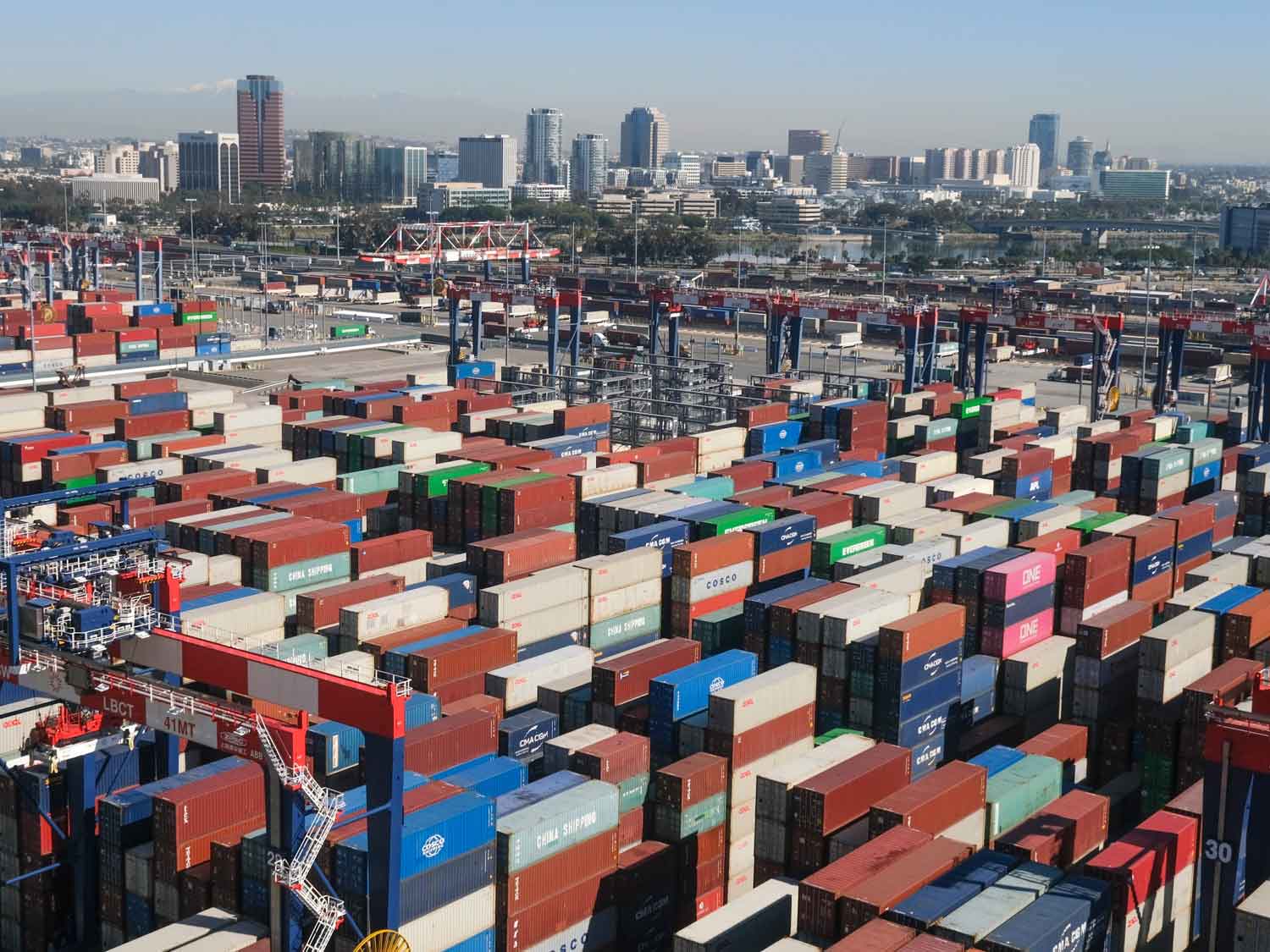
While Class I rail line-haul performance has largely normalised, disruption has migrated inland. Rail terminals including Memphis, Chicago and Cincinnati are now experiencing post-storm congestion.

At key inland hubs, container availability times have doubled from around one day to two days. Data from technology provider E-Dray shows that average availability at Union Pacific’s Memphis terminal rose from 0.7 days pre-storm to 2.9 days after the event.

Transit times between Kansas and Illinois spiked to nearly 80 hours before easing to around 35 hours. Mississippi–Illinois transits briefly doubled to 19 hours before settling closer to 10 hours.

Drivers report waiting up to five hours inside terminals, missing delivery windows and triggering demurrage exposure. The issue is not chassis shortages but crane and yard capacity constraints in freezing conditions.

Union Pacific’s decision to levy “flip fees” for lifting containers from stacks, a charge not typically applied by other North American Class I railroads or major US ports, has added further cost pressure for drayage providers, costs that are not being absorbed by cargo owners.

What this means for importers and exporters

For international shippers moving freight into and out of the US, the key risk lies in the inland leg:

  • Higher US trucking spot rates can quickly erode landed-cost assumptions.
  • Intermodal congestion extends container dwell time and increases demurrage and detention exposure.
  • Reefer market tightening during produce season could distort both temperature-controlled and dry-van pricing.
  • Inland rail volatility can delay export positioning, affecting vessel cut-offs and schedule integrity.

Weather-related disruption may ease, but reduced capacity buffers mean price and service volatility can persist longer than the storm itself.

How Metro supports shippers through US inland volatility

Metro works with importing and exporting customers to reduce exposure to short-term inland shocks through:

  • Pre-planned multimodal routing strategies
  • Secured trucking and intermodal capacity with vetted asset-based partners
  • Active dwell-time and demurrage monitoring
  • Early visibility of rail terminal congestion
  • Contingency planning ahead of seasonal inflection points such as produce season

In volatile inland markets, control and foresight matter as much as headline freight rates.

If your US supply chain is exposed to trucking or intermodal risk, EMAIL our managing director, Andrew Smith, to learn about building resilience into your routing strategy, before the next disruption hits.

Long Beach 1 1440x1080 1

Cautious CNY trans-Pacific surge

The trans-Pacific sea freight market is entering 2026 with pre-Chinese New Year volumes rising earlier than usual, spot rates climbing sharply and carriers leaning on capacity discipline to manage risk.

Despite Chinese New Year falling later than usual this year, shipment activity has moved forward, with volumes building three to four weeks earlier than the historical pattern. Import bookings from Asia to North America strengthened through December and into early January, marking the first month-on-month increase in six months.

According to the National Retail Federation, this uplift reflects a brief pre-holiday bump rather than a sustained restocking cycle. The organisation expects imports to soften again after Chinese New Year, in line with the usual post-holiday retail lull.

Forecasts for the US West Coast gateway show import volumes reaching a short-term high in early January, with weekly throughput at levels associated with a solid operating week. Volumes are then expected to ease back over the following weeks into a more typical seasonal lull, before recovering again from mid-February as cargo loaded just ahead of factory shutdowns arrives.

This pattern reinforces the view that the current lift is driven by timing rather than a fundamental demand shift.

Blank sailings shape the market response

Carrier behaviour has been decisive. In the five-week window from weeks 04 to 08, carriers have announced 68 blank sailings from approximately 698 scheduled departures from Asia, equating to around 10% of planned capacity being withdrawn.

Blankings are heavily concentrated on the trans-Pacific eastbound trade, which accounts for 47% of all announced cancellations. This targeted withdrawal has allowed carriers to manage utilisation closely, supporting pricing without widespread disruption to schedules.

Against this backdrop, spot rates from Asia to the US West Coast have increased by more than 40% over the past four weeks, with East Coast pricing up by around one-third over the same period. These gains follow a period of relatively muted demand and reflect a combination of seasonal lift and disciplined capacity management rather than space shortages.

Importantly, recent general rate increase attempts have shown limited staying power, indicating that while carriers have succeeded in lifting the rate floor, pricing remains sensitive to demand signals. The current rate environment is nevertheless viewed as sufficient to underpin upcoming service contract negotiations, with spot levels sitting comfortably above existing contract benchmarks.

Demand remains measured

Despite the visible rate movement, inventory indicators suggest a restrained demand environment. Importers are largely shipping against existing orders rather than aggressively pulling forward inventory. Inventory growth has slowed, and fourth-quarter volumes were slightly lower year on year, reflecting the unusually strong import levels seen in early 2025.

Looking ahead, expectations centre on a modest improvement rather than a repeat of last year’s surge. Trade growth forecasts for 2026 point to low single-digit expansion, consistent with a market returning to more traditional seasonal peaks and troughs.

With strategic capacity management and long-established ocean carrier relationships, Metro is helping customers secure space, optimise rates and keep high-priority cargo moving across key trans-Pacific lanes. As blank sailings and new rate initiatives reshape the market, proactive planning and flexible routing have never been more important.

Metro’s growing local presence in the United States further strengthens this approach, giving shippers on-the-ground support, closer carrier engagement and greater control across Asia–US supply chains.
https://metro.global/news/metro-global-usa-building-momentum-in-a-key-market/

If your business depends on reliable Asia–US trade flows, EMAIL Andrew Smith, Managing Director, to explore how expert guidance, tailored solutions and strong carrier partnerships can keep your supply chain agile and cost-effective—whatever the market brings.

Manhattan skyline 1440x1080 1

Strengthening Metro’s US customer focus

Metro continues to invest in capability, coverage and customer leadership as part of its expansion plans for 2026. The appointment of Jonathan Cheyne as Key Account Director for the USA reflects that commitment, reinforcing Metro’s commercial focus and customer engagement across the transatlantic market.

Jonathan joins Metro with a strong international background spanning education, sport and global logistics, bringing a people-first approach shaped by both operational delivery and customer experience leadership.

Jonathan’s higher education spans more than a decade, with undergraduate and postgraduate study, alongside research modules, completed at leading universities across Scotland, the United States and Singapore. This international academic exposure has underpinned a career built around collaboration, performance and cross-border understanding.

Alongside his studies, Jonathan rowed competitively for Glasgow University. After completing his eligibility as an athlete, he returned to the club as a volunteer coach, while working professionally with Scottish Rowing. This combination of participation and leadership helped shape a management style centred on performance, development and accountability.

Jonathan Cheyne – Key Account Director

As Regional Development Manager at Scottish Rowing, Jonathan spent two years supporting athlete pathways, regional programmes and organisational growth. The role built a strong grounding in stakeholder management, structured development and performance outcomes. Skills that would later translate into complex commercial environments.

Jonathan then spent eight years with A.P. Moller – Maersk, holding a series of progressively senior roles across the UK and Ireland. His experience spans client-facing account management, regional customer leadership and global programme director roles.

Across these roles, Jonathan worked at the intersection of customers, operations and carrier strategy, with a strong focus on service consistency, network performance and multi-carrier solutions.

Building Metro’s US commercial platform

Jonathan joined Metro in December 2025, with a clear mandate from the group’s leadership: to help build and shape Metro’s US commercial platform.

Working closely with existing and new customers, his role centres on developing long-term relationships, supporting inbound/outbound operations into the US and ensuring consistent service delivery for end customers. Crucially, Jonathan sees Metro USA as the group’s conduit to the US market, connecting customers, capabilities and opportunities across the wider Metro network.

As Metro expands its footprint and investment in the United States, Jonathan will play a key role in broadening the group’s horizons, commercially, operationally and strategically, across North America.

Whether you are exporting to the US today, considering new routes to market, or looking to strengthen service levels for your American customers, Jonathan Cheyne would welcome a conversation to understand your requirements and explore how Metro can support your ambitions. EMAIL Jonathan.

Trumps tariffs 1440x1080 1

Progress and Paralysis in US Trade Policy

After weeks and months of economic tension and political uncertainty, a flurry of developments in early November have reshaped the outlook for US trade and logistics.

From tariff rollbacks to port fee suspensions, and a potential landmark Supreme Court ruling and continuing government shutdown, the policy landscape is shifting rapidly, bringing both relief and unease across global supply chains.

Tariffs Eased Under New US–China Agreement

The reduction of tariffs between the US and China took effect on 10 November, following a trade accord reached between Presidents Trump and Xi. The agreement lowers import duties on a wide range of goods, from agricultural products and industrial components to consumer electronics.

Importers welcomed the easing as a means to restore competitiveness and predictability in sourcing, with improved freight flows anticipated on trans-Pacific lanes. Analysts note that while the tariff cuts do not resolve underlying geopolitical tensions, they provide welcome breathing space for manufacturers balancing cost pressures and re-shoring considerations.

Port Fee Suspension Brings Relief to Carriers and Shippers

Complementing the tariff reductions, both Washington and Beijing have suspended reciprocal port fees for one year, from 10 November. The decision, announced 30 October, pauses the retaliatory levies that had been applied to vessels linked to either country.

The inclusion of RoRo and car carrier vessels in the suspension was particularly well received by the automotive and heavy-equipment sectors, which had faced additional costs on each port call.

The agreement is widely viewed as a pragmatic step toward de-escalation in maritime trade policy, easing operational costs for shipping lines and restoring confidence among automotive exporters and manufacturing supply chains reliant on consistent vessel rotation between US and Chinese ports.

Supreme Court Tariff Showdown: Uncertainty Persists

The fate of President Trump’s ability to impose sweeping tariffs remains unresolved, with the Supreme Court having recently heard oral arguments but yet to issue a ruling. Lower courts previously ruled against the administration’s use of emergency powers to levy broad tariffs under the International Emergency Economic Powers Act (IEEPA), but the decision has been put on hold pending Supreme Court review.

The justices are split, with three seen as likely to support Trump’s position, three clearly against, and three in the middle, making the outcome difficult to predict. During oral arguments, skepticism was evident from across the bench regarding whether the statute provides a president such expansive tariff powers without congressional authorisation.

If the Supreme Court rules against Trump, attention will turn to the array of alternative mechanisms available to maintain tariffs. Even without IEEPA authority, legal experts note that the administration could rely on statutes such as Section 301 of the Trade Act of 1974, which permits tariffs against unfair trading practices, or Section 338, a Depression-era law, which allows for steep duties of up to 50% if US businesses are discriminated against abroad. While each legal tool has varying thresholds and limitations, trade analysts are convinced there remain multiple pathways for the US to reimpose tariffs on targeted imports, underscoring the persistent uncertainty facing global shippers and manufacturers.

Government Shutdown Disrupts Trade Flows

Meanwhile, the US government shutdown, which began on 1 October, continues to disrupt logistics and international trade operations. Although a Senate compromise now appears close, any deal is likely to offer only temporary relief, funding government activities through January and leaving open the possibility of renewed disruption early next year.

While ports remain open, reduced staffing at US Customs and Border Protection has slowed documentation and inspection processes, lengthening clearance times and increasing dwell periods at major gateways such as Los Angeles-Long Beach.

Exporters are facing further obstacles as the Bureau of Industry and Security and the Directorate of Defence Trade Controls have paused most export licence reviews, while trucking and aviation sectors face delays in driver certification and airworthiness approvals.

Global supply chains are already feeling the ripple effects, with European and Asian manufacturers reporting shipment delays and additional inventory costs. The episode underscores the vulnerability of cross-border trade to US political impasse, a reminder that even as tariff and port fee tensions ease, operational continuity remains at the mercy of Washington’s budget negotiations.

With tariffs shifting, port policies evolving, and the risk of government shutdowns disrupting customs and regulatory processes, keeping your cargo moving demands proactive coordination and local expertise.

Metro’s US brokerage and logistics teams work closely with CBP and partner agencies to maintain clearance continuity and minimise disruption during periods of political or operational uncertainty. Supported by our CuDoS customs automation platform and expanding Metro Global USA network, we ensure every declaration meets filing deadlines accurately, efficiently, and fully compliant.

EMAIL Andrew Smith, Managing Director, to learn how Metro can help you navigate US trade policy changes, mitigate shutdown risks, and protect your supply chain from volatility.