
wing merro dusk

Supply chain; a year in review

2023 was supposed to be the year that global supply chains bounced back from pandemic lockdowns and factory shutdowns, trade wars, tariffs and war in Europe, but now container shipping is disrupted by attacks in the Red Sea and restrictions on the Panama Canal.

The COVID pandemic and its aftermath, with supply-side fluctuations, shipping delays and port congestion created a logistics storm so brutal that many wondered if supply chains would ever recover.

The dramatic increase in consumer spending during the pandemic that left shippers scrambling for air, road and sea space, quickly fell away at the beginning of the year as consumers faced potential recession and a cost of living crisis.

That fall in demand provided the breathing space for carriers and ports to resolve their capacity and performance issues, clear backlogs and reposition equipment effectively, with markets reverting to pre-pandemic levels in terms of capacity and pricing.

The uncertainties surrounding tariffs, trade wars and geopolitical tensions remain, but there has been no significant move away from China, though we are seeing some diversification of sourcing, with Vietnam and Bangladesh - among other origins - increasingly popular.

While container shipping demand fell away the global shortage of RoRo capacity for finished vehicle shipments led to some car manufacturers to acquire their own vessel assets, while others looked to our containerised shipping solutions, for cheaper sea freight movement and certainty of service.

On the air freight front, having joined the Air France, KLM, Martinair Cargo Sustainable Aviation Fuel (SAF) programme in 2022, we were extremely pleased to support their second sustainable flight challenge in the summer, which was followed a few months later by the first transatlantic SAF-powered crossing, accelerating the transition to a more sustainable airline industry.

Metro’s road freight division has grown significantly in 2023, with more team members joining our UK Birmingham HQ and new support operations located close by manufacturing hubs in Desford and Wythenshawe.

Under new leadership the road freight team have increased European FTL/LTL capability, adding more lanes and expanded our groupage offering, alongside the increasingly popular European Distribution (EU/DDP) solutions. 

As the UK deferred post-Brexit food checks for the 5th time, to avoid adding to food inflation, the EU expanded its Emissions Trading System to the container shipping sector, in a move that will cost carriers, and by extension shippers, $Billions from the start of 2024.

In a move that took the market by surprise (but shouldn’t have) the European Commission announced that it would not renew the container shipping sector’s Consortia Block Exemption to operating alliances in 2024.

Despite the initial panic, it is likely that the EC’s decision will have little real impact, particularly as the Maersk and MSC 2M alliance was already ending, with the others likely to reorganise into new structures.

With 2024 just weeks away, scheduled Trans-Pacific and Asia to North Europe container shipping capacity was up 30% and 10%, raising fears of a massive blank sailing program to try and support rates, but now, with the Suez Canal transit suspended and Panama Canal disruption, we may see increased rates and delays, with air freight’s popularity rising.

We are hopeful that the US and coalition navies can restore maritime security quickly, because the prolonged re-routing of vessels away from the Suez Canal, via the Cape of Good Hope will increase transit times and costs, with a massive reduction in available capacity and a return to equipment imbalances.

Whatever challenges 2024 may bring, you can rest assured that we will keep you informed and protected, because we always have your back covered.
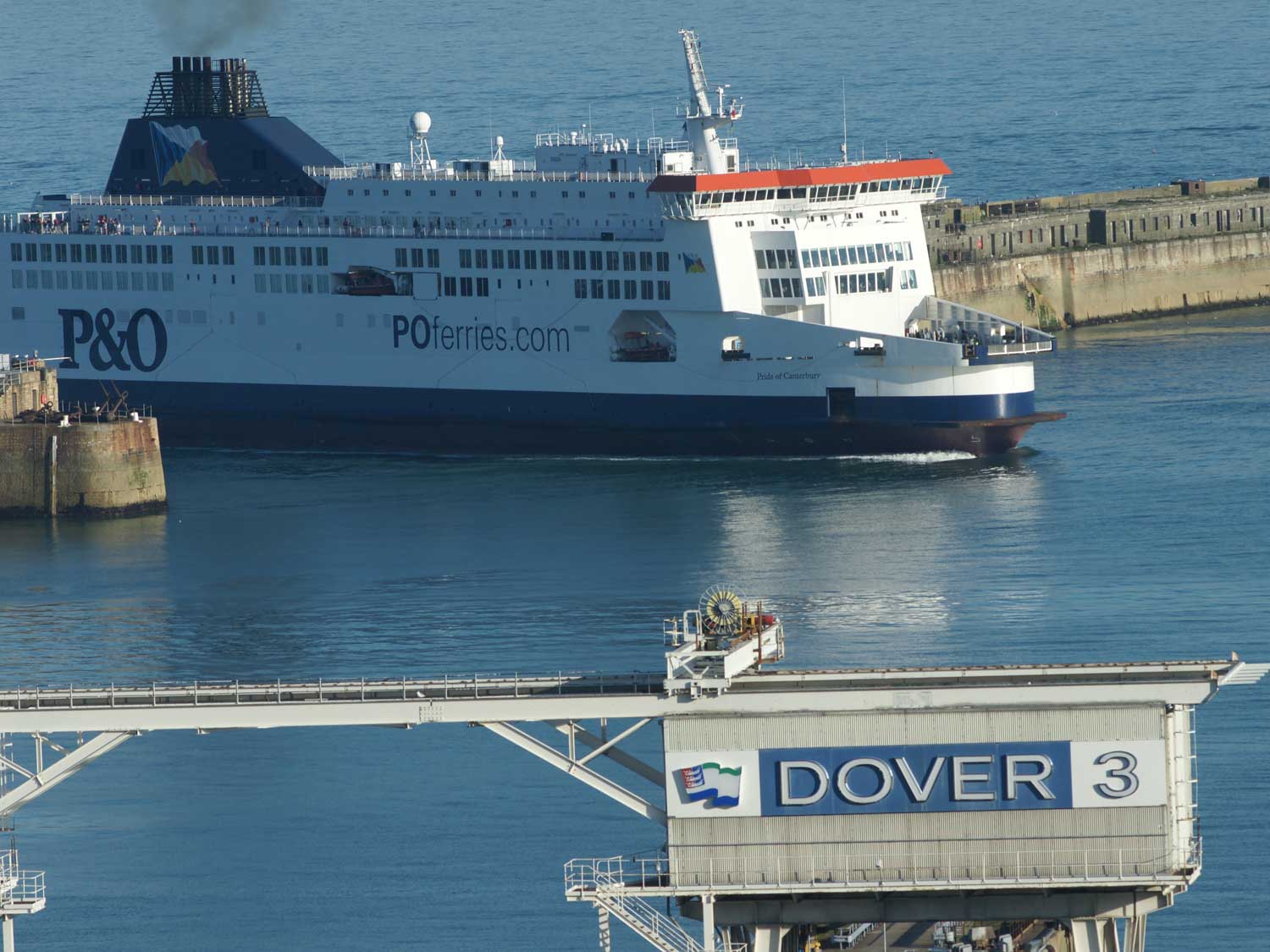
P and O

HMRC export deadline and rogue hauliers

With the deadline fast approaching for export declarations moving to the Customs Declaration Service HMRC are highlighting a worrying trend at the border, with misuse of valid documents leaving innocent exporters potentially non-compliant and exposed to penalties. 

In their latest Customs Declaration Service (CDS) update HMRC remind traders that all export declarations must move from their legacy Customs Handling of Import and Export Freight (CHIEF) system to CDS by Saturday 30th March 2024. 

We are continuing to work with our customers, setting them up on CDS for all export routes and the different types of export declaration submitted at the UK border, including Transit (TAD) and the Goods Vehicle Movement Service (GVMS).

It is these latter two that HMRC focused on, in highlighting Goods Movement Reference (GMR) errors by hauliers that are leading to issues at the UK and EU border.

Consistent misuse of valid export CDS documents where the transit document is being used for the convenience of the haulier means that shipments are not arrived in the correct manner.

Exporters have a legal obligation to pre-lodge declarations if they are moving their goods through a location using GVMS and pass evidence of this for a haulier to complete a GMR.

Hauliers have a legal obligation to carry evidence that pre-lodged customs declarations or reference numbers for Simplified Customs Procedure authorised traders are in place for all the goods they are moving.

This is met by hauliers completing a GMR which must include a declaration reference for each consignment as proof that a pre-lodged declaration has been made.

Carriers require a valid GMR to be presented at the port of departure before allowing the vehicle or trailer to board.

HMRC’s issue is that hauliers are inappropriately using TAD MRN (transit document) as suitable evidence for the export MRN reference, irrespective of what else is loaded to the trailer, which is not the case when a DUCR has been issued..

The correct use of DUCR or MUCR being advised to customs allows the authorities to “arrive” the customs entry, which means that there is a permanent record of the despatch of the goods so the VAT liability for the shipment is discharged and the zero rated document raised by the shipper becomes validated.

Incorrect GVMS entries by hauliers leads to missing data on exporters MSS reports, missing critical data in terms of managed Customs facilities such as stock records for CFSP locations, which leads to extra admin and inventory shortages, both serious matters.

These export process are incredibly complex and should be of no concern to exporters, but unfortunately many (non-Metro customers) are being caught out by the carriers’ non-compliance.

We work closely with our road transport partners to ensure they have the correct documentation and submit the correct information to GVMS through CDS.

Our CuDoS customs platform automatically monitors the status of export declarations and will flag potential non-compliance issues.

If you have any concerns or questions, regarding CDS or export compliance please EMAIL Andy Fitchett, Brokerage Manager.

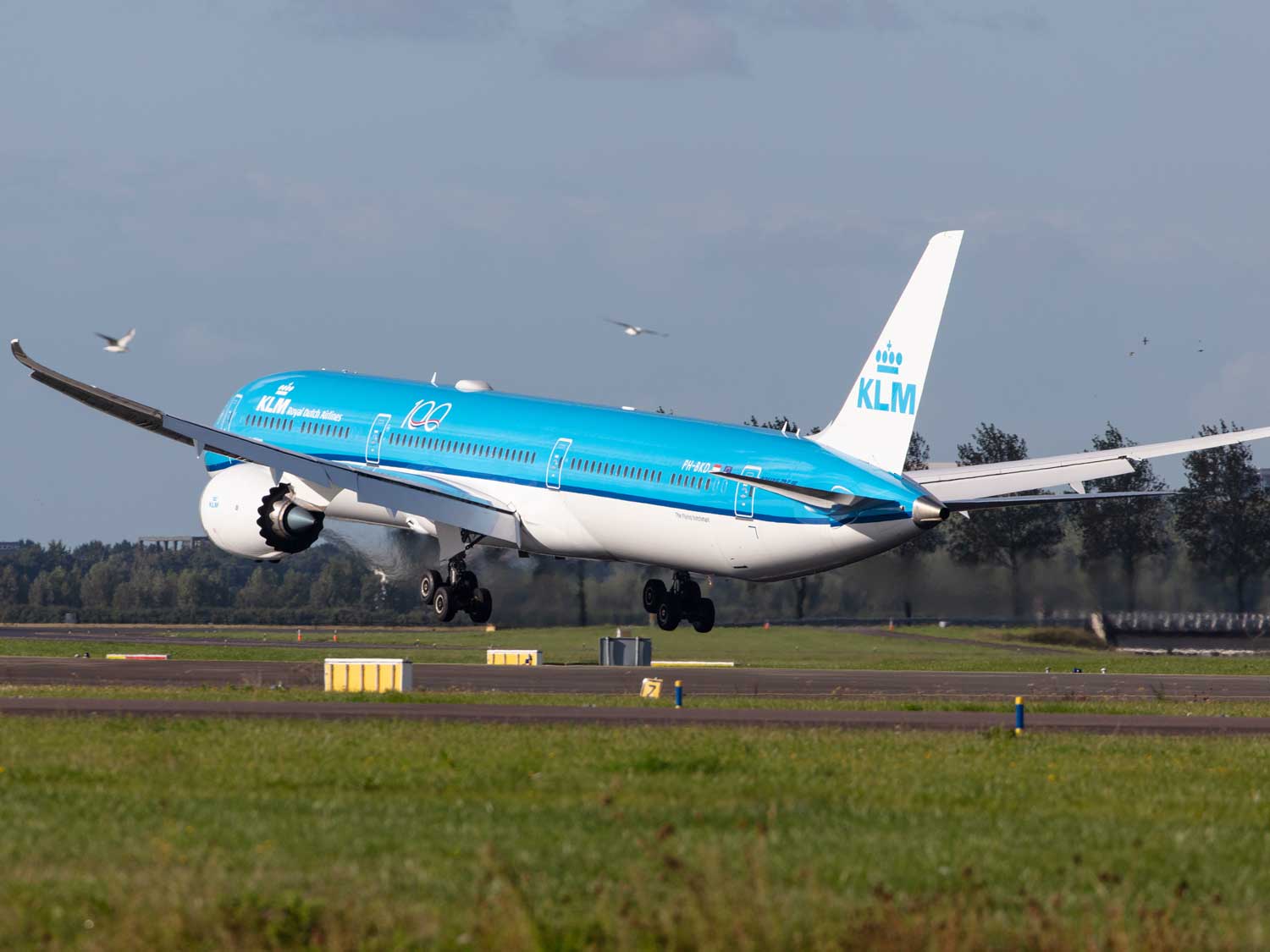
KLM Boeing 787 10 Dreamliner

Supporting sustainable fuel for air and sea freight

As we move into our second year of Sustainable Aviation Fuel (SAF) investment, with Air France, KLM, Martinair, it is great to see the successful transatlantic flight, greater SAF availability and increasing options for green sea freight transport.

The first transatlantic flight by a large passenger plane powered only by SAF landed in the US last week, demonstrating our belief that a greener way of flying freight is possible and that SAF as the most effective tool to help bring net emissions down to zero.

The doubling of SAF biofuel production in 2023 was encouraging as is the expected tripling of production expected in 2024.

However, demand for SAF is not the issue, because every drop produced has been bought and used, it is unlocking supply to meet demand that is the challenge which needs to be solved.

As a portion of renewable fuel production SAF will reach 6% in 2024 and aviation needs between 25% and 30% of renewable fuel production capacity for SAF, so we are on the trajectory needed to reach net zero carbon emissions by 2050. 

There have also been big green steps in container shipping, with carriers investing in energy efficiency for new vessels, while retrofitting their existing fleet for efficiency. 

Shipping lines have been embracing biofuel in the form of methane, methanol or fuel oils, because they promise a convenient way to reduce carbon emissions due to their ability to be mixed with similar versions of fossil fuels and used to power existing engines. 

This is an extremely attractive decarbonisation solution for shipowners as it reduces the need for investment for other decarbonisation options, such as the retrofitting dual-fuel capability. 

As with air, one of the biggest issues facing biofuels in sea freight is supply, with about 5,000 biofuel production facilities worldwide currently, with production of advanced biofuels at 11 Mtoe in 2023 and expected to rise to 23 Mtoe per annum by 2026. 

Whilst this represents strong growth, it still falls short of the volume of biofuels that shipping would need in order to make a big impact on decarbonisation efforts, though many in the industry feel shipping should be prioritised for biofuel supply over other sectors.  

A win for shippers 

Despite the challenge facing biofuel rollout to the shipping sector, there are biofuel solutions available for shippers committed to reducing their emissions.

Shipping lines will bunker biofuel upon the request of customers, allowing them to achieve their emission reduction targets, by paying the difference in fuel cost.

While biofuel is not currently available at all ports, it is possible to offer CO2 savings to customers along any trade lane and route as biofuel is bunkered and used across shipping alliances networks.

In reality shipping biofuel solutions will currently only be practical for the very largest shippers, with Nestlé announcing an agreement today with Maersk and CMA CGM to move 100% of their cargo with biofuel, which will reduces CO2 emissions by 80%

Metro has been carbon-neutral for several years and is committed to extending this zero-emission strategy as far down customers’ supply chains as possible, which is why we welcome the shipping lines efforts and are the first forwarder to invest in the Air France KLM Martinair Cargo SAF programme.

Metro is measuring and monitoring the emissions of every shipment, by every mode, for all of our customers, with offsetting alternatives, so they can work towards carbon neutrality in their global supply chain. 

Our MVT ECO module has reported over 100,000 shipments, with a total CO2 equivalent of more than 300,000 tonnes in 2023.

The MVT ECO module is available free-of-charge to customers on their MVT dashboard. To request a demo or discuss your requirements, please EMAIL Ian Powell.

SCEA

Metro win double in October

In partnership with key technology partners WNS and Windward, Metro has won the Innovation Category at this month’s Supply Chain Excellence and ISG Paragon Awards, for two AI powered solutions.

It is through award-winning initiatives such as these, that we maintain our strong track record in the market - at the cutting edge of new technology - and it is through the power of leveraging these partnerships that new innovations become reality. 

The future ability of our customers to compete globally, with competitive advantage in their supply chain, relies on us maintaining high levels of innovation and when we collaborate with the right partners, we all come out as winners.

AI driven Ocean freight visibility

In its 27th year, the Supply Chain Excellence Awards are the longest-standing trade awards in the European supply chain sector and are renowned for their vigorous judging process, which includes formal presentations for finalists and direct feedback from judges.

The winners of the Supply Chain Excellence Awards 2023 were announced at the London Hilton Hotel, Park Lane, on Thursday 9th November, with Metro & Windward winners of The Supply Chain Innovation Award, for our AI powered Ocean visibility solution.

The Ocean Freight Visibility (OFV) solution provides real-time visibility of shipping milestones, with AI Predicted ETAs for better planning, management by exception, and risk mitigation.

OFV is already delivering to a 75% reduction in time spent on shipment operations and a 50% decrease in demurrage & detention costs. 

Simon George, Group IT Director. “This award is fitting recognition of a partnership that is built on innovation, trust, and a shared commitment to excellence.

We're not just collaborators, we're design partners, and what we've achieved together is brilliant.

Our journey doesn't end here; it evolves. We're excited about the future possibilities, and promise to continue pushing the boundaries of what's possible.”

Digitising Customs with AI optimised data capture

Information Services Group (ISG), the global technology research and advisory firm, announced the winners of the 2023 ISG Paragon Awards, which celebrate the transformation of industry partnerships through new approaches and technologies, at the Park Plaza Victoria London on the 15th November.

In partnership with WNS, Metro won the Innovation Category, with the judges “Recognising the importance of imagination and entrepreneurial spirit in helping organisations future-proof their businesses and better serve clients.”

In the run up to Brexit, the Metro management team recognised that customers trading with Europe would need significant support to cope with an impending tsunami of new EU/UK border controls and tasked the Technical Solutions team with finding a solution.

Customs Document System (CuDoS) was their solution. To massively increase the volume of customs declarations that could be handled at any time, by digitising and automating the process.

Since 2020 Metro has partnered with WNS, a leading Business Process Management (BPM) provider, to leverage their technology, analytics and process expertise to co-create innovative, digitally led solutions. 

For Metro’s CuDoS solution this meant the automation of cognitive data extraction and contextualisation, using the latest AI/ML and automation capabilities to overhaul and optimise the data capture and customs declaration processes.

With WNS’ digitisation support, Metro’s CuDoS solution is now achieving an SLA of 98% on turnaround times (customer submission/request through to document delivery) of under two hours and other CuDoS performance statistics were just as compelling for the judges:

 – 20% reduction in headline costs, with 25% increase in volumes
– 96% of declarations processed and submitted to HMRC within 30 minutes of documents receipt
– 99% processing accuracy
– ML/AI contributed to record turnaround speeds under 8 mins

Metro are at the forefront of AI-powered shipment visibility, automated customs brokerage solutions, global emissions monitoring and supply chain management, with our MVT platform.

To learn more about any of the solutions highlighted in this report, or to arrange a demo, EMAIL Ian Powell, Customer & Technical Solutions Director.