US graph

<b>US freight market round-up</b>

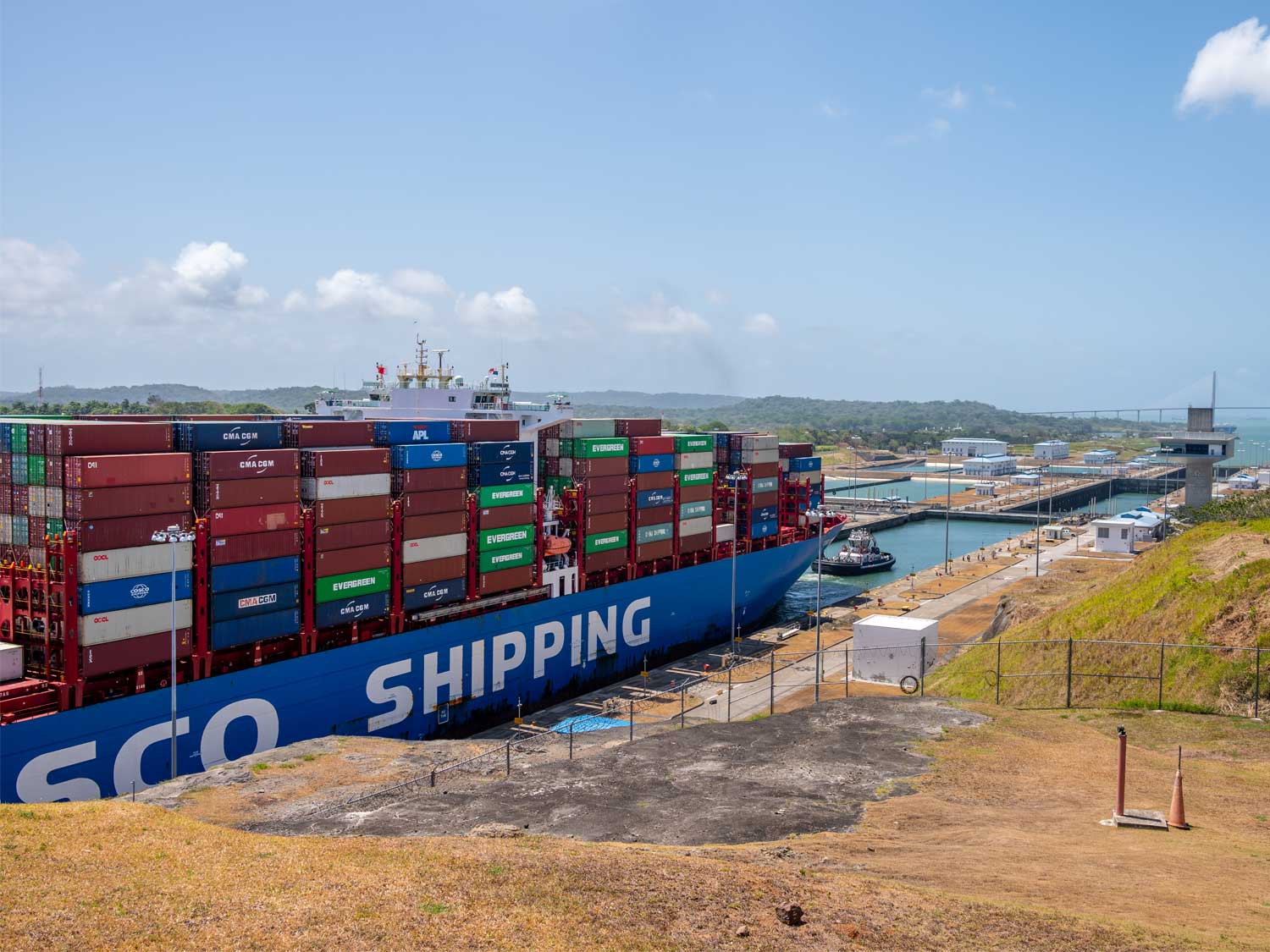
There was no pre-CNY transpacific rush this year and with China re-opening, factories are expected to open again in the second half of February, which is why carriers have tried to maintain rates. The CNY has given US ports a respite and most are now clear, with hardly any ships waiting outside West Coast ports and very few off the East Coast and Gulf.

Asia

The traditional ex-Asia space and volume crunch around Chinese New Year was extremely muted and market capacity remained higher than previous years, so we expect blank sailings to continue, as the lines attempt to stabilise rates.

Maersk’s 2022 Q4 volumes were down 14% on 2021 and it announced on Monday the “temporary suspension” of its TP20 transpacific loop, while OOCL’s North American liftings were down 16% over the year.

Despite US retail sales performing well in 2022, amidst higher inflation, global economic turmoil is adding to the uncertainty as to how strong demand from Asia will be in the second half of this year, with the lines struggling to balance transpacific capacity, if demand does not pick up in the summer-fall peak season. 

In the current transpacific environment in which spot rates and demand have fallen dramatically, the focus is now on cutting additional fees, such as detention charges for the late return of equipment, which can add hundreds of dollars to the total transportation cost. 

Shippers want more free storage days and the container shipping lines say (off-the-record) that they’re willing to be flexible on detention if they receive compensatory freight rates.

The container shipping lines claim that their problems have been amplified because their operational and administration costs increased significantly during the pandemic, and while freight rates have been dropping, the carriers’ per-unit costs have increased. On the eastbound transpacific trade-lane the lines claim units costs are up by >40% due to vessel backlogs and inland bottlenecks that add delays and costs to the supply chain, rising prices for bunker and diesel fuel, and administrative costs.

Detention charges normally kick in after four or five days and the daily costs for chassis, which the lines lease from intermodal equipment providers, vary depending upon the contractual relationship they have with the equipment lessor. Other costs are more nebulous, such as the potential revenue that is lost when the equipment sits idle at a warehouse for days or weeks. 

Carriers tend to be more bullish about demurrage charges, which are levied by the terminals when inbound loaded containers are left on the docks after their free days.

Transatlantic

The number of blank sailings from Europe to the U.S. has been minimal despite demand and rates softening and capacity is set to increase as MSC and Maersk are adding more vessels in the Mediterranean loops in the next few weeks.

Falling volumes has assisted the easing of congestion in U.S. East Coast (USEC) and U.S. West Coast (USWC) ports, with equipment availability getting better as congestion eases. 

Low empty stacks at inland depots are becoming established in some areas, but we still recommend equipment pick-up from the Port of Loading if possible and early shipment booking.

From the U.S. to Europe there is plenty of USEC capacity available, but services from Gulf and USWC ports remain tight and the market is stable. Gulf Coast to Europe services continue to have medium to high utilisation levels, though this is softening with the reintroduction of capacity.

ILWU

During the nine-month-long impasse in negotiations, between the International Longshore and Warehouse Union (ILWU) and the Pacific Maritime Association (PMA) dockworkers have engaged in unofficial actions at ports in Southern California, Northern California, and the Pacific Northwest that, although limited in scope and duration, have nonetheless caused disruptions in cargo handling. 

Shippers will continue to route cargo away from the West Coast, until the PMA and ILWU reach a contract settlement.  

Since last Autumn, Los Angeles-Long Beach and the Northwest Seaport Alliance of Seattle and Tacoma have registered year-over-year declines in imports from Asia, while imports through major East and Gulf coast ports have increased.

Air

Capacity from Asia continues to outstrip demand, which export demand from the U.S. remains steady to all markets, with airports running at a normal pace.

Capacity is opening up further, especially into Europe and rates remain stable week over week.

We negotiate long-term and FAK contracts with shipping lines across all three alliances to secure space and rates, so that we can provide the best alternatives and options, whatever the situation.

We have avoided huge detention and demurrage costs over the last few years for our customers, through slick entry to and from the USA markets and utilising our own facilities, or partner container yards, to limit the impact.

To learn how we can support your trade with the United States, or to learn more about our ocean and air solutions, please EMAIL our Chief Commercial Officer, Andy Smith. 

European roadmap to recovery

EU carbon tax on shipping is additional cost to IMO2023

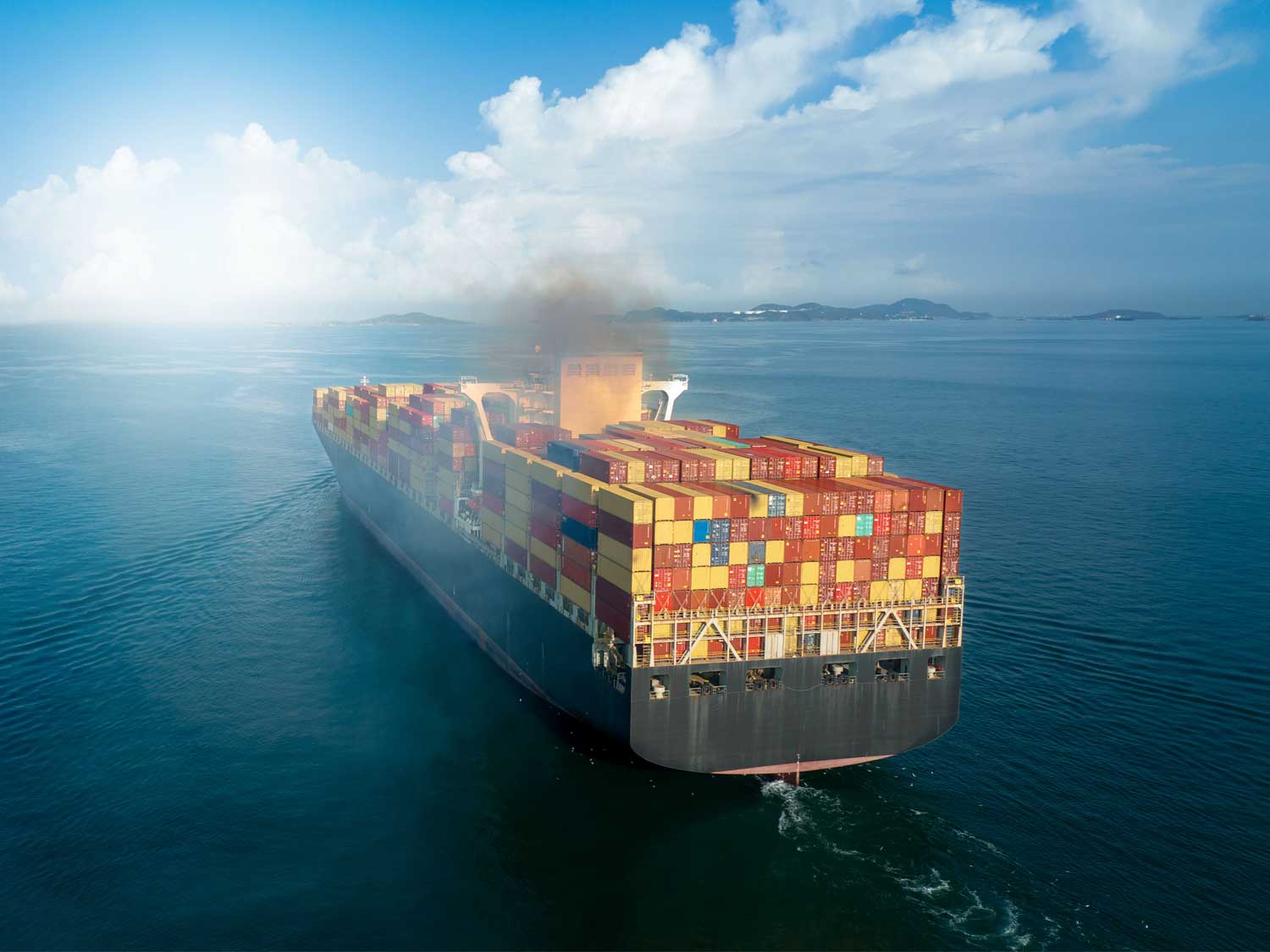
Ships emit around one billion tonnes of greenhouse gases every year, or 3% of global emissions and despite IMO 2023 aiming to reduce carbon emissions from international shipping by 40% by 2030 and 70% by 2050, the EU is including maritime emissions in its emissions trading scheme (ETS).

The EU plan will include shipping emissions in the bloc’s ETS, with a three phase-in from next year and means shipowners, regardless of the flag they fly, will have to buy carbon allowances known as EU Allowance contracts (EUAs), to cover all emissions during voyages in the EU and half of those generated by international voyages that start or finish at an EU port. 

Vessel operators will need to surrender EUAs in 2025 for 40% of their emissions in 2024, in 2026 for 70% of their emissions in 2025, and in 2027 for all of their emissions in 2026, based on the preliminary agreement. Full coverage will continue thereafter.

In contrast to the EU’s plan, the UK government is currently proposing only targeting domestic shipping, but there are suggestions that not including international shipping in the UK’s Emissions Trading Scheme will be in breach of its legally binding climate obligations.

Experts suggest that EU ETS carbon prices of around $95 per tonne of CO2 would not make a significant impact in closing the price gap between fossil fuels and zero-carbon fuels for shipping, with a recent report by the University College London’s (UCL) suggesting that an average carbon price of just under $200 per tonne of CO2 is needed to fully decarbonise the shipping industry by 2050, according to the analysis. 

“Initially, the ETS is not going to create a hugely impactful [carbon] price, but it will generate a significant amount of revenue,” said Dr Alison Shaw, research fellow at University Maritime Advisory Services and co-author of the report. 

Based on the scenarios outlined in the UMAS report, the ETS would raise $5 billion in 2030 at a price of around 50 euros ($56) per tonne of carbon. If this price increased to 103 euros per tonne of carbon ($116) by 2030, the total revenue generated from shipping would be $9 billion, according to Shaw. 

The inclusion of shipping in the EU ETS will drive up operating costs for container shipping lines and those costs will inevitably be passed onto shippers, in the form of surcharges.

The first customer circulars on the EU ETS issue from the carriers were in the third quarter of 2022, when the industry was expecting that emissions trading for shipping would come as early as 2023, but due to difficult negotiations at EU level, the plan has been postponed by a year, which is a relief for everyone involved. 

The first calculations on cost effects estimate the cost of pollution rights for transports from the Far East to Northern Europe is 170 euros/FEU, and 99 euros/FEU in the opposite direction. 

For shipments from European North Range ports to the US East Coast the estimate is 184 euros/FEU, with the costs for reefer transports significantly higher due to the additional energy requirements at 276 euros/FEU from Northern Europe to the US East Coast.

Shipowners, unsurprisingly, strongly oppose the EU measure, which they believe puts the EU in conflict with the IMO 2023 initiative and may lead shipping lines to consider shipping hubs outside the EU to lower their costs. 

They could, for example, finish voyages in the Mediterranean (or maybe even the UK) and transfer containers to smaller feeder vessels, with a lower carbon output. 

Its seems unavoidable that the shipping lines will not pass on these additional charges in coming years and that additional cost will be added as a result of the ETS scheme in Europe, and by default the UK.

There will be many factors that influence the costs accrued by EU ETS and we will be doing everything we can to mitigate its impact on our customers.

We will follow carriers adoption of cleaner fuel technology, the economies of scale offered by the largest vessels, the benefits of different routing options, intermodal opportunities and anything else which may provide cost and efficiency savings.

The ‘free of charge’ Eco module, that sits in our MVT supply chain platform, monitors the energy emissions, emission costs and CO2 equivalent emissions, of our customer’s consignments, by every mode.

The module is under continuous development, with regular updates, including distance calculators, that can be adapted to measure liabilities under the new EU ETS regime. When it is rolled out.

To request a demo or discuss your requirements, please EMAIL Simon George, who can outline our ECO strategies and offset projects.

Yantian 3

<strong>Asia blanked sailings, rolled cargo and detours</strong>

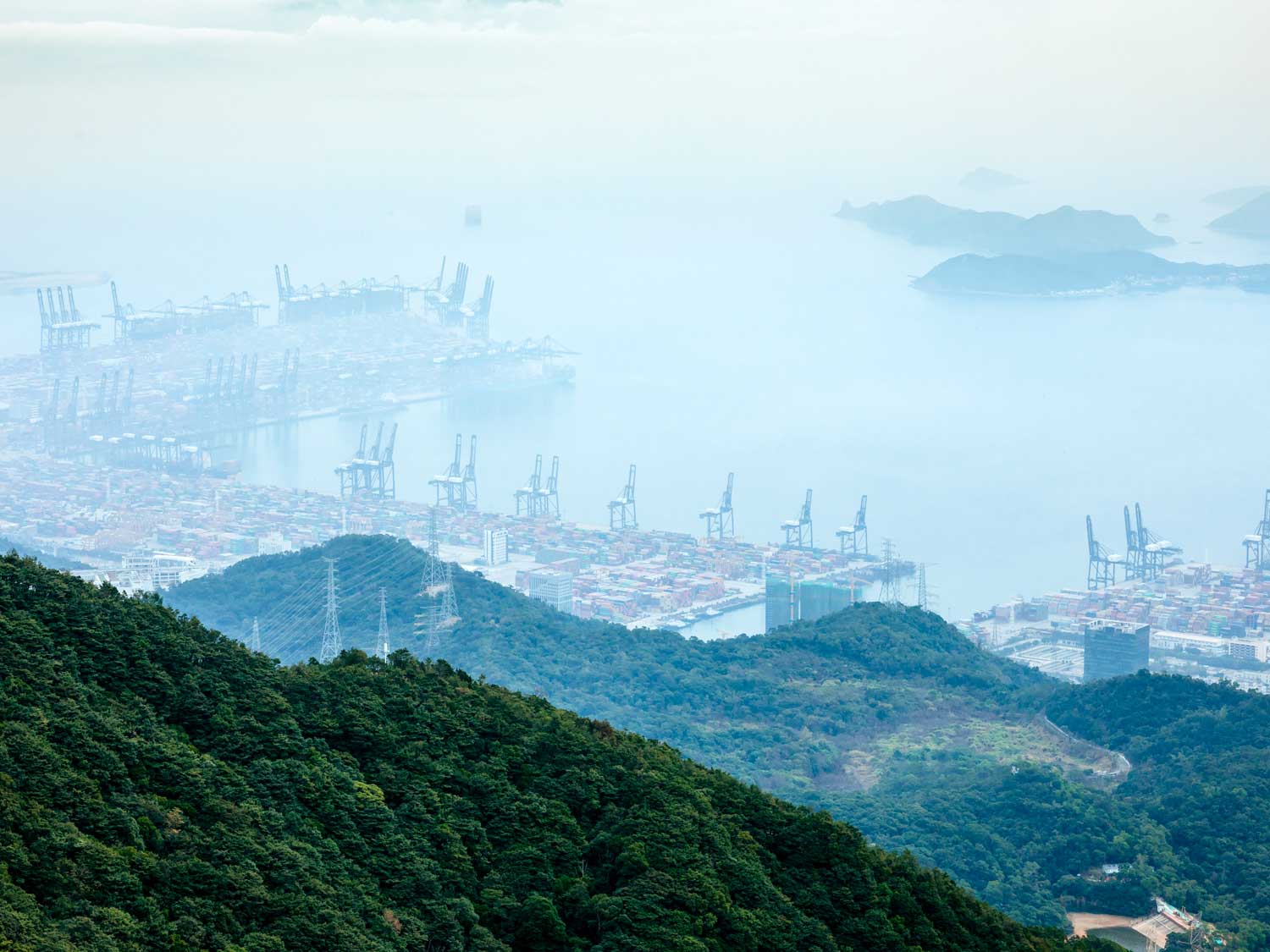
Shipping lines have cancelled almost 30% of pre and post Chinese New Year sailings from Asia, with THE Alliance cutting 36% to Europe and diverting backhaul sailings around the Cape of Good Hope, which adds two weeks transit time to China. 

In a normal year, the weeks building up to China’s Lunar New Year holiday see a spike in export shipping demand from China to most global destinations, including the UK and Europe, as orders are shipped before the factories close and production halts. This year, however, there has been no demand spike and carriers across the three alliances have cut 15 westbound departures, with just 69 ships departing on a round-trip to North Europe or the Mediterranean since the beginning of the year and the start of CNY. 

In the period from 1st January to 17th February, Alphaliner calculated that the three big carrier alliances are planning to skip 27% of their originally scheduled Asia – Europe sailings.

Across the Alliances, there has been a 29% reduction in the number of 2M sailings in the first seven weeks of the year, while OCEAN Alliance has reduced the number of westbound voyages by 23% and THE Alliance has cut most sailings from the Far East to Europe, with a 36% reduction. This is partly due to the fact that their carriers are diverting more backhaul sailings from the Suez Canal to the Cape of Good Hope, which adds two weeks to vessel arrivals back in China.

The shipping lines have also been creating roll pools, so that vessels leaving during the CNY holidays have boxes to load, while factories are closed. This occurs every year but, with less demand, it is having less impact than the previous three to four years.

Despite all the cancelled sailings and diversions, Hapag Lloyd has announced a new Asia-Europe service, FE9, that is actually a slot charter agreement with an alliance competitor, CMA-CGM.

Prior to the current three alliance setup, the shipping lines operated a complex web of slot charter agreements and it seems likely that the current high sailing cancellation levels are reducing service coverage, and an obvious solution for a carrier is this type of cooperation, that we may see accelerate in the wake of the 2M break between MSC and Maersk as they part company at the end of their 10 year agreement.

The 2M break may even result in a reshuffle of alliances, as carriers reshape the industry over the coming years on all trades. Although the focus has always been on the lucrative Asian markets - the transpacific and westbound European trades are the largest volume global lanes- one thing is for sure, there will be a lot more change, as a consequence of the unravelling situation in container shipping. It looks like a case of 'from boom to bust’ – although hopefully not quite so dramatic as we saw with Hanjin in 2016.

We work closely with our partners in China to monitor which lines are rolling cargo, and use our space agreements across all alliances wisely to ensure our containers are always lifted, though expectations are that roll pools will be cleared through weeks 5 to 8.

To learn how we can help you avoid blanked sailings and rolled cargo, or to request our regular ocean market report, please EMAIL our chief commercial officer, Andy Smith, who can advise on the best solutions for your ocean supply chain. We will always deliver the most appropriate service in an ever disrupted market and provide all options available to ensure that your product reaches the right destination, at the right time and at the right cost. Considered solutions are what we achieve.

US DoT

<strong>Complaints by shippers to FMC soar</strong>

The US Ocean Shipping Reform Act (OSRA), which was passed into law last June, gives the Federal Maritime Commission (FMC) more power to deal with shipping lines and mitigate supply chain disruption, leading to a slew of claims and jealous European shippers. 

In just six months the Federal Maritime Commission (FMC) has received more than 200 complaints since the Ocean Shipping Reform Act of 2022 (OSRA) was enacted, with over 30% of those complaints meeting threshold requirements to be referred to investigators.

Key points of the Reform Act:

- require ocean carriers to prove that detention and demurrage charges comply with federal regulations
- require ocean carriers to prove that detention and demurrage charges are reasonable (shifting burden of proof from the invoiced party to the carrier)
- prohibit ocean carriers to decline shipping opportunities without a good reason
- require ocean carriers to make quarterly reports to the Federal Maritime Commission

The FMC charge complaint process is promoting informal settlements and waivers of demurrage and detention billings, with more than $700,000 in charges refunded by carriers.

Hapag-Lloyd paid a $2 million civil penalty in June over detention fees it assessed to a drayage firm for containers the trucking company could not access. And now a Wisconsin-based non-vessel-operating common carrier (NVO) is accusing Hapag-Lloyd and its rail subcontractor CSX of improperly levying nearly $300,000 in fees against the NVO, after it exceeded container free time, attempting to retrieve containers, it says it could not access.  

Despite deciding that current conditions do not necessitate the issuance of an emergency order for shipping lines to share data, the FMC has announced that it intends to issue a supplemental notice of proposed rule-making (SNPRM) to address issues related to the ‘Unreasonable Refusal to Deal or Negotiate with Respect to Vessel Space Accommodations’ proposed rule issued last September.

The commission received almost 30 comments in response to its notice of proposed rule-making (NPRM) on Unreasonable Refusal to Deal or Negotiate, which the FMC believe demand thorough consideration. The SNPRM will address those matters and provide the commission the opportunity to receive additional public comments.

This initiative by the FMC is gathering pace and it is likely that there will be many more claims, and possibly even class action, against carriers  over coming months from disgruntled shippers and NVOCC organisations.

Any hope of the EU following the FMC’s lead has evaporated, as market supply and demand has moved in favour of the shippers, but the retained Container Shipping Consortia Block Exemption Regulation (CBER), expires on the 25th April 2024 and if the EU decide to revise or end the exemption regime, the UK may follow.

To learn how we can support your trade with the United States, or to learn more about our ocean solutions, please EMAIL our chief commercial officer, Andy Smith. 

We have avoided huge detention and demurrage costs over the last few years for our customers, through slick entry to and from the USA markets and utilising our own facilities, or partner container yards, to limit the impact.