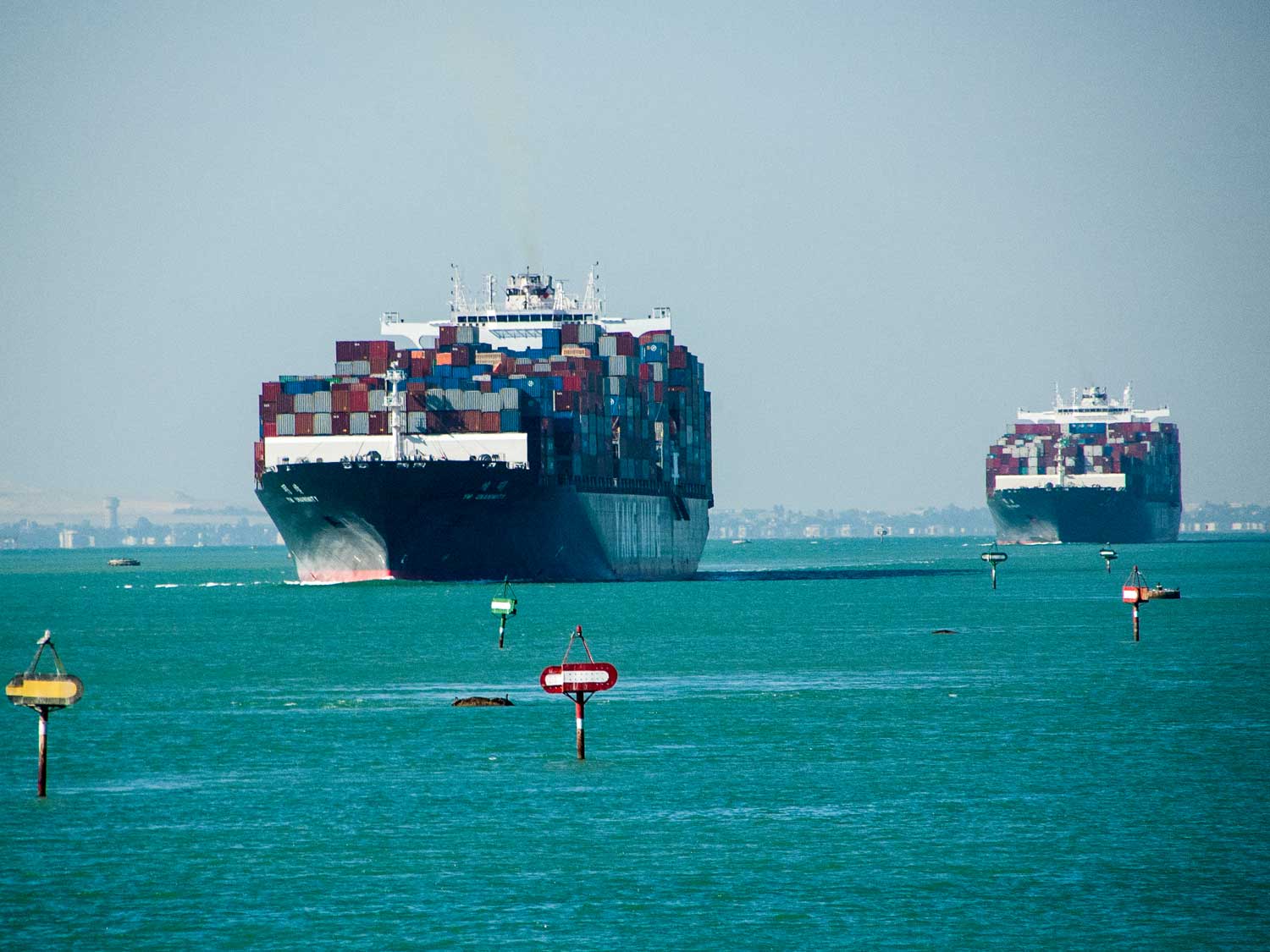
container ship and naval escort

SECURITY UPDATE: Red Sea

The recent sinking of the Prestige Falcon oil tanker, following a Houthi attack, marks the deadliest incident involving these strikes to date.

The vessel capsized near the Omani coastal city of Duqm, and while the Indian Navy rescued nine of the 16 crew members, one was found deceased, and six remain unaccounted for, feared to have gone down with the ship.

The Prestige Falcon, flagged under the Comoros, was targeted approximately 5 nautical miles southeast of Ras Madrakah, Oman, closer to the Persian Gulf than the typical Red Sea and Bab al-Mandeb strait attack zones. With at least 100 Houthi attacks on merchant ships so far, resulting in the deaths of four seafarers, this incident could significantly increase that toll.

These Red Sea attacks have contributed to elevated containership charter and freight rates. Industry experts predict continued Cape of Good Hope diversions until at least 2025, keeping rates high.

Recent escalations include Israel’s attack on the Hodeidah port in Yemen, following a Houthi drone strike on Tel Aviv. The method of the Houthi drone attack remains unclear, raising concerns about potential threats to shipping in the Eastern Mediterranean.

Speculation suggests the drone may have been launched with the aid of militants closer to Israel, highlighting the risk of supply chain disruptions if drones can be deployed from nearer locations or if groups like Hezbollah become involved.

The Houthi’s have already warned that they plan to expand their campaign of attacks on commercial shipping, to include vessels in the Mediterranean. While the Pentagon has stated that the US has seen no sign of the Iran-armed rebels attempting to do so yet, it has admitted to being worried about the possibility.

“The Houthis have an advanced array of weaponry and they have weapons that could reach the Mediterranean. It definitely is of concern that they have that capability.”

According to some projections, the current Houthi attack campaign will continue for at least the rest of this year, and many commercial vessels will keep avoiding the Gulf of Aden and southern Red Sea until 2025 or beyond. In fact, it could get much worse with some of the new developments this week between Israel and The Lebanon also. We will endeavour to keep you updated as frequently as news is issued and on the impact associated with your supply chain and logistics requirements.

Experts warn that until the Houthis are deprived of the weapons they are using to conduct these attacks at source, we should expect more attacks and damage to international trade.

If you have concerns or questions about the issues covered here, please EMAIL our Chief Commercial Officer, Andy Smith.

Bank of England

Fresh Start for UK Trade

The UK economy has faced significant challenges in recent years, impacted by global economic shocks, but signs of recovery are emerging as GDP growth returns, inflation declines, interest rates fall and consumer confidence grows.

Economic projections are indicating a positive outlook, despite some lingering challenges, with GDP growth, consumer spending, business investment, and productivity levels all providing optimism.

– 2024 GDP Growth: Projected to rise to 1.0%
– 2025 GDP Growth: Expected to reach 1.9%, aligning closely with the pre-COVID average growth rate of 2.0% (2010-2019)

Government Priorities
The new government has launched several policy initiatives in their first weeks in office, clearly signalling a focus on economic growth and international trade. A forthcoming Trade White Paper is expected to detail their strategies, potentially aligning with the Industrial Strategy.

– SME Exports: Support for small and medium-sized enterprises to expand their overseas sales
– Free Trade Agreements (FTAs): Emphasising quality over quantity in new agreements
– Market Access: Identifying areas beyond trade deals where the government can reduce market access barriers
– EU and Other Markets: Enhancing cooperation with the EU and other key markets, including the US
– China Strategy: Balancing economic and national interests in a new approach to China
– Response to EU and US Actions: Deciding on the UK’s stance regarding EU and US actions on Chinese electric vehicles

The Outlook
The outlook for the UK economy is improving after a challenging 2023. However, to secure sustainable long-term growth, the government must address the ongoing productivity issues through clear trade and investment strategies. Prioritising economic policies can unlock sustained growth in trade, manufacturing, and exports by bolstering business investment and fostering growth into the next decade.

– Consumer Spending: Expected to drive GDP growth and imports, increasing by 0.8% in 2024 and 2.5% in 2025, due to rising household incomes
– Business Investment: Though weak in 2024, is projected to grow by 1.8% in 2025 as economic activity strengthens

Inflation fell to the Bank of England’s target of 2% in the second quarter of 2024 and is expected to remain stable at 2% in 2025. Correspondingly, the Bank Rate is projected to decrease to a terminal rate of 3.5% in 2025.

By addressing these key areas, the UK can navigate the path to economic recovery and establish a robust foundation for future growth in imports and exports.

In conclusion, the UK economy looks to be on a path to recovery, with government policy initiatives and an upcoming Trade White Paper, to strengthen international trade and economic growth. By focusing on productivity and strategic trade policies, the UK can achieve sustainable long-term growth, enhancing its position in global markets and fostering a resilient economic future.

We continuously monitor and share the latest news on market influences, including currency FX and macroeconomic performance, which can impact our customers’ supply chains.

By closely tracking global trade indicators and money markets, we provide valuable insights to help you mitigate currency fluctuations.

For personalised advice and recommendations, please EMAIL Laurence Burford, our Chief Financial Officer.

ship and graph

Peak season impact on container freight rates

The last week of June saw further gains on sea freight spot rates from Asia into Europe and North America, as a series of peak season surcharges (PSS) were imposed and new FAK levels from 1st July creating double-digit increases in spot freight rates.

With spot and FAK rates across all three carrier alliances approaching five figures, analysts predict that if the peak season extends into the traditional August/September period, 40ft spot rates could rise to $14,000-$15,000. And possibly higher, with a much longer application than originally anticipated into 2025.

Surcharges Affecting Asia-North Europe Trade
Along with other carriers CMA CGM has imposed a $1,500 PSS on Oceania-North Europe shipments and a $500 emergency space surcharge per box on India-North Europe shipments. Similarly, Hapag-Lloyd will implement a $1,000 per 40ft PSS on the Far East-India trade.

Spot Rate Indices and Transpacific Route Increases
Drewry’s World Container Index (WCI) composite index grew by 12% last week, with the Shanghai-New York leg showing the steepest growth at 17%. Similarly, the Shanghai-Rotterdam spot rate increased by 10%. Shippers on transpacific routes could see further double-digit rate jumps next week, with CMA CGM set to implement a $2,400 per 40ft PSS on all shipments from Asia to the US starting Monday.

As always. Metro are working tirelessly to mitigate the impact of these increases on our customers.

Space Shortages, Elevated Rates, and Container Equipment Shortages
Due to strong demand, many shippers are paying above quoted rates to secure space. Space availability from Asia to Europe has dropped by 30%-40%, leading major importers to pay space guarantee surcharges.

Higher rates are expected to persist until Golden Week, with some Asia-North Europe spot rates already breaching five figures. An early peak season, lasting until Golden Week in October, driven by importers’ determination to avoid Christmas stock shortages, indicates strong orders lasting at least until then. Should the peak extend, the market may not significantly decline until Q2 next year, even with additional capacity coming in.

Additionally, container equipment shortages are becoming more prevalent, with average container prices in China reaching their highest level in two years, and leasing rates on China-Europe routes tripling.

Ports are becoming congested globally – on all continents. The outcome of this is increased port blanking’s or sliding’s. These can be voluntary by the carriers, but more often than not are now involuntary and caused through long waits outside the port and an inability to discharge vessels, without having a major impact on their schedules.

The result is, whether you are on contract, spot or FAK pricing – if a vessel doesn’t call at the port,  you will not get your product moved until the next one does. And then, when the following vessel from whichever alliance does call, you do not get any retrospective protection on capacity that is simply ‘lost’.

Every importer and shipper who trades with China and Asia on a wider scale is being affected – it is impossible in the current and short term market to avoid the disruption.

In summary, spot rates show substantial growth, with space shortages increasing and elevated rates likely to persist until at least Golden Week, compounded by container equipment shortages and rising costs.

These trends suggest continued high rates and strong demand well into next year. However, we will continue to mitigate these costs where we can, but in a market where $10,000 + a FEU is becoming normality we will always endeavour through our pricing mechanisms and thoughtful considered approach to ensure that you receive the best pricing and reliability of service available in the market.

We will continue to communicate this to you daily/weekly/monthly, and as frequently and for as long as we need to, until the market settles.

We see challenges as opportunities to shine, and deliver a collaborative market-leading solution, that is appropriate for your business and tailored to your expectations.

With carriers in the ‘driving seat’, they are cherry-picking which contracts to honour, rolling lower-yield containers and blanking vessels, to try and recover schedules.

With the market this challenging, there is no ’silver bullet’ and many shippers that try to play the spot market are coming unstuck.

Metro are leveraging our long-standing carrier relationships and sensible annual contracts, to secure our customers space and set rates.

To learn how we can enhance your ocean freight solutions, please EMAIL our Chief Commercial Officer, Andy Smith. 

Parliament blur

A New Government – a New Britain; Strengthening UK Supply Chains for Economic Resilience

The Labour party’s manifesto outlines a commitment to bolster the resilience of supply chains in key sectors, a task that Transport Secretary Louise Haigh will spearhead.

Recent global events, such as the war in Ukraine and pandemic-induced disruptions, have underscored the necessity of this mission. These crises have driven up energy prices and disrupted the supply of critical goods, exacerbating inflation.

Enhancing supply chain resilience not only mitigates risks but also presents growth opportunities and as the world faces more frequent external shocks, a resilient supply chain becomes crucial to safeguard the economy, because vulnerabilities can halt or divert production.

Labour’s plan includes several key policies to strengthen supply chains:

  • Investing £1.8 billion to upgrade ports and build supply chains across the UK
  • Ensuring a robust defence sector and resilient supply chains through long-term business-government partnerships
  • Maximising the economic and security potential of AUKUS, the trilateral security partnership with Australia and the US
  • Adopting a strategic approach to managing UK-China relations
  • Striking targeted trade agreements aligned with the UK’s industrial strategy
  • Leading international efforts to modernise trade rules and agreements, promoting deeper cooperation through organisations like the WTO and CPTPP
  • Seeking a new strategic partnership with India, including a free trade agreement, and enhancing cooperation with Gulf partners on security, energy, and trade

The government will work with international partners to align capacities in key sectors and advance international standards for supply chain diversification. Labour’s plan includes creating a Cabinet Subcommittee on National Resilience, conducting a COBRA review, and appointing a Minister for Resilience to coordinate responses.

Looking to a New EU Relationship
Labour’s manifesto also includes policies to improve the UK’s trade and investment relationship with the EU, which includes negotiating a veterinary agreement to reduce border checks and lower food costs. 

Upcoming EU legislation, such as the Corporate Sustainability Reporting Directive (CSRD) and the Corporate Sustainability Due Diligence Directive (CSDDD), will impact UK companies. These regulations will require companies to disclose data on suppliers and emissions, impacting those with substantial EU activity or those part of the EU value chain.

For example, a UK auto parts manufacturer selling to an EU car company will need to comply with these directives. Labour’s approach aims to remove unnecessary trade barriers and improve economic cooperation with the EU, ensuring UK businesses remain competitive and compliant with new regulations.

For over 40 years Metro has been providing stable and effective solutions for customers entering new export markets, or sourcing from new suppliers.

Supporting their regulatory compliance and finance requirements, with multi-modal transport services and guidance on insurance and packing, to protect their products.

Our MVT supply chain platform incorporates a suite of reporting modules, including the tracking of global CO2 emissions and templates for CSRD reporting.

If you have any questions, rate requests or would like further information on our global export capability, please EMAIL our Chief Commercial Officer, Andy Smith.