Capacity challenges continue for RoRo and project shipper

Capacity challenges continue for RoRo and project shipper

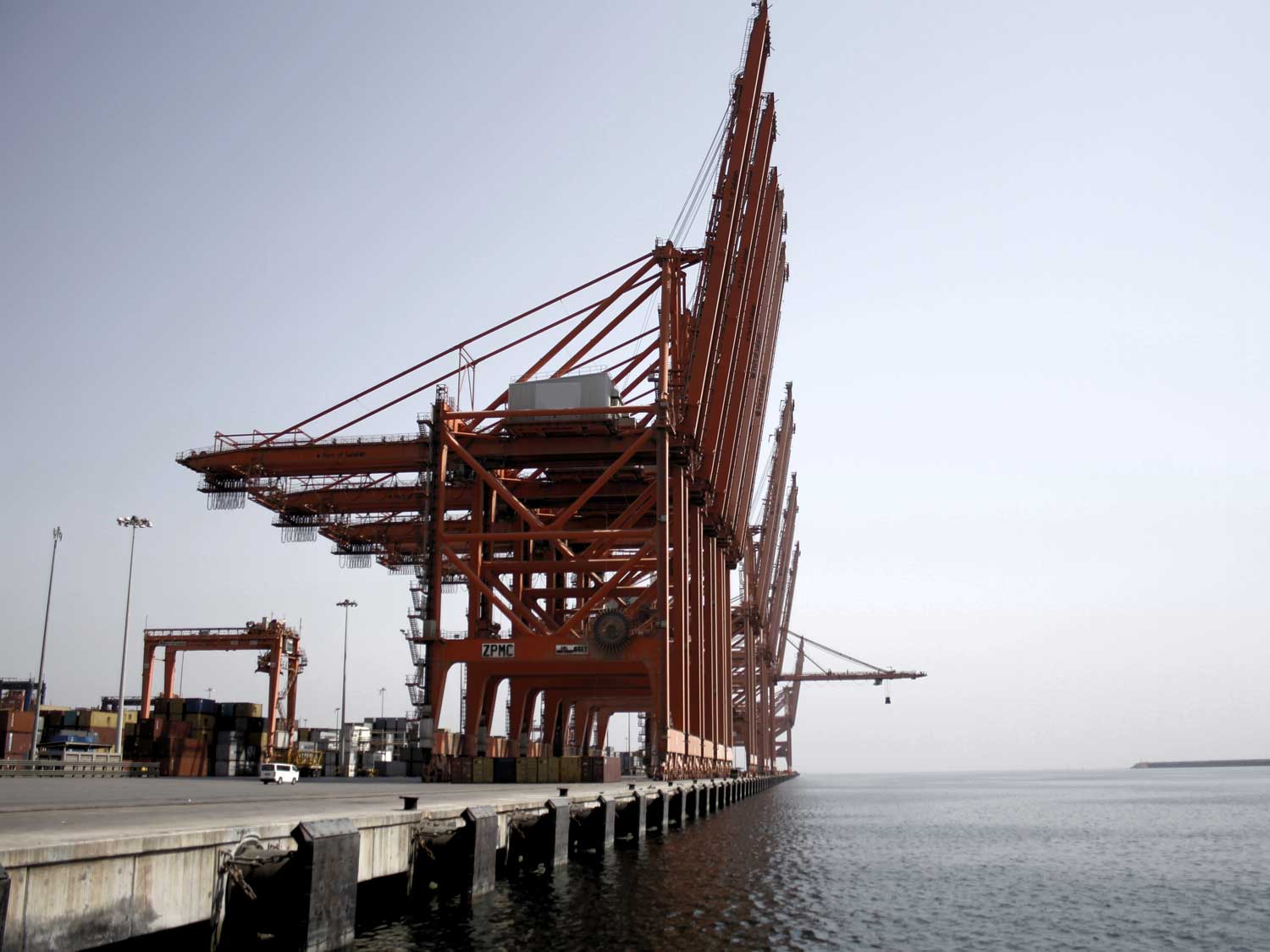
Roll-on/roll-off (RoRo) and project cargo shippers are entering a decisive phase, as fleet expansion, industrial investment and energy-driven demand are converging, creating both opportunity and pressure for shippers moving vehicles, machinery and oversized cargo.

The global Pure Car Carrier (PCC) and Pure Car and Truck Carrier (PCTC) fleet is forecast to expand by around 40% over the coming years, with new vessels significantly larger than the ships they replace.

Latest-generation PCTCs are designed to carry 20–30% more car-equivalent units (CEUs) than legacy tonnage, lifting individual vessel capacity into the 9,000+ CEU range. Most new-builds are dual-fuel or alternative-fuel capable and ammonia-ready, reflecting a clear shift towards lower-emission operations.

Despite this expansion, RoRo capacity remains unevenly distributed. Vessel size growth primarily benefits vehicle flows, while availability for high and heavy cargo continues to depend on stowage flexibility, port infrastructure and trade imbalances.

High and heavy manufacturing: volumes steady, costs rising

Shipment trends from major global manufacturers of construction, agricultural and power-generation equipment provide a useful barometer for RoRo and breakbulk demand. While tariff-related costs are rising sharply, shipment volumes in key segments continue to grow.

Construction and forestry equipment shipments recorded year-on-year growth of more than 25% in the most recent quarter, driven by infrastructure spending and large-scale industrial projects. Power-generation equipment volumes also strengthened, with segment revenues rising by around one-third, reflecting accelerating demand from data centres and energy infrastructure.

Order backlogs across the sector have reached record levels, extending visibility well into 2026 and beyond. This supports steady outbound cargo flows, even as manufacturers maintain tight inventory control rather than front-loading production.

Project and breakbulk cargo enters a capacity-sensitive phase

Project and breakbulk shipping is being lifted by sustained growth in energy, metals and mining cargo. Global electricity demand linked to new power generation is forecast to grow at more than 3% per year through 2030, translating directly into increased movements of turbines, generators and transformers.

Fleet growth for heavy-lift capable vessels is projected at an average of just over 4% per year through the end of the decade. While sufficient for smaller and modular cargo, this pace risks falling short during peak periods for large, indivisible units.

Copper and other critical minerals are adding further pressure. Forecasts point to a potential 30% supply shortfall by the mid-2030s, driving investment in mining projects and associated movements of oversized equipment. These cargoes typically require specialised lift planning, crane operations and non-standard stowage.

As RoRo capacity grows by double-digit percentages and project cargo demand rises at a similar pace, the balance increasingly depends on planning, technical expertise and access to the right assets at the right time. 2026 is shaping up as a year where execution, sequencing and specialist capability determine success.

Metro’s dedicated automotive logistics and project shipping teams understand the operational, technical and scheduling complexities of RoRo, breakbulk and heavy-lift movements.

Working with leading global carriers, independent lines and charter operators, Metro helps customers secure reliable capacity, design resilient supply chains and optimise transport from factory gate through to dealer or point of use.

Email Andrew Smith, Managing Director, to discuss how Metro can safeguard your project cargo, vehicle flows and unlock efficiencies across your global logistics operations.

UK supply chain policy is reshaping shipper risk and resilience

UK supply chain policy is reshaping shipper risk and resilience

Government support for supply chains is increasingly being framed as a matter of national capability rather than short-term intervention. That shift was made explicit in June 2025, when the government’s Modern Industrial Strategy earmarked £600m for logistics sites, signalling that logistics, freight and supply chains are now viewed as strategic economic infrastructure.

Against that backdrop, current support for shippers and manufacturers is delivered through a mix of strategy, guidance and targeted funding, with a clear emphasis on resilience, economic security, clean energy and zero-emission freight rather than generic subsidies.

Strategic focus: critical imports and resilience

The UK Critical Imports and Supply Chains Strategy sets out how government will work with business and international partners across five priorities:

  • Improving supply chain analysis and risk visibility
  • Removing barriers affecting critical imports
  • Strengthening shock-response capability
  • Adapting supply chains to long-term global trends
  • Expanding collaboration with business and academia

The aim is not to control supply chains, but to ensure the UK can anticipate risk, respond faster to disruption and secure access to essential goods.

Practical resilience tools for business

To support this, the Department for Business and Trade has published a Supply Chain Resilience Framework, supported by practical guidance for organisations in both the public and private sectors. The framework focuses on five core areas:

  • Supplier diversification
  • Stock and inventory management
  • On-shoring and near-shoring options
  • Demand management
  • Data quality and supply-chain visibility

As part of the Critical Imports Strategy, government also plans to introduce an online reporting portal for businesses to flag red tape or disruption affecting critical imports, with a commitment to work with industry to remove barriers “wherever possible”.

Supply chains and economic security

The new Supply Chains Centre, based within the Department for Business and Trade, is being established to take a more assertive, strategic and data-led approach to supply-chain security. Its remit includes enhanced analysis, early warning of risks and targeted interventions to ensure continued access to essential goods.

This sits alongside published “Secure your supply chains” guidance, including resilience checklists and links to wider “Safeguarding Supply” resources. Together, these initiatives reflect a broader economic security agenda, where supply chains are treated as critical to both national prosperity and national security.

Innovation funding for resilient supply chains

Public funding is also being directed toward innovation and future-proofing initiatives, including:

  • ReImagining Supply Chains Network Plus (RiSC+), backed by UK Research and Innovation, supporting modelling tools and digital-twin approaches to anticipate disruption across sectors such as food and critical minerals
  • The Circular Critical Materials Supply Chains (CLIMATES) initiative, supporting UK-based supply chains for rare earths and other critical materials through project and partnership funding
  • Regional and sector-specific programmes, often co-funded via the UK Shared Prosperity Fund, offering R&D grants, training and specialist support for SMEs navigating international supply chains

Sector-specific programmes and logistics decarbonisation

Targeted funding is also being directed at strategic sectors. Great British Energy’s “Energy Engineered in the UK” programme includes £1bn of investment into clean-energy supply chains, with a £300m Supply Chain Fund focused on offshore wind and network infrastructure.

In logistics, government support for zero-emission HGVs has expanded, with grants now reducing the upfront cost of electric lorries by up to £120,000. This is designed to accelerate fleet transition, stimulate innovation in green logistics and strengthen the resilience and sustainability of freight supply chains.

What this means for shippers

The policy direction is clear: government expects importers and exporters to map critical dependencies, diversify sourcing and build more robust contingency plans. Resilience, transparency and data quality are no longer optional.

Shippers that can demonstrate strong risk management, clear visibility and close collaboration with carriers and logistics partners will be better positioned to benefit from government-backed initiatives — and to reassure customers operating in increasingly volatile markets.

How Metro can help

Metro works with shippers to translate policy intent into practical supply-chain execution — strengthening routing flexibility, inventory strategy, carrier engagement and contingency planning across ocean, air, road and logistics.

If you’d like support assessing supply-chain resilience, managing disruption risk or aligning your logistics strategy with evolving UK policy priorities EMAIL Managing Director, Andy Smith.

Asia–Europe peak season meets Chinese New Year

Asia–Europe peak season meets Chinese New Year

As the Asia–Europe trade moves deeper into peak season, Chinese New Year (CNY) is already reshaping pricing, capacity and execution risk. What was once a predictable seasonal slowdown has become a compressed, high-impact period where demand surges, capacity is tightly managed and disruption risks escalate quickly.

With carriers reporting strong bookings through December, into January and expectations that volumes could remain firm into February, the traditional pre-CNY rush is well underway. 

Although Chinese New Year officially begins on 17 February, with public holidays running from 15 to 23 February, its impact is felt weeks earlier as factories slow production and exporters pull cargo forward.

For Asia–Europe shippers, this creates a narrow and volatile planning window rather than a clearly defined seasonal pause.

Demand strength keeps rates elevated

Underlying demand on the Asia–Europe trade remains robust. Volumes reached nearly 22 million teu by the end of October, representing 8.6% year-on-year growth, giving carriers confidence to defend pricing as peak season converges with CNY planning.

This strength has translated into a fresh round of pricing actions at the start of the year. Peak season surcharges (PSS) and higher freight-all-kinds (FAK) levels are being used to reinforce rate floors as space tightens.

Market benchmarks reflect this momentum. Ahead of Christmas, Drewry’s World Container Index showed:

  • Shanghai–Genoa up 10%
  • Shanghai–Rotterdam up 8%, marking a third consecutive week of gains

Carrier initiatives followed quickly:

  • Maersk introduced a $1,500 per 40ft PSS on Asia–Mediterranean shipments from 5 January
  • CMA CGM applied a $250 per teu PSS on Asia–North Europe alongside new FAK rates from 1 January
  • MSC set new FAK levels of $3,700 per 40ft to North Europe and $5,500 per 40ft to the Mediterranean

Rates remain relatively steady heading into CNY, supported less by demand and disciplined capacity control.

Capacity front-loading raises execution risk

As factories prepare to slow production, carriers are once again turning to blanked sailings to protect utilisation. However, the way capacity is being managed this year marks a clear break from historical patterns.

Analysis from Sea-Intelligence shows that carriers have increasingly front-loaded capacity into late Q4 and early Q1, followed by plans for sharp withdrawals as the holiday approaches. This creates short bursts of intense volume flow, followed by sudden capacity gaps.

For shippers, this shift materially increases the risk of:

  • Rolled cargo
  • Missed cut-offs
  • Port and inland congestion during compressed loading windows

On Asia–Europe specifically:

  • Asia–North Europe has seen the largest absolute capacity expansion, with deployment projected to surge nearly 50% above baseline, reflecting aggressive inventory pull-forward into Europe
  • Asia–Mediterranean shows the greatest percentage volatility, with peak capacity more than 60% above baseline, highlighting heightened disruption risk even on secondary trades

Rather than smoothing demand, blank sailings are now amplifying disruption once volumes peak.

What happens after the holiday?

In the immediate run-up to CNY, pricing is likely to remain supported by strong demand, PSS and constrained capacity. The greater uncertainty lies in the post-holiday period.

Once factories reopen and deferred cargo returns to the market, rate volatility is likely to increase — particularly if demand rebounds faster than carriers reinstate withdrawn sailings. This could result in sudden space shortages, uneven service recovery and renewed congestion on Asia–Europe lanes.

For shippers, the real risk is not confined to the holiday itself, but to the broader six-to-eight-week window around CNY, when schedules, capacity and pricing are most fluid.

Planning priorities for Asia–Europe shippers

As peak season and CNY converge, successful shippers are focusing on:

  • Securing space early rather than chasing spot availability
  • Building contingency routing and sailing options
  • Allowing extra buffer in cut-offs and inland planning
  • Treating CNY as an extended risk period, not a single event

If you are planning ocean freight on the Asia–Europe trade through Chinese New Year and into 2026, Metro’s teams can help you secure space, manage blank-sailing risk and adapt your shipping strategy — so you stay ahead of disruption rather than reacting to it.

Smart 2026 supply chains are being engineered for pressure

Smart 2026 supply chains are being engineered for pressure

Supply chains are no longer judged on efficiency alone, in 2026 they will be expected to anticipate disruption and adapt at speed to actively support growth. The experience of the past year confirmed that stability is no longer a realistic planning assumption, but performance under pressure is.

Rather than a single crisis, 2025 delivered constant friction. Congestion resurfaced across ports and inland networks, capacity existed but was selectively deployed, and geopolitical and regulatory shifts altered trade flows long before any formal policy changes took effect. 

The result was a decisive shift in mindset: supply chains must be designed to operate in volatility, not merely recover from it.

That shift accelerates in 2026, as technology, resilience and sustainability converge to redefine how supply chains are planned, financed and executed.

Resilience becomes a competitive advantage

If 2025 proved anything, it was that capacity on paper does not guarantee performance in practice. Across ocean, air and road freight, service reliability was dictated by execution: blank sailings, schedule volatility and inland bottlenecks determined what actually moved.

In response, supply chain design is moving beyond simple continuity planning toward resilience, where networks are designed to adapt and improve under stress.

Common characteristics include:

  • Multi-route and multimodal playbooks rather than single-lane optimisation
  • Near-shoring and regionalisation to shorten lead times and reduce exposure
  • Centralised planning paired with regional execution for faster response

These approaches reflect a broader shift away from cost-minimisation toward risk-adjusted performance.

Warehousing becomes a strategic control point

Warehousing emerged as one of the most critical differentiators in 2025 — a trend that intensifies in 2026. With transit times less predictable and congestion harder to avoid, inventory positioning and fulfilment speed have become central to supply-chain resilience.

High-performing shippers increasingly treat warehousing as an active control layer, not passive storage. Key developments include:

  • Greater use of strategically located facilities to buffer disruption
  • Tighter integration between warehousing, transport and customs planning
  • Investment in automation and robotics that flex with demand and seasonality

This is particularly important as omnichannel and e-commerce pressures continue to grow, demanding seamless support for direct-to-consumer, BOPIS and rapid fulfilment models alongside traditional B2B flows.

From reactive networks to intelligent systems

One of the most significant changes heading into 2026 is the role of technology within supply chains. What began as analytical support is now moving into operational control.

AI-enabled tools are increasingly embedded across planning, procurement, inventory management and risk assessment, enabling supply chains to:

  • Anticipate disruption through predictive insights
  • Optimise routing, inventory and capacity decisions in near real time
  • Coordinate responses across multiple functions and geographies

As these systems become more connected, cybersecurity and data governance also rise sharply in importance. Protecting sensitive operational, commercial and customs data is now a core supply-chain requirement, not an IT afterthought.

Data quality, skills and execution define winners

Technology alone is not enough. The past year also highlighted a widening gap between organisations that could convert insight into action and those constrained by fragmented systems and poor data quality.

In 2026, competitive advantage depends on:

  • Clean, trusted and consistent data across logistics, customs and finance
  • Integrated platforms rather than disconnected tools
  • Teams with the skills to manage AI-driven, data-rich operations

Workforce transformation is therefore as important as digital investment. Roles are evolving toward data analytics, systems oversight and exception management, requiring targeted up-skilling to unlock value from new technologies.

Sustainability and compliance move into the operating core

Environmental and regulatory pressures are no longer peripheral considerations. Carbon pricing, emissions transparency, stricter customs enforcement and evolving trade rules are now shaping routing, mode selection and inventory strategy.

For most shippers, progress in 2026 will come less from premium “green” options and more from practical levers:

  • Smarter planning and consolidation
  • Modal optimisation and regionalisation
  • Stronger traceability and data governance

Sustainability and compliance have become operational constraints — inseparable from cost, resilience and service performance.

Designing supply chains that perform under pressure

Taken together, the direction of travel for 2026 is clear. Supply chains are being rebuilt as intelligent, integrated systems — shifting from reactive cost centres to strategic growth engines.

The most resilient networks are those that:

  • Integrate finance, procurement, logistics and technology decisions
  • Combine centralised control with regional agility
  • Invest equally in data, platforms, people and process

The objective is not to eliminate disruption, but to design networks that continue to perform when conditions are uncertain.

At Metro, this same mindset underpins how supply chains are assessed and supported. Stress-testing assumptions, strengthening visibility and applying execution-focused logistics, warehousing and transport strategies. In 2026, the differentiator will not be avoiding disruption, but owning a supply chain designed to operate through it.