India office workers

Strengthening global partnerships: India

Metro’s main board recently completed a multi-city tour across India, as part of a strategy to fortify existing partnerships with key suppliers and to carve out new avenues for growth, by direct engagement with prospective customers.

The visit spanned several major cities including Mumbai and Bangalore, with multiple engagements and discussions focused on exploring opportunities within this key market.

The carefully curated itinerary and interactions were aimed at reinforcing the supply chain robustness, quality and continuity of the products and services offered.

Positive engagement with Jeena, Speedmark, 20Cube and Hapag-Lloyd strengthened existing relationships and laid the groundwork for future collaborations. The agenda was clear: to reinforce Metro’s commitment to its partners and to explore avenues for mutual growth and development.

India, with its vast industrial landscape, is a pivotal market in key verticals including automotive, industrial, retail, and fast-moving consumer goods (FMCG) and it is the potential for growth in these areas that triggered discussions on long-term strategies and partnerships that would benefit all parties.

Signalling the board’s intent to expand Metro’s regional footprint, meetings were held with several large prospective customers, which focused on understanding their needs and aligning the business to support their success in the longer term.

The visit is a testament to the company’s proactive approach to business development and recognition of the importance of strong partnerships. By investing time and resources into these face-to-face interactions, the company is setting the stage to drive continued growth and success in the economically vibrant market in India and the wider sub-continent.

As a business we have several promising leads and look forward to further developing these opportunities through strengthened relationships that solidify Metro’s presence in these key global markets. The road ahead is promising, and with the insights gained from this tour, the company is well-positioned to navigate the complexities of this market with confidence.

We look forward to sharing future updates.

Our commercial and operations teams work closely with our partners across India and surrounding regions, processing air, sea and sea/air shipments.

If you have any questions, rate requests or would like any further information on our capability in India, please EMAIL our Chief Commercial Officer, Andy Smith.

container ship and naval escort

Red Sea update

The last three months of 2023 were some of the worst for liner shipping’s finances in recent years, while early volume indications for this year suggest the coming months could bring stronger trading conditions for shipping lines, especially with the Red Sea diversions and capacity management techniques learned during the early phase of the pandemic.

Amidst the Red Sea crisis, global schedule reliability continued to decrease, dropping over 5% in January, but it does seem that schedule reliability may have improved slightly in February and the delays experienced for vessels arriving late were also reduced.

Performance overall is still very poor, but this does indicate that the new round-Africa services are beginning to slowly normalise, making supply chains slightly more predictable, albeit obviously with longer transit times. We would expect to see further improvements once we get the March data.

After eight consecutive days without incident, in the Red Sea on Monday the master of a vessel reported being hailed on the radio by an entity claiming to be the Yemeni Navy, while a crew member reported having heard gunshots and US naval forces destroyed a drone boat.

Despite the ongoing attacks, the US said it would consider revoking its recent designation of Yemen’s Houthis as terrorists if the Iran-backed militants cease their shipping attacks in and around the Red Sea.

Joe Biden’s special envoy for Yemen, Tim Lenderking, said the Houthis’ could “show good faith” and an “intent to de-escalate” if they released the 25-member crew of the Galaxy Leader, the RoRo car carrier that they hijacked in November.

Russia has sent several naval vessels from the Pacific Fleet into the Red Sea, though the purpose of the Russian vessels in the Red Sea area is unclear.

Air freight volumes jump

As a result air freight volumes have jumped up. February was the third consecutive month of double-digit year-on-year demand growth for air cargo, according to data released by IATA, with air cargo demand up 12% compared to 2023.

The rise comes as the market stabilises amid improved economic performance worldwide, with capacity up over 13% due to the continued return of belly capacity.

The strong start for 2024 could see demand surpass the exceptionally high levels of early 2022, with booming eCommerce and increased demand for sea/air services linked to Red Sea concerns.

If you have any questions or concerns about the impact of the Red Sea crisis on your Asia supply chain, or would like to discuss its wider implications, please EMAIL our Chief Commercial Officer, Andy Smith.
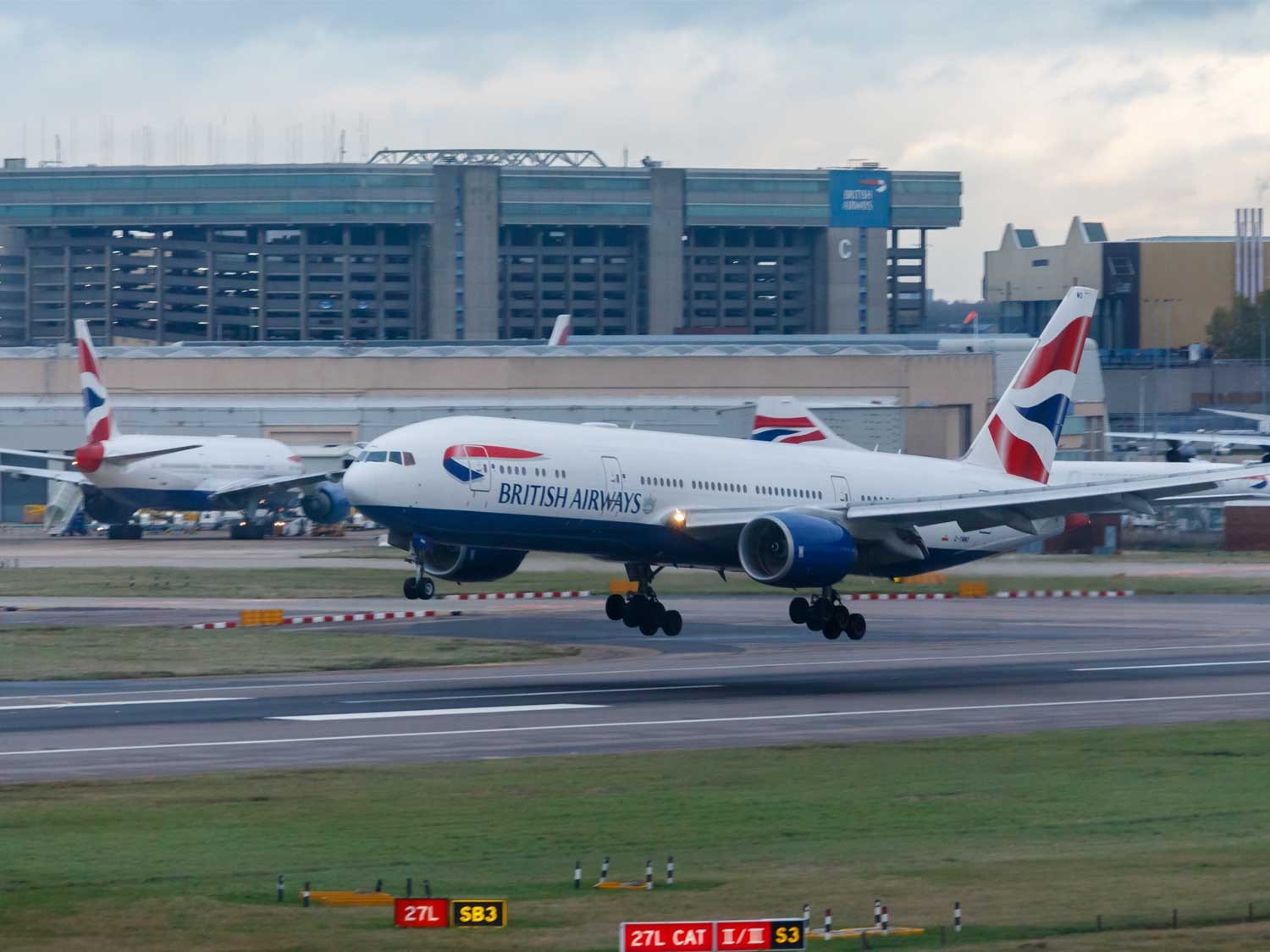
For questions about air freight, sea/air and our suite of time-sensitive solutions EMAIL Elliot Carlile, Operations Director, for insights, prices and advice.

New York port 1440x1080 1

TPM and US review

Organised by the Journal of Commerce, TPM (Transpacific Maritime Conference) is the premier global shipping and supply chain conference, attracting senior executives from all areas of the industry.

Held annually in the port city of Long Beach, California, TPM brings together shippers, carriers, freight forwarders, intermodal operators and technology providers to discuss the most pressing global challenges and developments, for a week of essential networking, seminars, and relationship building.

With over one hundred presentations, interactive speaker sessions and networking events, and almost two hundred speakers, including leaders from the largest brands and carriers on the planet, TPM really is in a league of its own.

Metro’s Chief Commercial Officer, Andrew Smith, joined this year’s conference, to participate in TPM’s insightful panels and forward-thinking discussions to explore the global dynamics and challenges impacting ocean supply chains.

Andrew said “It was important to take the opportunity to travel out to Long Beach for TPM as part of my recent visit to the United States, to meet key customers, partners and carriers. It was a full on trip, encompassing seven cities across the country in just over a week, and the time spent talking to customers in particular was invaluable”.

“The Red Sea crisis was obviously a major talking point among delegates and in particular how to manage a situation which appears to have no immediate solution and is likely to continue for the foreseeable future.”

“TPM was as interesting and insightful as always and I think the key takeaways are well-worth sharing.”

“Keynote speaker Robert Gates, the former CIA director, painted a picture of a world where increasing local conflicts should be anticipated and with the global geopolitical landscape the most challenging it has been for decades, preparedness for future supply chain disruption is essential.”

“In this environment it is perhaps natural that so many shippers are looking at de-risking their supply chains. Resilience and flexibility are at the core of de-risking, with initiatives such as multi-carrier programmes, sourcing diversification, re-shoring and near-shoring.”

“Another takeaway worth highlighting is that despite all the current operational challenges, sustainability still remains top of the agenda for carriers and major shippers, and the TPM programmes reflected this, with nearly a third of the scheduled events featuring environmental, transformation and sustainability issues.”

“My visit to the United States, alongside Metro colleagues regular trips, reiterate our focus and commitment to this important market. This focus will continue and ramp-up further with a new route development role created to expand both customer and partner engagement.”

“To discover how we can support your Transpacific or Transatlantic trade needs, or to discuss any of the issues highlighted here, please reach out to me directly via EMAIL.”

Sea Air aerial

Air freight’s promising 2024 start continues

The global air freight market’s positive start continued last month with significant growth in demand and a corresponding rise in global spot rates, especially from the Indian Subcontinent, which is out of step with traditional market trends.

Traditionally, air cargo demand and spot rates tend to decline following the year-end peak season in the previous year, and in the period immediately after the Lunar New Year.

It’s been a surprising start to the year from a volume perspective, with demand much higher than it was a year ago and not something the market would usually expect.

Clearly the Red Sea disruption is a driving factor, but it is not the only one, with clear signs that consumers are still spending.

With a lot of spend on cross-border eCommerce platforms, it is boosting airfreight demand, particularly from Guangzhou and Hong Kong, and for some carriers eCommerce cargoes now contribute over 50% of their revenue from East Asia.

The growth in demand was so profound and unexpected that some ground handlers at key transhipment hubs imposed short-term embargoes on traffic ex Asia to help clear backlogs caused by the sudden surge in air cargo volumes outpacing the availability of cargo supply.

February’s global volume growth was consistent with January’s increase, in what is traditionally a slower time of year for airfreight volumes. We now wait to see what impact airline summer schedules will have as well as what happens next in the Red Sea. 

We would normally expect to see downward pressure on rates as summer belly-hold capacity returns in the western hemisphere, although lesser so in China, where the travel market is still in recovery mode.

Continuation of the Red Sea crisis is extending transit times and driving down schedule reliability for Asia to Europe trades below 35%, which will continue to encourage the diversion of urgent cargoes to air freight and sea/air services.

The South Asia to Europe market led month-over-month growth, with demand on this trade rising by 18% and the average spot rate from South Asia to Europe increasing accordingly.

India, Bangladesh, and Sri Lanka also experienced significant increases in their general cargo spot rates, driven by strong demand for apparel products from these markets.

With spring in Europe, fashion retailers need seasonal products in-store for the peak sales period and with the subsequent mark down in product cost likely to be greater than the cost of switching from sea to airfreight, the demand is unsurprising.

For urgent, valuable and sensitive shipments we have a range of air freight and sea/air solutions, with block space agreements (BSA) and capacity purchase agreements (CPA) that protect space and capacity on the busiest routes.

Regardless of your cargo type, size and requirements, we have extremely competitive rate and service combinations, to meet every deadline and budget.

EMAIL Elliot Carlile, Operations Director, for insights, prices and advice.