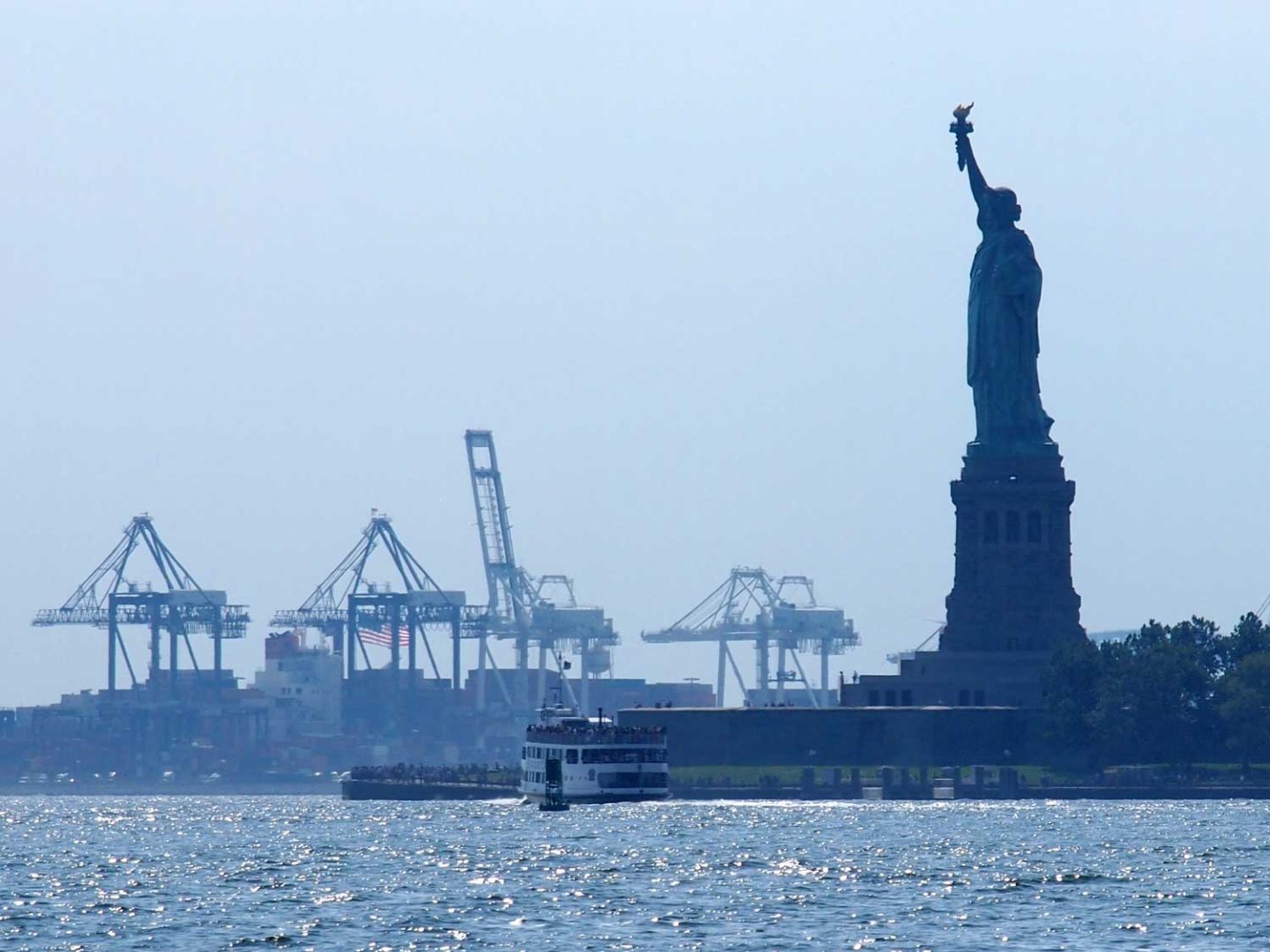
New York port 1440x1080 1

Transpacific capacity tightens as Panama restrictions reshape the market

Strong US import demand, reduced vessel capacity and tighter Panama Canal restrictions are keeping transpacific shipping under pressure, with East Coast services facing particular constraints as September approaches.

The transpacific market remains significantly firmer than Asia–Europe, despite signs that the recent rise in spot rates may be levelling off.

After several weeks of increases, Shanghai–New York spot rates slipped 2% in the latest Drewry World Container Index, while Shanghai–Los Angeles remained flat. Freightos recorded a different picture, with East Coast rates rising 3% and West Coast rates 1%. 

The differing indices underline the uncertainty surrounding the market rather than signalling a clear reversal. Rates remain substantially above levels seen three months ago, supported by resilient demand, constrained capacity and growing operational pressure around the Panama Canal.

Peak season demand remains resilient

An unusually early transpacific peak began in late May as US importers accelerated shipments from Asia, initially in response to tariff uncertainty and subsequently supported by continued demand.

China–US volumes fell 12% in the first quarter before surging 22% in Q2, with much of that rebound concentrated in April and May. US import forecasts suggest volumes could remain relatively firm through September before easing in October. 

Capacity has tightened at the same time. August capacity fell 9% month on month on Asia–US East Coast services, while carriers have continued using blank sailings to manage supply.

Congestion at Asian ports following successive typhoons has added further pressure, disrupting schedules and reducing the effective capacity available to shippers.

Panama compounds the East Coast squeeze

The Panama Canal is emerging as another important factor for Asia–US trade.

From early September, lower permitted draughts and fewer daily transits are expected to restrict the amount of cargo vessels can carry through the canal. Analysis of July movements suggests around 45% of Neopanamax transits could be affected by the new draught limits, representing approximately 55% of nominal container capacity using the larger locks. 

Initially, this may mean vessels carrying less cargo rather than carriers withdrawing ships. However, fewer daily transit slots could increase queues and delays while reducing the effective capacity available to East Coast services.

If restrictions become more severe, carriers could divert some Asia–US East Coast services around the Cape of Good Hope. That would add approximately 30% to transit times and tie up vessels for longer, tightening capacity elsewhere in the network.

West Coast gateways could gain cargo

Panama restrictions may also change how importers route US-bound cargo.

Some Asia-origin shipments normally moving through the canal to East Coast gateways could switch to Los Angeles, Long Beach and other West Coast ports, followed by rail or intermodal transport inland.

US intermodal volumes are already increasing as shippers respond to tight truckload capacity and higher road freight costs. Domestic container volumes grew 7.4% year on year during the first half, while international container volumes returned to growth in July. 

Rail networks currently appear to have capacity to absorb additional traffic, although localised pressure is emerging at some ports and railheads. A sustained transfer of transpacific cargo towards the West Coast could increase pressure on terminal appointments, chassis availability and inland connections during September.

Elevated conditions may persist into September

The immediate outlook remains finely balanced.

Strong transpacific demand contrasts sharply with Asia–Europe, where rates have declined for seven consecutive weeks. On the Pacific, however, capacity management, Asian port congestion and Panama restrictions provide continuing support for the market.

The latest pause in rate growth may therefore prove temporary rather than marking the end of peak-season pressure.

For shippers, the more important issue is increasingly where usable capacity will be available. East Coast constraints could favour West Coast routings, but shifting cargo west creates different inland transport requirements and potential congestion risks.

Early booking, additional lead time and the ability to switch gateways, routings and inland modes will be increasingly important as these pressures develop.

NOTICE: Transatlantic carriers push for September rate increases

Carriers are seeking to strengthen westbound transatlantic rates in September, despite softer demand between Europe and North America.

North Europe–US volumes fell 2.6% year on year in July, following a 5.5% decline in June, while Mediterranean–US volumes dropped 1.9%. In response, carriers reduced Europe–North America capacity by almost 9% during August, with a further 9% reduction expected on North Europe services in September.

Several carriers have now introduced peak-season surcharges and general rate increases, alongside higher European inland fuel and intermodal charges. With demand providing limited support, their success will depend on capacity discipline and shipper acceptance.

Metro connects an extensive Asian network with established operations across the United States, giving shippers access to alternative gateways, routings and inland solutions as capacity shifts. 

By considering ocean, port and inland costs together, we can identify the route that protects your supply chain and total landed cost and move with the market when conditions change.

EMAIL Andrew Smith, Metro’s Managing Director.
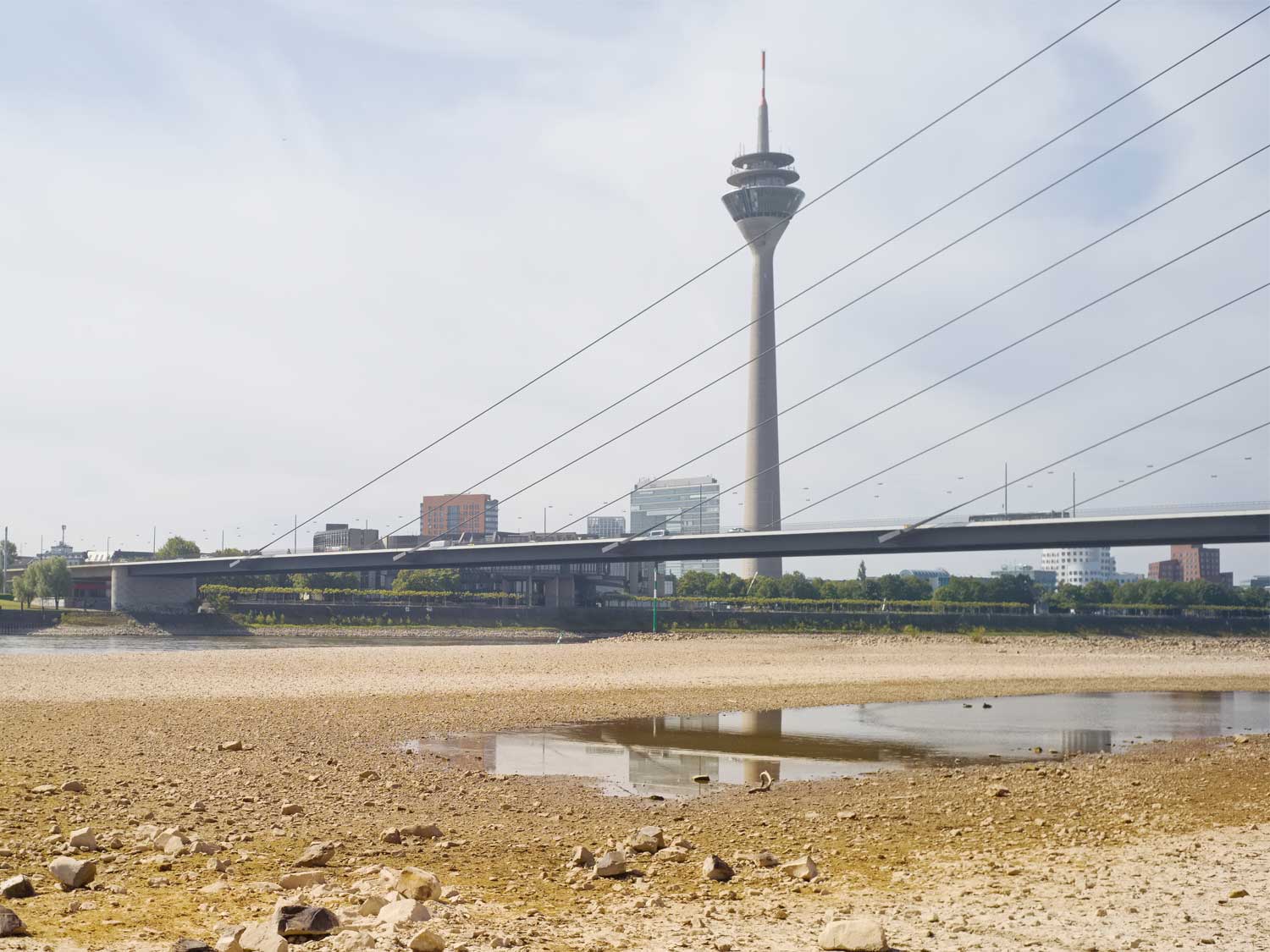
Rhine low water levels

Falling Rhine levels put European supply chains under growing pressure

Record-low water levels on the Rhine are creating another significant challenge for European supply chains, restricting barge capacity, increasing transport costs and putting additional pressure on already constrained road and rail networks.

The Rhine is one of Europe's most important freight arteries, connecting Rotterdam and Antwerp-Bruges with industrial centres across Germany, France and Switzerland. Around 35% of containers moving between Rotterdam and their hinterland travel by inland waterway, making reliable barge operations an important part of the region's freight infrastructure.

Persistent heat and drought have pushed water levels to exceptional lows, particularly around Kaub in Germany, a critical point for navigation on the Middle and Upper Rhine. Conditions have deteriorated to the point where some operators have suspended bookings beyond Kaub and sections of the river have become extremely difficult for container traffic.

The immediate problem is not simply whether barges can sail. Lower water levels dramatically reduce the amount of cargo they can safely carry.

Capacity disappears as the Rhine falls

Water levels at key Rhine gauges have fallen as low as 7cm at critical points, severely restricting barge operations and the impact on effective capacity is dramatic. 

Some mid-sized container barges with a nominal capacity of around 300 TEU are reportedly able to carry only about 20% of their normal capacity, while larger barges offering around 400 TEU of capacity have been completely unable to navigate some river stretches.

That creates an unusual form of supply chain disruption. The physical infrastructure remains in place, but much of its freight capacity has effectively disappeared.

Costs are rising accordingly. Low-water surcharges on the most severely affected sections have reached €1,350 per TEU around Kaub and €895 per TEU around Cologne, adding 

potentially substantial costs to container movements into Germany and Central Europe.

The disruption also threatens cargo flows through Europe's two largest container gateways. Around 35% of containers moving between Rotterdam and its hinterland travel by inland waterway, illustrating the scale of the potential problem if barge capacity remains restricted.

If containers cannot move inland quickly enough, they can accumulate at terminals in Rotterdam and Antwerp, potentially transferring congestion from the Rhine back towards the deep-sea ports.

Road and rail cannot simply replace barges

Shippers are increasingly turning to road and rail, but neither mode has enough spare capacity to replace lost barge movements quickly.

The scale of the substitution challenge is significant. Moving the containerised cargo carried by one barge can require more than 200 trucks. Replicating barge capacity by road would therefore place considerable additional pressure on trucking networks while increasing cost, congestion and emissions.

Available capacity is already tightening. In the most constrained areas, securing a truck can reportedly take up to two weeks, while additional rail capacity can require as much as six weeks' advance notice.

Rail also faces infrastructure constraints. Major renovation work on the Troisdorf–Wiesbaden corridor is restricting capacity on an important freight connection between Germany's inland regions and its European seaport gateways, just as demand for alternatives to barge transport is increasing.

The additional pressure is now feeding directly into transport costs. From 20 August, new congestion surcharges are being applied to selected container movements from Rotterdam and Antwerp, including €44 per container for trucking and €50 per container for rail and combined rail-road movements to and from affected German and Alsace locations.

For shippers, low Rhine levels are therefore no longer simply an inland-waterway issue. They are increasing costs and reducing available capacity across barge, road and rail simultaneously, while extending lead times and increasing the risk of missed delivery windows.

Weather is becoming a global supply chain variable

Extreme weather is increasingly affecting freight networks across different regions and modes. European heatwaves and drought are restricting inland waterways, while typhoons have recently disrupted Chinese ports and contributed to container and vessel-space shortages. Drought and water-management measures are also restricting vessel loading through the Panama Canal.

These events may be thousands of miles apart, but their supply chain effects are remarkably similar: effective capacity falls, schedules become less reliable, alternative routes become congested and transport costs increase.

As Metro recently highlighted in its analysis of how climate is becoming one of the biggest supply chain risks, extreme low-water events on the Rhine have reportedly occurred more frequently during the past decade than in the preceding five decades.

Contingency planning can no longer focus solely on recovering from an exceptional event. Shippers increasingly need supply chains designed to accommodate weather-related disruption as an ongoing operational risk.

Recovery could create another bottleneck

Rainfall would improve the situation, but higher water levels would not produce an immediate return to normal operations.

Barges and equipment displaced by weeks of disruption need to return to their scheduled rotations. A rapid recovery could also result in vessels arriving simultaneously at Rotterdam and Antwerp, transferring congestion from the river back towards the ports.

Shippers therefore need to consider both the immediate disruption and the recovery period that follows it.

Metro builds resilience beyond the port

When a major transport artery loses capacity, waiting for conditions to improve is rarely enough. Shippers need visibility of the disruption, early access to alternative capacity and the ability to switch between barge, rail and road before those alternatives become constrained.

Metro works across the supply chain to identify vulnerabilities and develop contingency options around individual cargo flows. By considering port choice, inland routing, available capacity, lead times and total transport cost together, Metro can help customers protect deliveries when established routes come under pressure.

Weather may be increasingly unpredictable, but your response does not have to be. Metro helps build flexibility into your European supply chain, giving you the options to keep cargo moving when critical links cannot operate as planned.

To learn more, EMAIL Managing Director Andrew Smith today

Bangladesh label

India and Bangladesh exporters face capacity squeeze

Exporters across India and Bangladesh are facing a difficult combination of strong demand, restricted vessel space, equipment shortages and weather-related disruption, with pressure particularly acute on westbound services to Europe and North America.

Although the underlying causes vary between the two markets, the consequences are similar. Shippers are competing harder for vessel allocations, paying significantly more for available capacity and allowing additional time for cargo to reach its destination.

The situation also illustrates a wider shift in global supply chains. Extreme weather is increasingly interacting with existing capacity constraints, port congestion and geopolitical disruption, turning what might once have been relatively isolated events into much broader operational problems.

Bangladesh loses capacity as carriers prioritise stronger markets

Bangladesh exporters are experiencing a sharp reduction in available ocean capacity as carriers allocate more vessel space and equipment towards China ahead of Golden Week.

One carrier indicated that its Bangladesh booking allocation had fallen from around 2,000 containers to 1,500, a 25% reduction. Equipment is also being repositioned towards China, leaving exporters from Chattogram competing for fewer containers and mother-vessel slots.

Bangladesh is particularly exposed because most exports do not move directly to Europe or North America. Containers typically travel by feeder to hubs including Colombo, Port Klang and Singapore before connecting with larger vessels. When capacity tightens at these transhipment points, Bangladesh allocations can quickly come under pressure.

Continuing Middle East disruption is adding to the problem. Longer vessel rotations around the Cape of Good Hope are absorbing capacity, with Asia–Europe rates reported to be 25% to 40% higher and Asia–US East Coast rates 15% to 25% higher.

For Bangladesh exporters, the increases have been considerably greater. Chattogram–US freight has risen by nearly 130% in a month, while reported pricing to Hamburg has increased by around 140%.

Some shipment bookings are also facing an additional two to three weeks in lead time. Businesses operating under Delivered Duty Paid terms have the greatest immediate financial exposure, although FOB exporters still face the commercial consequences of restricted capacity and delayed deliveries.

Airfreight offers an alternative for urgent cargo, but capacity from Dhaka is also tightening. Europe-bound shipments face particularly strong demand, making early booking and selective use of airfreight increasingly important for protecting critical delivery dates.

India–Europe demand pushes vessel space to a premium

India’s westbound market is experiencing its own capacity squeeze as export demand strengthens faster than available vessel space.

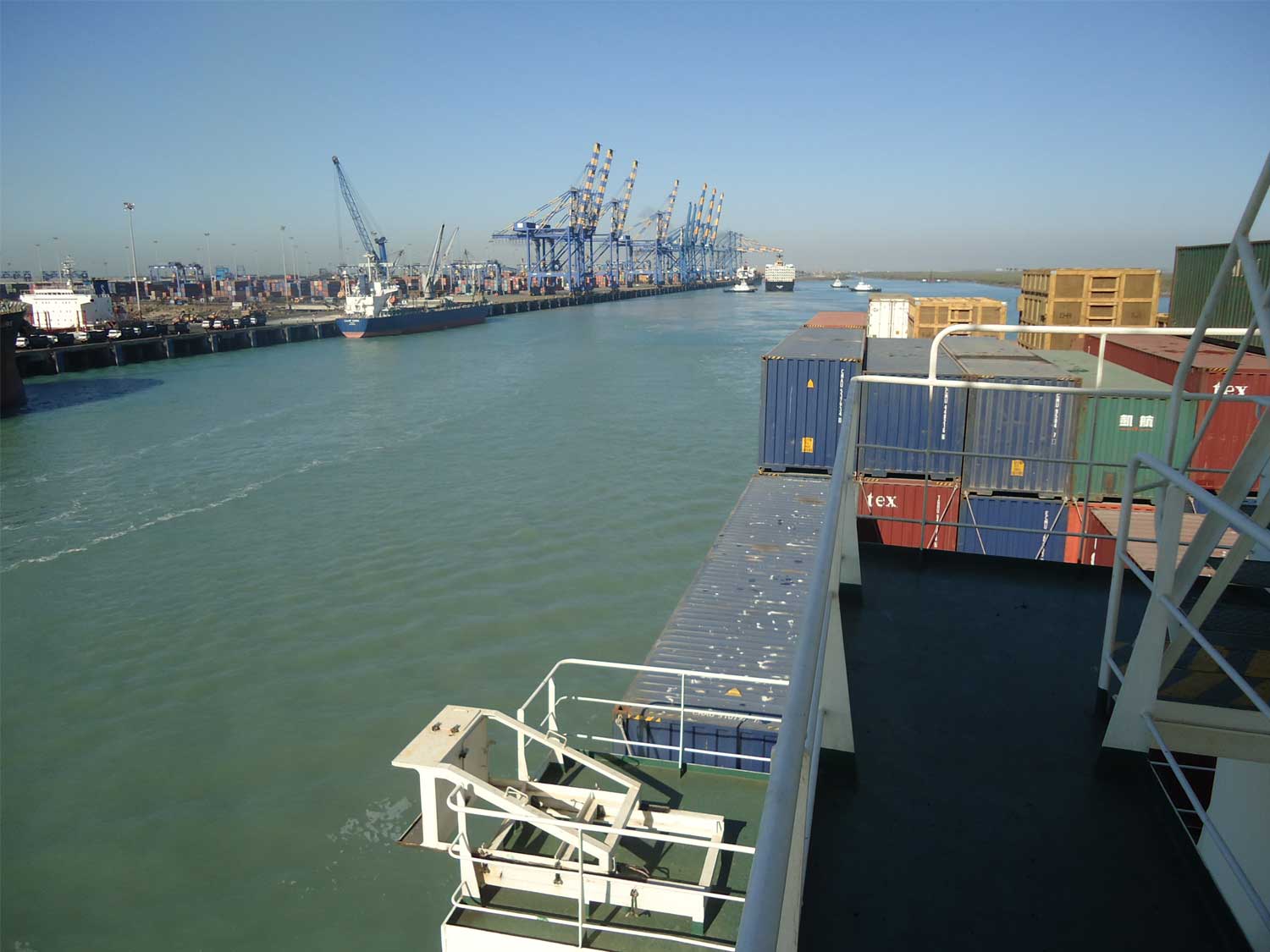
Indian containerised exports to Europe reached an estimated 518,000 TEU during the first half of 2026, while some key carrier services are already fully allocated through August and, on selected sailings, into early September.

Spot freight rates from Nhava Sheva and Mundra to major UK and European gateways have increased by approximately 10% to 15% since late July, reaching their highest levels in around four years. With guaranteed space increasingly valuable, shippers are also facing premiums where they need firm allocations.

Part of the constraint reflects carrier network decisions, including the reallocation of some India–Europe capacity towards growing Latin American flows. Blank sailings, rolled cargo and fluctuating allocations are adding further pressure.

But operational disruption at India’s major gateways is also playing an important role. Congestion at Nhava Sheva and Mundra has reduced vessel productivity and complicated cargo flows, while active monsoon conditions create further uncertainty for port operations and inland road and rail connections.

That matters because weather disruption is increasingly becoming an interconnected supply chain risk rather than simply a temporary port problem. Across Asia, tropical storms and extreme rainfall are affecting manufacturing, inland transport, terminals and vessel schedules simultaneously. A disruption at origin can then propagate through subsequent port calls and connections long after local conditions improve.

For exporters in India and Bangladesh, that combination makes early planning increasingly important. Securing space, allowing realistic lead times and retaining flexibility over gateways, routings and transport modes can provide valuable protection when capacity tightens or weather interrupts established schedules.

Metro combines extensive operations in India and Bangladesh to give shippers more options when ocean capacity becomes constrained. From securing vessel space and monitoring equipment availability to alternative routings, airfreight and air/sea solutions, we can identify pressure points early and build the flexibility your supply chain needs to keep critical cargo moving.

When capacity is scarce and disruption can develop quickly, talk to Metro before your shipment becomes urgent. EMAIL Managing Director Andrew Smith today

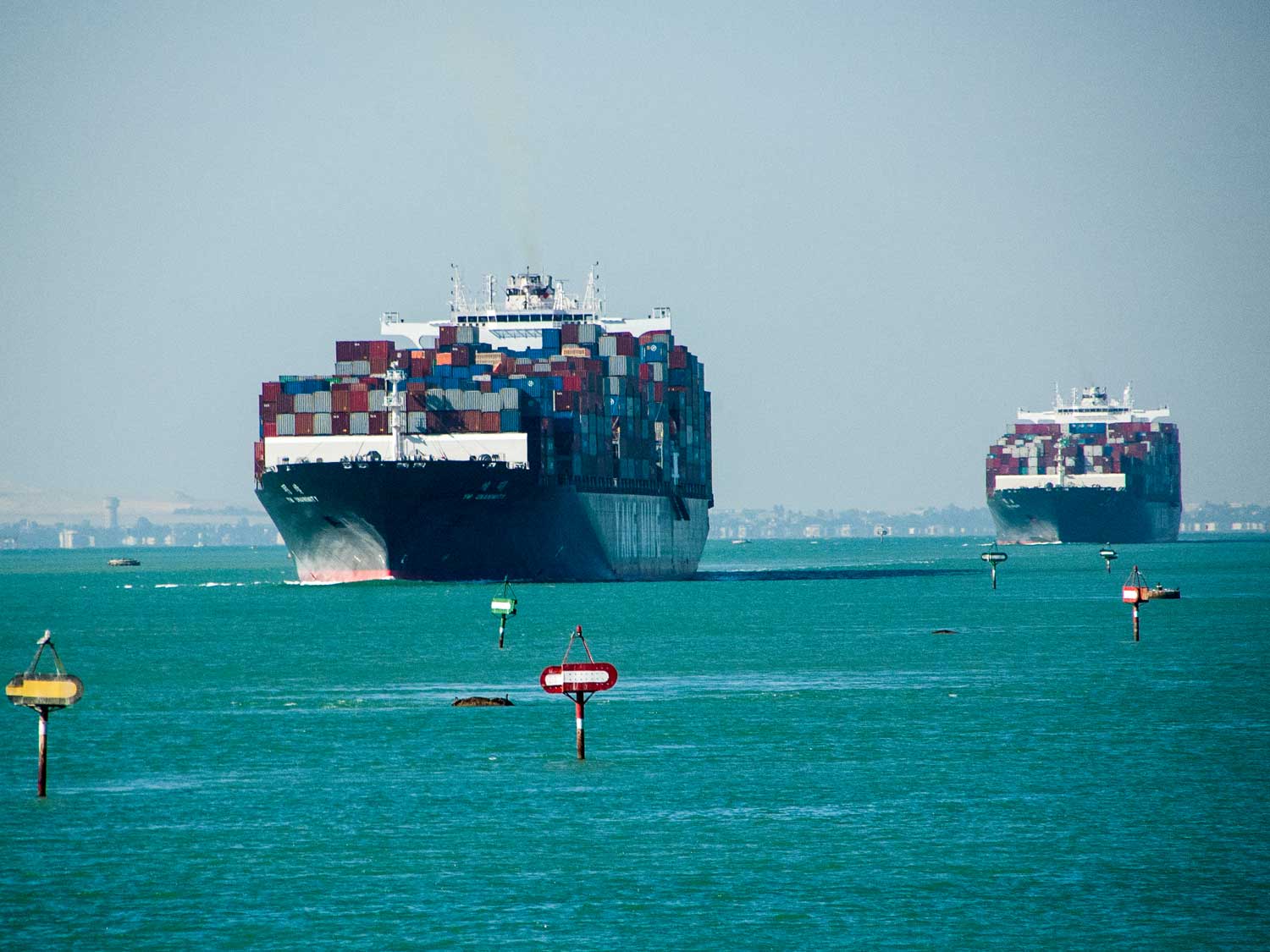
Suez MSC vessel

Red Sea return gathers pace, but risks remain

Container shipping through the Red Sea and Suez Canal is gradually increasing as major carriers test a return to the shorter Asia–Europe route, potentially signalling an important change for global supply chains.

But this is far from a return to normal. Recent deadly attacks demonstrate that security conditions remain volatile, while carriers are assessing individual sailings carefully and retaining the option to divert around the Cape of Good Hope at short notice.

For shippers, the potential benefits of shorter transit times must therefore be weighed against continuing routing uncertainty, war-risk insurance costs and the possibility that a broader return to Suez could create new congestion elsewhere in the network.

Carriers cautiously increase Suez transits

Maersk currently has four services passing through the Bab el-Mandeb Strait in both directions each week, equivalent to around one-third of its normal service pattern. The carrier believes current intelligence and security assessments support a gradual return, although every sailing remains subject to an individual risk assessment.

Hapag-Lloyd is taking a similarly cautious approach and expects any increase in Suez services to happen progressively rather than through an immediate network-wide switch.

Other carriers are also adding capacity. Cosco has reopened bookings for Red Sea services and is preparing a Far East–Red Sea rotation through Bab el-Mandeb, while CMA CGM already operates several services using Suez. The Gemini network has also moved additional Asia–Mediterranean services back towards the Red Sea.

The operational attraction is significant. Restoring the Suez route reduces the additional sailing distance created by Cape diversions and could ultimately release vessel and container capacity into a market already experiencing equipment and space constraints.

That is particularly relevant following severe weather disruption in China. Typhoon Dolphin closed operations at Ningbo and Shanghai during 7–8 August, leaving more than 2.4 million TEU of capacity across networks affected by the shutdown and subsequent congestion. With backlogs potentially taking weeks to clear, shorter vessel rotations could help carriers make more effective use of constrained fleets and equipment.

However, recent traffic data highlights how quickly sentiment can change. Total Red Sea/Suez transits fell from 255 vessels to 222 in a week, as operators adopted a more cautious approach following the renewed Houthi attacks.

Security risk translates directly into costs

The biggest obstacle to a sustained return remains security. A deadly attack on a commercial vessel off Yemen in August reinforced the wider and continuing threat to shipping, while missile and drone attacks have maintained uncertainty around the Bab el-Mandeb corridor.

Carriers are consequently treating Red Sea routings as conditional rather than permanent. A deterioration in security could prompt individual sailings, entire services or wider networks to return to the Cape route with relatively little notice.

For cargo owners, that uncertainty has an important financial dimension. Standard marine cargo policies typically exclude war risks, meaning shipments entering designated high-risk areas may require specific endorsements. Current market indications suggest Red Sea war-risk cover can cost approximately 0.5% to more than 1% of insured cargo value per voyage. Carriers may also pass additional security and operating expenses to customers through specialised risk surcharges.

Insurance availability itself can vary according to the cargo, vessel and parties involved. Some underwriters may restrict or refuse particular risks, while routing changes need to be declared correctly to avoid potential coverage issues.

Shippers should therefore consider the total cost and risk of the routing, rather than assuming that a shorter Suez transit automatically produces a cheaper supply chain.

A return could create another wave of disruption

There is another complication. A large-scale return to Suez could initially increase congestion rather than improve schedule reliability.

Cape diversions have fundamentally altered vessel arrival patterns. Switching significant numbers of ships back to the shorter route would change those patterns again, potentially creating bunching as vessels reach European terminals earlier and in different sequences.

That is particularly important while European ports are already managing congestion and inland transport constraints that are heightened by limited barge availability. Carriers are therefore planning phased returns partly to avoid overwhelming terminals.

For shippers, the next phase of the Red Sea situation could consequently bring both opportunity and uncertainty. Shorter routings may improve transit times and eventually release capacity, but security assessments, insurance premiums, surcharges and rapidly changing schedules will remain important considerations.

Metro monitors carrier routings, security developments, insurance implications and schedule changes across the Red Sea, Suez and Cape alternatives, helping customers understand the true cost and operational impact of each option. With conditions capable of changing from one sailing to the next, talk to Metro before booking critical cargo so we can assess the routing, timing, cost and risk that best protect your supply chain.

To learn more, EMAIL Managing Director Andrew Smith today.