
Paris grandstand 1440x1080 1

Summer 2024; France supply chain alert

This summer, a number of large-scale sporting events are likely to create some supply chain disruption, with the Olympic and Paralympic Games taking place in Paris between the 26th of July to the 11th of August, and the 28th of August to the 8th of September.

The Paris 2024 Olympic Games, which begin on the 26th July, will take place in 36 locations and are expected to attract about 13.5 million people, with parts of Paris closed off and drivers expected to gain access through online applications.

We are following the situation closely with our French partners, but it is inevitable that the current installation of infrastructure, movement of athletes and visitors and the subsequent dismantling and clearing of temporary traffic routes to the end of October, will require widespread access restrictions to routes in Paris and the wider Metropolitan area during the summer, which will impact local distribution.

OPERATIONAL TIMELINE AND ROAD CLOSURES
April: Infrastructure assembly began at Grand Palais, Point Alexandre III, and Invalides
June: Assembly begins on the docks in the Opening Ceremony area
Early July: Assembly begins on the bridges at the area of the Opening Ceremony
Mid-July: Olympic Village is opened
26th July: Olympic Games begin, accompanied by the introduction of reserved lanes
Early August: Bridges and docks will start to open up again
September – October: Dismantling phase and gradual release of competition sites

As stated above most impacts will be caused due to infrastructure assembly and disassembly operations throughout the 35 Olympic sites, with on-road or road-adjacent sporting events also having impacts on road transportation due to road closures.

Delays and re-routings of cargo moving through this area during the summer are inevitable and we are aware of carriers announcing surcharges for transportation through the Île-de-France area. 

We are reorganising our activities to cope with all the restrictions and will keep you informed as the situation evolves. 

To discuss the potential impact of the Olympics on your French traffic EMAIL Richard Gibbs to begin a conversation.

Parliament blur

UK is world’s 4th largest exporter – we look behind the headline

The UK, which ranked 7th in 2021, leapt up to become the world’s 4th largest exporter in 2022, according to new data published by the UN Conference on Trade and Development (UNCTAD). But it may not be all good news and there’s plenty to consider within the data.

The UK’s rise to become the world’s fourth largest exporter, behind China, the US and Germany in 2022 has given politicians an excuse to showcase the UK’s ‘economic resilience’, but the top-line export figures report the total value, which includes intermediate costs for parts and labour and much of this will have been imported.

So, the UK’s export ranking may not accurately reflect its economic strengths and manufacturing capability and the £0.8 trillion headline may hide a large portion of imported value.

The UK’s output produced domestically as a percentage of GDP (after adding all output and subtracting intermediate inputs) has been on a steady decline since the 1990s, while the value of imported intermediate inputs increased in 2022 by 4.8% and 11.9% from EU and non-EU countries respectively, confirming an increasing reliance on imported goods.

By contract, UK services export volumes have risen nine times faster than goods since 2010, suggesting a shift away from manufacturing, which some economists said was accelerated by Brexit.

Office for National Statistics showed a 63% real terms growth in the export of services in the 14 years to the end of 2023, compared with just a 7% rise for goods.

The 2022 data does show an impressive rise in UK exports, but it also shows an even faster increase in imports, which produced the highest trade deficit since 1989.

And even though a trade deficit is not necessarily indicative of an unhealthy economy, a prolonged deficit, especially where imports are replacing domestically produced goods, may highlight low productivity, a lack of international competitiveness, or both.

While the UK’s reliance on EU trade has diminished somewhat, the EU remains by far our largest and most important trading partner and despite the 2021 trade deal, leaving the single market introduced new trade frictions.

To counterbalance these frictions, striking more bilateral trade deals could increase UK exports to faster-growing overseas markets, but this depends on UK manufacturers breaking into these new markets, overcoming trade obstacles and establishing effective supply chains.

For over 40 years Metro has helped customers enter new export markets, supporting their regulatory compliance, finance requirements and multi-modal transport, alongside guidance on insurance and packing to protect their products.

If you have any questions, rate requests or would like further information on our global export capability, please EMAIL our Chief Commercial Officer, Andy Smith.

HKG port

Ex-Asia spot rate spiral turned into shooting star

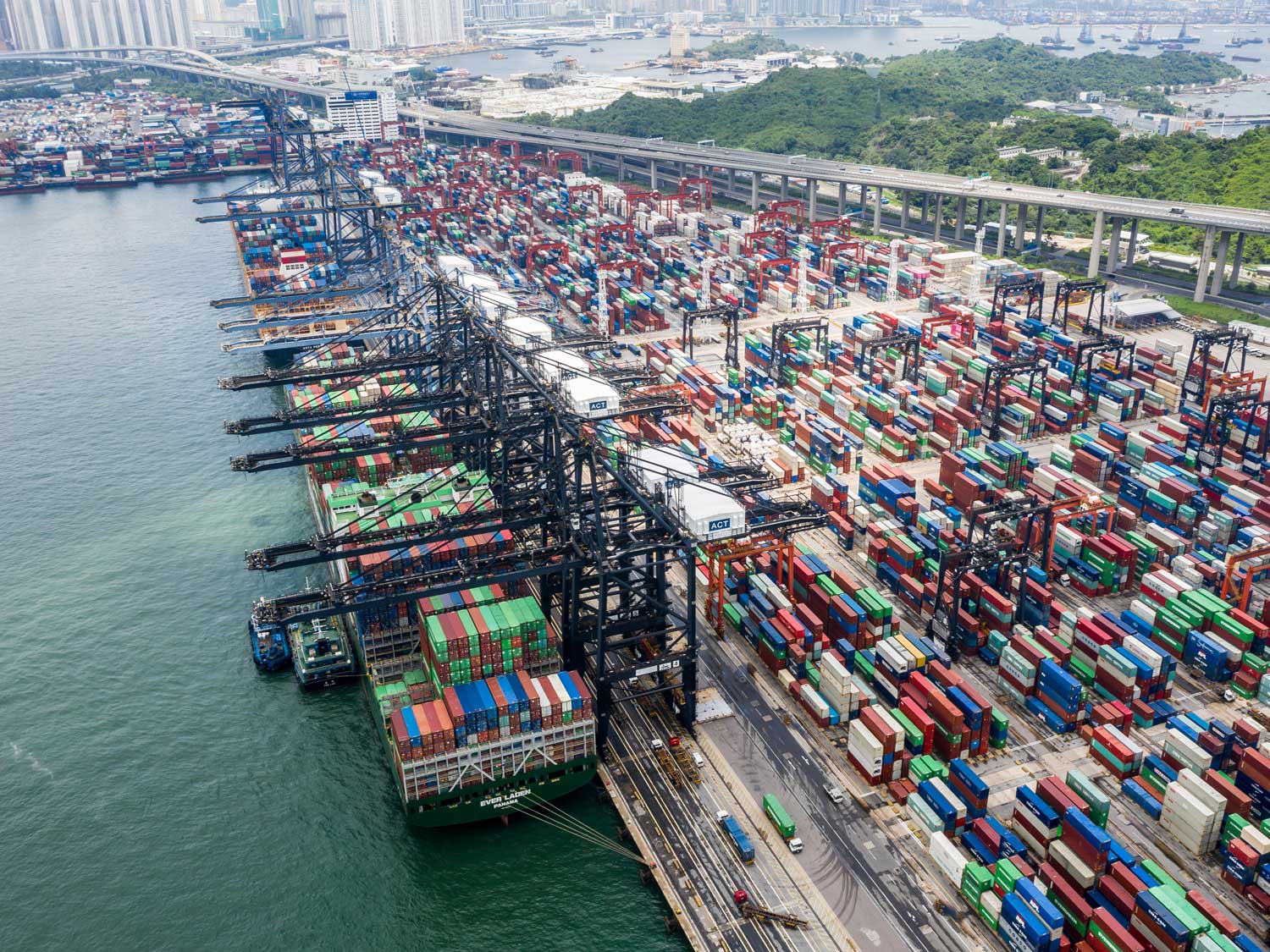
Container shipping lines have announced significant rate hikes on all ex-Asia trade lanes, due to increased demand and increasing equipment challenges in more origins and it would be prudent to expect more of the same.

Effective capacity to North Europe has decreased by 5% compared to a year ago, due to the longer route around Africa, despite the deployment of 18% more vessel capacity. 

One leading carrier has suggested that capacity shortages could be as much as 20% and while the situation is not as grim as the carrier suggests, demand growth of 15% has taken the market by surprise with container equipment and vessels in short supply. 

It is difficult to see what precipitated the steep increase in demand over the last couple of weeks, which have been remarkably strong. It may be buyers pulling orders forward because they have concerns about global geopolitical uncertainties, or they need an additional two-week buffer of stock in transit. Or rates could be driven by a more general restocking to replenish inventories.

The speed and pace of change in the market has been phenomenal, replicating the lead-up to the peak of the pandemic, with demand hugely high. Add to that the early start of the traditional peak season in May, which is now seasonalising to the pre-pandemic model and it’s a potential nightmare scenario for importers.

Carriers are putting rates out and then withdrawing them because they have already been replaced with higher levels. 

FAK and spot rate quotes for most shipping lines are now closed until June, or later, so shippers can’t make a booking even if they are willing to pay premium prices.

Demand has grown consistently over the last two quarters and while new container ship deliveries continue, the diversion around the Cape of Good Hope, strong demand and additional summer service deployments are absorbing this capacity and we expect the lines to continue raising rates into the summer.

The ocean freight market has moved beyond ‘pay to play’, with carriers cutting back on contracts, blanking vessels and not carrying space forward. Shippers may look around and try to ‘play the market’ but everyone is in the same ‘boat’.

Metro are coping relatively well, thanks to our long-standing carrier relationships and sensible annual contracts, which guarantee us space and set rates.

To learn how we can enhance your ocean freight solutions, please EMAIL our Chief Commercial Officer, Andy Smith. 

India industrial revolution 1440x1080 1

India; sourcing opportunity

For years India has been looked to as the next global manufacturing powerhouse and it now appears to be finally becoming the manufacturing power and sourcing alternative to China that it has long promised to be.

India’s Prime Minister Narendra Modi inherited an economy that was teetering on an economic precipice a decade ago.

Immediately after his victory in 2014, the prime minister launched an ambitious ‘Make In India’ campaign to turn India into the world’s factory.

Foxconn – which makes iPhones for Apple – are moving their supply chain to India and other major global giants like Tesla, Micron and Samsung have also been enthused to invest in manufacturing.

And while investment in manufacturing has not reached the highest expectations, India’s growth is outpacing other major economies, overtaking the UK as the fifth largest economy and it’s on track to leapfrog Japan and Germany and hit the third spot by 2027.

India has been heralded as the next global manufacturing powerhouse, only to be outshone in trade diversification initiatives by Vietnam, and more recently by Mexico, but over the last decade, US imports from India have doubled, to the 1 million TEU range, with East Coast ports reaping the largest gains.

Retailers and fashion brands have been shifting their focus to India for many years, in a bid to speed up supply chains, keep costs down and spread out sourcing to other countries.

Carrier commitment
Container shipping lines are expanding services and local presence, with ONE launching a service to the US East Coast and HMM securing slots on the new loop.

In December, MSC acquired a 49% stake in a container terminal, near Chennai, while CMA CGM and Hapag-Lloyd are also targeting Indian port opportunities.

Last year, Hapag-Lloyd invested in local ports and logistics and Maersk also has a significant footprint inland, with marine terminal operations at Nhava Sheva and Pipavav.

OOCL and APL have invested in rail services and container freight stations for nearly two decades.

The current supply chain
Despite the investment and presence of the shipping lines, Indian exporters are turning to air freight as ‘Red Sea’ vessel diversions around southern Africa have choked off capacity, by omitting Indian subcontinent port calls, making air cargo and sea/air the viable alternatives.

In a further complication fashion products are moving in trucks from Bangladesh into India, which is adding further demand for air freight.

Another significant contributing factor to elevated export air cargo rates is the shortage of capacity as big Chinese eCommerce marketplaces buy up as much space as they can find at premium rates.

With high rates on offer, capacity has moved from the Indian subcontinent to the Chinese market and as capacity dwindles rates out of India, Pakistan and Bangladesh go up even faster.

Overall, rates to Europe from South Asia are up 120% from the same time last year, with India to Europe spot rates up 174%.

There is also strong underlying economic growth in India, with HSBC reporting that the economy’s rate of expansion the strongest since July 2023, led by the strongest manufacturing output in nearly three and a half years, with export orders showing improved robustness.

India’s next decade could resemble China’s hyper growth, analysts from Morgan Stanley wrote and other trends like digitalisation, clean energy and growth in global offshoring will propel future growth, say experts.

For over 40 years Metro has helped customers open up new export markets and diversify sourcing across Asia and India.

Integrated on our MVT supply chain platform, our commercial and operations teams work closely with our partners across India and surrounding regions, processing air, ocean and sea/air shipments.

If you have any questions, rate requests or would like any further information on our capability in India, please EMAIL our Chief Commercial Officer, Andy Smith.