shopping 2

Retailers warn of delays after Red Sea attacks

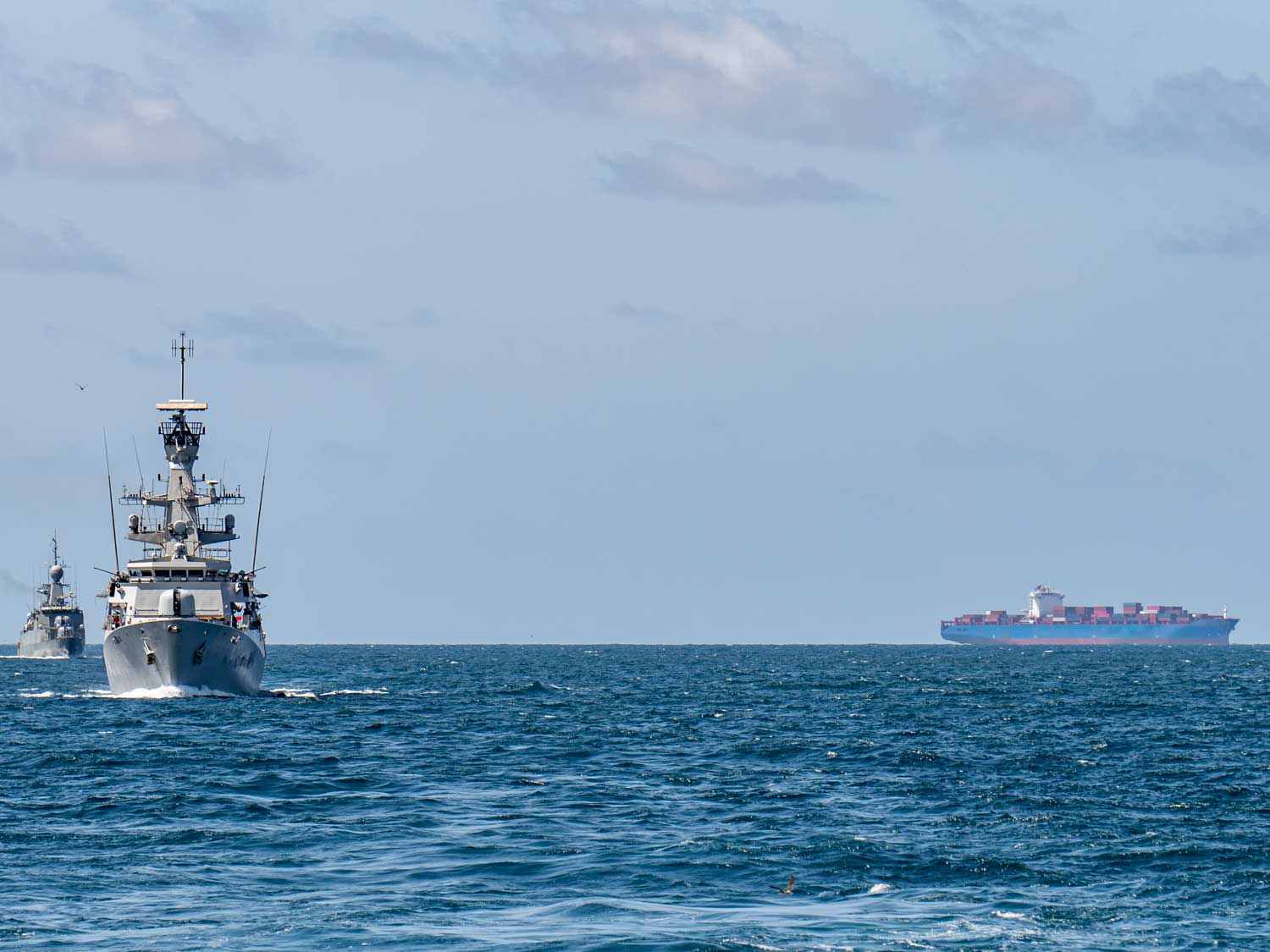
Leading retailers including IKEA and NEXT have warned that the diverting of vessels aways from the Suez canal and around southern Africa will result in delays and may restrict the availability of certain products.

Re-routing container ships around Africa adds 3,500 nautical miles to a typical journey from Asia to Europe and potentially adds three or four weeks to product delivery times and with delays to deliveries threatening the availability of some products retailers are evaluating other supply chain options.

The problems have not impacted Christmas or New Year sales stock, which arrived more than a month ago, but could squeeze spring trade if not resolved shortly.

While it is not yet clear what impact late deliveries will have, it is possible that the problems could renew pressure on inflation, which has fallen to 3.9% in the UK, with the disruption already putting pressure on oil prices.

In the short term retail goods will take longer to be shipped, as they are redirected via longer routes, which means a knock-on impact to availability and prices as a result of higher transportation and shipping insurance costs.

About 19,000 ships navigate the Suez canal every year, which represents about 30% of global container traffic, so the diversion accounts for about 23.5% of current global container traffic.

The Suez Canal is consequently one of the world’s key trade routes, particularly for goods moving between Asia and Europe, and the disruption comes at a time when many retailers are trying to move orders ahead of Chinese New Year in February, when factories will close.

Some retailers have warned that with container shipping costs increasing due to the disruption, prices in the shops could rise further. 

The London Textile Fair took place this week with 300 global manufacturers including from Europe, Pakistan, Vietnam and China exhibiting.

Manufacturers have been wary about the additional expenses incurred as a result of the African diversion, with shipping costs increasing between 20% and 400%, although it appears that many retailers are taking on the surcharges. 

A number of UK retailers are instructing their vendors to ship all orders by air freight and are covering the extra costs.

Despite the Red Sea challenges the retailer and manufacturer feedback from the fair has been largely positive, with production prices in many regions stabilising compared to last year and buyers optimistic, as economic pressures ease.

Metro support retail customers’ success, by protecting their supply chains, with innovation and resilience.  

Our unique blend of experience, systems and processes means that we can introduce new methods and efficiencies to optimise global inventory, reduce shipping costs and streamline the entire supply chain. 

Please EMAIL Elliot Carlie to discuss how we can optimise your supply chain and help you overcome the challenges you currently face.

metro tech

Metro’s new LCL guru

With over 20 years' experience in freight and logistics, the majority of which has been in the ocean freight environment and specifically the LCL product, in the UK and overseas, we are pleased to introduce our new Senior LCL Commercial Manager, Jane Kenny, who is leading this critical service area.

Our comprehensive LCL services provide predictability and reliability at a competitive price. Flexible solutions, which are integrated within our global sea freight network to provide fully-managed, adaptable, reliable and customisable solutions, that meet the demands of the most demanding supply chains.

Talking about 'LCL Shipping' or 'Groupage Shipping’, when we literally group your goods with other consignments, that need to take the same route, to make up full containers, Jane said. “Our focus within LCL is on offering cost savings and sustainable solutions, especially where customers are shipping under-utilised containers.”

“We are always thinking outside of the box to keep our customers’ freight moving and rates low and because we constantly have consolidated containers moving on the major trade-routes, we are able to offer sailing schedules which meet critical transit deadlines to keep supply chains moving efficiently.“

“LCL has always been a true passion of mine, as it is such an adaptable solution for moving freight, especially when the market is facing challenges and it is the perfect choice for shippers when rate inflation and lack of space threatens traditional shipping”. 

“Geographically Metro have a powerful presence on all the major trade-routes and are particularly strong in the United States and China, with really well supported LCL services out of critical cities like Shanghai, Yantian, Shenzhen and Hong Kong, which is so important when regular FCL traffic is facing massive rate increases and service disruption.”

Metro’s global LCL solutions:

 - Dedicated pricing team for fastest quote turnaround
- In-house Metro control from load point to arrival point
- Regular LCL services covering all major trade lanes
- Fastest ocean services utilised for our consolidated containers
- LCL containers packed/unpacked at our dedicated facilities for speed and security
- Facilities linked to customs CuDoS system and our in-house specialists

Metro’s LCL services are the most cost-effective method of moving freight over long distances, offering immense cost and emission savings on air, with an exceptional number of weekly import and export departures, and the fastest transit times.

LCL services depart from all major ports worldwide and can be linked to upstream and downstream warehousing, consolidation and distribution support. We handle global customs brokerage and declarations through our CuDoS system and you can track your shipments with our AI-powered ocean visibility tools.

EMAIL Jane Kenny, to discuss your ocean freight requirements, to learn more about our LCL product, or to request a quote.

LHR BA landing

Sea freight shippers opt for air and sea/air alternatives

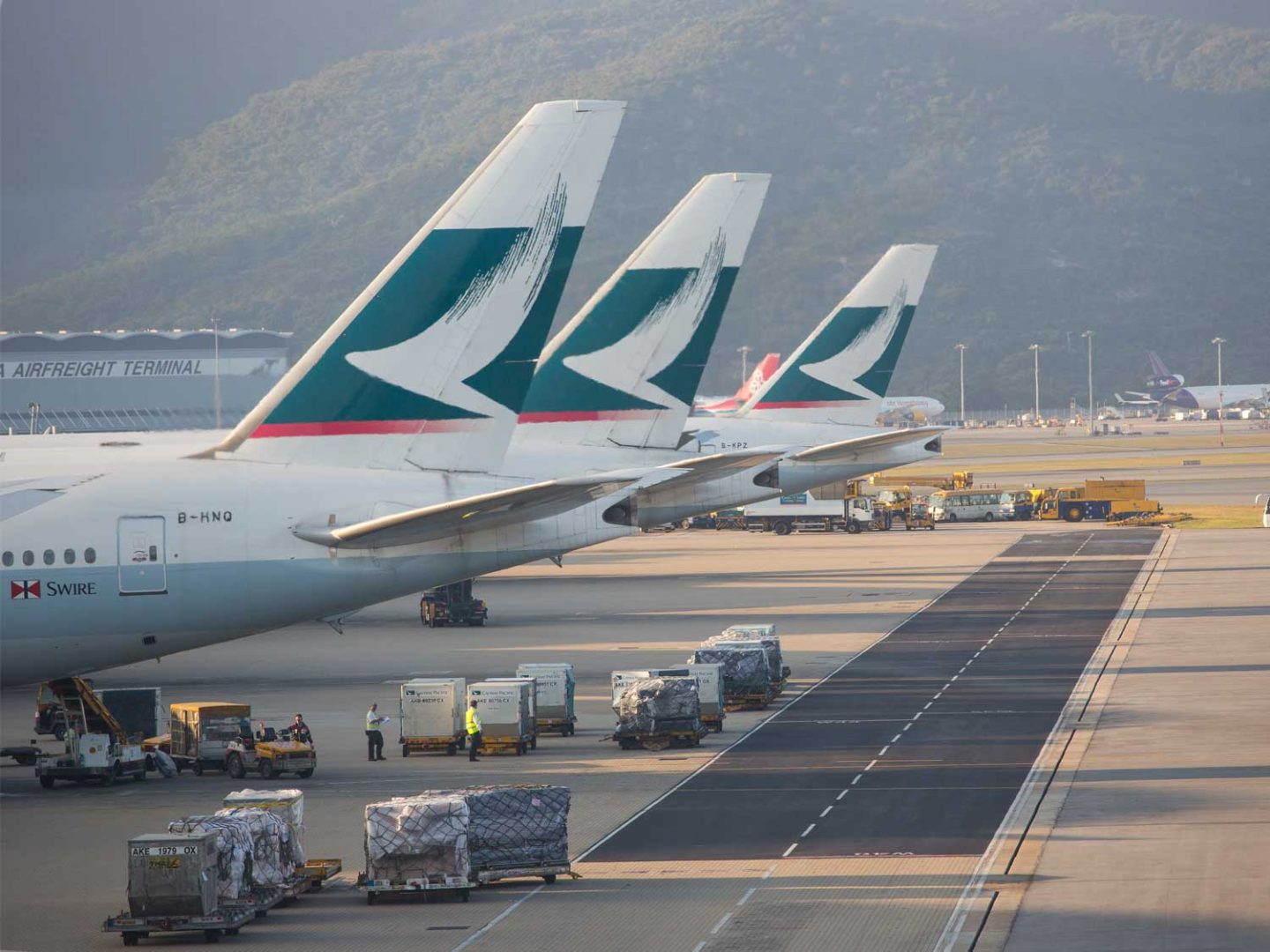
With the container shipping lines diverting around Africa until the Red Sea maritime security situation improves, the uncertainty and unpredictability that surrounds schedules could fuel demand for air cargo as shippers seek stability of services and certainty of transit times.

Air cargo demand data for last month showed a 9% year on year increase, with spot rates reaching their highest level in nine months and the dynamic load factor increasing by 3% to reach 59%.

The Red Sea ship diversions around the Cape of good Hope will inevitably cause ships to cluster at ports, leading to port congestion, worsening equipment shortages and gaps in sailing schedules, which may significantly impact global supply chains. 

Carriers will need to adjust schedules and networks, and would need to add more ships to achieve weekly or nearly weekly service frequency.

The diversion of ships away from the Suez Canal will swiftly see a million-plus containers delayed and when you factor in the knock-on effects of cash (in stock) tied up for longer, together with the fact that you don’t know how long this situation will continue means that some shippers will opt for the predictability of air cargo costing and reliability, to overcome the impact of the current sea freight disruption.

Improved stability in air cargo is encouraging a switch back to long-term, fixed-rate contracts, with deals for over six months rising to 45% of all contracts signed In the last quarter of 2023. Six-month contracts amounted to another 28% of the total market, while the share of up-to-one-month rates was just 14%.

This latest data appears to reflect stronger local market performance on key lanes and a global economy that is doing much better, but the market outlook forecast for 2024 remains modest, with an anticipated 1-2% growth in demand and a 2-4% rise in supply, though this does not take into account the potential ‘Red Sea’ effect.

Air cargo spot rates from Europe to the US were up +21% month over month in December, with the reduction in capacity helping to push up rates on this lane, while spot rates from China and Southeast Asia to Europe both rose 9% and strong eCommerce demand pushed the China to US air spot rate up 6% in December. Though these gains have subsequently fallen back, they may well recover if ocean shippers do start to look for time dependable alternatives, to hit supply chain deadlines.

Sea/Air; the effective and cost-efficient alternative

Sea/Air solutions offer an attractive blend of fast movement, defined transit times and significant economies over direct air freight.

The multimodal solution’s relative low-cost comes courtesy of a significant part of the cargo transit being undertaken by ship, from Asia, or the Indian subcontinent to Dubai, where cargo is transhipped securely and swiftly for the second transit leg, which is undertaken via air, directly to our UK hub airports, thereby completely avoiding the Red Sea problems and reducing transit times significantly.

Multimodal transport solutions like our Sea/Air solution are the best way for shippers to avoid delays between Asia and Europe and any potential land-side disruption.

Many of our customers are increasing the use of this solution, alongside their pure sea and air options, to avoid potential issues. We believe that Sea/Air should be considered to be a natural part of supply chain planning, due to the increased resilience and flexibility it offers over other modes and its lower carbon footprint compared to regular air freight.

For valuable, special and time-sensitive shipments we have a range of air freight and Sea/Air solutions, with extremely competitive rates and service combinations, to meet every deadline and budget requirement.

EMAIL Elliot Carlile, Operations Director, for insights, prices and advice.

Cape of Good Hope

The real impact of diverting ships round Africa

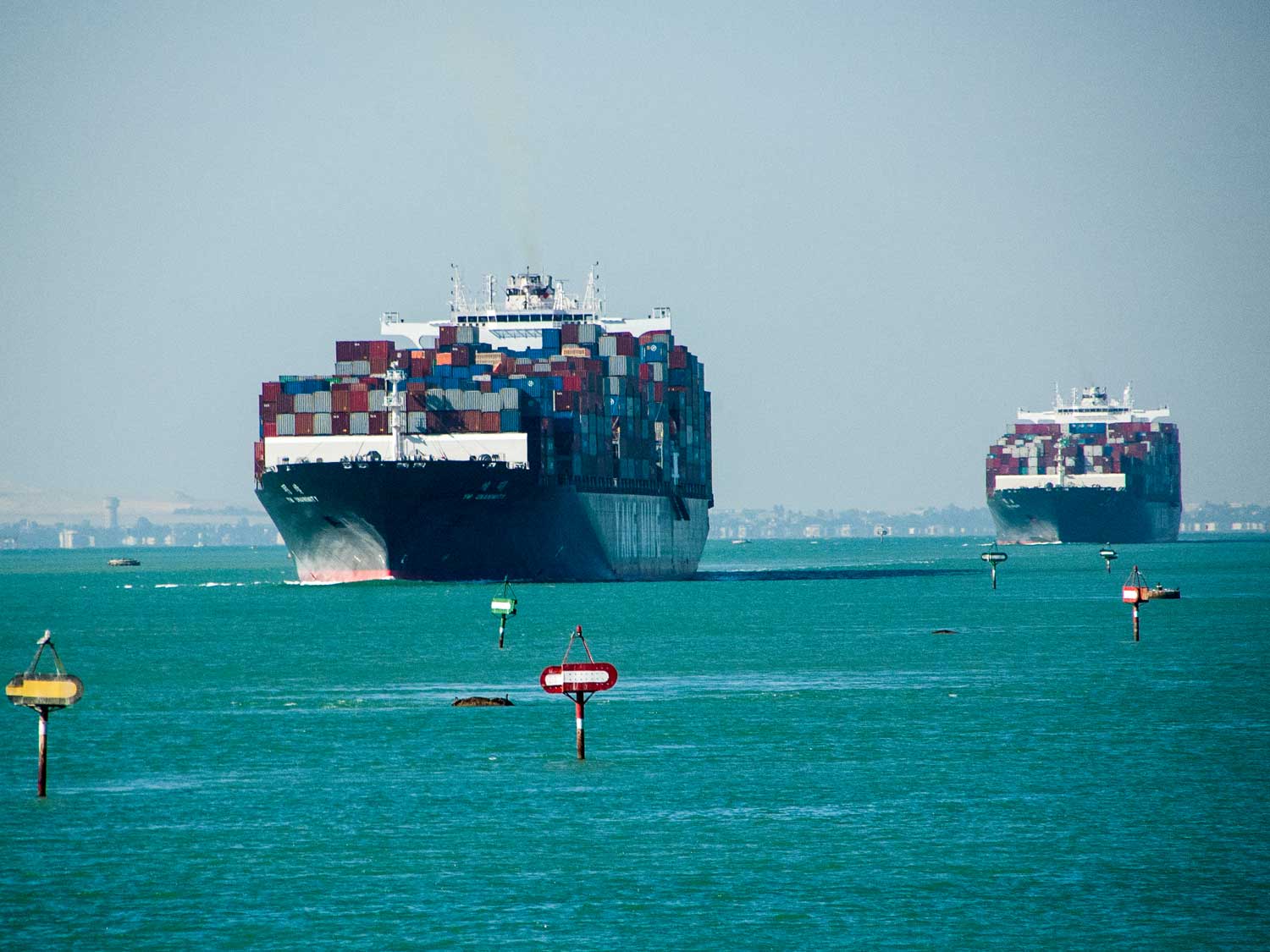
Following the sharp escalation of attacks on container ships in the Bab-al-Mandeb strait off the coast of Yemen last week, major container shipping lines are diverting vessels around the southern tip of Africa, rendering the Suez routing unavailable for an unknown period.

With the Suez route closed it instantly delayed shipments to Europe and the US East Coast between 5-14 days, which effectively removes two weeks of supply of empty containers going back to the Far East.

While the impact of this action will be felt on multiple trades, its impact will be most profound on traffic from Asia and will be particularly troublesome on the Far East to North America East Coast (NAEC) trade, as there has been a shift towards the Suez routing due to the drought in the Panama Canal, making a reversal to the Panama routing impossible.

Routing around Africa by the Cape of Good Hope increases sailing times considerably, especially for services to the Mediterranean (MED). 

Using a standard speed of 17 knots during the deviation, we are looking at a likely increase in transit time of roughly 10 days on Far East-North Europe, 14 days to MED, and 5 days to NAEC. 

For a full roundtrip however, additional vessels will need to be injected into services on these trades to maintain a weekly departure.

Using the number of services on the impacted trades, the average vessel size on each service, and an additional vessel for every 7-day increase in sailing time, a switch to round-Africa would require 1.7 Million TEU of vessel capacity, which is around 6% of the total global container vessel capacity (just 4% is currently idled). 

Every week there is approximately 390,000 TEU loaded from Europe and USEC going to Far East as a mix off full and empties and having lost two weeks sailing round-Africa 780,000 TEU of containers less will arrive in Far East in time for the beginning of the Chinese New Year peak over the next 4 weeks, which will create shortages in key locations. 

The supply/demand crunch is therefore less a matter of ships and more a matter of equipment, which also means that all export trades out of Far East will feel this impact and not just those that usually go through Suez.

We are seeing some 20’ and 40’ GP issues currently ex North China Feeder Ports, but nothing major and issues can be avoided if shippers make their bookings in good time.

We remain hopeful that equipment issues might be worked through the system in the post-CNY lull period.

And that 6% assumes vessels using the Cape of Good Hope are running normally, but in the short term the required capacity injection is actually much larger, as some vessels’ total sailing time will be much longer, either because they  were either waiting around for days for instructions, or they were caught in the wrong locations for the diversion.

Part of the current overcapacity problem, caused in large part by new-build deliveries, has been absorbed by slow-steaming, and while this additional capacity could also be absorbed it would require vessels to sail a lot faster and claw back some of the lost transit days.

From a capacity perspective this should not be a disaster in the longer term and while equipment shortages in Asia have not happened yet , it may enter the equation beginning week 4 but from week 5 ish there will be far less export containers to be loaded from China 

During week 5 to 8 plenty of equipment will arrive back in time for re-opening factories, so any genuine equipment problem in East Asia will not transpire till early April 

We have formed a ‘Red Sea Crisis Task Force’ who are monitoring the ongoing situation, gathering intelligence, speaking with carriers and ensuring that we can share the latest information as the situation continues to develop. 

While many of the issues detailed will only be felt and experienced in the coming weeks, we are mindful to share this information now, to support your decision making and to help you prepare for any product movements that are essential.

If you have any questions or concerns about the impact of the Suez situation on your Asia supply chain, or would like to discuss its wider implications, please EMAIL our Chief Commercial Officer, Andy Smith.