Gulf of Oman 1440x1080 1

Red Sea crisis expanding and growing

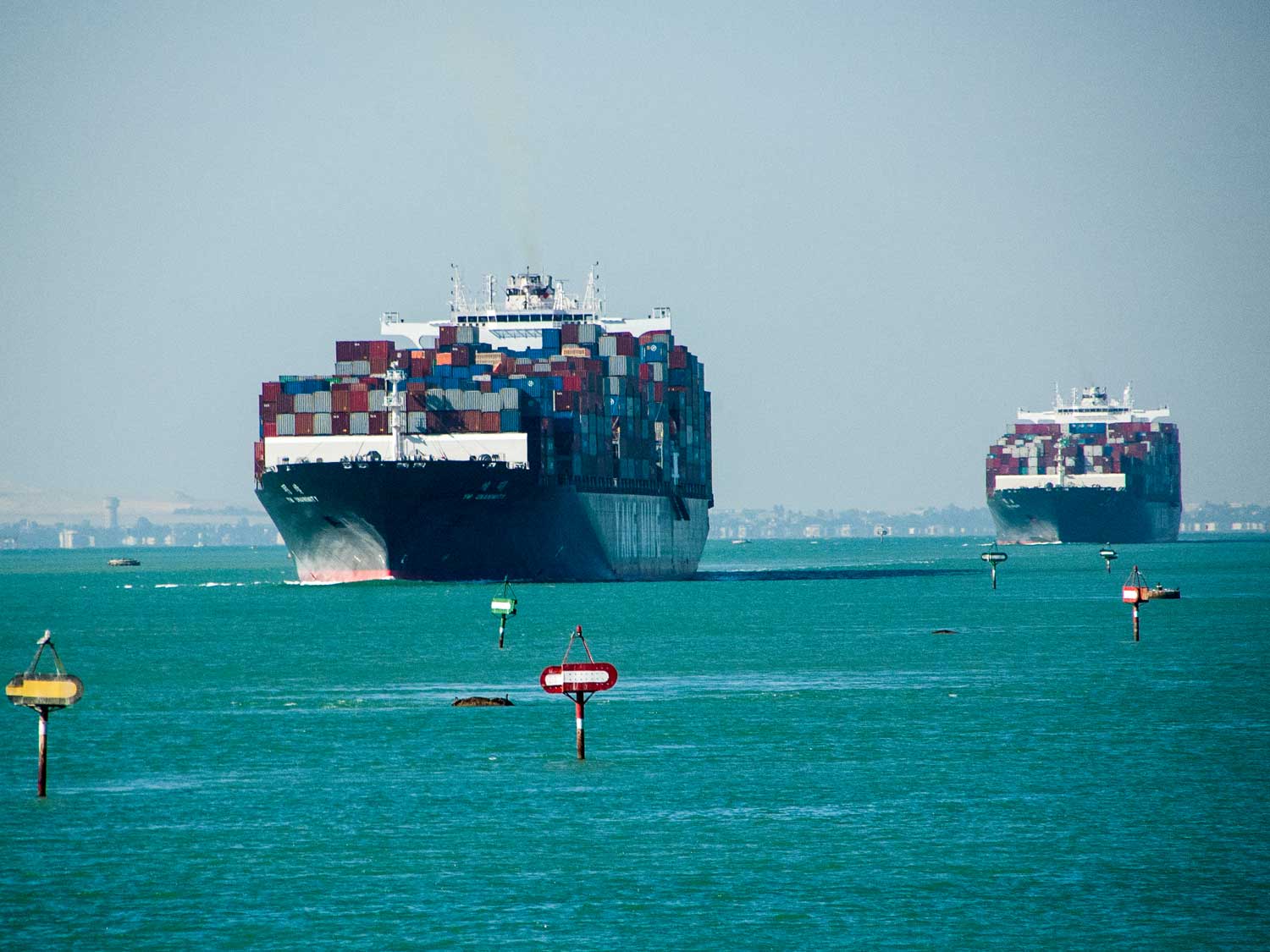
After the longest period of attack-free shipping in the Red Sea since December, the situation in the region is escalating, with an increase in Houthi attacks, fears that the ‘danger area’ may be expanding into the Arabian Sea and Indian Ocean and an Iranian vessel hijack off the Gulf of Oman.

At virtually the same time the US special envoy for Yemen indicated that the US might consider a path to revoking the terrorist designation on the Houthis if attacks on vessels are halted. The Yemeni group resumed attacks after an eight day pause and claimed to have attacked a number of warships and commercial vessels in the Arabian Sea and the Indian Ocean. 

The Houthi claims have not been corroborated and it remains uncertain if they have the capability to acquire targets that far out to sea. However, if they have been successful it may have implications for shipping, possibly forcing it to head further east and making access to the Gulf harder.

Iran hijack
In a further, unexpected development, the 15,000 teu MSC Aries was boarded and seized by Iranian Revolutionary Guard troops in international waters off the Gulf of Oman in the Straits of Hormuz on Saturday 13th April.

The Aries was managed by Zodiac Maritime, a firm controlled by the Israel-born shipping magnate Eyal Ofer, but the vessel is currently chartered to MSC and its current links to Zodiac is unclear. 

Iran’s action means the ‘maritime danger zone’ has expanded significantly and the ramifications of this illegal vessel seizure could be massive, potentially providing a catalyst for freight rates to rise in the short-term.

Insurance check
We would recommend double-checking your cargo insurance, to clarify what it covers, but also to ensure its validity should your cargo suddenly be in a war-zone, even if the planned route was not intended to transit a war-zone.

Anticipate increased risk premiums for insurance and freight to and from the Persian Gulf area, and also the Gulf of Oman, and not necessarily labelled as a risk premium but another acronym.

Scenarios
We do not anticipate a full closure of the Strait of Hormuz, it is more likely to resemble the southern Red Sea where some shipping lines will still operate and some will not. However, a partial closure could backfill, escalating port congestion problems at origins including Sri Lanka, Singapore, Port Klang and Indian ports.

Finally, it is clear that threats against shipping made by Iran, and their proxies have not been idle and it might be prudent to recollect the threat made by an Iranian Revolutionary Guards commander to target shipping in the Mediterranean. 

Groups in Algeria have received attack drones from Iran, which have the potential to impact shipping in the Eastern Mediterranean.

If you have any questions or concerns about the impact of the Red Sea crisis on your Asia supply chain, or would like to discuss its wider implications, please EMAIL our Chief Commercial Officer, Andy Smith.

For questions about airfreight, sea/air and our suite of time-sensitive solutions EMAIL Elliot Carlile, Operations Director, for insights, prices and advice.

For insurance related questions or concerns please EMAIL our Chief Financial Officer, Laurence Burford.

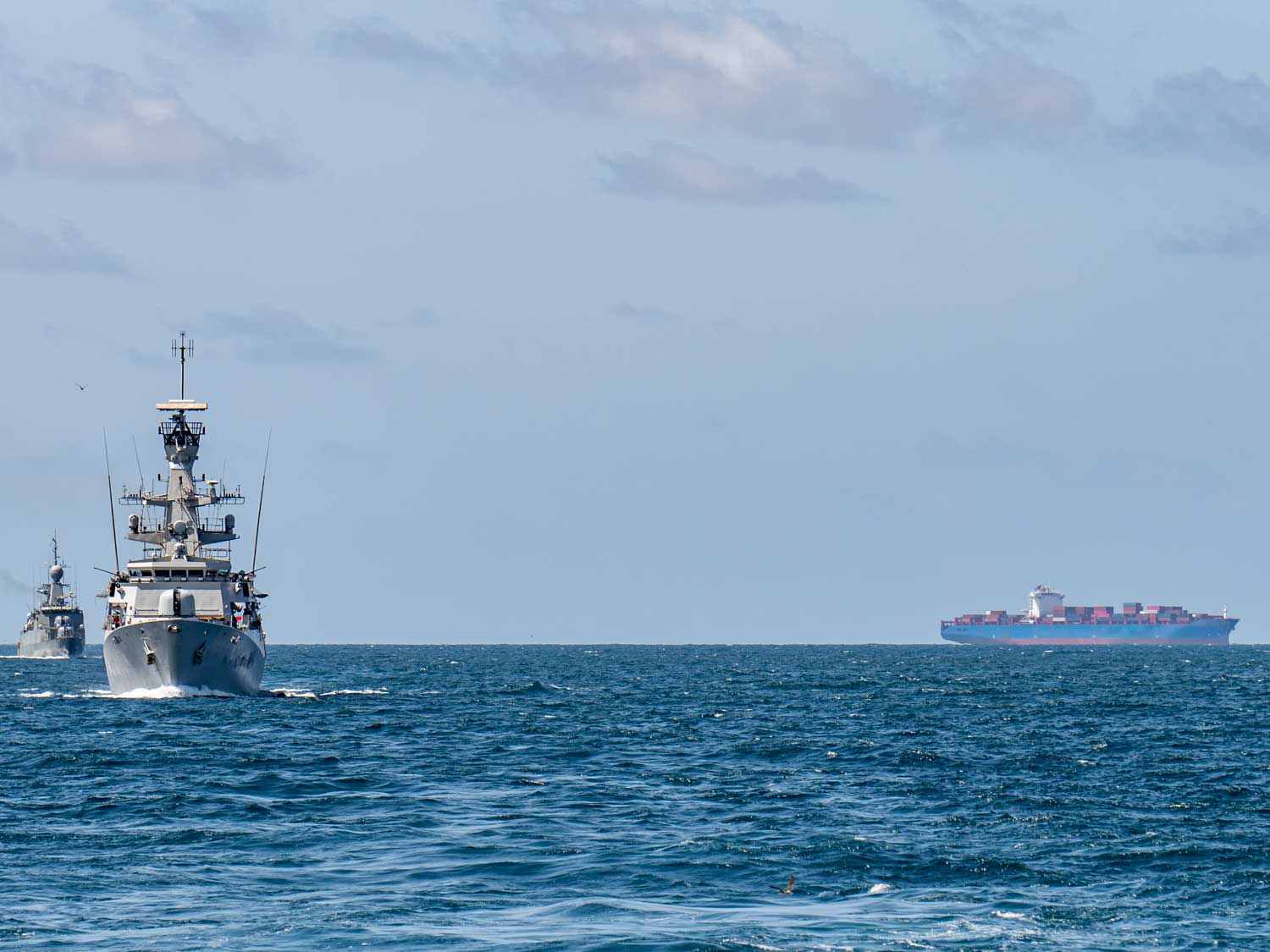
container ship and naval escort

Red Sea update

The last three months of 2023 were some of the worst for liner shipping’s finances in recent years, while early volume indications for this year suggest the coming months could bring stronger trading conditions for shipping lines, especially with the Red Sea diversions and capacity management techniques learned during the early phase of the pandemic.

Amidst the Red Sea crisis, global schedule reliability continued to decrease, dropping over 5% in January, but it does seem that schedule reliability may have improved slightly in February and the delays experienced for vessels arriving late were also reduced.

Performance overall is still very poor, but this does indicate that the new round-Africa services are beginning to slowly normalise, making supply chains slightly more predictable, albeit obviously with longer transit times. We would expect to see further improvements once we get the March data.

After eight consecutive days without incident, in the Red Sea on Monday the master of a vessel reported being hailed on the radio by an entity claiming to be the Yemeni Navy, while a crew member reported having heard gunshots and US naval forces destroyed a drone boat.

Despite the ongoing attacks, the US said it would consider revoking its recent designation of Yemen’s Houthis as terrorists if the Iran-backed militants cease their shipping attacks in and around the Red Sea.

Joe Biden’s special envoy for Yemen, Tim Lenderking, said the Houthis’ could “show good faith” and an “intent to de-escalate” if they released the 25-member crew of the Galaxy Leader, the RoRo car carrier that they hijacked in November.

Russia has sent several naval vessels from the Pacific Fleet into the Red Sea, though the purpose of the Russian vessels in the Red Sea area is unclear.

Air freight volumes jump

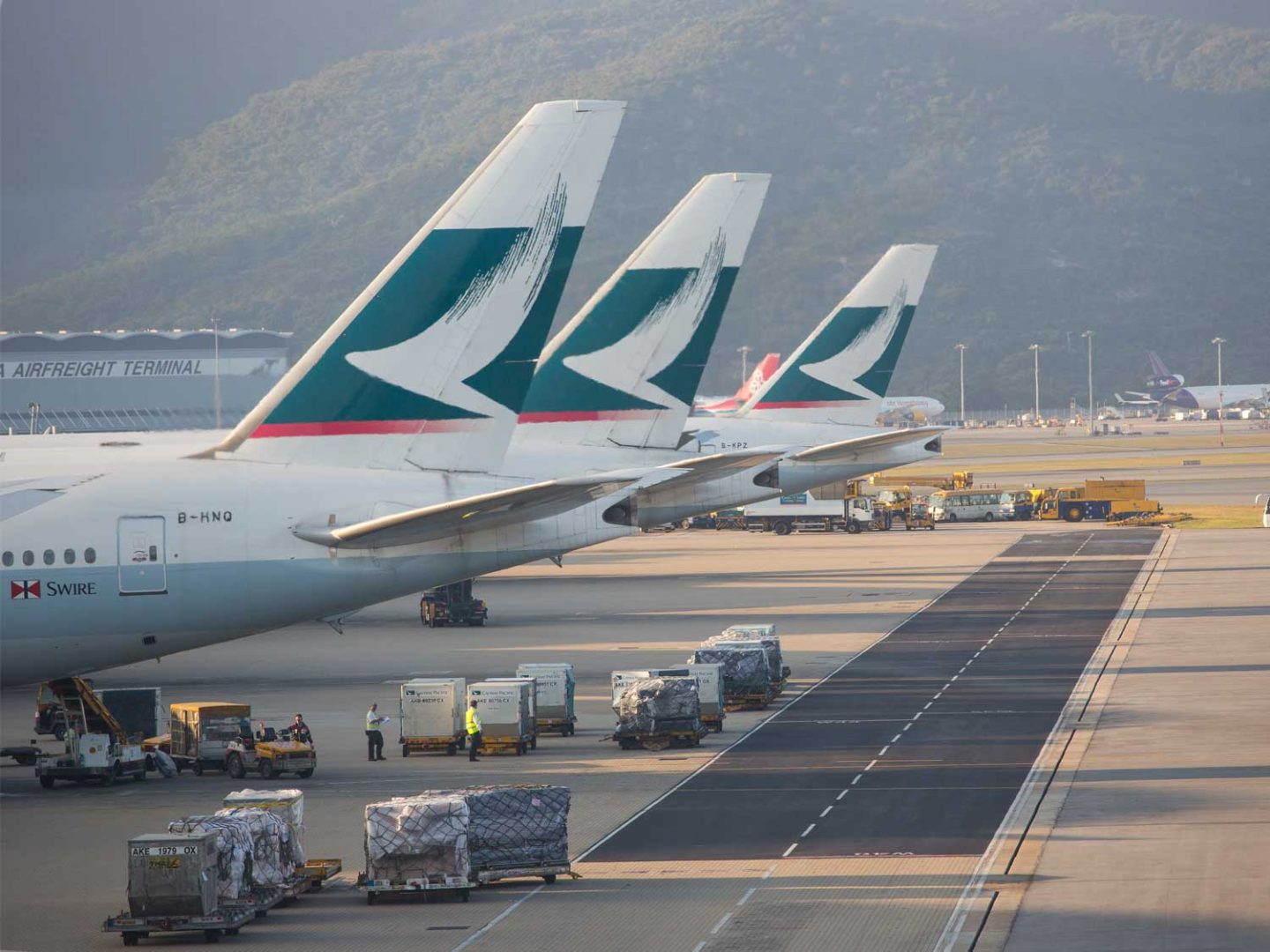
As a result air freight volumes have jumped up. February was the third consecutive month of double-digit year-on-year demand growth for air cargo, according to data released by IATA, with air cargo demand up 12% compared to 2023.

The rise comes as the market stabilises amid improved economic performance worldwide, with capacity up over 13% due to the continued return of belly capacity.

The strong start for 2024 could see demand surpass the exceptionally high levels of early 2022, with booming eCommerce and increased demand for sea/air services linked to Red Sea concerns.

If you have any questions or concerns about the impact of the Red Sea crisis on your Asia supply chain, or would like to discuss its wider implications, please EMAIL our Chief Commercial Officer, Andy Smith.
For questions about air freight, sea/air and our suite of time-sensitive solutions EMAIL Elliot Carlile, Operations Director, for insights, prices and advice.

New York port 1440x1080 1

TPM and US review

Organised by the Journal of Commerce, TPM (Transpacific Maritime Conference) is the premier global shipping and supply chain conference, attracting senior executives from all areas of the industry.

Held annually in the port city of Long Beach, California, TPM brings together shippers, carriers, freight forwarders, intermodal operators and technology providers to discuss the most pressing global challenges and developments, for a week of essential networking, seminars, and relationship building.

With over one hundred presentations, interactive speaker sessions and networking events, and almost two hundred speakers, including leaders from the largest brands and carriers on the planet, TPM really is in a league of its own.

Metro’s Chief Commercial Officer, Andrew Smith, joined this year’s conference, to participate in TPM’s insightful panels and forward-thinking discussions to explore the global dynamics and challenges impacting ocean supply chains.

Andrew said “It was important to take the opportunity to travel out to Long Beach for TPM as part of my recent visit to the United States, to meet key customers, partners and carriers. It was a full on trip, encompassing seven cities across the country in just over a week, and the time spent talking to customers in particular was invaluable”.

“The Red Sea crisis was obviously a major talking point among delegates and in particular how to manage a situation which appears to have no immediate solution and is likely to continue for the foreseeable future.”

“TPM was as interesting and insightful as always and I think the key takeaways are well-worth sharing.”

“Keynote speaker Robert Gates, the former CIA director, painted a picture of a world where increasing local conflicts should be anticipated and with the global geopolitical landscape the most challenging it has been for decades, preparedness for future supply chain disruption is essential.”

“In this environment it is perhaps natural that so many shippers are looking at de-risking their supply chains. Resilience and flexibility are at the core of de-risking, with initiatives such as multi-carrier programmes, sourcing diversification, re-shoring and near-shoring.”

“Another takeaway worth highlighting is that despite all the current operational challenges, sustainability still remains top of the agenda for carriers and major shippers, and the TPM programmes reflected this, with nearly a third of the scheduled events featuring environmental, transformation and sustainability issues.”

“My visit to the United States, alongside Metro colleagues regular trips, reiterate our focus and commitment to this important market. This focus will continue and ramp-up further with a new route development role created to expand both customer and partner engagement.”

“To discover how we can support your Transpacific or Transatlantic trade needs, or to discuss any of the issues highlighted here, please reach out to me directly via EMAIL.”

vessels at anchor 1440x1080 1

Research uncovers scale of Red Sea disruption

New research by the British Chambers of Commerce (BCC) has found that over half of importing manufacturers and retailers (53%) have been impacted by the disruption to shipping caused by the Red Sea crisis, with over half of exporters (55%) also experiencing increased costs and delays.

The issues highlighted by responding firms included increased costs of up to 300% for shipping, with transit delays adding up to three to four weeks to delivery times. Knock-on effects include cashflow difficulties and component shortages on production lines.

With a record-high new container ship order-book and constrained consumer demand in many markets, the container shipping sector has had ample spare capacity to respond to the challenge of diverting vessels around the southern top of Africa.

The Red Sea transit to the Suez Canal is the fastest sea route between Asia and Europe, but all the major container shipping lines have diverted vessels to the much longer route around Africa’s Cape of Good Hope, increasing costs and creating delays.

Recent ONS data suggest the ‘Red Sea effect’ has yet to filter through to the UK economy, with inflation holding steady in January. However, the longer the current situation persists the more likely it is that the cost pressures will start to build, with some sectors of the economy more exposed than others.

The UK economy saw a drop in its total goods exports for 2023, and with global demand weak, the BCC want the Government to look at providing support in the March Budget, including the establishment of an Exports Council to hone the UK’s trade strategy and a review of government funding for export support.

Week 12 of the Red Sea crisis
The war in Gaza, which according to the Houthis is the reason for their attacks on commercial shipping, shows no sign of abating and on Monday the Rubymar finally sank, the first total loss in the Houthis campaign.

Vessel schedule reliability data for January 2024 confirmed that global reliability dropped sharply due to the Red Sea impact and only slightly more than half of vessels arrived on time, compared to pre-pandemic normality of 70-80%.

Geopolitical risk
The wars in the Middle East and Ukraine are threatening flows of grain, oil and consumer goods, with climate change disrupting the Panama Canal and growing geopolitical tensions are making international supply chains ever more complex.

The World Economic Forum’s Global Risks Report (GRPS) for 2024 highlights how geopolitical tensions in multiple regions is contributing to an unstable global order, eroding trust and security.

GRPS 2024 results highlight a predominantly negative outlook for the world over the next two years, that is expected to worsen over the next decade, with supply chain disruption ranked 19th of severe global risks in the short term (2 years) and 25th for the long term (10 years).

Over the next two years, attention is likely to be focused on the war in Ukraine, the Israel-Gaza conflict and tensions over Taiwan, with any escalation likely to disrupt global supply chains.

All three areas stand at a geopolitical crossroads, where major powers have vested interests: oil and trade routes in the Middle East, stability and the balance of power in Eastern Europe, and advanced technological supply chains in East Asia.

If you have any questions or concerns about the impact of the Suez situation on your Asia supply chain, or would like to discuss its wider global implications, please EMAIL our Chief Commercial Officer, Andy Smith.