U.S. Shutdown Strains Supply Chains as Key Agencies Go Offline

U.S. Shutdown Strains Supply Chains as Key Agencies Go Offline

As it enters its 3rd week the U.S. government shutdown is squeezing every part of the country’s trade and logistics ecosystem, with air traffic control, ports and customs all under strain. While some critical functions persist, the uncertainty is already slowing imports, exports and regulatory oversight, with shippers scrambling for workarounds.

When Congress failed to pass funding for the new fiscal year, roughly 900,000 federal employees were furloughed, while another 700,000 remained working without pay under “essential services” status. Agencies handling cargo inspections, agricultural exports, customs clearances, and aviation safety have been forced to scale back or suspend operations.

Among the hardest hit is the Federal Aviation Administration (FAA). Though flights continue, staffing gaps at control towers have led to lengthier delays and, in some cases, temporary closures.  Air traffic controllers are being asked to continue working without pay, a situation already fuelling increased absences that further jeopardise flow.

Across U.S. seaports, cargo movement remains technically active, but growing friction is emerging. While U.S. Customs and Border Protection (CBP) has stated that it will continue tariff collections and core port entry functions, other agricultural certifications, regulatory and partner-agency bottlenecks may slow processing.

Those ports that are reliant on external agencies for sanitary inspections, agricultural checks, environmental clearances or supplementary certifications may see the greatest delays.

USTR has classified trade negotiation support, tariff administration and enforcement of trade agreements as national security relevant trade actions which are essential and continues to operate in that capacity.

Key Risks

  • Regulatory and clearance bottlenecks. With agencies operating at reduced capacity, goods may stall at ports, borders, or customs checkpoints until funding resumes.
  • Air-cargo delays intensify. Disruptions in air traffic control could cascade into longer handling times and rerouting risks for time-sensitive freight.
  • Critical staffing stress. Essential personnel working unpaid risk exhaustion and attrition, which is precarious.
  • Economic spillover. Delays ripple into production, inventory, and consumer markets, especially where just-in-time systems dominate.
  • Shutdown resolution timeline. The longer the impasse endures, the sharper the pressure on Congress to return vital infrastructure back to full operation.

Our North American offices, customs brokerage network, and local support teams are closely coordinating with CBP and partner agencies to maintain cargo flow and eradicate clearance delays.

EMAIL Andrew Smith, Managing Director, today to discover how we can protect your success in the U.S.

Carriers Pull Sailings and Add GRIs as US Port Fees Add New Cost Layer

Carriers Pull Sailings and Add GRIs as US Port Fees Add New Cost Layer

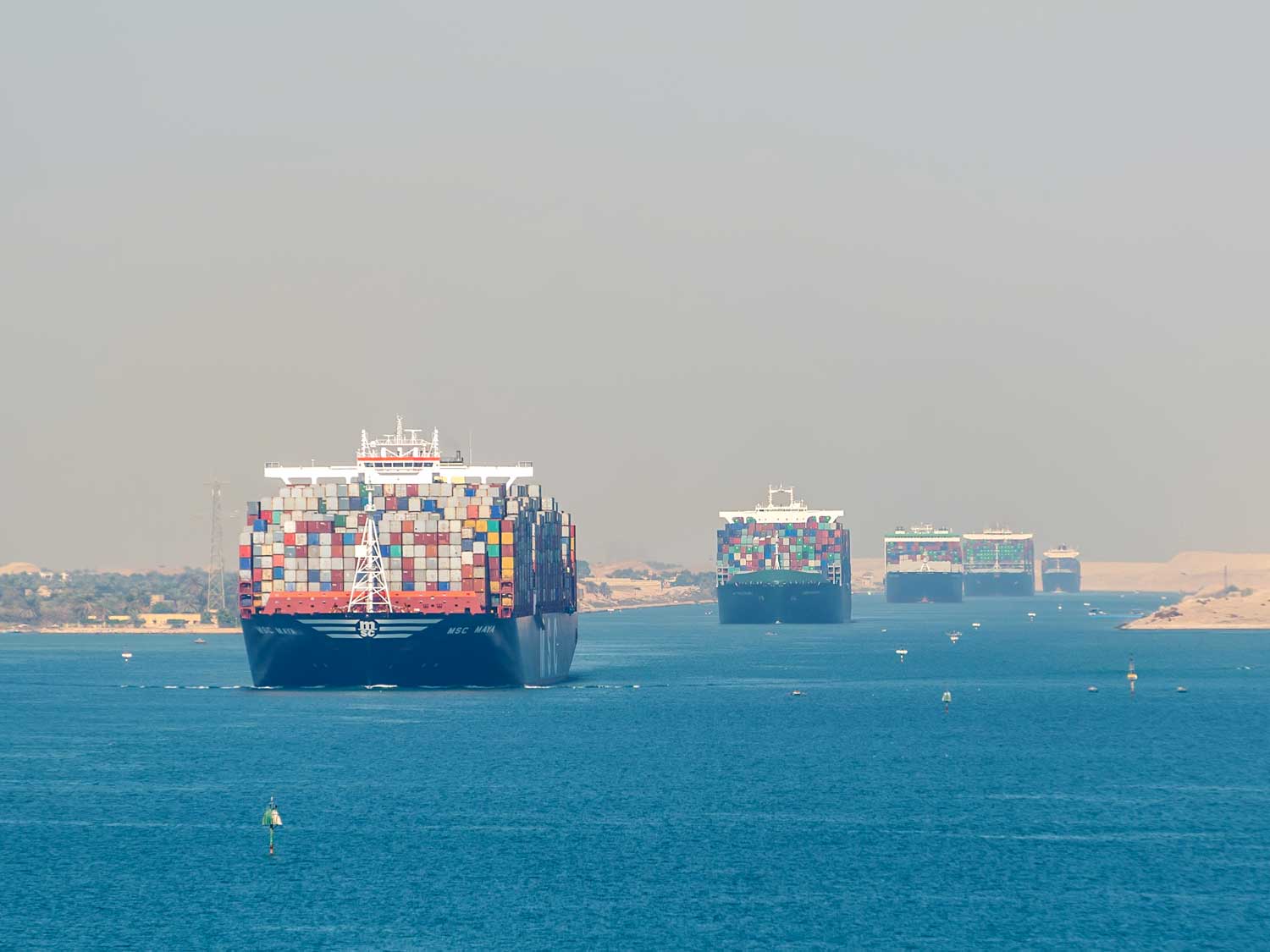
Container lines are tightening capacity to defend freight rates just as new U.S. port fees on China vessels start on 14 October—costs that carriers say will be passed through to shippers.

In the run-up to contracting season, the shipping alliances have stepped up blank sailings to support pricing. Between weeks 42–46, carriers withdrew 41 of 716 planned east–west sailings with the heaviest cuts on the transpacific and Asia–Europe corridors. It means that 6% of capacity, or 544,000 TEU have been stripped from transpacific and Asia–Europe trade-lanes over the past four weeks. 

Spot rates remain soft, with Drewry’s composite World Container Index dipping 1% in week 41, as carriers signal fresh GRIs of up to $2,300/teu and congestion/peak surcharges as they curb supply with voids and slow steaming.

USTR port fees are active

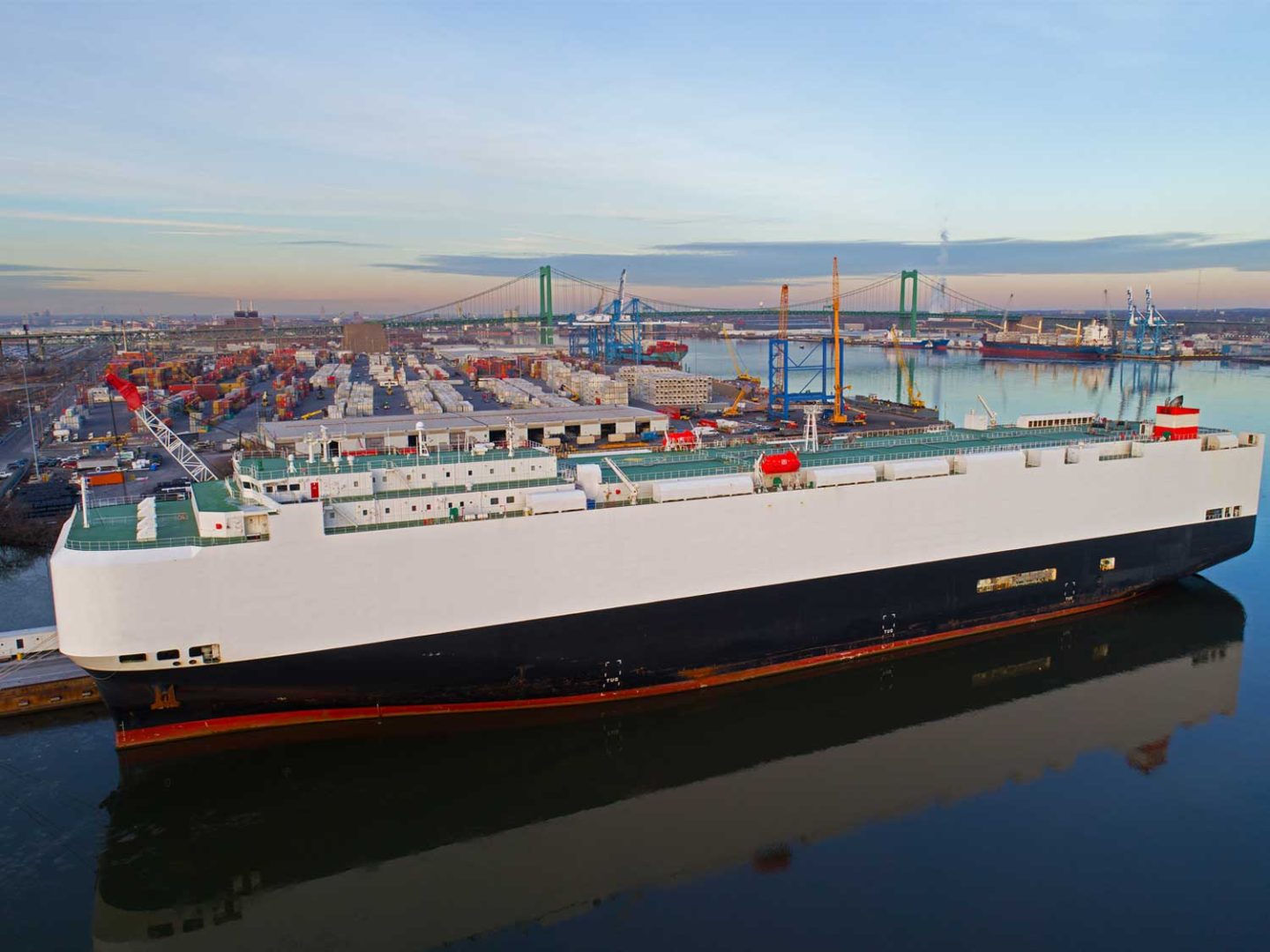
From 14 October, the United States is imposing USTR “special port service fees” on China-linked tonnage, with payment required in advance of arrival to avoid being denied lading, unlading or clearance.

For Chinese-owned/operated vessels, the fee starts at $50 per net ton, stepping up annually to 2028. For Chinese-built ships (not China-operated), the fee is the higher of $18 per net ton or $120 per discharged container, while foreign-built vehicle carriers face $46 per net ton from today.

What it means for shippers

  • The USTR regime adds a new fixed cost per container on top of base ocean rates and surcharges, and carriers are preparing pass-throughs.
  • With 6% of departures already pulled on main east–west trades and more voids likely, load factors are rising on the sailings that remain, which will add upward price pressure.
  • U.S. rules emphasise USTR pre-payment and proof on arrival, with non-compliance risks of port denial, cascading delays to inland supply chains and additional cost.

The container shipping lines are using their capacity and surcharge levers to prop up rates, while the USTR/China port fees, effective from last Tuesday, inject a non-market cost that will filter through to shippers. Expect more targeted blanks, GRIs with short notice, and more surcharges on Asia–Europe and transpacific flows into November.

At Metro, we work hand-in-hand with our network and carrier partners to keep cargo moving, even when the market is disrupted.

From time-sensitive shipments to sudden blankings, our sea freight team secure the right space to safeguard your supply chains and shield you from GRIs.

EMAIL Andrew Smith, Managing Director, today to explore how we can protect your US supply chains and insulate you from threatened GRIs.

Transatlantic Sea Freight Steadies

Transatlantic Sea Freight Steadies

The North Europe to US, transatlantic trade-lane, is settling into a more predictable rhythm, after a trade deal and took much of the guesswork out of export planning, while carriers have lifted reliability and held blank sailings to minimal levels. 

The result is a market where prices are easing but services are firmer, though the traditional peak looks unlikely.

Westbound volumes have risen 2% year on year, defying earlier expectations of heavy front-loading, while the slots deployed  by carriers are 7% higher than 2024, giving buyers more choice and competitive pricing.

On the reliability front, Europe toUS on-time performance has surged to 52% in Q2 vs Q1, with August the best month since October 2023.

Pricing pressure without panic

While price benchmarks are trending down they are not collapsing. 

Long-term deals signed over the prior three months are down under a third, while average spot rates fell 20% over the last three months. However, despite the softer prices, carriers have not resorted to large-scale blankings, a signal that underlying demand remains sound and that utilisation on sailing vessels is still healthy.

Service quality has moved decisively in the right direction. On-time performance on North Europe to US routes has improved from 24% in January to 58%, while the Mediterranean to US leg has nudged up from 24% to 36%. 

One alliance has consistently posted 92% reliability on the transatlantic in H1, far ahead of non-alliance services and standalone carriers (36%), underlining the advantage of integrated rotations. The challenge now is keeping performance high through winter weather and any land-side pinch points.

With inventories in better balance and retailers expecting low growth for winter, the consensus is no classic peak in late 2025. Expect stable demand, ample capacity and rates in range into year-end unless weather or labour disruptions intrude.

What shippers should do now

  • Prioritise services with proven on-time performance and shorter port strings to reduce dwell and downstream buffer stock.
  • Use today’s attractive rates to book core volumes and keep tactical headroom on spot.
  • Backhaul eastbound pricing remains sensitive so secure equipment and minimise roll risk.
  • The policy environment is calmer, but not static; maintain landed-cost models that can absorb incremental fees without re-quoting.

With long-established ocean carrier relationships, our team is helping clients secure space, optimise rates, and keep high-priority cargo moving on transatlantic lanes.

If your business depends on dependable transatlantic trade flows, EMAIL Andrew Smith, Managing Director, today to discover how expert guidance and tailored solutions can keep your supply chain agile and cost-effective, whatever the market brings.

Brands Adapt to a New US Trade Reality

Brands Adapt to a New US Trade Reality

UK fashion brands and retailers have long viewed the United States as the ultimate growth market, drawn by its scale, spending power, and trendsetting influence. But new trade policies and tariff changes mean that succeeding in America now demands more resilience and strategic agility than ever before.

As the US has scrapped the “de minimis” rule, which had allowed shipments under $800 to enter duty-free and ramped up tariffs, UK brands are rethinking every stage of their entry strategies. Once reliant on seamless, low-cost access for direct-to-consumer and test shipments, brands now face extra duty, customs checks, shipping expense, and more paperwork, even on small parcels.

For many, rising costs and increased bureaucracy threaten profitability and expansion plans just as competition and consumer expectations intensify.

Turning Challenge into Opportunity

While some UK retailers have pressed pause on ambitious US store launches, pivoting towards digital channels or wholesale collaborations to maintain a presence with lower risk, others have doubled down, unveiling shops in key metros and converting retail units to local fulfilment spaces. Robust consumer demand, particularly for womenswear and occasion-wear is encouraging brands to keep investing, yet the focus for autumn/winter 2025 is on smarter pricing and operational transparency.

Many are adopting “all-inclusive” US pricing, building duties and shipping into up-front costs and clearly communicating this to customers. This not only preserves brand trust but also softens the sting of retail price hikes, which are often in the range of 20–30%, to reflect tariff increases and core logistics expenses. According to executives quoted in industry analysis, US shoppers, and especially women seeking high-value items, remain willing to spend if pricing is transparent and the overall brand proposition remains strong.

Managing Tariff and Sourcing Risks

Tariff structures have become more complex and increasingly volatile, with rates ranging from 10% for UK-origin apparel to as high as 50% for goods sourced from countries such as India, now impacted by additional duties in retaliation for trade decisions. The end of de minimis has further complicated direct-to-consumer logistics, requiring every incoming parcel to undergo duty assessment and customs clearance. Many brands have responded by broadening sourcing strategies, seeking to insulate themselves from abrupt tariff escalation or disruptions in high-risk producer nations.

Retailers also report stepping up risk management by diversifying suppliers, even at the cost of short-term speed or margin. Some brands, for instance, have paused or revised launches tied to affected regions, while others are maintaining close scrutiny of the US policy environment before committing to major investments.

Metro: Delivering Fashion Logistics Advantage

Succeeding in this new environment requires supply chain partners with deep expertise and agile solutions. Metro stands out for its long track record of delivering fashion logistics, combining global knowledge with hands-on operational support in the UK and United states.

Metro’s dedicated retail platform offers end-to-end supply chain visibility, specialist fulfilment services, and responsive support that fashion brands trust. From managing in-store launches and pop-ups to supporting direct-to-consumer deliveries and optimising last-mile logistics, Metro’s technology empowers brands to control costs, navigate customs changes, and keep products moving in sync with shifting sales cycles.

This level of insight and flexibility is essential as the “golden quarter” peak season approaches. Metro’s experience and local support help brands stay ahead of regulatory changes, respond to market trends, and build lasting competitive advantage.

Though the US trade landscape now presents more complexity and risk, it remains a vital growth market for fashion brands committed to meeting high consumer expectations and navigating tariff headwinds.

Businesses that benefit from Metro’s resilient, intelligent supply chain solutions will be best placed to weather uncertainty, prosper and grow in the evolving American marketplace.

EMAIL Andrew Smith, Managing Director, today to explore how we can support your success in the United States.