India industrial revolution 1440x1080 1

India’s sourcing growth creates pressure at both ends of the supply chain

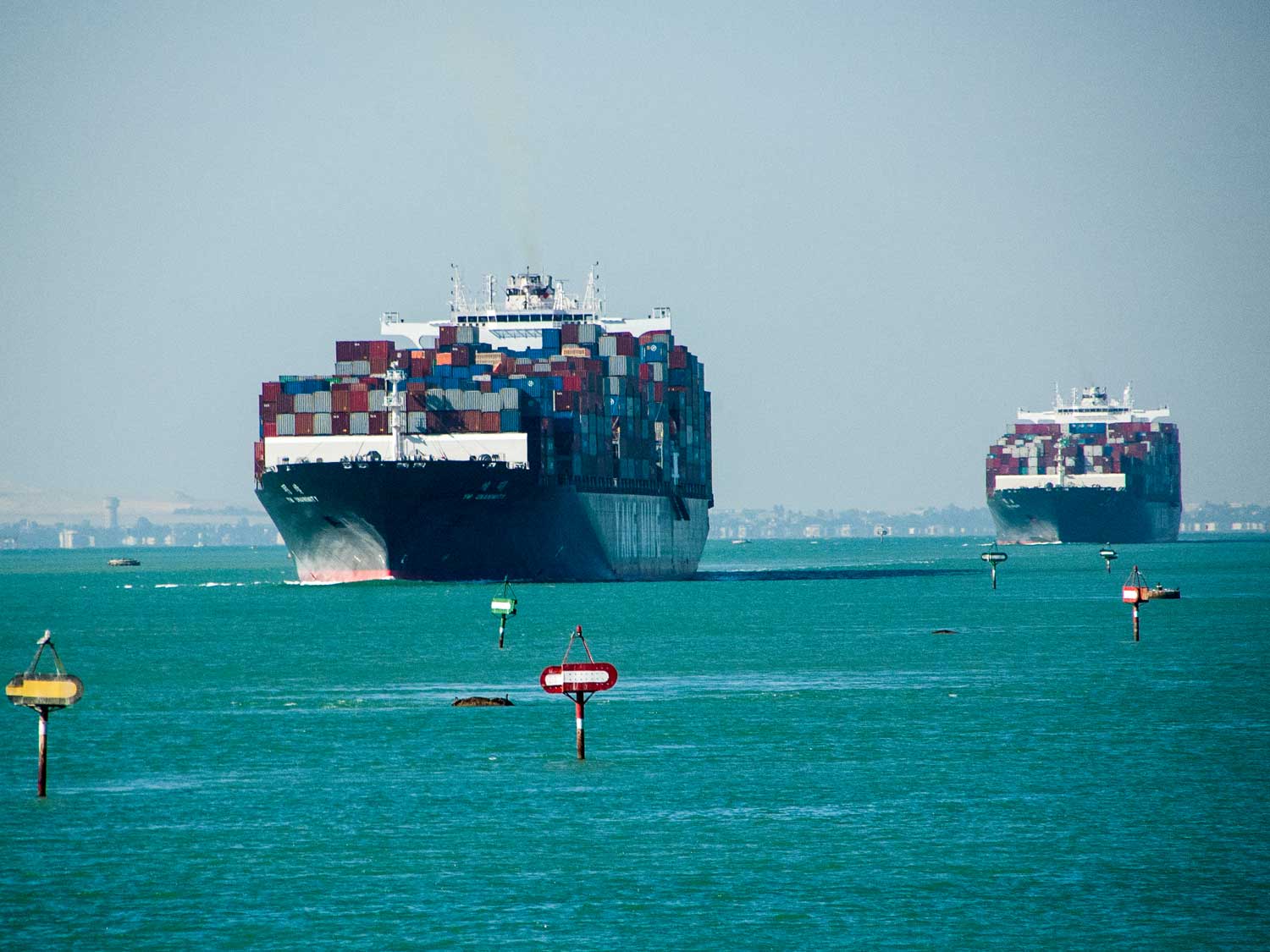
UK businesses sourcing from India face rising logistics costs before and after production, as more expensive Asian imports combine with tight westbound capacity and strong India–Europe demand.

India continues to strengthen its position as a manufacturing and sourcing alternative for UK and European businesses. But the cost of moving goods through the supply chains supporting that growth is rising.

The pressure starts well before finished products leave India. Many manufacturers rely on machinery, components, chemicals, electronics and other inputs imported from China and neighbouring Asian markets. Freight costs on those inbound routes have risen sharply, increasing the cost base for Indian production.

At the same time, strong exports are tightening India–Europe container capacity and pushing westbound freight costs higher.

For UK buyers, that creates a potential double freight squeeze, with logistics inflation entering the product cost upstream before another layer is added on the journey to Europe.

Asian imports into India become more expensive

The first pressure point is emerging on eastbound services into India.

During August, Shanghai–Nhava Sheva spot rates have almost doubled compared with July, while Shanghai–Chennai rates have increased by around 60%. Costs from other Asian origins, including Singapore, have also risen significantly.

Strong seasonal imports ahead of India's festival period are contributing to demand, while congestion at major Asian hubs has disrupted schedules and tightened available capacity.

For Indian importers, the impact extends beyond freight rates. Changing schedules and less predictable transit times make it harder to manage inbound inventory and maintain reliable production flows.

Higher freight feeds into manufacturing costs

The significance for UK buyers comes from China's deep integration into Indian manufacturing.

Rising transport costs for the raw materials and components feeding Indian factories may initially be absorbed through manufacturer margins. If elevated costs persist, however, some will inevitably feed into production costs and finished-product pricing.

That creates a supply-chain exposure that may be difficult to see when procurement decisions focus primarily on the factory price.

An Indian-made product can already contain significant logistics costs before it enters a container for its journey to the UK.

Strong exports tighten the westbound market

The second pressure point is India–Europe shipping.

Indian containerised exports to Europe reached an estimated 518,000 TEU during the first half of 2026, with stronger-than-expected demand creating a pronounced capacity squeeze.

Westbound rates increased again during August and are approaching levels last experienced around four years ago. Space has become increasingly difficult to secure, with some leading India–Europe services selling out several weeks ahead and additional spot capacity appearing only as carriers release allocations.

The problem is not simply growing demand. Available capacity has struggled to keep pace.

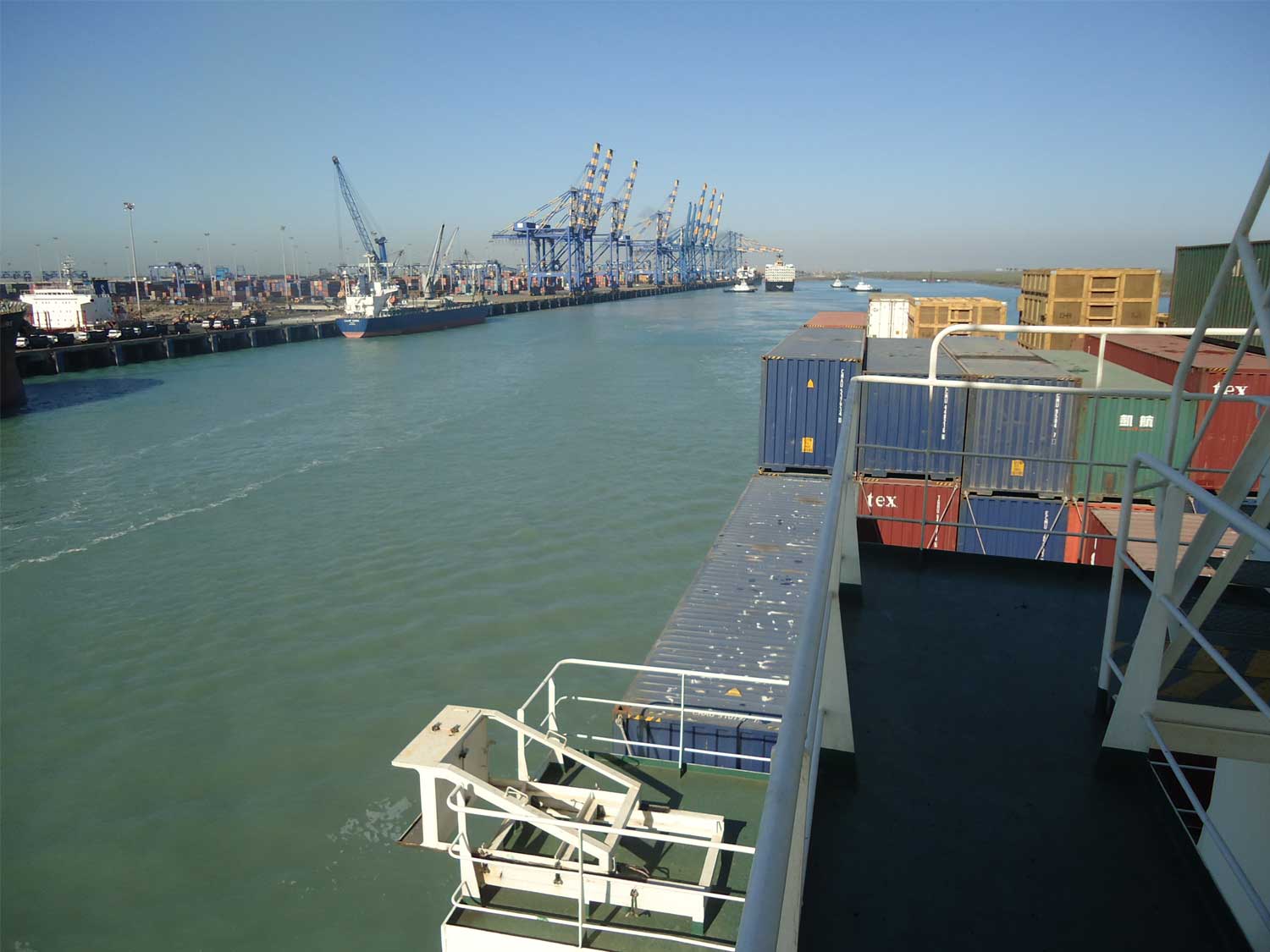
Blank sailings, congestion and rolled cargo at Nhava Sheva and Mundra are reducing effective space, while some capacity has been redirected towards growing Latin American flows using Indian ports for transhipment.

For cargo owners, guaranteed space can therefore command a premium, while less flexible shipments face greater rollover and delay risks.

Look beyond the supplier price

India's manufacturing scale and expanding trade relationships continue to make it an important sourcing market. But the changing freight environment reinforces the need to assess the complete landed cost of sourcing there.

A product assembled using Chinese or other Asian components may now carry substantially higher inbound logistics costs. Moving the finished goods from India to the UK then adds a second layer of freight inflation.

For lower-margin or freight-intensive products in particular, those combined costs could materially affect sourcing economics.

Timing matters too. With strong westbound bookings and constrained capacity, waiting for cheaper freight could leave importers competing for even tighter space.

Businesses can reduce that exposure by understanding upstream supply flows, consolidating shipments where appropriate and planning westbound capacity earlier.

Manage the whole supply chain, not just the final leg

The growing relationship between Chinese inputs, Indian manufacturing and European demand means these movements cannot always be managed effectively in isolation.

Metro can connect the complete Asia–India–UK supply chain, providing visibility from upstream suppliers through Indian production and onward to the UK. 

With extensive Indian based capabilities, global carrier relationships, consolidation and alternative routing options, we can identify where cost and capacity pressures are building and act before they reach your bottom line. EMAIL Andrew Smith, Metro’s Managing Director, to learn about protecting your landed cost from origin to destination.

Shanghai Hongqiao Airport 1440x1080 1

Regional airfreight demand and capacity diverge

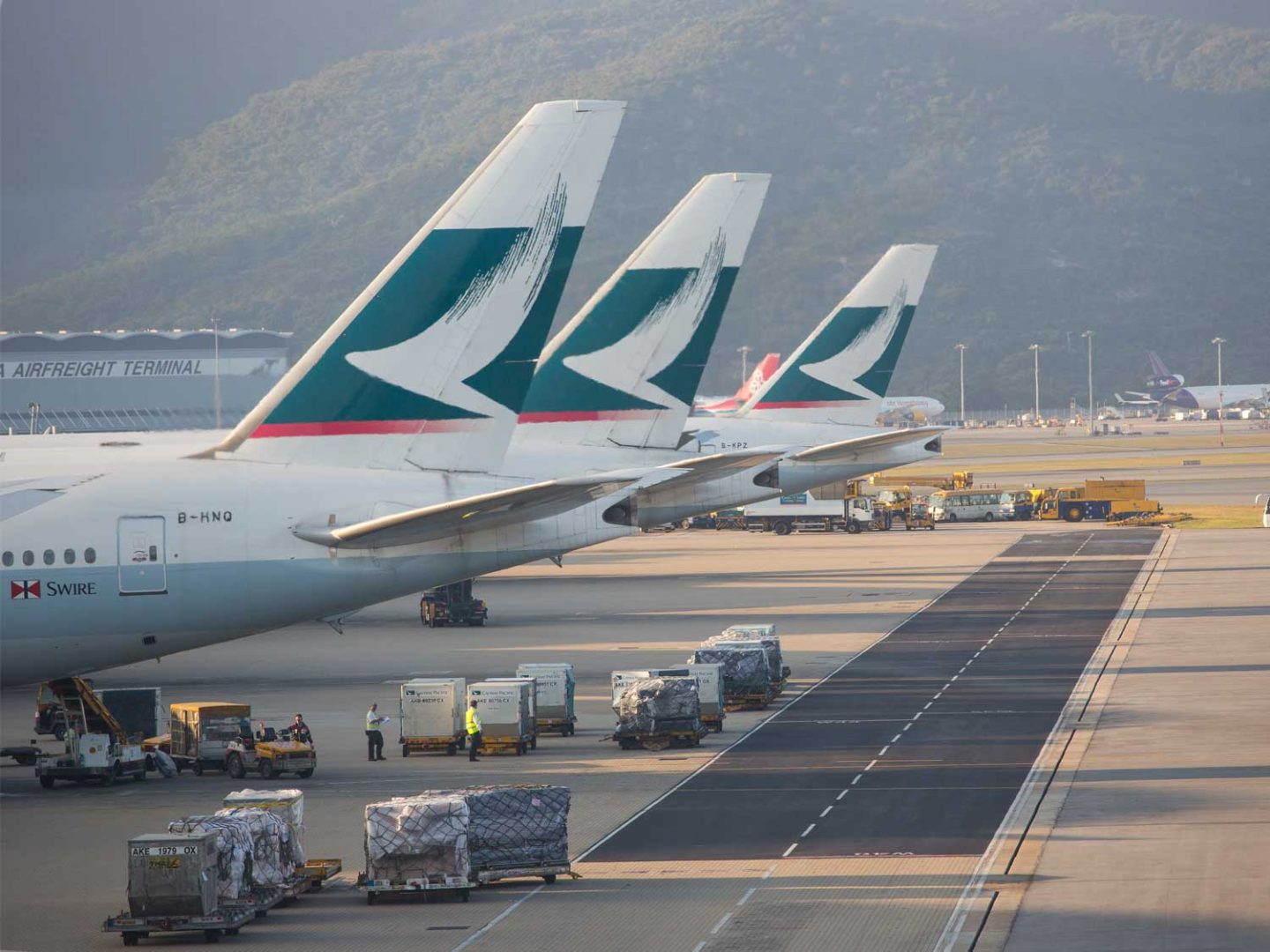
The global airfreight market is becoming increasingly difficult to predict through headline averages. While worldwide volumes remain above last year’s levels, conditions are diverging sharply between individual origins and trade lanes as de-minimis regulation, technology demand, weather disruption and capacity shifts reshape cargo flows.

For UK, European and US shippers, this means the availability and cost of airfreight increasingly depend on exactly where cargo originates and which carrier networks it uses. Asia may appear relatively balanced overall, while individual gateways can experience much tighter capacity or rapidly changing rates.

The latest WorldACD data reinforces that picture. Global tonnage fell 4% in the latest reporting week, but remained 1% higher year on year, while individual Asian origins recorded movements ranging from double-digit growth to double-digit declines. 

Asia–Europe adjusts to e-commerce changes and shifting capacity

Asia–Europe is undergoing a significant adjustment following changes to the EU’s treatment of low-value e-commerce shipments.

The introduction of a €3 charge on packages valued below €150 at the beginning of July has affected one of air cargo’s most important sources of recent growth. By week 32, China–Europe e-commerce volumes were 8% lower year on year, while Hong Kong–Europe volumes were down almost 30%.

Overall Asia Pacific–Europe tonnage fell, yet rates moved in the opposite direction on some important lanes, with Asia Pacific–Europe spot pricing increasing 1%, led by a 6% increase from China and 3% from Hong Kong.

This apparent contradiction reflects changes in available capacity. Freighter capacity previously deployed for e-commerce traffic appears to be moving between markets, allowing pricing to strengthen even as overall volumes soften.

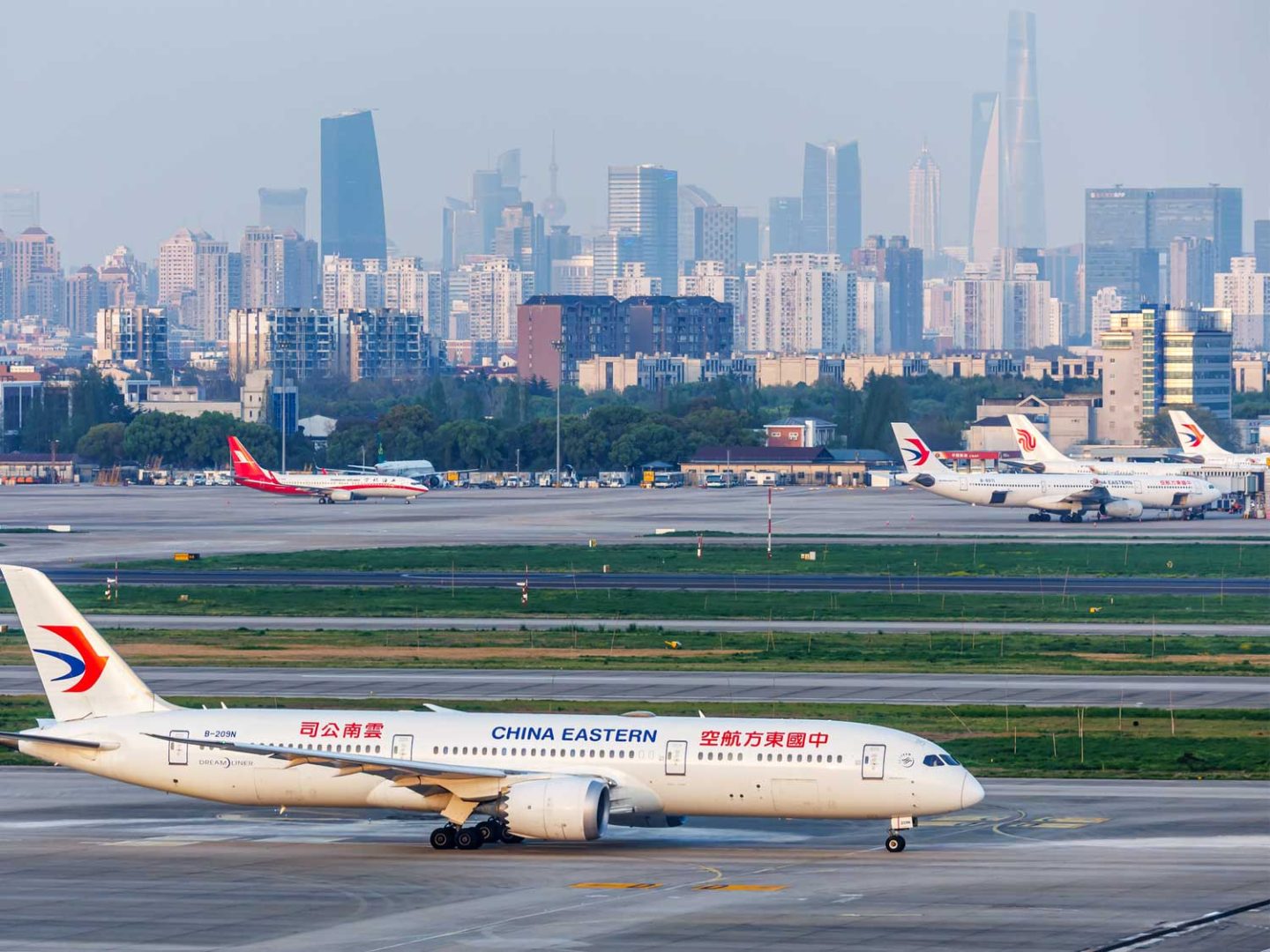
Weather is adding another variable. Typhoon Dolphin caused more than 1,000 flight cancellations in Shanghai, contributing to an 8% week-on-week decline in total air cargo from the gateway. Disruption to Chinese seaports could subsequently generate some modal shift from ocean to air as businesses try to recover delayed shipments.

“Airfreight is becoming much more localised,” says Phil Morris, Metro’s Head of Airfreight. “A regional average can suggest that capacity is plentiful, but that may not reflect what is happening at an individual origin. Shippers increasingly need to look at the cargo mix, available capacity and conditions at specific gateways rather than relying on the headline market.”

Transpacific technology demand creates localised pressure

The transpacific market presents a different picture. Asia Pacific–US tonnage declined 4% week on week in early August and spot rates fell 3%, suggesting a relatively balanced market at regional level. But significant variations sit beneath those figures.

Japan–US volumes increased 12% in a single week, while Taiwan and Indonesia’s volumes were down around 10%. High-value technology cargo is also supporting demand from Japan, South Korea, Taiwan, Thailand and Vietnam.

AI servers, semiconductors, electronics and associated data-centre infrastructure are particularly important because these products are high-value, time-sensitive and often linked to fixed deployment schedules. Airfreight can therefore remain the preferred mode even when ocean capacity is available.

That demand can have consequences for businesses outside the technology sector. Cargo moving through the same airports, using the same freighter capacity or competing for uplift during concentrated production periods can encounter tighter availability and firmer pricing.

“For shippers, it is important to understand what else is moving from their origin,” Phil adds. “A surge in one high-value vertical can tighten an airport very quickly. That makes early conversations about capacity and alternative routings particularly valuable, especially as we approach Q4.”

Further typhoon activity across Asia could amplify these localised pressures if flight cancellations or airport disruption coincide with peaks in technology exports.

Transatlantic capacity remains comparatively accessible

The transatlantic market currently offers a more stable environment, with capacity generally available as the summer passenger schedule provides substantial belly-hold space.

WorldACD data shows North America–Europe volumes fell 5% over the latest two-week comparison, while European exports to North America increased 3%. This creates different conditions depending on direction rather than a single transatlantic trend.

The current availability provides an opportunity for shippers with flexible requirements, but the position could change as passenger schedules transition from summer to winter and belly capacity reduces.

The broader lesson is that airfreight has moved away from a market where one global trend reliably describes conditions everywhere. Regulation is reshaping e-commerce demand, technology is concentrating demand around particular Asian origins, weather can remove capacity with little warning and seasonal passenger schedules continue to influence individual corridors.

Shippers can respond by separating genuinely time-critical freight from cargo with greater delivery flexibility, securing capacity earlier on constrained origins and maintaining alternative gateway and routing options.

Metro’s global airfreight network gives shippers the visibility and flexibility to respond to these increasingly localised conditions. Our airfreight teams monitor capacity, rates, weather disruption and demand at origin level, identifying where space is tightening and where alternative gateways, carriers or routings can provide an advantage. 

Whether you are moving cargo from Asia to the UK, Europe or US, or across the Atlantic, talk to Metro early so we can secure the capacity and routing that best protects your cost, transit time and delivery commitments.

To learn more, EMAIL Managing Director Andrew Smith today

White House 1440x1080 1

US tariff uncertainty is becoming a permanent supply chain challenge

US importers face another period of significant trade policy change as the Trump administration expands its use of tariffs across countries, commodities and industries.

The immediate challenge is understanding which measures apply and how they interact. The wider issue is more fundamental: Section 301 is developing into a broad mechanism for imposing additional tariffs, while stricter customs enforcement increases the financial consequences of getting classification, valuation or origin wrong.

For importers, tariff exposure can no longer be treated as a temporary disruption. It increasingly needs to form part of sourcing, landed-cost and customs compliance decisions.

New tariffs broaden importer exposure

The latest changes follow the expiry of temporary Section 122 tariffs introduced in February 2026 after the Supreme Court overturned the administration’s earlier use of emergency powers for its ‘Liberation Day’ tariffs.

On 24 July, the administration introduced new tariffs on 59 countries and the European Union following a Section 301 investigation into goods allegedly produced using forced labour. The measures effectively restored a 10%–12% minimum tariff across economies responsible for around 99% of US imports, although significant product exemptions remain.

The UK was placed in the 10% group rather than the 12.5% tier applied to many other countries. There are product-specific exemptions under the UK-US Economic Prosperity Deal, so the 10% does not apply universally.

UK automotive exports benefit from a 10% tariff within the agreed 100,000-vehicle quota, aerospace goods have preferential treatment, and UK pharmaceutical exports secured 0% tariffs in April 2026. Different Section 232 or other measures can also apply depending on the commodity.

These duties can also stack on top of existing measures, helping push the estimated overall US effective tariff rate to approximately 10.8%.

Some individual measures go considerably further. Selected Brazilian goods face additional tariffs of 25%, while certain Canadian products have been targeted with duties of 50%. From 31 July, some pharmaceutical imports also became subject to tariffs reaching 100%.

More measures could follow. An investigation into excess industrial capacity covers 16 economies, including China, India, Japan and the EU, while further action targeting digital policies and specific industries remains possible.

The near-term outlook therefore points towards continued volatility rather than simplification. Importers should expect tariffs to change by country, product and policy objective, making total landed-cost calculations increasingly important when comparing suppliers and sourcing locations.

Enforcement raises the cost of getting customs wrong

Tariffs are only one part of the financial exposure. US Customs and Border Protection is also moving towards more aggressive enforcement.

Importers face increased scrutiny of the three areas fundamental to duty assessment: tariff classification, customs valuation and country of origin. Errors can result not only in additional duty assessments but potentially penalties where authorities believe tariffs have been avoided.

The scope for mitigating penalties may also be narrowing. Industry analysis indicates that reductions which historically could reach 90% are becoming less readily available, with mitigation potentially limited to around 50% for trusted traders able to demonstrate effective written controls and robust compliance procedures.

This makes customs governance increasingly important. Importers should review classifications, origin determinations and valuation methodologies before goods arrive rather than relying on retrospective corrections.

Procurement contracts also deserve attention. Businesses may need clearer provisions determining which party absorbs new tariffs and what happens if government action materially changes the economics of an existing sourcing agreement.

Tariffs are likely to remain part of the landscape

Legal challenges continue, including action involving 25 US states, but importers should be cautious about building their strategy around the prospect of tariffs disappearing.

Section 301 has expanded well beyond its previous association with China and is increasingly being used across different countries and policy objectives. Further investigations are expected, suggesting additional tariff announcements remain possible.

Even successful legal challenges may not deliver lasting certainty if the administration replaces overturned measures using alternative statutory authority.

For importers, this changes the emphasis from reacting to individual tariff announcements to building greater resilience into customs and sourcing strategies. That means modelling landed costs under different tariff scenarios, reviewing alternative origins and suppliers, maintaining accurate customs data and identifying opportunities to use legitimate duty-management mechanisms.

Metro’s growing US footprint combined with customs brokerage capability at every US gateway gives importers the support they need as tariff and enforcement requirements become more complex. Our teams can review classification, valuation, origin and duty exposure before cargo moves, identify potential customs risks and help you understand how changing tariffs affect your true landed cost.

With US trade policy changing quickly, don’t wait for a new tariff or customs intervention to expose a problem. Talk to Metro now about reviewing your imports, customs compliance and duty exposure. EMAIL Managing Director Andrew Smith.

customer survey 1440x1080 1

Peak season survey reveals cautious confidence as demand strengthens

Metro's Q3/26 Peak Season Survey suggests businesses are entering the second half of the year with growing confidence, despite ongoing uncertainty across global supply chains.

While current shipping volumes remain mixed, the outlook for the next three months is positive. More than three-quarters of respondents expect shipping volumes to either increase or remain stable, with no respondents anticipating a decline. 

The findings indicate that businesses are continuing to adapt to market disruption, focusing on flexibility, resilience and proactive supply chain planning rather than waiting for conditions to return to normal.

Demand is being driven by real business growth

Unlike previous peak seasons, where activity was often influenced by front-loading or supply chain disruption, this year's demand appears to be supported by underlying market conditions.

Half of respondents identified genuine customer demand as the primary driver of shipping activity, while 37.5% pointed to inventory replenishment and restocking. Only 12.5% believed customers were bringing orders forward, and the same proportion cited carrier actions creating tighter supply. No respondents believed an earlier-than-usual seasonal peak was driving demand. 

Current shipping volumes remain varied. While 37.5% reported moderately higher volumes than the same period last year and 12.5% reported increases of more than 20%, an equal 37.5% said volumes were lower than a year ago. 

Looking ahead, confidence remains encouraging.

A quarter of respondents expect shipping volumes to increase significantly over the next three months, while 37.5% anticipate a slight increase and a further 37.5% expect volumes to remain stable. Significantly, none of those surveyed expect demand to decline during the remainder of the peak season. 

The results suggest businesses are planning for sustained activity rather than a short-lived seasonal spike.

Peak season has already begun

Three-quarters of respondents believe the traditional peak shipping season is already well underway, while only 12.5% believe it has yet to begin. A further 12.5% remain unsure. 

This reflects the continued resilience of international trade despite geopolitical tensions, longer shipping routes and higher transport costs.

However, an early start does not necessarily mean peak season will finish early. Over the past three years, an earlier summer peak has typically been followed by a second, smaller surge in demand during the fourth quarter, bookended by Golden Week in early October and the build-up to Chinese New Year. Many shippers are therefore planning for sustained demand through the remainder of 2026 rather than a single seasonal spike.

Red Sea transits remain under close review

As container carriers continue trial transits through the Suez Canal and Red Sea, businesses are monitoring developments carefully.

Three-quarters of respondents were already aware of the resumed transits. However, only a minority have fully reviewed their cargo insurance arrangements. Instead, 62.5% said insurance reviews are currently underway, while 25% have yet to assess whether their existing cover is suitable for regular Red Sea transits. 

The findings suggest confidence in the route is improving, but these results came before the recent Houthi attacks, so risk management remains a priority.

Flexibility is becoming the preferred strategy

Businesses are responding to market conditions by adapting existing supply chains rather than making wholesale changes to transport modes.

The most common response (37.5%) has been to alter shipping routes while maintaining the same mode of transport. Another 25% are considering alternative transport solutions if conditions deteriorate further, while 12.5% have already introduced sea-air services and a further 12.5% have switched some shipments to road transport. Meanwhile, 37.5% have not changed their transport strategy. 

Among those making changes, every respondent (100%) cited long transit times as the primary reason, with vessel capacity and port congestion receiving no responses. 

Agility is becoming more important than storage

When asked about warehousing priorities, 83.3% of respondents identified flexible transport alternatives as their greatest requirement, compared with 33.3% who highlighted low-cost short-term storage solutions. 

The findings suggest businesses are placing greater emphasis on maintaining supply chain agility than simply increasing storage capacity.

What the survey tells us

The results paint the picture of a market that remains resilient despite continued disruption.

Demand is being driven primarily by genuine customer activity rather than precautionary ordering, businesses are broadly optimistic about shipping volumes over the coming months, and most believe peak season is already underway.

At the same time, companies continue to manage risk carefully. Red Sea insurance arrangements are being reviewed, alternative routing remains under consideration, and flexibility has become a higher priority than simply securing additional warehouse space.

As peak season develops, Metro can help keep your supply chain agile. We'll review your transport strategy, identify opportunities to improve resilience and help you respond quickly to changing market conditions while maintaining service levels and controlling costs.

We’d be interested in your views too. EMAIL Managing Director, Andrew Smith