Global supply chains are operating in a more stable position than at the peak of the Iran war, but conditions remain far from normal.
President Trump’s announcement of a ceasefire, tied to the opening of the Strait of Hormuz, has reduced immediate geopolitical tension. However, logistics networks are still dealing with the after-effects of six weeks of disruption across one of the world’s most critical trade corridors.
Shipping activity through the Strait has resumed in limited form, but not at levels that would support a full return to pre-conflict operations. Carriers, insurers and cargo owners continue to treat the region as high risk, and that caution is shaping how goods are moved globally.
A clear indicator is the sustained level of Gulf container diversions to alternative gateways due to risk or congestion. Weekly diversions have risen from under 2,000 to consistently above 9,000 since early March. The UAE still receives 42% of diverted cargo, while Saudi Arabia’s share has climbed from 4% to 24% in five weeks. The 6 April attack on Khawr Fakkan has also removed a key alternative hub, adding further pressure to the network.
Congestion and cost pressures extend beyond the Gulf
The impact of these diversions is now being felt well beyond the Middle East. As cargo is redirected through alternative routes, pressure is building at ports not designed to handle sustained increases in transhipment volumes.
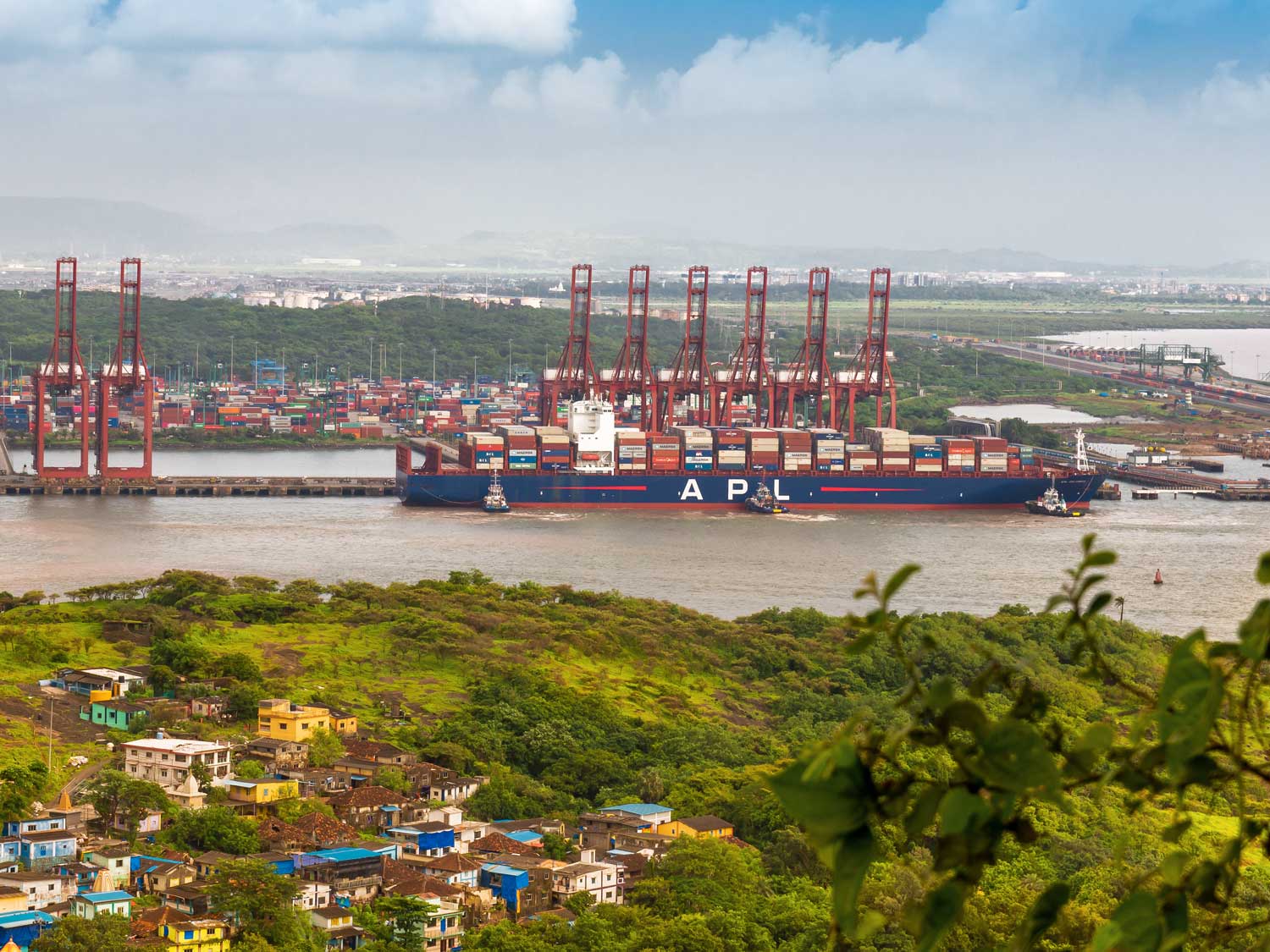
Navi Mumbai transhipment volumes have surged more than 1,300%, while import dwell times peaked at 23 days and remain elevated at around 20 days. Transhipment dwell has also increased, reaching 11 days and continuing to rise.
These developments underline a broader point: while flows have not stopped, the network has become less efficient. Transit times are longer, routing is less direct, and the risk of delay has increased at multiple points along the supply chain.
Energy disruption remains a central factor. The Strait of Hormuz has been functionally constrained for several weeks, removing an estimated 7–10% of global oil supply once partial workarounds are considered. This is feeding directly into transport costs across ocean, air and inland networks, while also increasing volatility in fuel pricing.
Global economies face different but connected pressures
The IMF have issued their updated global economic outlooks, with global GDP expected to slow to 3.1% in 2026 and 3.2% in 2027, while UK growth for 2026 has slowed from 1.3% to 0.8%, reflecting reliance on imported energy and the wider inflationary effects of sustained disruption.
As energy-driven inflation persists and interest rate cuts are delayed, businesses are seeing pressure on margins, reduced order volumes and tighter working capital, while influences procurement and inventory strategies.
In the United States, supply chains are tightening rather than slowing. The Logistics Manager’s Index rose to 65.7 in March, its highest level since May 2022, with transportation, warehousing and inventory costs all increasing. Diesel prices have risen by almost 50% since late February, pushing trucking fuel surcharges to their highest levels since 2022.
A key difference compared to previous disruptions is the lack of buffer in the system. Inventories are leaner and fleet capacity has already been reduced, leaving less room to absorb further shocks. This increases the risk of stock-outs or service disruption if conditions deteriorate.
Business response: cautious planning and greater resilience
Across sectors, businesses are taking a measured but cautious approach. The ceasefire has improved sentiment, but expectations remain grounded. One retail CEO described it as a positive step that should gradually improve logistics planning and route reliability, while warning that supply chains would take time to rebalance. Another business leader noted that while freight costs had already increased, the business had anticipated this and planned accordingly, although any sustained rise in oil prices would create further pressure.
There are also early signs of upstream impact. In manufacturing supply chains reliant on imported energy, lead times have extended by up to six weeks in some cases. Textile production is reported to be down by around 15–20%, indicating that disruption is beginning to affect output at source. These effects typically take time to filter through to finished goods, but they highlight the potential for delayed disruption later in the supply chain.
In response, businesses are shifting from efficiency towards resilience, with greater emphasis on flexibility in routing, supplier selection and inventory management.
Short-term outlook: stabilisation without normalisation
In the near term, the most likely scenario is continued stabilisation without a full return to normal conditions. Vessel backlogs have eased and airspace restrictions eased, with some capacity redeployed, but diversion levels remain high and alternative hubs are under pressure. The loss of key secondary ports and ongoing uncertainty around the Strait mean carriers are unlikely to revert quickly to previous routing patterns.
For supply chains, this translates into a more complex operating environment. Costs remain elevated, transit times are less predictable, and planning cycles need to account for ongoing disruption rather than a rapid recovery.
In an environment where stability cannot be assumed, the ability to adapt quickly is critical and the right logistics partner can make the difference between maintaining flow and losing control.
With critical market insights, flexible routing options and proactive supply chain management, Metro helps customers overcome the most challenging conditions.
EMAIL our Managing Director Andy Smith.