
Idle containership capacity hits all time high

The pain of pandemic freight rates

There cannot have been many weeks when we were either warning of impending rate increases, highlighting recent increases, or explaining why further rises were likely. And while we have protected our customers from the worst excesses of the lines, this article by Mike Wackett for The Loadstar lays bare the stark reality for some shippers.

In normal times we would report positive market intelligence and the latest news, but those opportunities are less than sparse currently, so here is another dose of the real market as reported in the trade press....unfortunately.

'I paid ridiculous charges, my cargo still got rolled and the carrier wanted more'

Short-term freight rates from China to North Europe have breached the $20,000 per 40ft mark, while transpacific carriers are quoting rates of up to $25,000 to the US west coast.

And there was one report of $32,000 from Shanghai to Los Angeles being quoted this week.

The Loadstar has seen several quotes from the top five carriers of $21,000 per 40ft for July shipments from Chinese ports to Felixstowe and Southampton, with the average at around $18,000.

Although these massively elevated rates include a premium fee, to guarantee equipment and space, some shippers complain that their cargo is still getting rolled.

“We paid their ridiculous charges and thought that was the end of it,” said one, “but then we found out from our local agent that the boxes were still on the quay and the line wanted more to ship the cargo.

“Apparently, there was another FAK hike from the next vessel which they insisted on charging, which means their so-called premium fees are worth nothing,” he added.

And as the peak season approaches, it appears the situation is about to get even worse for shippers to Europe and the US.

They will need to brace themselves for another round of FAK and GRI rate hikes on the 1st July, with yet another hike likely from the middle of the month and a PSS [peak season surcharge] of several thousand dollars.

One UK-based NVOCC told The Loadstar this week that a “curt email” from his carrier advising of a new increase was “the final straw”.

He said: “We have supported them through thick and thin, even when their standing was pretty low in the industry, and this is how we get repaid.”

On the transpacific, shippers are suffering similar problems. Jon Monroe, of Jon Monroe Consulting, said carriers had the ability to “manage rates” by rolling cargo, suggesting that the US Shipping Act needed to be updated to include a cap on rate increases and a both-parties damages clause for non-fulfilment of contract.

Meanwhile, Craig Grossgart, confirmed to The Loadstar that one shipper had been quoted $32,000 this week for the shipment of a 40ft container from Shanghai to Los Angeles.

“To be honest, I think it was a polite way of the carrier saying to the customer it doesn’t want to take its business,” said Mr Grossgart.

Nevertheless, he said a figure of $25,000 per 40ft had been quoted to a shipper that needed to move 300 containers from Shanghai and Yantian to Los Angeles next month – “and that is a serious offer”.

With the addition of premium fees, plus a raft of other charges, the gap between the spot market indices and the actual rate being paid is widening by the week.

For example, the North Europe component of today’s Freightos Baltic Index stood at $11,006 per 40ft, while the FBX reading for the US west coast was $6,588.

With strong demand for space and limited capacity likely to extend into next year, we continue to encourage shippers to contact us for all options available which may include the spot market and protect themselves with tailored and specific alternatives, rather than face rates that have risen over 50% in two months and are likely to rise even higher than the current record level, as we enter the traditional peak season for ocean and air freight.

If you have outstanding orders in Asia and are waiting for rates to fall, all the indications are that you will have a very long wait. Certainly up to Lunar New Year 2022 and possibly even after that, which is why we would recommend booking at the earliest opportunity, despite the current high rates. Definitely don’t try to play the market. 

Forecasting continues to be a key ingredient to successful supply chains in the current market and are now needed months ahead of despatch, and not weeks or days as we used to ‘enjoy’. We can only manage cargo movements and your expectations, if we can see them ahead, especially during the critical busy last six months of the year.

Please contact us immediately to receive further updates on a rapidly changing logistics market and arrange a review and discussion on how we can further enhance the movement of your products to market or manufacturing locations globally.
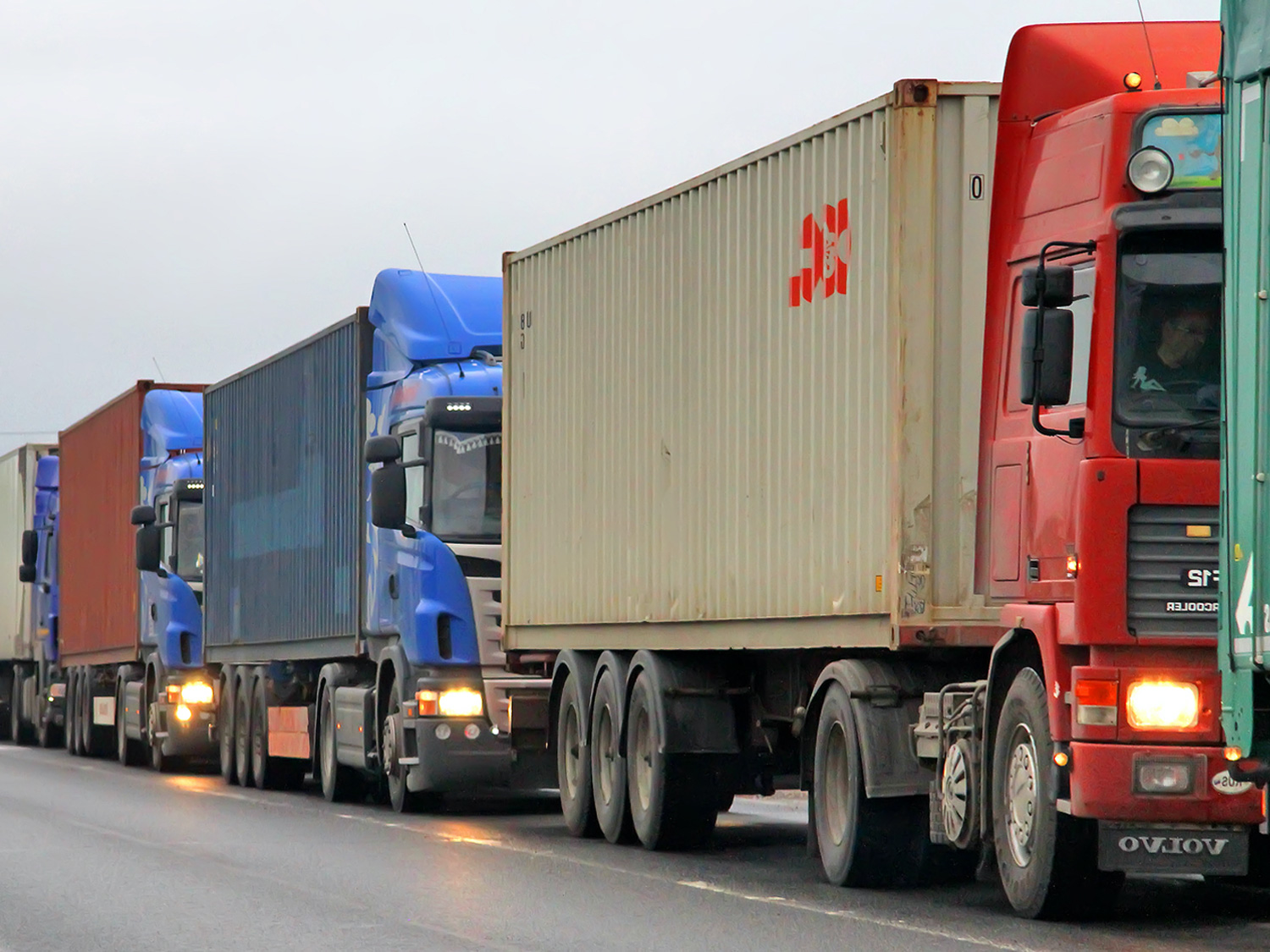
container lorry queue

Pandemic reveals weak links in global supply chain

Global supply chains have been under pressure since the outbreak of COVID-19 at the beginning of last year, highlighting deficiencies that have resulted in disruption, delays and rising costs. Along with a roller coaster journey from start to finish.

In time, most of the congestion and disruption we currently face will dissipate, containers will be in plentiful supply, there will be space on ships and there will be more planes in the sky, and freight rates will return to a more sustainable level. But not yet.

Expectations that cost pressures would reduce, as vaccinations and lockdown re-openings prompted a shift in consumer spending on consumer products to spending on services, are proving to be too optimistic, as demand continues unabated on a global scale.

While container shipping prices should be expected to remain higher than before the crisis, they are thankfully unlikely to stay at their current levels, but other problems in the global supply chain need to be addressed, outside of the pure logistics element.

The shortage of computer chips, used in consumer electronics and automotive, is a high-profile example of the challenges facing “just in time” (JIT) production, leading many to suggest there is a clear case for building up inventories of crucial components and SKUs, which arguably defeats the whole point of JIT.

Another typical response is to bring production home (on-shoring), or find closer suppliers (near-shoring), but moving chip, or many other forms of manufacturing closer to home makes little sense, because the scale you need to make ‘low-margin' production work is very high and Europe and the US are far behind Asia, having advocated their manufacturing capability decades ago.

Sourcing from an expanded range of suppliers and regions is another strategy for mitigating supply chain risk, with many technology and fashion brands successfully  diversifying from China, in favour of lower-cost south-east Asian markets including Vietnam and Indonesia. 

But these regions have been hit almost as hard as China by the ongoing supply chain disruption and expanding supplier portfolios increasingly requires more focus on due diligence, to carefully consider environmental, social and governance responsibilities, with more domestic governments insistent that foreign suppliers meet acceptable standards.

The EU is intent on turning multinationals into labour rights enforcers and while this may create competitive disadvantages in the beginning, supporters believe it will result in those companies that invest in sustainability becoming more resilient and securing the most ethical suppliers early on.

Nevertheless, meeting due diligence standards and diversifying supply chains will raise prices in the short term, as would re-shoring to markets with higher labour and production costs.

The need to manage supply chain shocks, such as the myriad triggered by the pandemic, may mean global trade ceases to be the deflationary force that it has been in recent decades, if efficiency gains from technology and logistics and cheap (mostly Asian) labour are replaced by misplaced focus on near and re-shoring. 

Higher costs related to the physical movement of goods, that we are currently experiencing, can be replaced by a higher cost of products, with a lower price for the positioning of goods to the end market – it is a new balance that could change the dynamics of world trade.

The spread of globalisation has extended supply chains, as buyers sought low-cost manufacturing and cheap new products in the Far East, Indian sub-continent and other regions.

Increasing supply chain complexity adds uncertainty by extending geographic reach, introducing language barriers and multiplying participants, which is complicated further by the addition of order due dates, required actions and critical timelines.

Metro has spent 40 years transforming and simplifying the most complex supply chains, with our global network of partners and our award-winning MVT supply chain management platform.

Invaluable for shippers during the unprecedented supply chain disruption unleashed by the pandemic, MVT is our cloud-based, hyper secure, workflow solution that connects shippers to their entire supply chain – from suppliers and manufacturers, to carriers, distribution networks and customers – harnessing participant, process and inventory data to provide complete real-time visibility, control and intelligence.

Please contact Elliot Carlile or Grant Liddell to learn how MVT and our supply chain knowledge can protect your commercial interests during these challenging times.

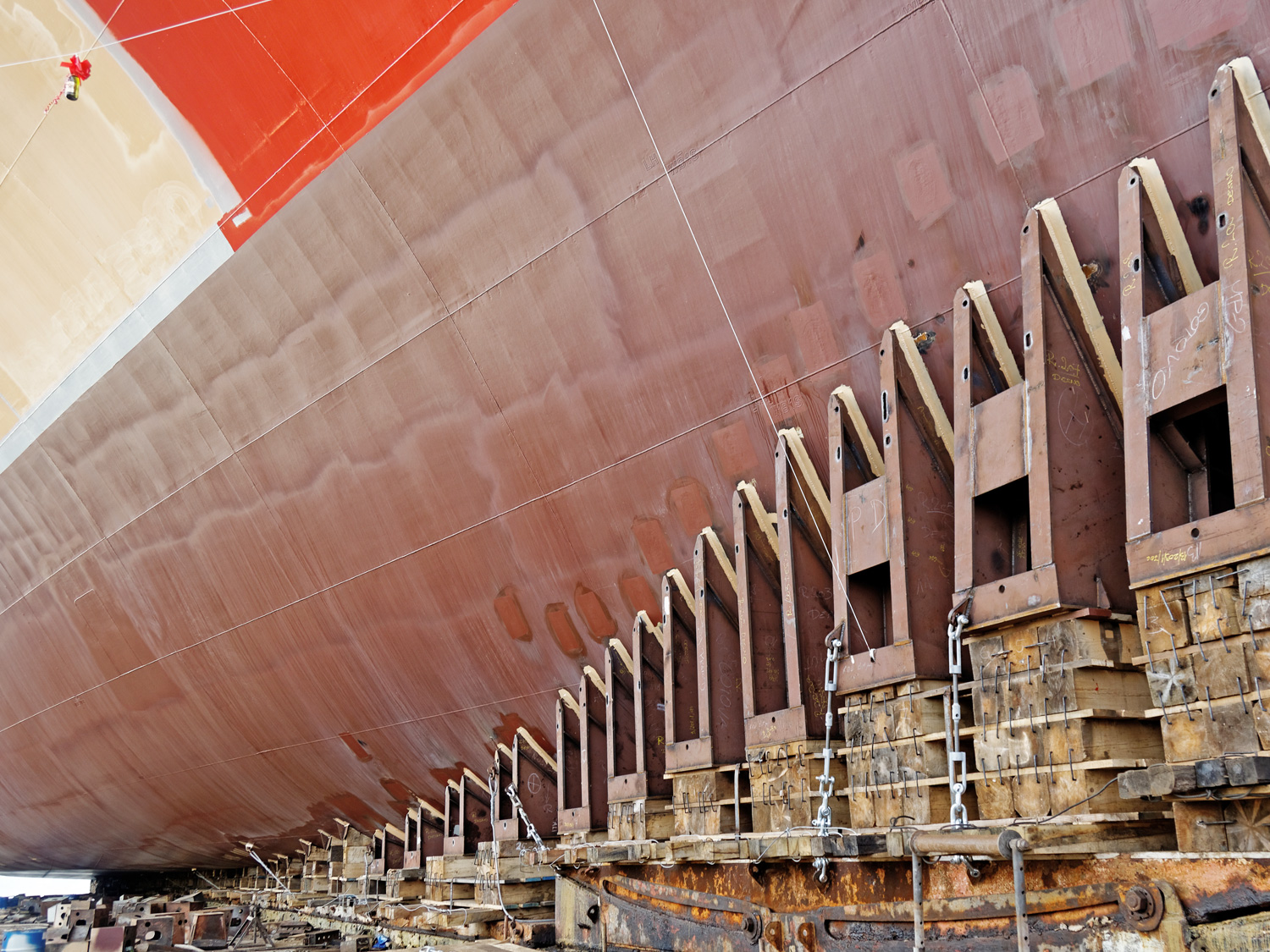
ship launch

New container ship orders cheer shippers

The new containership order-book has been in decline since 2008 but, driven by new carrier confidence, activity increased significantly in the fourth quarter of 2020, with a further surge of nearly two million teu of orders in early 2021, meaning that new ships on order equal 18% of the total global fleet - a five year high that is close to oversupply.

The amount of new capacity on order is at a multi-year high and receipt of the new vessels will drive new market dynamics and reorder shipping line rankings by fleet capacity, with the ordering spree demonstrating liner confidence in returning to a healthier level of fleet replacement - But the possibility of oversupply rises, if it continues.

The new container ship order-book will add a further 4.17 million TEU over the next two to three years, to the 24 million TEU currently in service globally and follows years of inaction, as the carriers resisted new orders during years of overcapacity. Also their coffers are now full with the current market situation and rates so investment in new leaner and more efficient hardware can be accomplished without heavy debt burden which has been the industry model for the last few decades.

The ordering of new vessels has been so strong that some yards have stopped giving quotes for new builds and are trying to renegotiate existing orders, as the price of steel plates used to build vessels has doubled.

Capacity has been sustained - nine new container ships were delivered in June - in the face of strong demand since last year and while the carriers are continuing to exercise supply discipline, as new vessel deliveries increase, we could return to oversupply and maybe even softer rates - in two to three years.

The surge in demand for sea freight, that begin in the third quarter 2020, has overwhelmed the global container fleet - and all the charter capacity the lines could find - so it is not surprising that carriers want to add capacity. MSC alone took delivery of two new ships this month and their order book currently stands at 70 vessels.

Carriers in the Ocean Alliance have placed the most orders and MSC will move ahead of 2M in terms of capacity, while Evergreen has the largest liner order-book at 665,375 TEU, which will take its fleet over the two million TEU mark, to overtake Hapag-Lloyd and Ocean Network Express.

CMA CGM’s order-book stands at 552,516 TEU and MSC has the third-largest order-book, with 390,000 TEU and means it will overtake 2M Alliance partner Maersk as the world’s largest containership operator, with 4.26 million TEU of fleet capacity compared to Maersk’s 4 million TEU. 

The lowest order-book-to-fleet ratio of the major global carriers suggests Maersk is not chasing market share and if non-operating owners and private equity investors follow their lead, the possibility of oversupply may be limited, as orders are being driven by the freight market and not speculation.

While Ultra-large container ships (ULCSs) represent the bulk of the order-book, there is renewed interest in smaller new-Panamax vessels, as the current demand environment has shown the value in versatile ships over the giant ULCSs that are restricted to the Asia-Europe trade lane, due to port handling capability in other regions.

Metro have strong strategic partnerships with carriers across all three alliances, which means we can direct our sea freight volumes to reflect capacity opportunities, as charters, second-hand and new vessels come on stream.

Please contact Elliot Carlile or Grant Liddell to discuss how our carrier knowledge, partnerships and contracts can support your supply chains in these challenging times.

Terms of trade will trip you up

Six months in UK businesses are still battling with the post-Brexit environment and sleep-walking into chaos

Surveys for the FT find companies have been hit hard by new checks and red tape, with almost a third of British companies suffering a decline or loss of business since post-Brexit.

The survey by the Institute of Directors found that 17% that previously traded with the EU have stopped — either temporarily or permanently — since the start of the year.

Six months after Brexit, companies reported they were continuing to struggle to comply with border checks, customs controls and bureaucracy which have added friction to EU/UK commerce.

Of those companies that trade with the EU, 31% said new barriers since 1st January had a negative impact on trading with the bloc and just 6% said trade had increased, with 58% reporting no change.

According to another survey, by the Chartered Management Institute (CMI), just over a quarter of respondents said changes at the end of the Brexit transition had negatively affected their organisations’ turnover in January and six months later there had been no improvement, with the same proportion reporting a negative impact.

Some UK businesses have responded to Brexit by moving operations across the English Channel to simplify trading with the bloc and many businesses think the impact of Brexit will get worse when some of the HMRC easements come to an end this year, including the introduction of import controls at British borders with the bloc.

According to the IoD survey, about two-thirds of companies said the new UK customs controls would have a negative effect on trade when they were implemented in January next year — six months after they were supposed to be introduced.

The Loadstar reported this week on concerns that UK importers of European goods are “sleepwalking” into disaster, as the UK’s six-month moratorium on customs declarations comes to an end.

HMRC’s six-month delay on declarations for imported goods from 1st January aimed to reduce strain on the system and provide importers sufficient time to adjust to post-Brexit procedures.

But many brokers feel it simply delayed a crisis, as many importers are new to the customs environment and they may not realise their agent used the delayed declaration scheme and they will have failed to retain sufficient records or copies of E2/C88s, providing proof of authorisation to import or export.

The delayed declaration scheme process is actually quite complex and, we believe, fundamentally dangerous, which is why none of our importers adopted it. Opting instead for full clearance of their goods and consequently any liability to HMRC. We have been advising customers and recommending full customs entry at time of movement which now will ensure that this situation does not impact your historical movements and compliance.

We can clearly see that there will be issues arising from HMRC’s border ‘easements’ and potential pitfalls, that we are pleased our customers will avoid.

Our CuDoS customs brokerage platform is optimised continuously, in line with the regimes in force on both sides of the Channel, automating and submitting customs declarations, for simple and compliant border processing in either direction. Which has protected our customers from the potential fallout of HMRC’s delayed declaration scheme and means that their EU supply chains will not be interrupted when full UK/EU border controls are implemented on the 1st January 2022.

To learn more and to discuss your trading objectives, please contact Elliot Carlile or Grant Liddell who can talk you through the options.