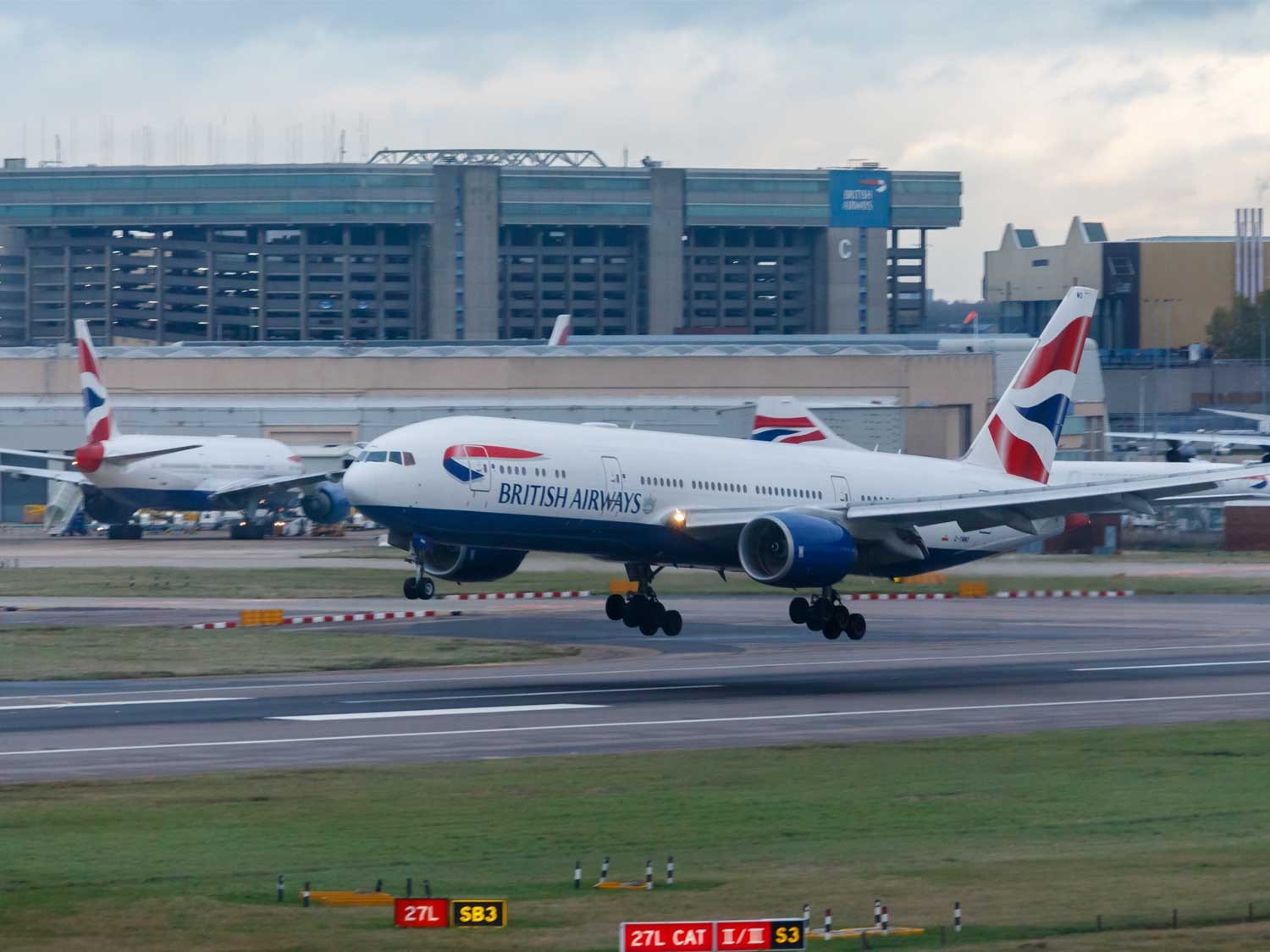
LHR BA landing

Sea freight shippers opt for air and sea/air alternatives

With the container shipping lines diverting around Africa until the Red Sea maritime security situation improves, the uncertainty and unpredictability that surrounds schedules could fuel demand for air cargo as shippers seek stability of services and certainty of transit times.

Air cargo demand data for last month showed a 9% year on year increase, with spot rates reaching their highest level in nine months and the dynamic load factor increasing by 3% to reach 59%.

The Red Sea ship diversions around the Cape of good Hope will inevitably cause ships to cluster at ports, leading to port congestion, worsening equipment shortages and gaps in sailing schedules, which may significantly impact global supply chains. 

Carriers will need to adjust schedules and networks, and would need to add more ships to achieve weekly or nearly weekly service frequency.

The diversion of ships away from the Suez Canal will swiftly see a million-plus containers delayed and when you factor in the knock-on effects of cash (in stock) tied up for longer, together with the fact that you don’t know how long this situation will continue means that some shippers will opt for the predictability of air cargo costing and reliability, to overcome the impact of the current sea freight disruption.

Improved stability in air cargo is encouraging a switch back to long-term, fixed-rate contracts, with deals for over six months rising to 45% of all contracts signed In the last quarter of 2023. Six-month contracts amounted to another 28% of the total market, while the share of up-to-one-month rates was just 14%.

This latest data appears to reflect stronger local market performance on key lanes and a global economy that is doing much better, but the market outlook forecast for 2024 remains modest, with an anticipated 1-2% growth in demand and a 2-4% rise in supply, though this does not take into account the potential ‘Red Sea’ effect.

Air cargo spot rates from Europe to the US were up +21% month over month in December, with the reduction in capacity helping to push up rates on this lane, while spot rates from China and Southeast Asia to Europe both rose 9% and strong eCommerce demand pushed the China to US air spot rate up 6% in December. Though these gains have subsequently fallen back, they may well recover if ocean shippers do start to look for time dependable alternatives, to hit supply chain deadlines.

Sea/Air; the effective and cost-efficient alternative

Sea/Air solutions offer an attractive blend of fast movement, defined transit times and significant economies over direct air freight.

The multimodal solution’s relative low-cost comes courtesy of a significant part of the cargo transit being undertaken by ship, from Asia, or the Indian subcontinent to Dubai, where cargo is transhipped securely and swiftly for the second transit leg, which is undertaken via air, directly to our UK hub airports, thereby completely avoiding the Red Sea problems and reducing transit times significantly.

Multimodal transport solutions like our Sea/Air solution are the best way for shippers to avoid delays between Asia and Europe and any potential land-side disruption.

Many of our customers are increasing the use of this solution, alongside their pure sea and air options, to avoid potential issues. We believe that Sea/Air should be considered to be a natural part of supply chain planning, due to the increased resilience and flexibility it offers over other modes and its lower carbon footprint compared to regular air freight.

For valuable, special and time-sensitive shipments we have a range of air freight and Sea/Air solutions, with extremely competitive rates and service combinations, to meet every deadline and budget requirement.

EMAIL Elliot Carlile, Operations Director, for insights, prices and advice.
Cape of Good Hope

The real impact of diverting ships round Africa

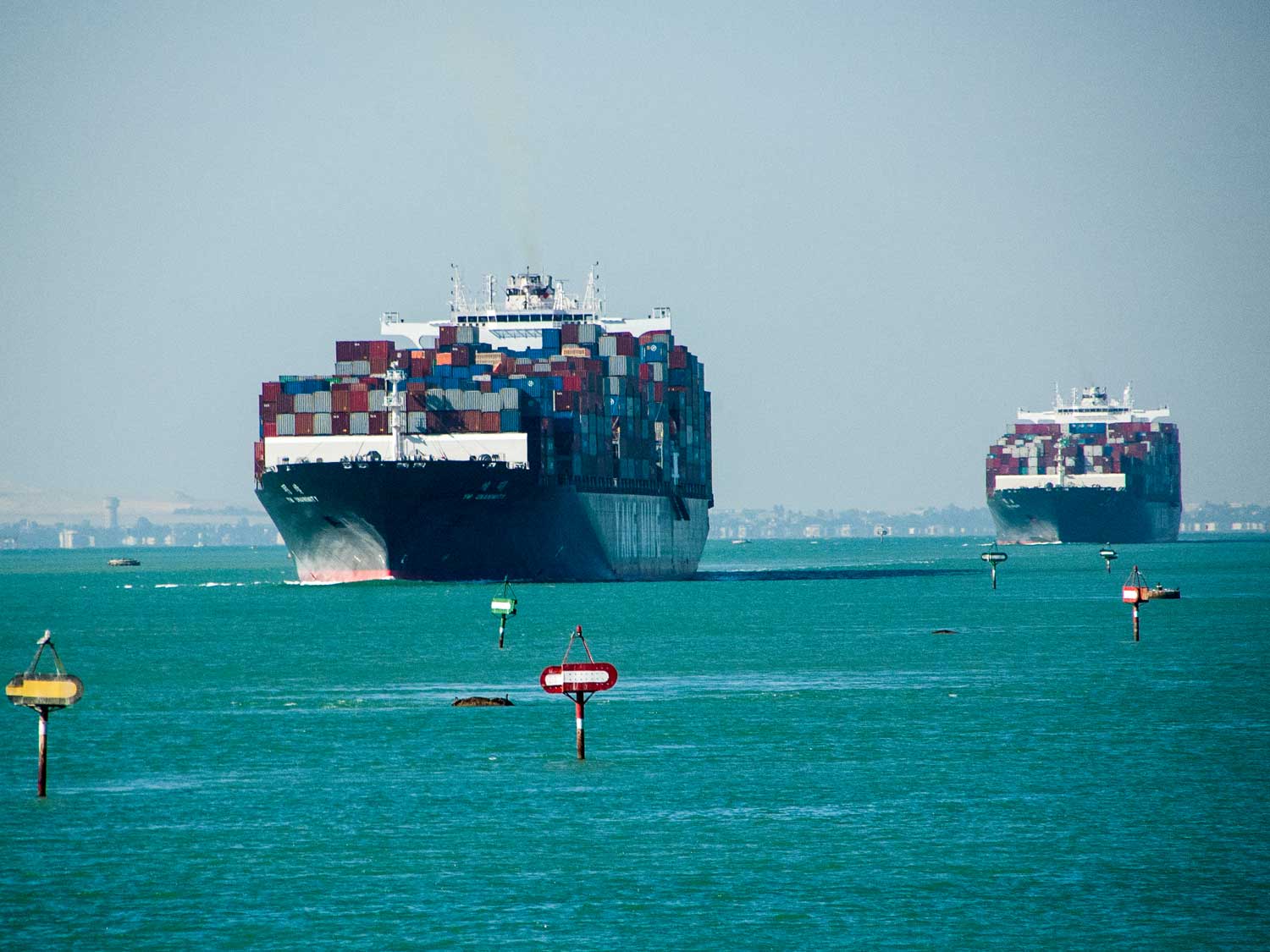
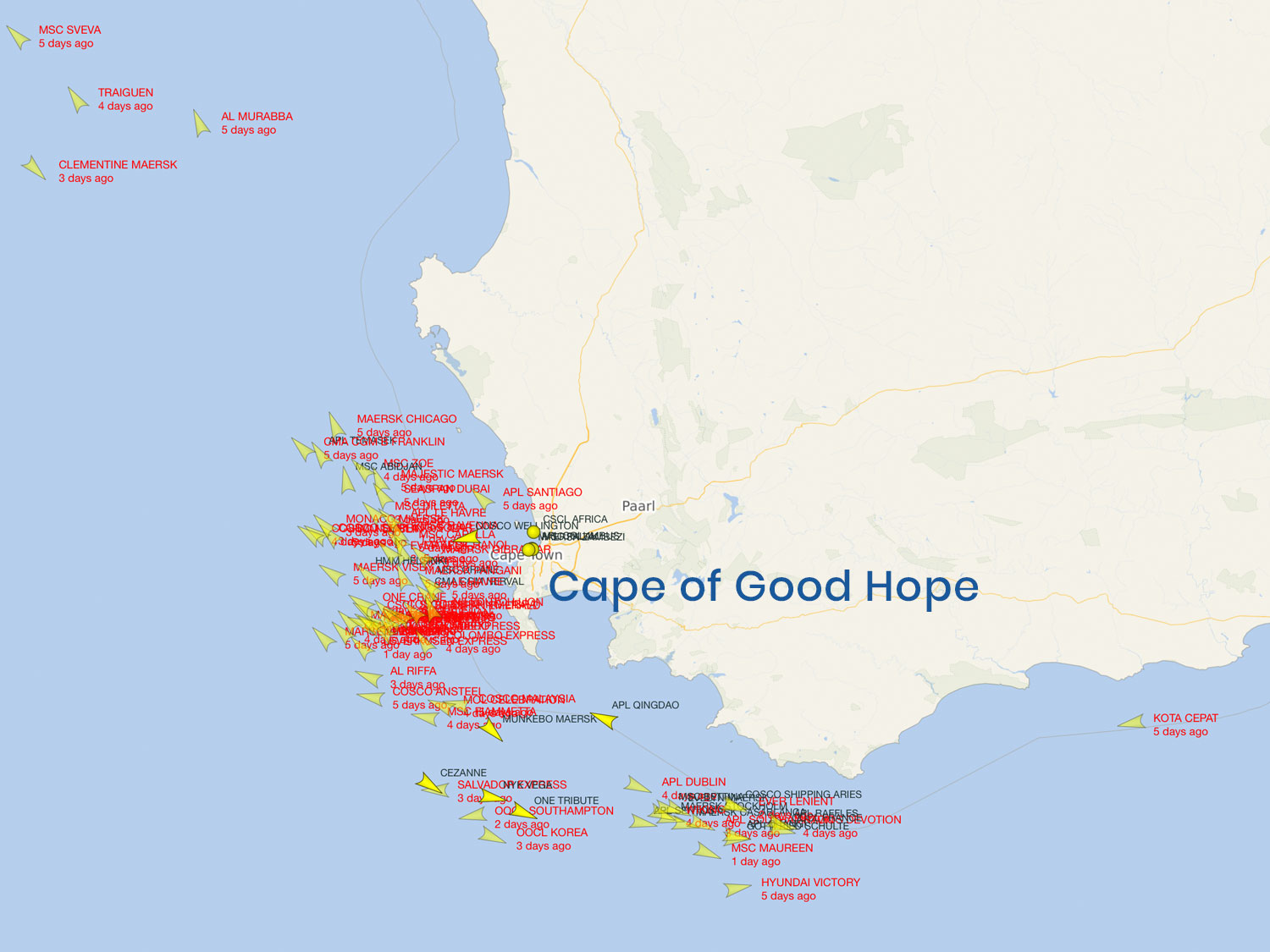
Following the sharp escalation of attacks on container ships in the Bab-al-Mandeb strait off the coast of Yemen last week, major container shipping lines are diverting vessels around the southern tip of Africa, rendering the Suez routing unavailable for an unknown period.

With the Suez route closed it instantly delayed shipments to Europe and the US East Coast between 5-14 days, which effectively removes two weeks of supply of empty containers going back to the Far East.

While the impact of this action will be felt on multiple trades, its impact will be most profound on traffic from Asia and will be particularly troublesome on the Far East to North America East Coast (NAEC) trade, as there has been a shift towards the Suez routing due to the drought in the Panama Canal, making a reversal to the Panama routing impossible.

Routing around Africa by the Cape of Good Hope increases sailing times considerably, especially for services to the Mediterranean (MED). 

Using a standard speed of 17 knots during the deviation, we are looking at a likely increase in transit time of roughly 10 days on Far East-North Europe, 14 days to MED, and 5 days to NAEC. 

For a full roundtrip however, additional vessels will need to be injected into services on these trades to maintain a weekly departure.

Using the number of services on the impacted trades, the average vessel size on each service, and an additional vessel for every 7-day increase in sailing time, a switch to round-Africa would require 1.7 Million TEU of vessel capacity, which is around 6% of the total global container vessel capacity (just 4% is currently idled). 

Every week there is approximately 390,000 TEU loaded from Europe and USEC going to Far East as a mix off full and empties and having lost two weeks sailing round-Africa 780,000 TEU of containers less will arrive in Far East in time for the beginning of the Chinese New Year peak over the next 4 weeks, which will create shortages in key locations. 

The supply/demand crunch is therefore less a matter of ships and more a matter of equipment, which also means that all export trades out of Far East will feel this impact and not just those that usually go through Suez.

We are seeing some 20’ and 40’ GP issues currently ex North China Feeder Ports, but nothing major and issues can be avoided if shippers make their bookings in good time.

We remain hopeful that equipment issues might be worked through the system in the post-CNY lull period.

And that 6% assumes vessels using the Cape of Good Hope are running normally, but in the short term the required capacity injection is actually much larger, as some vessels’ total sailing time will be much longer, either because they  were either waiting around for days for instructions, or they were caught in the wrong locations for the diversion.

Part of the current overcapacity problem, caused in large part by new-build deliveries, has been absorbed by slow-steaming, and while this additional capacity could also be absorbed it would require vessels to sail a lot faster and claw back some of the lost transit days.

From a capacity perspective this should not be a disaster in the longer term and while equipment shortages in Asia have not happened yet , it may enter the equation beginning week 4 but from week 5 ish there will be far less export containers to be loaded from China 

During week 5 to 8 plenty of equipment will arrive back in time for re-opening factories, so any genuine equipment problem in East Asia will not transpire till early April 

We have formed a ‘Red Sea Crisis Task Force’ who are monitoring the ongoing situation, gathering intelligence, speaking with carriers and ensuring that we can share the latest information as the situation continues to develop. 

While many of the issues detailed will only be felt and experienced in the coming weeks, we are mindful to share this information now, to support your decision making and to help you prepare for any product movements that are essential.

If you have any questions or concerns about the impact of the Suez situation on your Asia supply chain, or would like to discuss its wider implications, please EMAIL our Chief Commercial Officer, Andy Smith.

The Suez strikes back

2nd January; Suez Crisis Update

In our 2023 supply chain review we said that we were hopeful that the formation of a coalition naval task force to patrol the southern Red Sea and Gulf of Aden would restore maritime security quickly, but Sunday’s two attacks on the Maersk Hangzhou suggest it could be some time before the route is secure enough for container shipping.

Having halted Suez transits after Sunday’s attack Maersk has now announced that it will pause all sailings through the Red Sea until further notice.

The earlier targeting of vessels tied to Israel has clearly ended, putting any ship, regardless of their nation status in danger and while the coalition forces are successful in intercepting air-based weapons, without a protection regime that guarantees freedom of navigation through the Gulf of Aden and Red Sea, container shipping lines will continue to divert around the Cape of Good Hope route, adding 3,500 miles and 10-14 days transit.

With Iran providing a steady supply of drones and missiles the Houthis can keep up the pace of attacks indefinitely, which means the cost of maintaining a naval presence will rapidly rise into billions of dollars, with spot rates for North Asia to Europe and the Med more than doubling over the past week.

The supply chain disruption being generated by this evolving situation is already spreading and extremely concerning, as we see many similarities with the recently experienced pandemic chaos. Some of the things to consider before they actually occur are as follows :-

With this crisis unfolding during the global slowdown and pause in working over the festive break, it will be interesting to see how businesses react, as the reality and additional costs become apparent.

Whats the impact going to be on air freight once shippers realise components, stock and inventory needed for is manufacturing running low, along with the clash with CNY, which starts early in February.

Both shipping lines and air carriers will increase rates to cope with increased demand from Asia to Europe and the USA, with a peak season to replace the subdued one last year.

If you have any questions for Metro or require advice and assistance on priority shipments in January and February please highlight these and we will put under scrutiny and advise all options available as we anticipate this situation will now extend for a minimum of three months, with the impact that has already occurred so it will be a challenge for some time.

Emerging issues include:

RATES

Spot rates and insurance costs are rising rapidly on all affected trades. However, rates on unrelated trades (eg Transatlantic or India to Australia) are also increasing as operational disruption and vessels being reallocated to fill schedule gaps ex-Asia squeezes available capacity.

SURCHARGES

The shipping lines have been steadily introducing a range of surcharges since November, with a large number of acronyms and mechanisms being employed including Red Sea surcharges, War Risk Surcharge, Emergency Risk Surcharge, War risk premium surcharge, Contingency Surcharge, Emergency Contingency Surcharge and Contingency Adjustment Charge. We work hard to protect our customers from these costs and challenge the lines on every occasion.

ETA

Vessels are turning off their AIS identifying locators, which means they can’t be targeted by baddies, but also means that they are difficult to track, though our AI-driven ocean tracking system continues to predict updated ETAs.

TRANSIT

Extending total service transit times by 20-25 days means that schedule reliability is going to fall off a cliff and the lines will be unable to maintain subsequent schedules, with massive delays and backlogs anticipated.

CAPACITY

With services extended by two weeks (and possibly longer) each way, the shipping lines are adding more vessels, but capacity will still be constrained, which means upwards pressure on rates.

CONGESTION

Lines that paused vessels for 6-8 days are now diverting, but that now means extended transit times of 20 days + and they are bunching up, with the outcome potentially being congestion and berthing issues at arrival ports in weeks to come across Asia and Europe and other regions of the world.

EQUIPMENT

With containers sitting on vessels for an additional 25 days, plus whatever time they spend in ports, we will quickly see equipment shortages grow in Asia and potentially globally and it is inevitable that this will spread to other regions, as their containers are moved to cover Asia’s shortfall. In addition some shipping lines are actively ‘cascading’ vessels from directly unaffected lanes on the Asia/ Europe trades in order to ‘plug the gap’ caused by extended transits and delays on the routes which will have consequences at a later date with the other trade lanes. We will keep you fully advised of the developments on a wider scale as they impact.

AIR

Air cargo volumes increased in the last quarter and are likely to increase significantly as shippers transfer cargo away from sea, with rates already rising and a spike very likely ahead of CNY. We anticipated this becoming evident in the next 2 weeks and we are taking action now to cover capacity and demand.

SEA/AIR

Sea/Air services are rapidly increasing in popularity, with solutions that are not much slower than standard air freight but are typically over 30% cheaper currently and could be significantly more attractive when air freight demand rises. We have a proven and well established sea/ air platform and we have seen a significant increase in utilization from Asia to Europe and USA over the last week already.

ROAD/OVERLAND

With sea services to the Middle East facing so many uncertainties and disruption overland road freight services are much in demand rates have doubled over recent weeks with routings to The Sub Sahara and Middle East.

This is an actively evolving situation, which is liable to change at any time, which is why we will continue to proactively keep you updated with the most important and relevant developments.

We are monitoring individual vessels and routes, to keep customers informed and urge you to contact your account team or manager directly, if you have questions about a live shipment, or want to discuss upcoming consignments. 

With the likelihood of significant sea freight disruption spreading, providing us with your shipment forecasts will help us secure the capacity and routing you need at the best rates. 

Whatever the challenges, our sea freight team keep your cargo moving, finding the best options for your cargo and supply chain deadlines. 

As always we are updating the latest market intelligence on this crisis as it occurs and we are informed or learn of the developments. We are always proactive and we will always have all of  the options available to mitigate impact of these events and supply change challenges.

If you have any questions or concerns about your Asia supply chain, your export logistics platform into The Middle East, Africa, Indian Sub and beyond or any of the content and  developments outlined here, please EMAIL our Chief Commercial Officer, Andy Smith.

Suez MSC vessel

Suez and Panama Canal crisis could go either way

The danger to container shipping approaching the Suez Canal comes at a time when the other key maritime gateway, the Panama Canal has been restricting transit numbers and draught limits due to drought driven low water levels.

Due to the impact of the prolonged Panama Canal drought carriers have had to carry less containers from Asia, to pass through the shallow Panama Canal and accept ‘vessel bunching’ as the reduction in transit crossings creates a queue of ships at either end of the channel.

The issue has been exacerbated by attacks on container ships in the Red Sea, linked to the conflict in the region, with shipping lines suspending sailings through the Red Sea and via the Suez Canal, diverting vessels around the southern tip of Africa, until the security situation improves. 

Shipping via the Cape of Good Hope will add around 3.5k nautical miles, adding approximately two weeks to transit times, with increased fuel consumption potentially leading to significant increases to freight and bunker levels. 

It is likely that carriers will implement emergency surcharges to cover fuel and insurance costs in addition to the loss of revenue from the extended round trip voyage duration.

The extended transit time will soak up available capacity which, when combined with the current blanking programme, could lead to a reduction of up to 20% of global capacity, also leading to growing equipment imbalances.

There are two positives, however…

After better-than-expected November rains, the Panama Canal Authority have announced that they will be increasing the number of ships it accepts each day starting in January, with 24 vessels permitted to pass through, up from 22 currently.

The launch of Operation Prosperity Guardian by the US Navy is forming a coalition that includes the UK, Bahrain, Canada, France, Italy, Netherlands, Norway, Seychelles and Spain, to jointly address the security challenges in the Red Sea and Gulf of Aden.

Suppressing the current threat to maritime trade and creating a system to ensure safe passage of container ships will take time and the shipping lines will need to be certain that all risks have been removed before they will return to the Suez Canal.

If it’s just a month or two, then the Cape of Good Hope diversions may have only a short-term impact on rates, capacity, and equipment availability. But if the security situation cannot be resolved, or worsens, the impact may be profound and long term. 

The longer it takes to resume the normal Suez Canal routing, the greater the likelihood of a knock-on effect into the airfreight market, as vessel delays push shippers to move urgent cargo via air, therefore increasing demand and pushing up rates.

These are both evolving situations, which are liable to change at any time, which is why we share important updates.

We are proactively advising customers with updates on individual vessels and routes, while our AI-powered ocean visibility tools predict ETAs based on the current situation, vessel location and liner information. 

Please be assured that we will continue to communicate proactively during this developing situation and will provide customers with updated ETA’s accordingly.