Suez empty

Middle East: Disruption ripples through global supply chains

The ongoing disruption across the Middle East is now sending shockwaves far beyond the region itself, with upstream impacts emerging across air cargo networks, ocean shipping services and global freight pricing.

What began as a regional security crisis affecting Gulf airspace and the Strait of Hormuz is increasingly triggering structural changes in how global supply chains move cargo between Asia, Europe and the Americas.

Carriers and airlines are rapidly restructuring networks, while a growing number of emergency surcharges are being introduced as transport providers attempt to offset rising operational risks and fuel costs.

Air cargo networks feel the strain

Air cargo capacity has begun to stabilise slightly, but significant gaps remain in global lift availability.

Global air cargo capacity is currently down around 8%, improving from the 18% decline recorded earlier in the week. However, the regional disruption remains severe.

Outbound capacity from the Middle East to Europe remains 52% below normal levels, although this is an improvement on the 61% reduction seen earlier in the crisis.

At the same time, capacity from Asia Pacific to the Middle East remains 57% lower week-on-week, reflecting the continued disruption to key Gulf hub airports.

To compensate, airlines have increased direct Asia–Europe flights by around 14%, bypassing traditional stopovers in Dubai, Doha and Abu Dhabi and operating longer non-stop sectors.

However, direct flying cannot fully replace the connectivity normally provided by the Middle East’s hub-and-spoke air cargo networks.

Approximately a quarter of China–Europe air cargo capacity normally transits the Middle East, meaning the sudden loss of these hubs is creating structural gaps in the global network.

South Asia exports under particular pressure

The disruption is particularly acute for exporters across South and Southeast Asia, where cargo flows to Europe and North America rely heavily on Middle Eastern transit hubs.

Across South Asia–Europe corridors, available cargo tonne kilometres (ACTK) have fallen by 39%, leaving shippers scrambling to secure alternative routings.

Air cargo markets across the Indian Subcontinent and Bangladesh are already feeling the secondary effects.

Export capacity from Dhaka has tightened significantly, pushing airfreight rates up by roughly 20%.

In India, where many cargo services traditionally route via Gulf hubs, capacity constraints are becoming increasingly visible. Several major origins are now overbooked, some locations have temporarily stopped accepting cargo for five to seven days, and freight rates have increased by two to three times on certain lanes.

As capacity normally routed through the Middle East disappears, cargo destined for Europe and North America is expected to begin stacking up at Asian airports, creating a growing imbalance between available lift and cargo demand.

Early signs of pricing pressure are already emerging.

Spot rate indices have increased 2% from China to North America, 7% to Northern Europe, and 3% eastbound across the Atlantic.

The developing supply-demand imbalance is drawing comparisons with airfreight market conditions seen during the COVID-19 pandemic, when ocean disruptions pushed large volumes of cargo into the air freight market and triggered rapid rate increases.

Disruption spreads through global shipping networks

The ocean freight sector is experiencing a similar cascade effect.

Maritime tensions intensified further this week when the 1,700-TEU container vessel Safeen Prestige was struck by a missile in the Strait of Hormuz, bringing the total number of vessels hit during the crisis to six tankers and one container ship.

Although only a small proportion of the global fleet is physically located in the immediate risk zone, the operational consequences extend much further.

Currently around 2% of the global container fleet is located inside or near the Persian Gulf.

However, the wider network impact extends far beyond those vessels.

A total of 124 liner services include at least one Arabian Gulf port in their scheduled rotations, representing:

  • 520 container vessels
  • 3.6 million TEU of deployed capacity

As a result, the current disruption is directly affecting more than 10% of the global container shipping fleet by deployed capacity.

Carriers are already restructuring services, redeploying vessels and adjusting port rotations across multiple trade lanes as they attempt to maintain network stability.

Emergency surcharges begin to emerge

Alongside operational disruption, shipping lines have begun implementing a growing range of emergency surcharges linked to security risks, fuel costs and network congestion.

These charges are appearing under several different names, including:

  • ECS – Emergency Conflict Surcharge
  • WRS – War Risk Surcharge
  • EFS – Emergency Fuel Surcharge
  • EFQ – Emergency Fuel Quarterly surcharge

While terminology varies, the purpose is broadly similar: to offset the additional costs associated with longer sailing distances, higher insurance premiums and volatile fuel markets.

In some cases, the surcharges being discussed across the market are significant and may reach four-figure levels per container, depending on the trade lane, equipment type and carrier policy.

Because these charges differ between carriers and routes, shippers may encounter multiple surcharges applied simultaneously as conditions evolve.

Alongside new surcharges, carriers are also introducing operational measures designed to manage equipment supply and limit container accumulation at intermediate ports.

In one recent example, a major carrier has introduced a requirement for import containers discharged at certain ports to be collected from the quay within 48 hours.

Failure to remove containers within that timeframe may trigger additional charges, which in some cases are in a substantial four figure range.

Cargo backing up upstream

The ripple effects are already visible at origin.

In Bangladesh, more than 1,000 containers are currently stranded at Chittagong port and inland depots, while hundreds of containers already shipped remain stuck at Middle Eastern ports or on vessels awaiting discharge.

Similar pressures are beginning to appear at other Asian export hubs as Gulf-bound cargo stalls and vessels adjust schedules.

Nearly every major Asia export port is now experiencing some level of disruption, either through delayed sailings, suspended services or uncertainty around onward routing.

As shipping lines and airlines continue restructuring their networks, the full impact is expected to spread further across global supply chains.

Ocean carriers may redeploy vessels across Asia–Europe and Asia–US trade lanes, while airlines continue adjusting long-haul flight paths to compensate for the loss of Gulf connectivity.

Managing disruption

In light of the rapidly evolving situation, Metro is working closely with customers to assess the need for contingency airfreight on a shipment-by-shipment basis.

Our team can also advise on alternative routing options, particularly for cargo that would normally transit Middle Eastern hubs, helping customers minimise disruption and maintain supply chain resilience.

Customers with shipments moving through the region are encouraged to contact their Metro representative to review routing options and obtain the latest operational guidance.

screen concept

Turning disruption into decision advantage

The simultaneous disruption in the Persian Gulf and continued Red Sea avoidance is creating a supply chain shock without modern precedent. Metro’s latest application release is giving you unprecedented visibility.

With vessels held or diverting, Gulf-bound cargo potentially discharging at intermediate hubs, and 2%+ of the global fleet positioned in or near the Persian Gulf, pressure is rapidly shifting across global port networks.

Congestion is no longer isolated to one region. It is migrating.

Transhipment hubs such as Salalah, Khor Fakkan, Sohar, Duqm and Colombo are absorbing displaced volumes. Secondary effects are already emerging at Singapore, Port Klang and Tanjung Pelepas. As carriers reassess Gulf calls and reroute services, containers already on the water may face discharge changes, berth delays and inland knock-on disruption.

In this environment, traditional vessel tracking is not enough.

Shippers need early, reliable visibility into port performance — not just where the vessel is, but what will happen when it arrives.

Introducing port congestion visibility in Metro MVT

To support customers navigating this evolving situation, Metro has launched a new Port Congestion application within the Metro MVT Portal.

The solution provides real-time, data-driven insight into port conditions across key global gateways, enabling proactive planning rather than reactive firefighting.

Key Capabilities

Interactive dashboards deliver clear visibility of:

• Vessel Waiting Time
• Vessel Traffic at Port
• Vessel Days Wasted
• Vessel Dwell Time
• Country-level congestion trends
• Port-level congestion indicators

This allows customers to identify where congestion is building — often days or weeks before cargo arrival.

Why this matters now

With emergency war-risk surcharges applied, routing changes underway and air cargo capacity reduced, cost exposure is already rising. Port congestion adds a further layer of unpredictability.

Early visibility enables:

Smarter Routing Decisions

Assess risk exposure at potential discharge ports before cargo is affected.

Delivery & Warehouse Planning

Align inland haulage, labour and warehouse capacity with real arrival conditions — not estimated schedules.

Priority Management

Identify at-risk shipments early and protect critical cargo before delays escalate.

Cost Control

Reduce detention, demurrage and last-minute premium transport spend triggered by unexpected congestion.

From tracking to foresight

In today’s environment, supply chain resilience depends on anticipation.

Port congestion visibility transforms MVT from a tracking platform into a decision-support tool, combining global congestion intelligence with shipment-level visibility in one place.

As geopolitical volatility reshapes trade flows, having early insight into where disruption is building can materially change operational outcomes.

Accessing the capability

All MVT users with access to the Track & Trace application automatically have access to the new Port Congestion feature.

Your account director will be in touch to arrange a demo. For further information or a guided walkthrough, please EMAIL Ian Powell, Customer & Technical Solutions Director.

US Iran flags

Middle east Crisis: global network implications

The evolving security situation across the Middle East is now materially affecting both ocean and air freight networks, with implications extending far beyond the region itself.

The Middle East is currently classified as high-risk for international transport operations, and the resulting disruption is creating a supply chain shock with no modern precedent.

Unlike isolated regional events, this situation affects two of the world’s most critical trade corridors simultaneously: the Persian Gulf and the Red Sea/Suez route.

The ripple effects are already visible.

Ocean freight: structural disruption, not just diversion

Over 2% of the global container fleet is currently positioned in or near the Persian Gulf. Several major carriers have suspended Gulf bookings or limited transits through the Strait of Hormuz.

Whereas the Red Sea disruption allowed vessels to reroute via the Cape of Good Hope, extending transit times but preserving destination access, a full restriction in the Persian Gulf removes the destination entirely for Gulf-bound cargo.

This includes major transhipment hubs handling significant volumes between Asia, the Indian Subcontinent and Europe.

Carrier responses include:

  • Suspension of high-risk sailings
  • Diversion around Southern Africa
  • Vessels instructed to seek safe anchorage
  • Potential discharge of Gulf-bound cargo at intermediate hubs

Emergency war-risk and conflict surcharges are now being applied across specific Gulf and Red Sea routes, alongside sharply rising marine insurance premiums.

The likely secondary impact:

  • Port congestion at alternative hubs such as Salalah, Khor Fakkan, Sohar, Duqm and Colombo
  • Knock-on bottlenecks at Singapore, Port Klang and Tanjung Pelepas
  • Upward pressure on spot rates as effective capacity tightens

The displacement of volume may take weeks, potentially months, to stabilise.

Air freight: capacity shock across a critical corridor

Air cargo networks are also under pressure.

Regional airspace closures affecting the United Arab Emirates, Qatar, Kuwait, Bahrain, Iraq, Iran, Israel and Jordan have significantly reduced available lift.

Global air cargo capacity is currently down by approximately 18%, with Asia–Middle East–Europe capacity falling by around 26%.

Airlines are bypassing traditional Gulf hubs such as Dubai, Abu Dhabi and Doha, resulting in:

  • Increased direct Asia–Europe flights
  • Extended routings for India–Europe and India–North America
  • Congestion at alternative technical stops
  • A potential 7–10 day backlog, even with rapid reopening

Sustained disruption could result in upward rate movement, particularly on Asia–Europe lanes.

Wider Market Impact

Energy markets have reacted sharply, increasing fuel costs for both ocean carriers and airlines. This adds further upward pressure on operating costs and may feed through into freight pricing.

What This Means for Shippers

In practical terms, customers should expect:

  • Extended transit times
  • Volatile routing patterns
  • Increased surcharges
  • Greater congestion risk at transhipment hubs
  • Potential rate fluctuations

Visibility and proactive planning are now critical

At Metro, we are maintaining continuous liaison with carriers, airlines and insurers, actively reviewing alternative routing options and communicating directly with affected customers.

As geopolitical disruption reshapes trade flows, agility and early visibility will determine how effectively supply chains absorb the shock.

We will continue to provide structured updates as the situation develops.

If you would like to review exposure across your current shipments or upcoming bookings, our team is available to support scenario planning and contingency routing.

BHX

Birmingham airport investment will enhance cargo capability

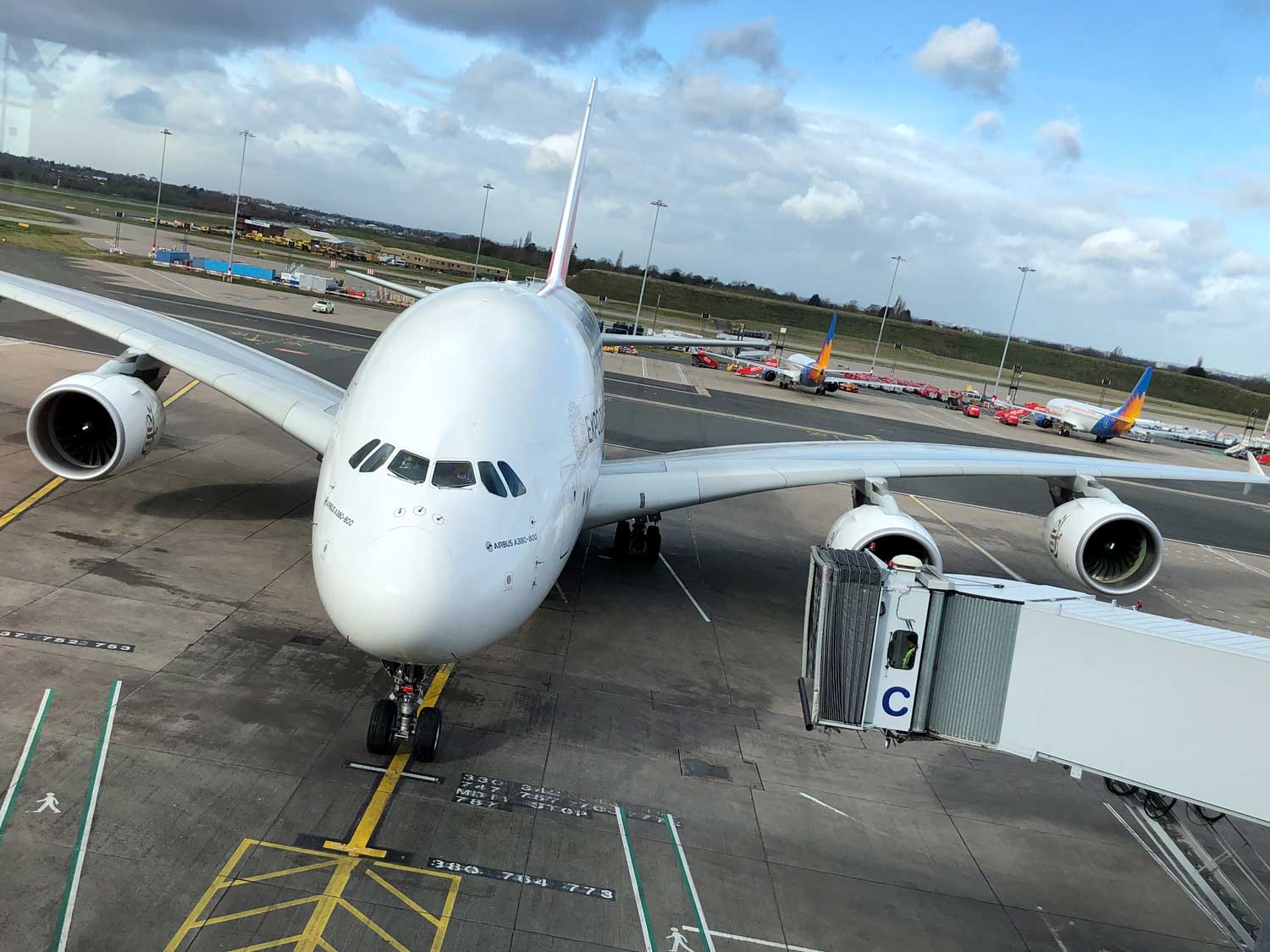
Birmingham International Airport, a long-standing strategic hub partner of Metro, has confirmed an ambitious growth programme that will strengthen its infrastructure and bolster its role in air cargo logistics and global connectivity.

Building on years of collaborative development with Metro and ground-handling partners, which have already improved cargo turnaround efficiency, expanded value-added services, and supported new freighter services into key markets, the airport is now moving into a new phase of investment. 

Major investment plan sets framework for growth

The airport has outlined a £300 million capital programme aimed at modernising key facilities and preparing for anticipated increases in passenger and freight demand. This investment includes:

  • A significant capital commitment toward terminal and airfield enhancements designed to improve operational resilience. 
  • Upgraded airfield infrastructure, including taxiway reconstruction, new aircraft stands and runway works, which will support more frequent and diverse cargo aircraft operations. 
  • Enhanced baggage and cargo handling systems, to contribute to greater throughput capacity and speed of processing for both inbound and outbound consignments. 

While the initial focus of much recent investment has been on passenger facilities, these infrastructure improvements will also benefit cargo flows by increasing overall operational efficiency and flexibility across the airport.

In parallel with capital spending, the airport has appointed a leading international consultancy to help develop its next long-term masterplan. This forthcoming blueprint will define how the airport evolves over the coming decade, taking account of technological, sustainability and market trends. 

This forward-looking strategy reaffirms Birmingham Airport’s role as a regional and international gateway that supports economic growth and cargo connectivity across the Midlands and beyond.

Complementing physical investment, broader transport links being developed around the airport — including future rail connections and improved surface access — are expected to enhance the airport’s appeal as a logistics centre. These improvements will widen the airport’s catchment area and could unlock further opportunities for cargo route development and new airline services. 

Implications for Metro’s shippers

For Metro and its customers, these expansions reinforce the strategic value of Birmingham Airport:

  • Faster turnaround times, with greater handling capacity reducing potential bottlenecks during peak periods.
  • Improved reliability and service quality as infrastructure upgrades take effect.
  • Enhanced route potential, supporting ambitions for more diverse cargo services to and from key global markets.
  • Stronger regional freight hub, strengthening the airport’s competitive position relative to other UK gateways.

Birmingham Airport’s investment and planning activities signal confidence in the growth of both passenger and cargo traffic. By modernising infrastructure and preparing for future needs, the airport is positioning itself as a more capable and flexible partner for Metro’s client community.

Metro are able to offer time critical ‘JIT’ services through the airport where freight can be transferred in minutes rather than hours from aircraft to the road. Additional customs formalities such as ATA carnets are handled swiftly and efficiently. 

Birmingham International is the UK’s fastest-growing airport and our central air freight hub, with proximity to major clients and manufacturing regions, for speed of first/final mile logistics and 90% of the UK population within a few hours drive. EMAIL our managing director, Andrew Smith, to learn more.