Metro is working with fellow GB Global company Ellerman City Liners to develop more competitive European intermodal solutions, offering businesses an opportunity to reduce transport costs, improve resilience and significantly cut carbon emissions in 2027.
Road freight remains the default transport mode for many businesses moving goods across Europe, but established transport arrangements are not necessarily the most efficient or cost-effective.
Rising operating costs, driver shortages, congestion and increasing environmental pressures are strengthening the commercial case for intermodal transport, combining short-sea shipping, rail and local road movements.
Central to Metro's proposition is Ellerman City Liners, the European container shipping specialist and fellow member of GB Global.
Mark Godfrey, Metro's Global Commercial Director, explains:
“For Metro, short-sea is a credible alternative to European road freight, which is why we don't simply see Ellerman as another shipping option. The biggest benefits for our customers are around cost, reliability, reduced road dependency and sustainability.”
A historic shipping line with a modern purpose
With a maritime heritage dating back to 1892, Ellerman was once one of the largest and most recognised names in British merchant shipping, operating a fleet of more than 100 vessels by 1939.
Relaunched in 2021, Ellerman City Liners has developed into a specialist European short-sea carrier focused on schedule integrity, equipment availability and integrated inland transport connections.
Its acquisition of Norwegian short-sea operator Viasea Shipping has significantly extended its geographical coverage and service frequency across Northern and Western Europe.
The combined network connects Iberia, the UK, the Netherlands, Poland, Scandinavia and the Baltic states, using strategically selected ports to reduce exposure to congestion at major international container gateways.
Competitive transits across Europe
Short-sea shipping is sometimes perceived as a significantly slower alternative to road freight, but Ellerman's service schedules challenge that assumption.
- iNEX 1 – Portugal, UK and Netherlands: Direct connections between Aveiro, Tilbury and Rotterdam, with a four-day transit from Portugal to the UK and dedicated rail connections between Aveiro and Bobadela.
- iPEX 1 & 2 – Poland and UK: Direct connections between Polish and British ports, with three-day sea transits and dedicated inland rail services between Łódź and Gdynia.
- iBEX 1 – Spain, UK and Netherlands: Weekly sailings connecting Bilbao, Rotterdam and Tilbury, with a four-day Spain–UK transit and dedicated rail connections to Tarragona.
- iPEX 3 – Poland and Spain: Direct sailings between Gdynia and Bilbao, providing an alternative to long-distance trucking across continental Europe.
- BALTEX – Baltics, UK and Benelux: Weekly connections serving Klaipeda, Riga, Gdynia, Teesport, Tilbury and Rotterdam, with onward connections into Spain and Portugal.
Viasea's complementary services extend coverage into Norway, serving Oslo, Moss, Fredrikstad, Larvik and Kristiansand.
These connections enable Metro to develop door-to-door solutions across Europe, including cross-trade, or third-country movements.
A commercially compelling alternative to road freight
Long-distance trucking is exposed to fluctuating diesel prices, motorway tolls, driver costs, operating restrictions and congestion.
Intermodal transport reduces exposure to these pressures by transferring the longest stages of the journey to scheduled sea and rail services, retaining road transport where it is most effective: collection and final delivery.
Specialised equipment make the Ellerman offering even more commercially attractive.
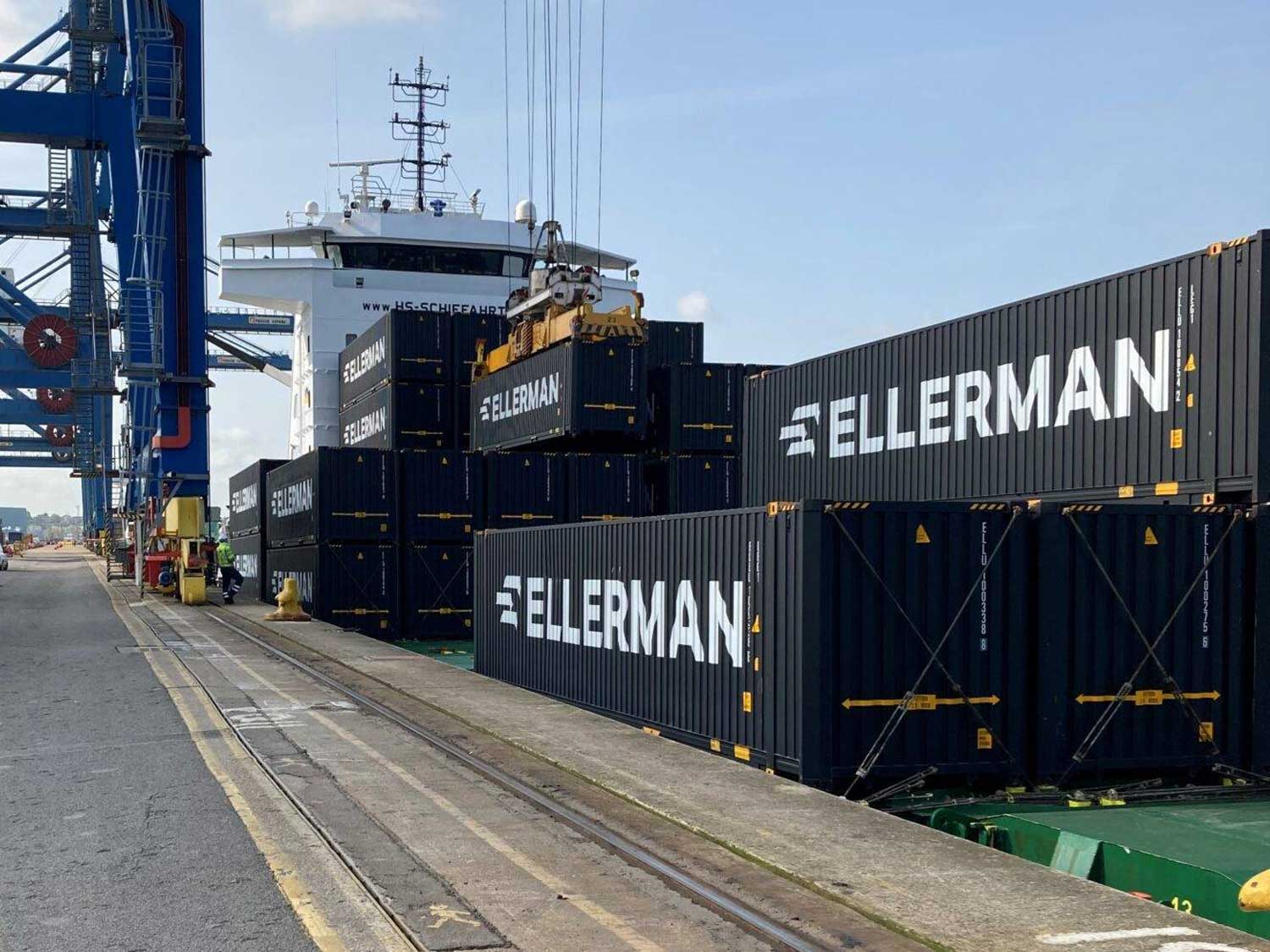
Ellerman's fleet includes 4,200 45ft pallet-wide high-cube containers, each accommodating up to 33 Euro pallets, with approximately 90 cubic metres of capacity and a maximum container payload of 29.7 tonnes, subject to inland transport weight restrictions.
This provides comparable pallet capacity to a conventional European articulated trailer, enabling businesses to switch established full-load movements without fundamentally changing their loading arrangements.
Containerised transport also offers greater operational flexibility, separating cargo availability from vehicle and driver schedules and providing secure interim storage options where required.
With refrigerated equipment and a range of other container sizes available, capability extends across manufacturing, automotive, retail, food and beverage supply chains.
Regular, predictable freight flows are particularly well suited to intermodal transport, offering significant opportunities to lower costs without compromising delivery commitments.
Making meaningful reductions in carbon emissions
Switching from road to short-sea shipping has the potential to reduce carbon dioxide emissions by 50% or more, with inland rail connections offering further opportunities to reduce road mileage.
For businesses working towards Scope 3 emissions reduction targets, modal shift represents an immediate opportunity to make meaningful improvements without relying solely on carbon offsetting or the future availability of alternative-fuel road vehicles.
Metro's MVT Eco module enables customers to measure, monitor and compare shipment emissions using methodology aligned with Global Logistics Emissions Council (GLEC) standards.
Rethinking European transport for 2027
Metro is prioritising European intermodal services in 2027, combining Ellerman's shipping network with its own road freight, customs and supply chain expertise.
The objective is not to replace road freight indiscriminately, but to challenge established transport arrangements where alternative modes deliver better commercial and operational outcomes.
Regular full-load movements, planned inventory replenishment, manufacturing supply chains and longer-distance European trade lanes are particularly strong candidates for review.
As you review your European transport arrangements for 2027, ask Metro to benchmark your existing road freight movements against our intermodal alternatives, identifying opportunities to reduce costs, maintain delivery performance and lower carbon emissions.