Container lines are restoring services through the Red Sea and Suez Canal, promising shorter Asia–Europe transits and more effective capacity. But the security picture around the Middle East’s critical shipping chokepoints is becoming more complicated, not less.
More Asia–Europe services are returning to Suez after almost three years of widespread diversions around the Cape of Good Hope. Yet a successful Houthi land offensive has expanded the group’s control along Yemen’s Red Sea coastline and the Bab el-Mandeb Strait.
At the same time, the Strait of Hormuz remains effectively closed to regular container services, conflict continues across the region and alternative Gulf supply chains are operating at significantly higher cost.
For shippers, this is not a straightforward return to normal. It is a more fragmented Middle East shipping environment in which routes can reopen, tighten or change at short notice.
Suez is reopening but the risk has not gone away
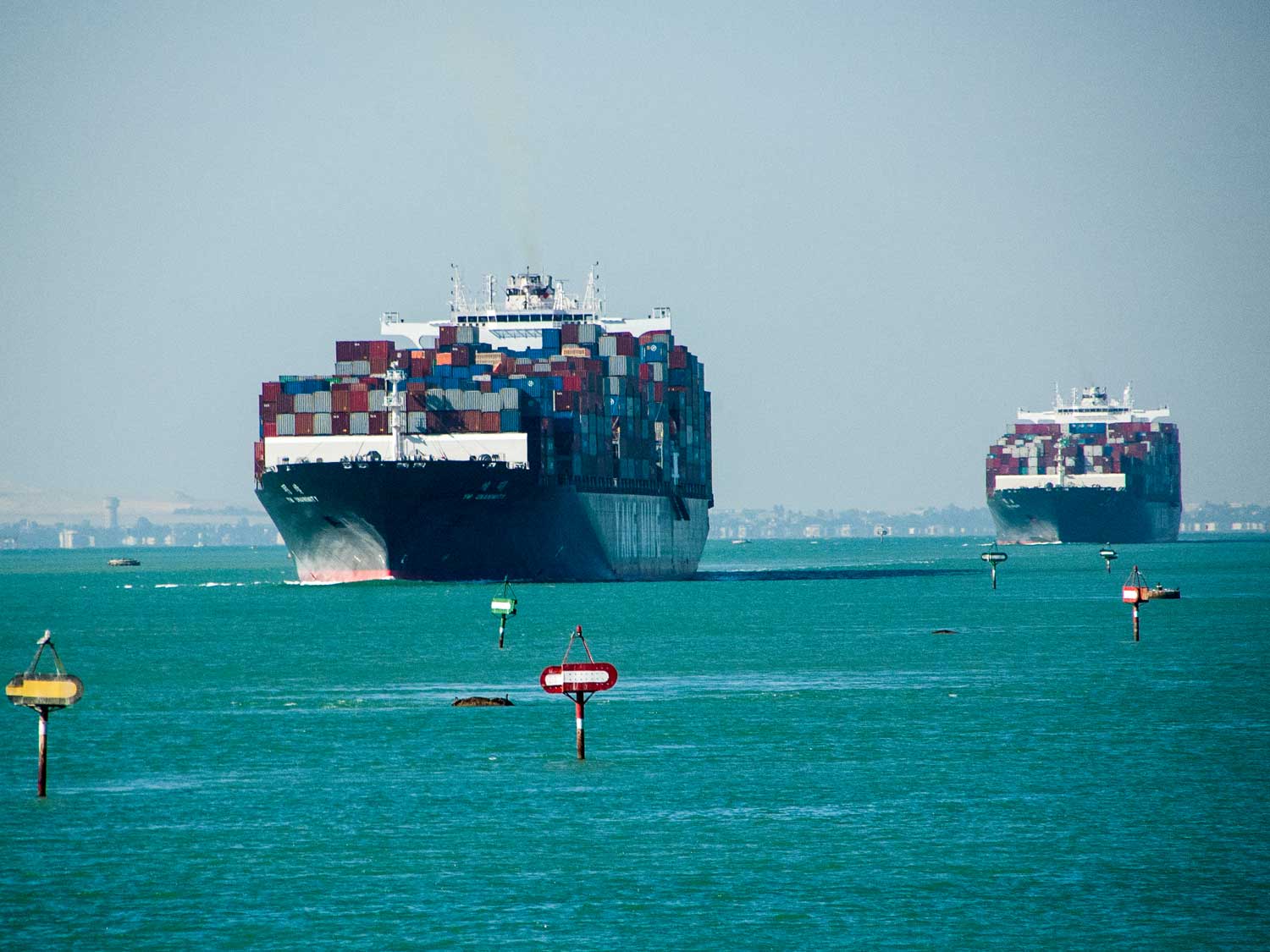
Container lines have steadily increased their use of the Red Sea during 2026. Almost a quarter of deep-sea capacity originally diverted around southern Africa has returned to Suez, with around 213,000 TEU of weekly capacity now moving through the waterway.
The shift is particularly advanced between Asia and the Mediterranean. More than a third of September headhaul capacity on this trade is expected to use the Red Sea, compared with around 6% between Asia and North Europe.
That transition is accelerating. Maersk and Hapag-Lloyd are moving another four Gemini Cooperation services from the Cape route to Suez during September, while other major carriers have also restored selected services.
The attraction is clear. Suez cuts substantial distance from Asia–Europe voyages, shortening transit times and allowing carriers to use vessels more efficiently. A widespread return could ultimately release the equivalent of 8% of global containership capacity currently absorbed by longer Cape routings.
That additional effective capacity is already contributing to softer Asia–Europe pricing, particularly into the Mediterranean.
However, the strategic picture at the southern entrance to the Red Sea has changed.
Recent Houthi advances have extended the group’s territorial control along Yemen’s Red Sea coastline and include Mayyun Island, which sits in the Bab el-Mandeb Strait. This gives the Houthis an even stronger position around the gateway connecting the Gulf of Aden with the Red Sea.
For now, the group has indicated that international traffic can continue unimpeded, with its restrictions focused on Saudi shipping. Container vessels have also largely avoided direct attacks for more than a year, allowing carriers to conclude that selected Red Sea transits are currently viable.
So Suez normalisation continues. But the underlying vulnerability has arguably increased. The Houthis have retained and potentially strengthened their ability to interfere with traffic through Bab el-Mandeb should their intentions or the wider conflict change.
Shippers forum question the return
That contradiction is causing concern among cargo owners, with The Global Shippers Forum questioning whether carriers are returning too quickly given the continuing instability and the Houthis’ close relationship with Iran.
GSF director James Hookham described the increasing number of Red Sea transits as potentially a “reckless gamble”, arguing that shippers need more information about the security assessments underpinning carriers’ decisions.
Carriers maintain that safety remains the determining factor and that decisions to transit the Red Sea follow extensive security assessments informed by international and regional security organisations, with a commitment to stop transiting if there were indications that container vessels were again being targeted.
The absence of attacks on container ships for more than a year provides some reassurance. But a renewed threat could quickly send services back around the Cape, absorbing vessel capacity and extending transit times. A sudden reversal during the September and October shipping period could also disrupt cargo moving ahead of Black Friday and Christmas.
Further east, the picture is very different
The Strait of Hormuz remains severely restricted for container shipping after more than six months of disruption. Container ships have represented only around 6% of recorded inbound and outbound vessel transits during the conflict, with regular liner services largely avoiding the waterway.
Recent developments have added to the uncertainty. Iran has expanded a vessel blacklist that can potentially expose designated ships to fines, detention or confiscation, while vessels involved in transhipment with listed tonnage could also face restrictions.
Attacks on vessels have reinforced the risks, while diplomatic efforts to establish a framework for future shipping through Hormuz have stalled.
For Gulf importers, this has already reshaped supply chains.
Cargo is increasingly using alternative gateways such as Jeddah and Khor al Fakkan before moving overland. Demand for these alternatives has pushed China–Jeddah spot rates around 256% higher than before the conflict, while China–Khor al Fakkan rates have increased almost 480%.
Overland transport is consequently becoming a more important part of regional logistics. Greater use of the TIR trucking system through Iraq is opening additional options for upper Gulf markets, with some journeys between Europe, Turkey, Iraq and the Gulf dramatically reducing transit times compared with disrupted maritime routes.
But landbridges are not a direct substitute for ocean capacity. They add handling, road transport and border requirements, while growing demand is putting pressure on available trucking capacity and costs.
The wider conflict also matters far beyond Middle East cargo. Rising oil and bunker prices have the potential to feed into fuel surcharges and shipping costs across global trade lanes.
For shippers, the question is no longer simply whether a particular route is open. It is how dependable that route will remain, what alternatives exist if conditions change and how quickly cargo can be switched when they do.
Metro monitors carrier networks, regional gateways and changing conditions across the Middle East to identify emerging risks before they reach your supply chain.
With global ocean freight expertise, alternative routing options and joined-up origin-to-destination management, we can help you balance cost, transit time and resilience, to keep your cargo moving when routes or risk change.