Container shipping capacity remains under pressure as carriers increase blanked sailings, schedule reliability weakens and port congestion ties up vessels across key gateways.
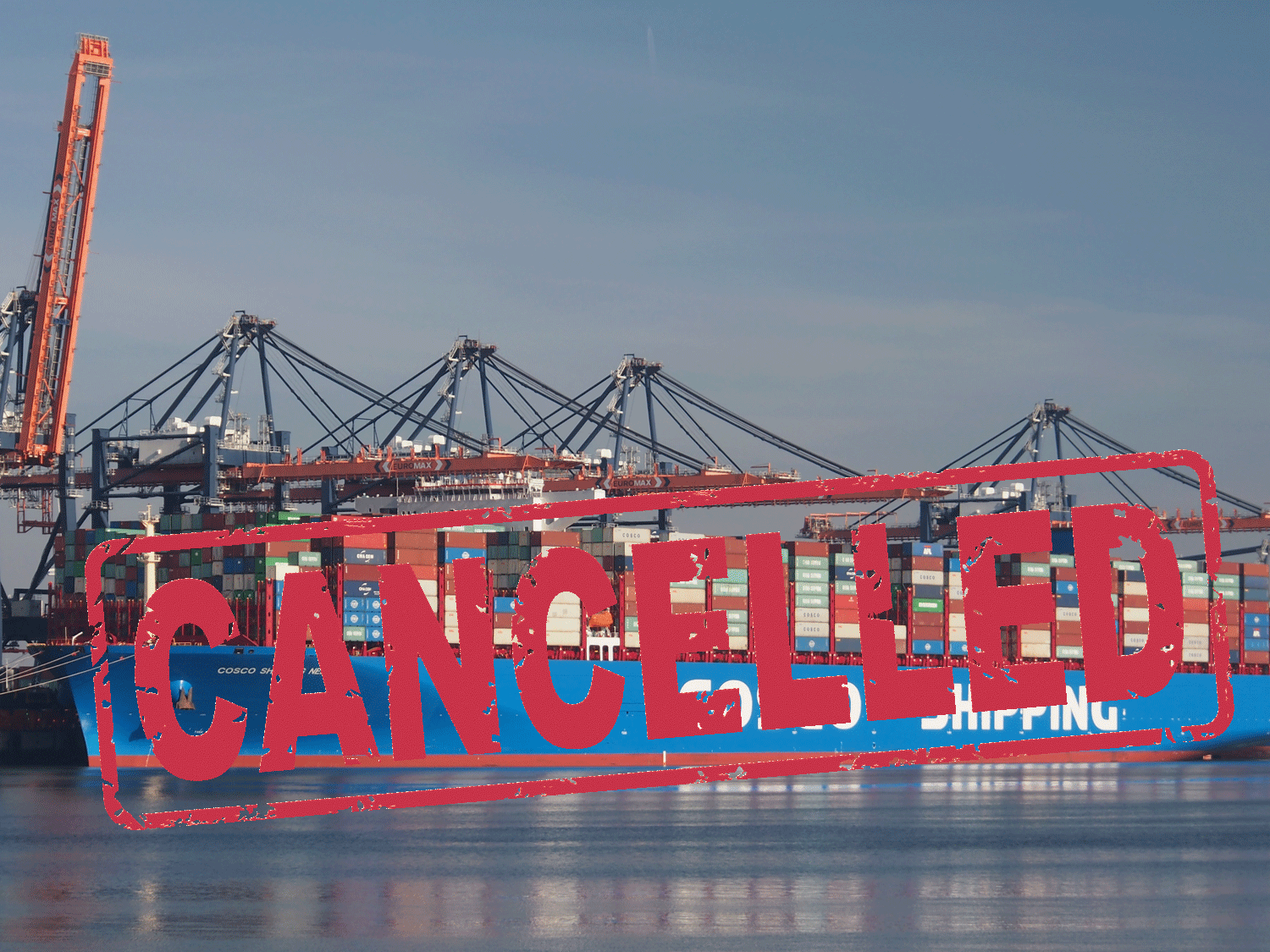
According to maritime researchers Drewry, 136 sailings were cancelled in February across the transpacific, Asia–Europe and transatlantic trades, a 122% increase compared with January. The surge coincides with the traditional Lunar New Year slowdown, as carriers anticipate a seasonal contraction in export volumes from Asia.
The majority of blanked sailings are concentrated on the transpacific eastbound route. While cancellations are expected to ease in March, with only 53 blank sailings currently announced, February’s reductions represent a material short-term withdrawal of capacity from the market.
Reliability slips back
Schedule reliability also deteriorated in December. Global on-time performance fell by 1.2 percentage points month-on-month to 62.8%, the second-lowest reading since May.
Average vessel delay increased to 5.04 days, the second-highest level since April.
While reliability remains 9% higher year-on-year, performance across the major carrier groups remains uneven. Maersk recorded 76.7% schedule reliability in December, followed by Hapag-Lloyd at 75.2%. Eight of the top 13 carriers operated within the 50–60% range, while Wan Hai recorded 47.8%.
Alliance performance also diverged. In November and December, Gemini Cooperation achieved 92.3% reliability across all arrivals, compared with 73.5% for MSC and 58.8% for Ocean Alliance.
Lower reliability effectively reduces usable capacity. Late arrivals compress schedules, extend port stays and create knock-on disruption across subsequent rotations.
Northern Europe congestion continues
Port congestion continues to tie up vessels, particularly across Northern Europe. Winter weather has reduced terminal productivity in Antwerp, Hamburg and Rotterdam, with berth delays of three to five days reported. Le Havre is experiencing delays of up to eight days following temporary terminal closures.
Yard utilisation levels remain elevated across major European hubs, including UK ports. London Gateway and Southampton are reporting intermittent delays of one to two days, while Felixstowe has seen delays of up to five days.
Operational disruption is also reported in Poland, where snow and frozen equipment have affected both port and inland transport productivity.
Analysts estimate that congestion can effectively absorb around 6% of the global fleet at any given time, limiting available vessel supply.
Outlook remains challenging
Despite a global order-book equivalent to 34% of the existing fleet, the highest level since before the financial crisis, effective capacity remains sensitive to operational constraints.
Sea-Intelligence forecasts structural overcapacity could approach 10% by 2027, even when factoring in slow steaming, congestion, Red Sea diversions and scrapping of older tonnage.
In the near term, however, blanked sailings, reliability slippage and port congestion continue to determine how much capacity is actually available to shippers, regardless of headline fleet growth.
Metro’s sea freight team continuously model the potential impact of blank sailings, so we can secure space, optimise routings and build contingency plans around our customers’ specific flows.
By sharing your forecasts and critical SKUs early, we can ring-fence capacity, minimise disruption and shield you from service disruption and last-minute surcharges.
EMAIL Andrew Smith, Managing Director, today to arrange a strategic review and lock in the resilience you need for 2026 and beyond.