Moscow 1

April global logistics update; Five key supply chain disruptors

Since the early days of 2020, the COVID-19 pandemic has disrupted global supply chains, creating shortages of goods, even though ships, trains, trucks and planes continued to run, to the best of their ability.

The infrastructure that supports global supply chain operations has struggled to absorb the continuing impacts emanating from COVID-19; including the need for urgent PPE, sustained spikes in consumer demand, idled factories, COVID-safe working regimes and workers getting sick or forced to work from home, through localised lockdowns, globally.

The result has been shortages of shipping containers in the right places, carrier schedules that are completely disrupted by weeks, long delivery delays, a shortage of first mile/last mile truck drivers, a sustained period of soaring freight rates and, inevitably, higher prices for consumers. And now, we have the uncertainty created by Russia’s war in Ukraine and China’s zero-COVID strategy complicating trade in the region; both of which increase supply chain uncertainty and costs.

1. China’s zero-COVID strategy

China is the world’s most important manufacturing hub and home to six of the 10 largest container ports.

While most countries have decided to learn to live with the coronavirus, China has maintained its zero-COVID policy, where even small outbreaks can shut down large population centres and slow economic activity.

In Shenzhen, some of the country’s most important manufacturers had to temporarily shut in March, in Changchun, an industrial hub that accounted for about 11% of China’s total annual car output in 2020, automakers were forced to close and now Shanghai, China’s largest city of 26 million people, is in total lockdown, with no end in sight.

The concern is that continuation of the strategy is likely to have a dampening effect on China’s domestic growth, which will translate more widely as impact on global trade; 80% of which moves on container ships.

2. Russia’s war

Energy prices have soared since Russia’s invasion of Ukraine, increasing costs for every mode of transport, with rising prices and emergency surcharges.

Food supplies are under threat because both countries are big producers of wheat and fertiliser. They are also key exporters of industrial raw materials, including nickel, lumber and neon gas, which is vital for making semiconductors, a critical component in automotive manufacturing. 

More than 2,100 US companies and 1,200 European organisations have at least one direct supplier in Russia, and the total reaches 300,000 when indirect suppliers are included. With sanctions blocking commerce with Russia, companies are scrambling to find suppliers elsewhere, as well as sea and air routings that avoid the conflict zone altogether. That is before Ukraine manufacturers which are essential to many industries, such as the automotive sector, are considered as they are unable to operate in the current conflict.

3. The impact on freight rates

At the peak of the COVID supply chain strains in October 2021, ocean carrier spot rates had risen ten-fold on a year earlier on many global lanes, including the important Asia to Europe trade.

The FAK/ Spot market cost for a 40’ container on the Asia-North Europe route has fallen since then, in the first quarter of 2022, but that’s a typical move after CNY and rates are still more than double what they were a year earlier. Largely due to blanked sailings and carrier capacity adjustments, along with continued disruption to shipping line schedules, caused by a plethora of market dynamics.

The massive reduction in passenger (belly-hold) air freight capacity in the 1st quarter of 2020, has never recovered, because the restoration of long-haul passenger services, has been patchy - at best - and now the Ukraine crisis has removed another >10% of global capacity. The impact on rates is inevitable, and that’s without factoring in emergency fuel and war surcharges, which we have seen implemented by most scheduled carriers since the beginning of March, with charter aircraft costs doubling in a month on most global routes.

Any longer-term slide back on rates will be driven by weaker import demand or a seasonal adjustment. Either way, freight rates are still several times higher than 2019 levels and are feeding into price inflation. Air freight traditionally accounts for 40% of products moved globally by value, to put these statistics into perspective.

According to research by the International Monetary Fund, “when freight rates double, inflation picks up by about 0.7%, which implies that the increase in shipping costs in 2021 could increase inflation by about 1.5% in 2022.

4. The BIG three

The leading container shipping lines, mostly based in Asia and Europe, have enjoyed some of their highest-ever profits. And even though these profits follow decades of loss and investment, politicians across all continents have taken the opportunity to blame the concentration of power in the shipping industry for dulling price competition.

In 2017, the dozen biggest container shipping lines formed three  alliances to share ships, cooperate on routes and limit excess capacity - 2M | Ocean alliance | THE Alliance - in control of about 80% of the world’s shipping container capacity.

Critics claim the arrangement is an oligopoly, as some busy trade lanes might have several competitors, but smaller gateways for goods might have just one or two.

US and European regulators have raised questions about constrained competition, and while politicians might like to complain about the carriers, the global nature of the industry means it’s mostly beyond the reach of national regulators, who are unlikely to be able to do much to control prices. 

If there was action taken, in suspending carriers for their conduct, the impact would be even greater disruption and reduction in shipping availability, which would normally result in even higher prices due to the supply versus demand market dynamics. It’s a dilemma at best, that is difficult to address, resulting in carriers being in the driving seat.

5. Why containers matter

There are about 25 million standard shipping containers, that move globally on around 6,000 container ships. They move within a fragile network of ports, terminals, inland transport and warehouses that are designed to stay synchronised.

They are the backbone of globalisation and globalised supply chains worked so well and became so slick, that they encouraged the widespread adoption of supply chain dependent strategies, like just-in-time (JIT) manufacturing which, at its purest, meant no inventory and assembly lines dependent on the next part arriving (just) in time.

But, there’s a limited supply of containers, to meet what became unpredictable demand two years ago. 

The COVID pandemic triggered unusual swings in the demand for goods as well as on-again, off-again lockdowns and the disruption left handlers of containers struggling to manage traffic, creating shortages of equipment, where and when they were needed most. 

JIT is being replaced by Just-in-case inventory management, as firms build buffer stocks, as the world continues to deal with many of the previous risks, along with a new set of geopolitical worries.

The other consideration is the fact that we are in the traditional ‘slack’ season where demand for logistics softens and the peak is yet to come – there could be even more trouble ahead...

With continuing supply chain challenges in many regions, we work closely with our network partners, carriers and own offices globally, to monitor the situation and find solutions for our customers, including the most time-sensitive and urgent shipments. 

Despite the negative tone of the above market update Metro are constantly introducing initiatives, innovation and market leading services, that deliver reliability within your logistics platforms and supply chains. Creative, tailored in design and consistent solutions based on an end outcome and your expectations.

With the continued rate and capacity pessimism, there are often new and emerging opportunities thrown up by the market, which is why we share regular intelligence and breaking news.

For the latest insights and to review your situation please contact Elliot Carlile, who will share market conditions and intelligence and explain how we will protect your supply chain in avolatile situation.
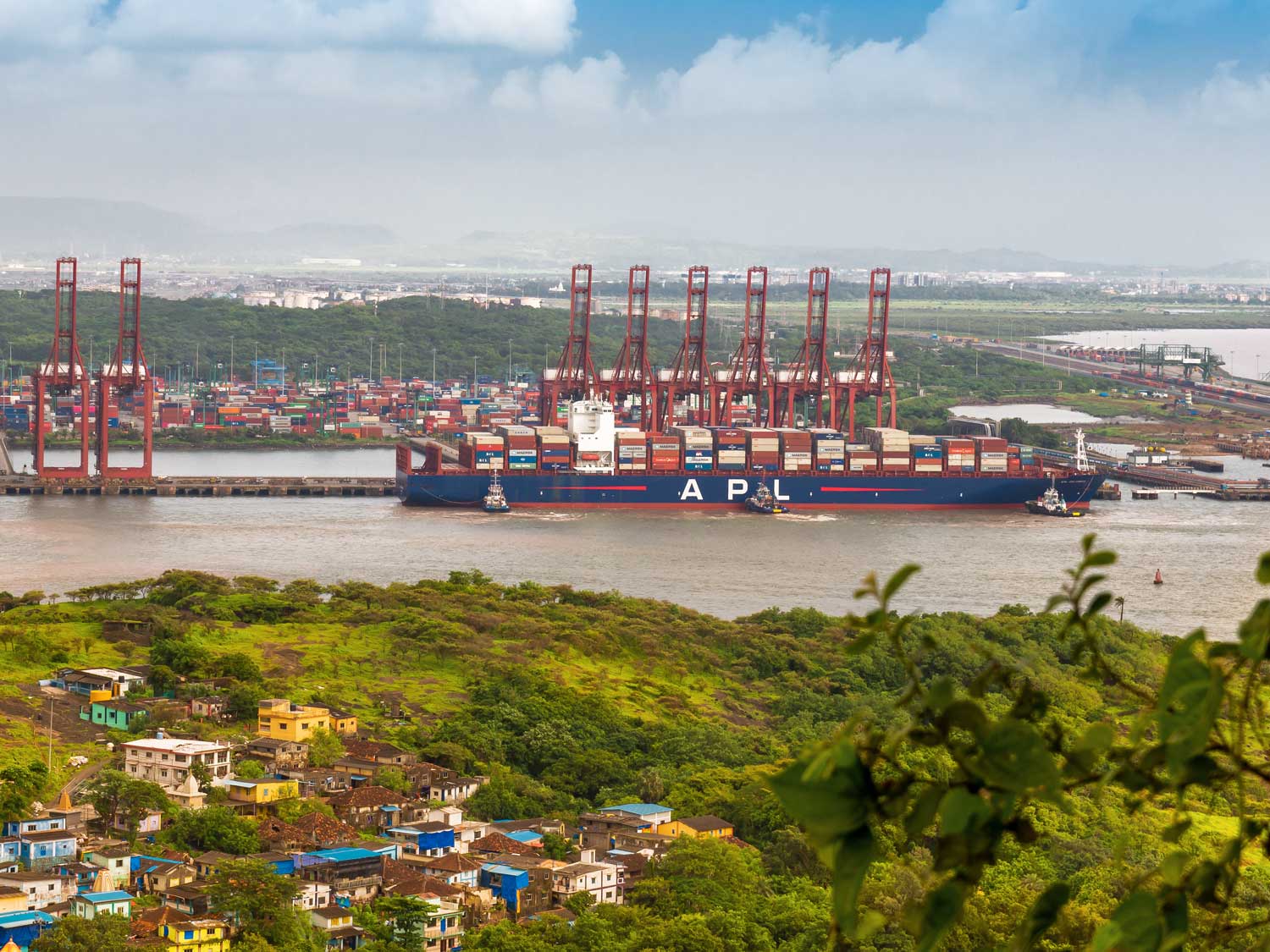
Nhava Sheva

Sea freight challenges in India and Sri Lanka

Leading container shipping line MSC is reducing Indian ports of call, in order to sustain a weekly sailing frequency on major commercial routes.

As the shipping line struggles to sustain a weekly sailing frequency on major commercial routes, Mediterranean Shipping Co (MSC) is reducing Indian ports of call, with services between India the United States and Europe frequently sailing directly into Mundra Port and skipping the first JNPT/Nhava Sheva port call. 

Nhava Sheva is roughly 300 nautical miles from Mundra, where the carrier has ‘own terminal advantages’, which allow it to turn its vessels around faster.  (The largest container handler in Mundra, the Adani International Container Terminal, is a strategic investment collaboration between port owner Adani Group and MSC.)

After the MSC Altair skipped Nhava Sheva in Week 11, MSC has issued a new advisory announcing another Nhava Sheva omission on the same service.

In view of severe delays faced at previous ports of call and to maintain schedule integrity, MSC Rosa M, voyage IV211A, will skip the Nhava Sheva call and proceed to Mundra, the carrier said in its notice.

With heightened service reliability challenges, the concentration of Indian calls in Mundra, instead of multiple port calls, is becoming an industry strategy to maximise cargo volumes.

That consolidation has seen many sailings on MSC’s premier routings under its US East Coast and Europe networks skipping Nhava Sheva/Jawaharlal Nehru Port Trust (JNPT) in recent weeks.

MSC’s ‘own-terminal advantage’ in Mundra enables quicker vessel turnarounds and tariff benefits, which are critical factors in the current flawed scenario.

On a normal schedule, the INDUSA rotates Mundra, Nhava Sheva, Colombo, Valencia, New York, Savannah, Norfolk and Mundra.

MSC’s India-Europe connections have also missed or are due to miss Nhava Sheva calls, while IPAK’s third Indian port call at Hazira has also been disrupted.

With schedule disruptions set to persist, Indian exporters have a harder time shipping goods out of the country, even though empty container availability has expanded substantially, with empty imports via Nhava Sheva up 20% (Dec to Feb) and 78,000 teu of empties landing in Chennai between April 2021 and February 2022.

Growing transhipment delays at Colombo Port in Sri Lanka, as a consequence of the economic and political crisis and capacity strains from new COVID lockdowns in China, add even more pressure to market conditions for Indian shippers.

Increasingly, shipments that would typically take a two to four-week window from booking to sailing are now taking up to six to eight weeks, across all lanes into Europe and The USA – and then there is the potential dwell time on arrival at congested destination ports to also contend with and consider within the logistics equation.

We have also been cautioned by our local partners about truck shortages increasing in Colombo for inter-terminal transfer operations, with the potential to cause delays to loading vessels, and with inventory levels increasing, if the delay in the supply of fuel for trailers to the port increases, delays will creep in for the vessels too.

Our network and expertise extend across the Indian subcontinent, with customers across a variety of verticals sourcing from and exporting to the region. We have established operations throughout Pakistan, India, Sri Lanka and Bangladesh and will always offer the most reliable options available within each market.

We are monitoring the evolving situation closely with our local network partners, so if you are currently shipping, or are thinking of developing the ISC, please speak to Elliot Carlile, who will be delighted to offer guidance and recommendations on the best solutions for your needs.

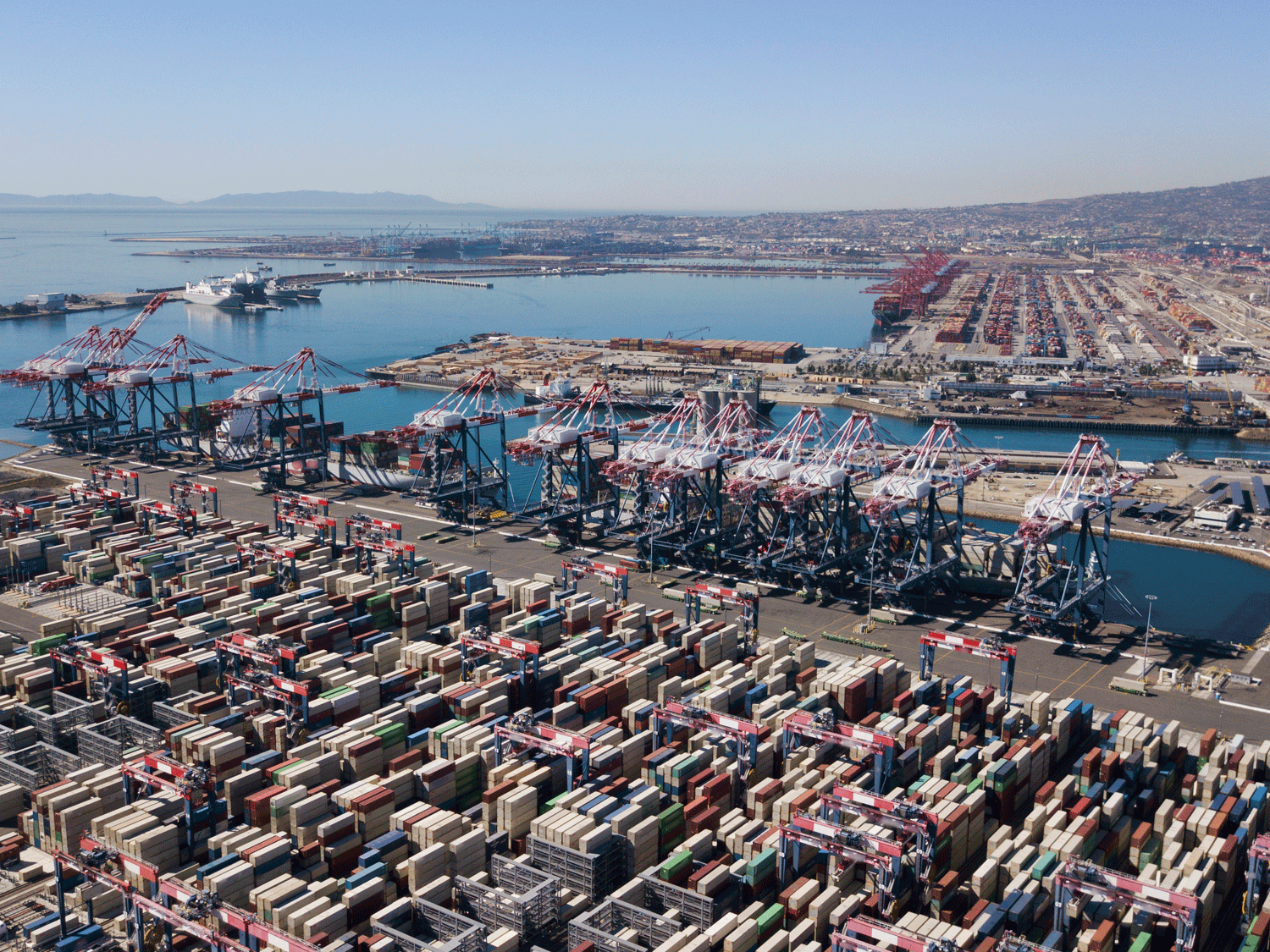
LA an d Long Beach

USA west coast ports fear chaos as labour negotiations loom

Negotiations for a new labour contract with the International Longshore and Warehouse Union (ILWU), are due to start on the 12th of May and shippers are already sourcing products from Asia earlier than normal and directing more cargo to US East Coast and Gulf terminals, to avoid potential port chaos on the US West Coast.

Contract negotiations between the ILWU (which represents nearly 14,000 port workers in California, Oregon and Washington State) and Pacific Maritime Association (PMA), on behalf of shipping lines and terminal operators at 29 west coast ports, will begin on the 12th of May, against a backdrop of vessel backlogs, congested marine terminals, and inland supply chains struggling to handle near-record cargo volumes.

The pending negotiations come amid fears from shippers that an impasse could result in further disruption, leading some importers to shift traffic to the East and Gulf coasts, in an attempt to avoid any potential problems.

There is some cautious optimism for the negotiations, based on the cooperation that was demonstrated by longshore workers and employers, in handling the import surge that is now in its 20th month amid the COVID-19 pandemic.

US Secretary of Labor Marty Walsh cautioned not to judge this year’s talks on how prior negotiations played out. “You can’t look at history of past practices to say, ‘Well, in 2014 it was pretty bad, so that means in 2022 it will be pretty bad. ’That’s not how negotiations work.”

Neither the ILWU nor the PMA has spoken publicly as to what issues they view as crucial in this year’s negotiations. However, the union in recent years has publicly opposed the spread of automation on the West Coast.

Employers, on the other hand, have noted that in order to continue handling record cargo volumes each year on waterfront property that cannot be expanded, some West Coast terminals will have no choice but to automate, as automation allows terminals to almost double the cargo volumes they can handle on the same footprint compared with operating manually.

In past negotiations, discussions involving wages normally were not a major sticking point. According to the PMA’s 2021 annual report, the average salary for full-time general longshore workers was $182,789. Marine clerks’ average salary was $203,533, while the average for foremen was $280,352. Quite incredible by anyone’s imagination.

The perceived risk of disruption has led many importers to re-evaluate their use of West Coast ports and many of those, that have not ordered early, to land goods ahead of June, are diverting cargo to East Coast ports.

The ports of New York and New Jersey, Virginia, Charleston, and Savannah have been experiencing congestion for the past year and the diversion of West Coast cargo is escalating vessel backlogs along the East Coast and deteriorating service for importers, with Charleston experiencing the worst of it. Currently, there are 27 vessels awaiting berth. Typically, berthing takes approximately 1 day. At this time, the average is 10 days.

There are alternative access ports you can consider diverting to, in Canada, the Gulf and the East coasts, but, with so much cargo already diverted from Los Angeles and Long Beach, there are questions about how much additional capacity the most popular ports actually have.

We would ask that customers shipping to, or importing through, the West Coast speak to us at the earliest opportunity so that we can review their situation and prepare contingency plans to protect them.

Kevin Lake and Andy Smith, who has spent the last week in The USA, are available to discuss the latest solutions both in shipping port to port and the inland first/final movement of containers. They have this week set up emergency platforms for customers to ensure that product is delivered to market in The USA, without the delays experienced through alternative providers.

With planning, visibility and a collaborative approach, we will continue to provide the best option available to ensure that your products are moved and expectations are met, or adjusted accordingly in line with the real market situation.

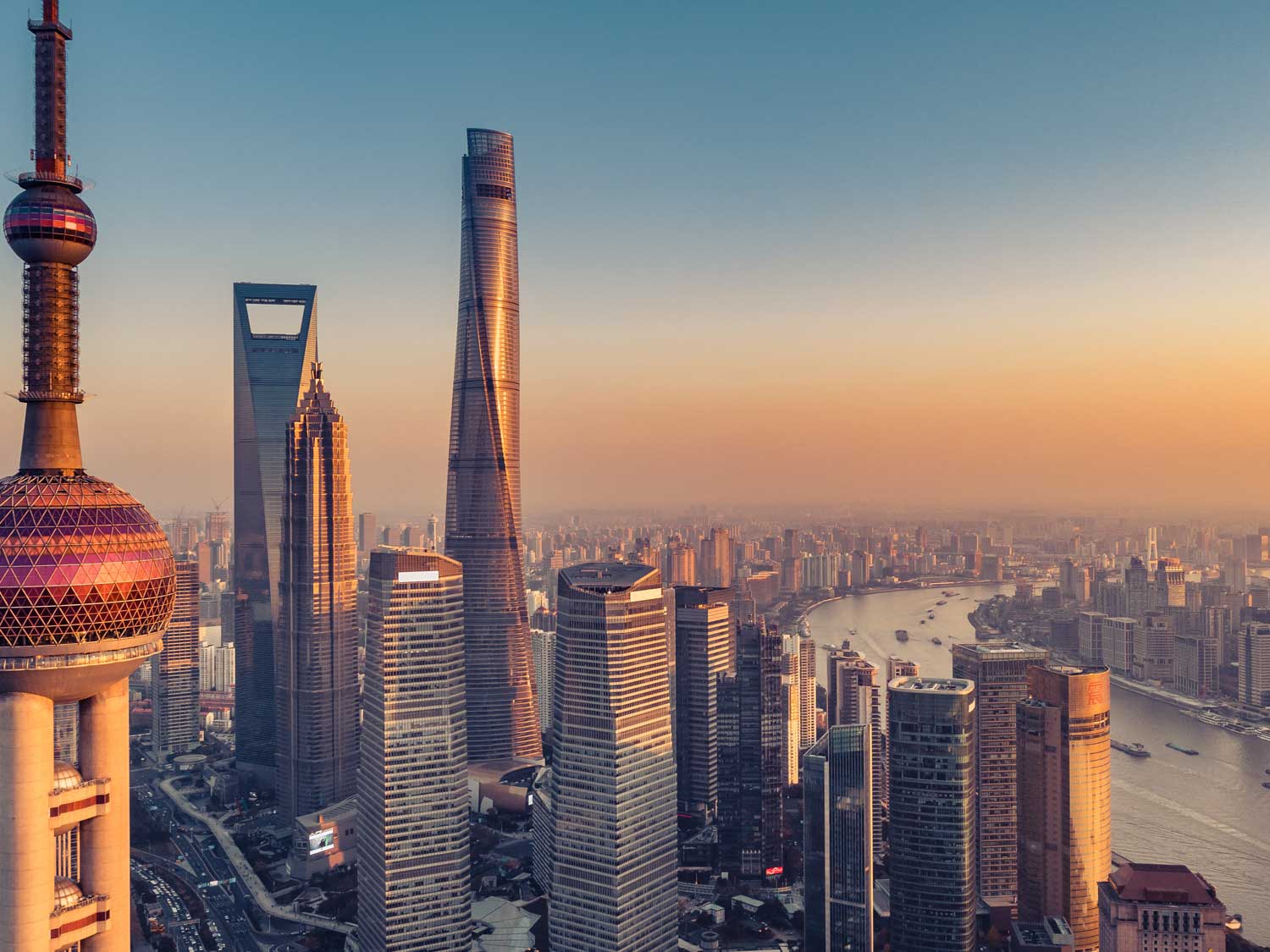
Shanghai

Shanghai supply chain update– Lockdown extended indefinitely

The lifting of COVID restrictions in parts of Shanghai this week has been postponed after nearly 20,000 new cases were reported on Monday.

While the primary port terminals and airport remain open, most workers are in locked-down neighbourhoods and the impact on production and inland logistics is severely limiting supply chain operations.

With limited goods available to despatch, demand for air cargo capacity out of Shanghai is decreasing quickly, with carriers cancelling flights. Despite the drop in demand, reduction in ground handling capability and capacity has seen air freight rate indexes to North Europe increase by 43% since the start of the recent outbreaks. Shanghai Airport is effectively closed for cargo receipt and despatch and is being redirected to Zhengzhou Xinzheng International airport nearly 1000 kilometres away.

The world’s largest sea container port remains open 24 hours a day and even though it is operating within a “closed-loop” bubble, which requires workers to stay on-site, increasing numbers are quarantined. While the closure of many warehouses, the drop in manufacturing and serious disruptions to trucking have significantly reduced the availability of goods and the port’s throughput, which reportedly has resulted in queues of in excess of 300 vessels, as of today, awaiting berth outside the port.

A flash survey on the impact of COVID on business in Shanghai found:

99% of respondents had been impacted by the recent outbreak

86% of manufacturers reported that their supply chains had been disrupted

82% of manufacturers reported slowed or reduced production

54% of respondents have decreased 2022 revenue projections 

The soaring number of cases in Shanghai has restricted driver testing capacity and with many drivers from neighbouring provinces reluctant to enter Shanghai, because of the risk of having to quarantine on their return, haulage capacity has been slashed.

The deteriorating COVID situation has raised concerns over worsening port congestion elsewhere in China, with Yantian and Shekou experiencing longer waiting times.

According to Bloomberg, there are 174 vessels anchored or loading across South China – the most since the region was affected by typhoons in October - representing 14% of the total fleet.

What was expected to be a relatively short situation is now becoming a much bigger concern to production by manufacturers, logistics infrastructure and ultimately the global economy with even greater challenges in what was an already challenging environment. This is creating issues both at a local level and on a much wider scale as detailed in this recent news article published by the BBC which is worth reading - China lockdowns 

With over 80% of manufacturers reporting disrupted supply chains and reduced production, factories may not meet planned delivery schedules. This is why we recommend checking with your vendors, to clarify the status of your orders.

Metro’s cloud-based supply chain management platform, MVT, simplifies the most demanding global trading regimes, by making every milestone and participant in the supply chain transparent and controllable.

With end-to-end visibility across the extended supply network and global control down to individual SKU level, it is simple to adapt to external developments. Changing supply lines, managing existing or adding new vendors, monitoring product flows and outbound order data, from any location.

To discuss how our technology could support your supply chain, please contact Simon George our Technical Solutions Director or Elliot Carlile.