graph rising

Logistics companies struggle with continued rising costs

A members survey by freight trade association, Logistics UK, found that 40% of respondents had experienced transport costs rising by 25% or more and with margins typically very low, particularly for road freight, many will not be able to absorb these increased costs.

In the survey 71% reported an escalation in the cost of transporting goods during Q1 2022, with sharp increases in the cost of fuel and other global supply chain pressures with 40% reporting increased costs of 25% or more.

Surging costs are feeding through to freight rates, with more than six in ten respondents saying both air and international road freight rates had increased substantially and 50% confirming freight rates for transporting goods by sea, domestic roads and rail had increased substantially. As if you didn’t know…….

Bulk diesel prices, which constitute about 30% of the cost to operate a vehicle, have risen by 35.7% compared with Q1 2021, with the cost to transport goods and the broader cost of living squeeze beginning to impact demand for goods.

The cost to transport goods is surging at an unprecedented rate amid significant increases in the cost of fuel and the sheer number of companies reporting increases in freight rates and the costs to move goods suggests rising prices are deeply embedded and unlikely to subside in the short-term. The sector is particularly reliant on diesel, the cost of which is likely to remain elevated even as the cost of other fuels subside.

Activity in the logistics sector is a reliable indicator for the broader economy and the survey reveals worrying signs, with more than a third of respondents saying orders are declining, likely as a result of rising costs and consumers cutting back amid a broader cost of living squeeze.

With COVID-19, Brexit, new technology and other disruptive forces driving change in the way goods move across borders and through the supply chain, logistics has never been more important.

Logistics UK represents the freight and logistics industry, with members from the road, rail, sea and air industries, as well as the buyers of freight services such as retailers and manufacturers whose businesses depend on the efficient movement of goods.

YOU CAN USE THIS LINK TO VIEW THE ORIGINAL SURVEY REPORT ON THE LOGISTICS UK WEB SITE

We work tirelessly to keep our operating costs low and to protect our customers from price rises, as much as possible.

From accessing alternative solutions, like our group shipping line (Ellerman City Lines), to leveraging our considerable group buying power in negotiating volume and price contracts with leading air and ocean carriers, our focus is always on deals that deliver the best service at optimum pricing.

Our long-standing investment in technology and innovation is driven in large-part by developing applications and processes that simplify and automate activity, that frees up resources and drives down cost.

Many of these initiatives are supported by our Business Process Outsource operations in Malaysia and India, where our experienced personnel are highly skilled at executing complex data input projects and completing global compliance and regulatory declarations.

If you would like to review your processes and explore your cost-cutting opportunities, talk with Elliot Carlile, who will take you through the options.

expats

Foreign workers leave China and it is likely to continue as China ‘reshapes’ commerce

Strict border controls amid China’s zero-COVID policy is creating a shortage of foreign expertise, with some suggesting the development could become a permanent feature, with ramifications for supply chains and an accelerating factor for consideration of production moving to alternative origins.

China’s foreign national population has plummeted during the COVID pandemic, with hundreds of thousands of expats returning home since 2020 and many have never returned, with more leaving in an exodus since the lockdowns in China were implemented. It is also widely reported in the international press that more non-domiciles will be exiting China and Hong Kong in the near future.

Nearly two years after China introduced a virtual ban on foreign nationals entering, border restrictions remain extremely tight, with work permits requiring an invitation letter from the Chinese government.

Large numbers of expats are effectively stranded outside China, with as many as 100,000 waiting for permission to return to Shanghai alone. It’s unclear exactly how many foreigners remain in China, though a 2020 census estimated there were around 850,000 overseas nationals living on the mainland and websites serving China’s foreign community have experienced steep drops in traffic since 2019.

The expat shortage is causing businesses serious headaches, because foreign staff often have skills and established networks in overseas markets that are hard to replace.

In some sectors, companies have begun offering massive wages to attract international talent. In others, hiring from overseas has become so difficult, many firms have simply given up. Or rely totally on on-line connectivity – this effects all parties involved both within China and overseas.

And the situation could potentially get worse, with The Loadstar reporting that a survey by the German Chamber of Commerce in China shows nearly one-third of foreign employees plan to leave permanently, with 10% aiming to do so before their current employment contract ends.

With many Shanghai expats still unable to leave their apartment building or gain access to basic necessities, Chinese employers are bracing for a mass retreat of foreign talent this summer.

The owner of a rail components manufacturing firm in Northeast China said he had dealt with all sorts of supply problems, but never expected that a shortage of foreign workers would be one of them.

That, however, is exactly what he’s facing two years into the pandemic, as one by one, he lost all of the overseas executives who used to work under him and he says the impact has been devastating, but local hires lack the international experience the firm needs and recruiting foreign professionals has become impossible.

The owners comments are supported by the German Chamber’s survey, which shows businesses allowed to resume production under lockdown are operating at 46% of their total production capacity.

Furthermore, respondents said their company’s production capacity was hampered by lack of logistics availability (69%), missing raw materials and pre-products (69%), missing transport permits (56%), additional workers cannot leave their compound (56%) or their districts (43%) and uncertainty due to rapidly changing policies (41%).

Pressure from international clients is increasing as trust in Chinese supply chains is decreasing. Supply chains can’t be changed overnight, but they can with time, and the longer the disruptions in China last without any signs of improvement, the more supply chains will be transferred to other countries outside of China.

Metro are constantly reviewing the situation and we have both local colleagues ‘on the ground’ and international teams. We have it covered with our approach and up-to-date market intel and will continue to encourage international travel and the movement of stakeholders involved in our clients business requirements, globally.

coronavirus threat to car industry

Shipping challenge of electrical vehicles grow as they overtake diesel sales

The demand for lithium-ion batteries is developing at a rapid pace, as virtually every type of Electric Vehicle (EV) overtake diesel units in the new car market, but their presence on ships and planes are a concern for insurers.

While the UK new car market declined 15.8% in April, battery electric car registrations were up 40.9%, with plug-in cars anticipated to account for more than a quarter of the market in 2022 and with 1.72 million cars expected to be registered during the year, that equates to 430,000 lithium batteries of assorted sizes to transport to the assembly line.

We realise how confusing the new abbreviations are for alternative fuelled vehicles, so we thought we’d best put together a quick guide to explain what a BEV, HEV PHEV and MHEV actually is.

BEV – Battery Electric Vehicle

All aspects of the traditional diesel or petrol engines have been replaced by electric motors and the EV carries very large lithium battery packs to power the car.

HEV – Hybrid Electric Engines

In simple terms the Hybrid is a traditional combustion engine that works alongside an electric motor, with the battery pack on-board charged by the engine and most manufacturers offer a Hybrid, with Toyota’s Prius being an iconic example.

PHEV – Plug-in Hybrid Electric Car

The bridge between a regular hybrid and full electric (EV) has on-board battery pack, with a typical range of 20-40 miles, and has an engine to take over when the battery runs out.

MHEV – Mild Hybrid Electric Vehicles

The small electric motor assists the traditional engine, generally at low speeds to keep the emissions down as well as providing additional power for systems such as the Air Con and engine cooling systems.

UK new car registrations fell by 15.8% to 119,167 units in April, according to the latest figures from the Society of Motor Manufacturers and Traders (SMMT), despite showrooms being open for the entire month, unlike the previous year which saw lockdown restrictions in place until 12th April.

Global supply chain shortages, of which semiconductors are the most notable, have continued to constrain the delivery of new vehicles.

Battery electric vehicle (BEV) registrations continued to grow in April, with 12,899 of the latest zero emission cars joining UK roads, an increase of 40.9% on last year and taking a 10.8% market share overall, with electrified vehicles representing 27.9% of all new car registrations during April.

And then there are hydrogen power vehicles and much more technological based creativity to consider as the world continues to speed up alternative production to the combustion engine, soon to become a distant memory with the ambitious global government policies. 2030 – the end of an era in vehicle production and procurement in the UK.

Our automotive team handle the movement of thousands of EV’s and battery components every month, by all modes of transport. With finished cars typically transported by specialist RoRo vessels, aircraft and in containers for sea transport, including the use of refrigerated equipment, to maintain ambient temperature levels, for additional safety precautions.

Lithium batteries, are used to power electric vehicles, because they have exceptionally long lives and are rechargeable, but they can heat up and combust if faulty and after a lithium battery fire in the cargo hold of an aircraft in 2010, legislative changes regarding the safe transport of lithium batteries was introduced.

Classed as ‘dangerous goods’, lithium batteries are subject to extensive international legislation. Their shipment via road networks is regulated within Europe by ADR 2017 regulations, and the rail equivalent to that is RID. Air freight is subject to IATA guidelines and sea freight falls under the remit of the IMO's International Maritime Dangerous Goods (IMDG) Code.

Transport requirements for road and sea-freight are very similar, and usually less restrictive than air freight requirements. There are also rating and labelling requirements, which means shipments should come with watt-hour rating marks, handling labels, and transport documents.

If you would like to learn more about our handling and long-standing safe transportation of all types of EV's, or discuss any other aspect of our immense car industry experience, please contact Ian Tubbs, Automotive Manager at our Birmingham HQ.

Shanghai

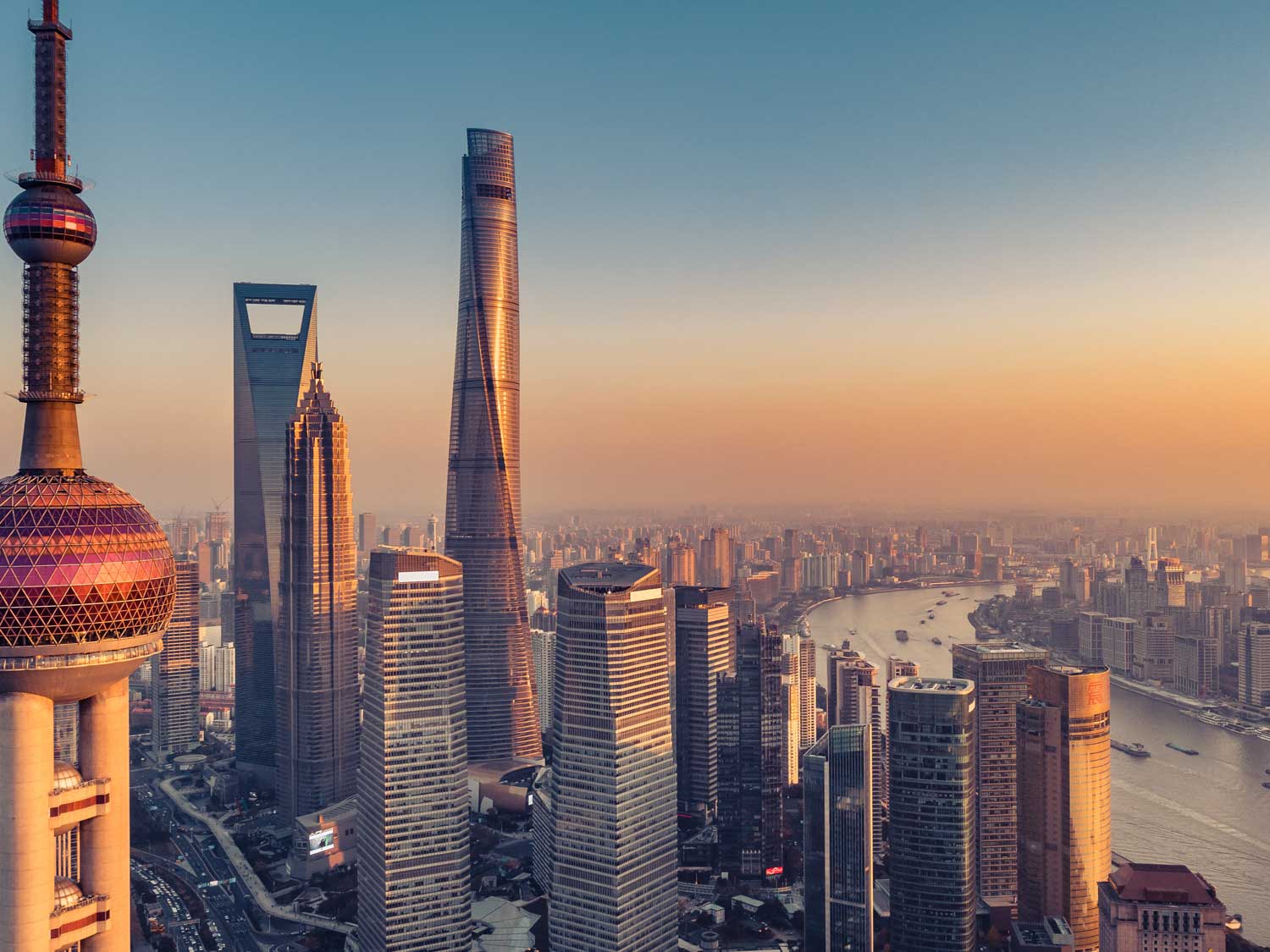
Shanghai to return to normal in June? Let’s hope so…

Shanghai is aiming to reopen the city and business operations, with normal life resuming from the 1st June, as all 16 city districts report acceptably reduced ‘zero-COVID’ cases.

At a press briefing on Monday, Shanghai’s Vice Mayor announced that 15 of Shanghai’s 16 districts had recorded no new COVID-19 infections for two consecutive days, with all of the city’s 16 districts achieving zero-COVID the following day. 

The news comes as the city’s case count fell under 1,000 for the first time in over a month, with the vice mayor announcing a three-phase plan for reopening, which aims to return to normal business operations by mid to late June.

Supermarkets, convenience stores and pharmacies have opened, but movement curbs will largely remain in place until 21st May, to prevent a rebound in infections, with efforts to restore normal production and life in the city from the 1st June.

The number of trains serving Shanghai and domestic flights are increasing and from the 22nd May bus and rail services will gradually resume normal operations, but passengers will need to show a negative COVID test.

At the end of April reports suggested that 20% of the global containership fleet was caught in congestion outside ports, with more than a quarter waiting to get into Shanghai, leading to fears of a cargo ‘tsunami’ when the port reopens and pent-up container flows are finally released.

Increasing numbers of factories are operating under “closed loop production“ and most warehouses are open (though operating with reduced capacity) while - critically - more trucking is available, which means more cargo is able to be shipped from Shanghai.

While other cities implement varied COVID control policies, cargo collection and deliveries is still facing challenges and heavy cost, so please check with us on a case by case basis, for the best solutions.

Flights serving Pudong (PVG) airport are resuming and are gradually increasing, but passenger flight policy has not changed, Chinese airlines are still re-routed to other airports, while foreign airlines are either ordered to suspend and cancel or reduce seating rate to 40%.  

China's severe zero-COVID restrictions are increasingly out of step with the rest of the world, which has been lifting restrictions even as infections spread, and are sending shockwaves through global supply chains.

China’s industrial output fell 2.9% in April from a year earlier, down sharply from a 5.0% increase in March and while economic activity has been improving in May, the strength of any rebound is uncertain due to China’s uncompromising “zero Covid” policy and the scale of future Covid outbreaks and lockdowns.

Beijing has been finding new cases almost every day, in an indication of how difficult it is to tackle the transmissible Omicron variant and while the capital has not enforced a city-wide lockdown it has extended guidance to work from home in four districts, banned dine-in service at restaurants and curtailed public transport.

We are working closely with our local partners to follow the evolving situation in Shanghai and Beijing and will continue to share any important developments.

With Shanghai’s lockdown lifting we anticipate the manufacturing bounce-back happening swiftly and we recommend checking the status of your orders with your vendors, to clarify when they will be manufactured and available for despatch.

We expect demand for space and spot/ FAK rates to increase very quickly and would suggest you start talking to us now about your potential requirements, so we can put appropriate plans in place.

With the long term fixed price and capacity agreements we have in place with our partner carriers we are well positioned to continue to deliver resilient, consistent and reliable supply chain movements as China recovers.

Our cloud-based supply chain management platform, MVT, simplifies the most demanding global trading regimes, by making every milestone and participant in the supply chain transparent and controllable, down to individual SKU level. 

To discuss how our technology could support your supply chain, please contact Simon George our Technical Solutions Director or Elliot Carlile.