rail freight

Potentially disruptive rail strike averted in US, while, unfortunately, UK braces for more

President Biden’s administration has averted a rail strike that would have caused further issues within the country’s fragile supply chain infrastructure, while rail strikes will recommence  in the UK from October, following the recent deferment of the original announced action.

US shippers and retailers had warned of the negative effects of a rail strike and the ‘11th hour’ contract agreement brokered by Biden’s team shows that the White House was particularly sensitive to the issue, as any strike would have had a hugely negative impact on the pending midterm elections.

Freight railroads and unions reached the tentative contract agreement for 60,000 employees just hours before a strike or lockout could have happened from midnight last Friday.

The deal brokered by the Biden administration averts a strike that had the potential to impact the country’s supply chain, by disrupting the movement of containers inland and the positioning of products throughout the country.

Shippers are relieved that the devastating nationwide rail strike has been avoided, with many applauding the Biden administration’s intervention, at a time when high inflation and economic uncertainty are challenging consumer budgets and putting business resiliency at risk.

Confidence in rail freight transportation is higher in the wake of the tentative deal and with many of the biggest volume shippers moving freight worth billions of dollars via the rail network, their dependency on reliable services is absolute.

The tentative deal means railroads and ports can unwind the contingency plans they had begun to implement ahead of the strike deadline, with inland ports resuming normal operations.

However, train strikes are set to resume in the UK, after unions cancelled their most recent planned action following the Queen’s death, with ASLEF train driver members at 12 rail companies set to strike on Saturday 1st October and Wednesday 5th October. This does also effect the movement of containers throughout the UK and puts further pressure on the inland logistics required for export and import movements, including an upsurge in demand for pure road transport, especially if the strikes are longer than 24 hours.

The Rail, Maritime and Transport (RMT) union has also announced a strike for the 1st October among its members at Network Rail and 14 train companies.

Workers are striking over pay and conditions, with unions objecting to pay offers that sit well below inflation.

RMT general secretary Mick Lynch said: “We will continue to negotiate in good faith, but the employers and government need to understand our industrial campaign will continue for as long as it takes.”

Previous rail strikes have had restricted direct impact on our container movements, but we monitor the situation closely and our transport team work closely with our rail service providers, to work around potential disruption.

If you have any questions, concerns, or would like any further information regarding the situation in the United States, please don’t hesitate to contact Kevin Lake, who leads our North American operations. 
Mojave

US inland port will reduce pressure on Los Angeles and Long Beach

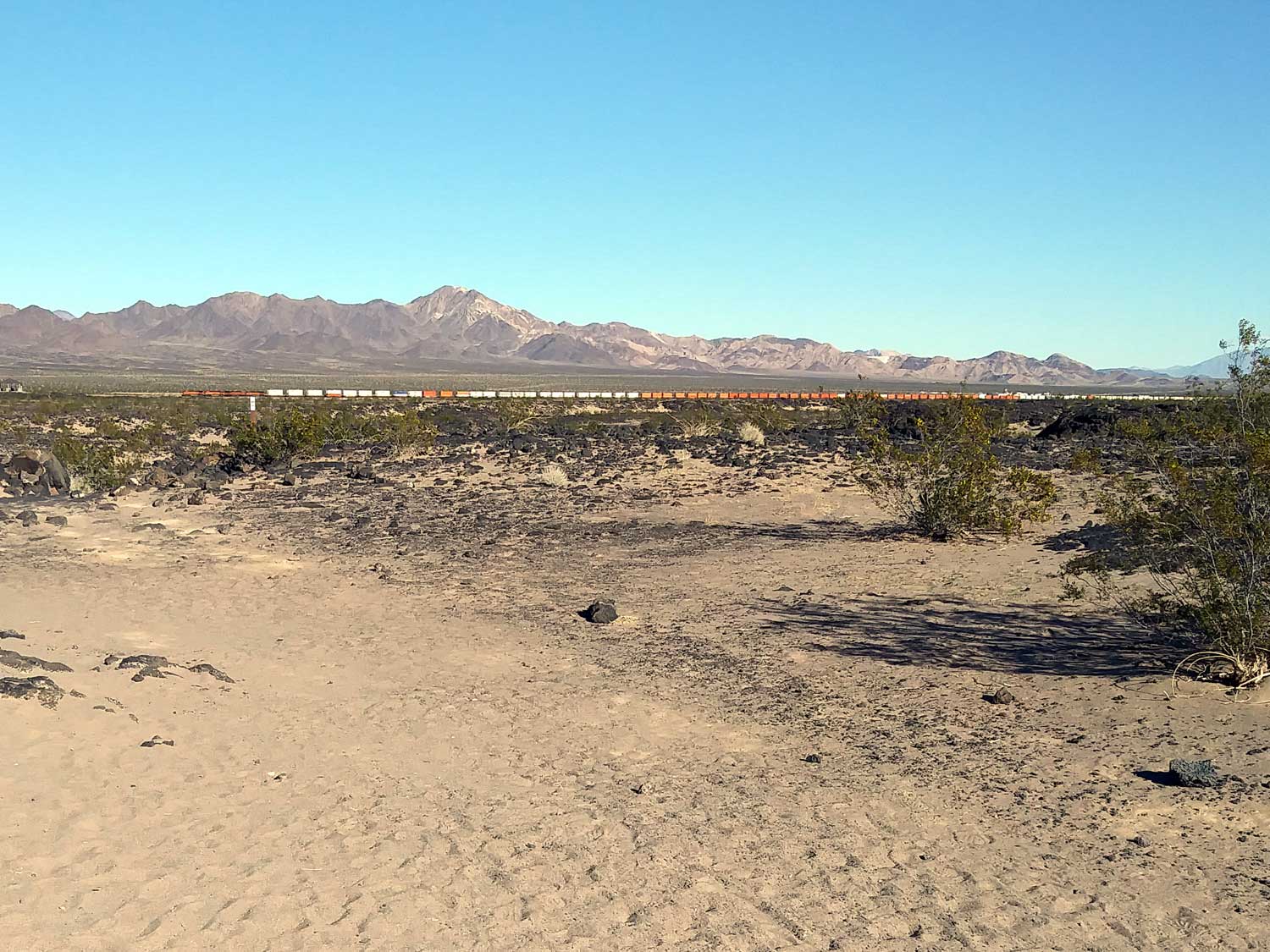
The Mojave Inland Port site is adjacent to the Mojave Air and Space Port, a fully operational airport capable of accommodating large cargo aircraft, with a Union Pacific rail line running through the site and the capacity to handle up to 3,600 trucks a day and three million containers per year once operational.

The project received approval from officials in California to move forward with the transportation and logistics hub, to provide a critical relief valve for the West Coast gateways, that have been continuing to choke with container traffic and have run out of land, to add capacity.

The Mojave Inland Port will be located 90 miles west of the ports in the Mojave Desert, on 400 acres of land, with the project costing an estimated $75 million, that is being privately financed.

The new inland port will save shippers time and money by moving their containers speedily, it is claimed inside three hours, instead of sitting in the port or terminals for days or weeks waiting to be transported.

One of the major causes of port congestion on the west coast is the number of containers waiting to be transported, with more than 33,700 designated for rail sitting on the Port of Los Angeles docks, nearly four times the number that would typically be waiting on a recent survey.

The Port of Los Angeles, America’s largest container port, handled 10.7 million container units in 2021, the busiest calendar year in the port’s 115-year history and Long Beach set a new record in 2021 by moving 9.38 million cargo containers, up 15.7% on 2020 volumes.

With no letup in container traffic since the beginning of the year, the ports reported record container movements in July which continued robustly in August, with both ports very interested in the project and encouraging of the development.

Mario Cordero, executive director of the Port of Long Beach, said he supports the Mojave Inland Port project. “The Mojave Inland Port is the type of innovative solution that will alleviate congestion and allow dockworkers to do their jobs more efficiently, getting goods to businesses and consumers faster.”

On the 9th August officials in Kern County, where the inland port site is located, issued permits for its zoning and site plans, with building permits the next step and a groundbreaking scheduled for next year. The desert port is scheduled to become fully operational in 2024.

The Mojave Inland Port will service containers transporting consumer goods from Asia, which represents 40% of the freight that moves through the ports of Los Angeles and Long Beach.

If this programme is successful we suspect that it will be emulated globally, including in Europe, to move container holding facilities inland. It is one that is worth noting and watching, for slicker supply chains reliant on an ocean freight model.

We always explore contingency opportunities that deliver product to market in the USA, avoiding congestion and delay. We will monitor the progress of this project and will engage with the executive team at an appropriate time.

If you trade with the United States and would like to explore our capability, please contact Kevin Lake, who leads our North American operations. 

Yangtze

Climate change forcing new unexpected factory closures in China

Just a few months after Shanghai emerged from the city-wide COVID lockdowns, which disrupted supply chains and forced factories to halt operations, manufacturers have been closed again, this time by the impact of climate change. A new challenge to Chinese production and sourcing.

An intense heatwave and drought around the Yangtze river basin has seriously depleted water levels in dams and rivers, curbing electricity generation at hydropower plants, just as air conditioning demand is spiking.

To prevent power outages, authorities in Sichuan province, which relies on hydropower for about 80% of its energy needs, ordered factories to halt operations, with data showing that the impact of closures is climbing amid concerns that power rationing could have a knock-on effect for supply chains.

These energy linked closures, that have been reported in the international press, could have more impact than COVID-related factory closures, which were geographically compact in specific locations and operations can gradually resume under“closed-loop” conditions, while the effects of power shortages can be more extensive and indiscriminate.

Sichuan, Chongqing and Hubei provinces export power to manufacturing hubs on China’s east coast, but this year, Sichuan’s hydropower has operated at 20% of capacity, and as the river flow rates remain depressed, Sichuan hydropower generation loses the capacity to meet the minimum level of demand. So the situation is much more widespread throughout China’s manufacturing regions than it would first appear.

The heatwave sparked huge demand for electricity as hundreds of millions of people turned up their air conditioning, which in turn led to major power shortages, with authorities suspending or rationing electricity supply to factories, shopping malls, homes, and public transport.

Sichuan province began to restore power for some industrial users at the start of the week, but the impact on the broader economy from the heatwave, has been severe, drying up the rivers that feed hydroelectric plants, including China’s largest the Yangtze, which dropped to its lowest level on record.

Light to moderate showers are moving into central and southern China and may intensify this week across the drought-stricken Sichuan basin, bringing a risk of flash floods and some areas could see up to twice as much rain as usual, which should help replenish reservoirs, but drought warnings are still being maintained and power rationing continues in many areas.

The Chinese economy growth has been severely downgraded by leading experts for 2022 and as the ubiquitous saying goes when China sneezes the world catches a cold – let’s hope this isn’t the case.

We continue to monitor the situation and will update you if anything significant occurs, but we do recommend checking with any of your vendors in the Sichuan, Chongqing and Hubei provinces, to check if they have been affected.

Metro’s cloud-based supply chain management platform, MVT, simplifies the most demanding global trading regimes, by making every milestone and participant in the supply chain transparent and controllable, down to individual SKU level. 

To discuss how our technology could support your supply chain, please contact Simon George our Technical Solutions Director or any of your Metro team contacts.

RMT

Felixstowe | Liverpool | Railways: Ocean freight container supply chains face triple strike challenge

With rail workers striking tomorrow and Saturday nationally and the Felixstowe Port strike starting on Sunday, for potentially eight days, UK supply chain operations and infrastructure are facing the biggest industrial action challenge in decades.

Two of the UK’s most important container ports will be shut by industrial action during the busiest time of year for global shipping - the annual peak season - when manufacturers gear up after the holiday period, and retailers replenish inventories to start their build up for the critical Christmas trading period.

The Unite Union’s 1,900 members at the Port of Felixstowe will start their eight day walkout on Sunday 21st August. Unite’s chosen industrial action is a ‘discontinuous’ strike, when action takes place on a series of days, with normal working in between, which can either support operations, or cause maximum disruption.

The container shipping lines will be preparing for more congestion around Europe and we await their contingency plans and schedule updates at time of writing, because they are likely to offload UK-bound cargo at hubs such as Antwerp and Rotterdam, which are already busy and dealing with their own industrial disputes and congestion delays. Omitting the UK entirely to avoid the closed ports is also a likely tool to be used to try and keep schedules as intact as possible.

With Southampton and London Gateway working at capacity, if the Felixstowe or Northern European ports situation deteriorates, it is very possible that some carriers may drop UK-bound cargo further downstream – for example in Tangier or alternative Mediterranean ports - and use feeder services to get cargo closer to destination.

To coordinate our response to the Felixstowe escalating situation and linked industrial actions we have created an eight-strong ‘Strike Action team’ who, working with the port, carriers and our contracted long-term haulage and rail partners, have been delivering and moving containers to off-dock holding areas ahead of Sunday. This is something that we, Metro, anticipated when the original potential strike action was announced and have been preparing for ‘behind the scenes’.

As we learn what omissions and discharge points the shipping lines are planning, we are reviewing modal/service options and will work with our contracted partners to plan the haulage offerings we have available in the UK and on the continent. Another contingency that the shipping line partners using Felixstowe have is to delay vessels which will have a further impact on schedule reliability and result in delayed arrival into the UK.

The Strike Action team will discuss options with affected customers individually and swiftly. As any options that are possible in those ports, will likely be subject to availability, due to the congestion that will quickly build during the strike action, or as part of the following impact.

Unofficially, we understand that some carriers that call at Felixstowe have changed port rotations, so that vessels that were initially due to arrive during the strike period will now arrive after.  Alternatively, as highlighted earlier, carriers may plan to remove Felixstowe bound containers at earlier port calls, to be collected by the following week’s vessel which is due to call Felixstowe after the strike period.

Felixstowe has advised the suspension of the option to book vehicle booking slots (VBS) more than 24 hours in advance, which is available to us and other large users of the port normally. Instead they will release any available VBS slots each day, subject to the level of workforce present, which means there will be limited collections and deliveries from the port next week. Therefore, disruption, rent and demurrage, and elevated costs are likely to feature prominently. Neither the shipping lines nor the Port of Felixstowe have offered any immediate advice on the extension of free time during the strike action. It is likely that additional costs will be inevitable at the current time, as no party within the dispute, or carriers will accept any liability.

Shortages of drivers and the continuing pandemic-linked supply chain disruption caused significant snarl-ups at Felixstowe ahead of last year's Christmas period, with some container ships diverted to other ports, or omitting the UK altogether. This week’s industrial action could have a more profound impact than Christmas, or the Suez blockage last year, as it is specifically UK focused. However it will have an impact on other ports, as Felixstowe vessels call or are redirected to discharge and load both in the UK and Europe, as a consequence further disrupting the supply chain and logistics for container movements. From experience and market intelligence a seven day delay will take more than seven days to rectify and there will be consequences to the port's closure that will reverberate for weeks after the event, and that is without further industrial strike action being confirmed.

Dockworkers at the Port of Liverpool have also voted to strike over wage negotiations and while no dates have yet been announced, it will not be before the 3rd week in September.

The inland movement of containers will be further disrupted today and Saturday as the RMT and TSSA rail unions withdraw labour, including drivers and critical operations staff, which means many freight services will not be running. The reality of this situation is that the rail network for container movements will be interrupted for the next three days and road transport will be the only reliable way to move containers to and from all of the UK ports, as this is a national strike.

The Strike Action team have been consulting closely with rail service operators and do expect some freight services to keep running. The current planning shared with them suggests that 30% of services will run today, 70% on Friday and 50% on Saturday 20th August.

The timing of these disputes could not be worse for the economy, where the cost of living is soaring, with inflation already at a 40 year high and recession warnings ever more pessimistic, as inflation escalates and consumer demand is dampened.

We will continue to monitor and manage the situation as it unfolds but the disruption now looks unavoidable. We continue to hope that there will be an eleventh hour resolution(s) and will keep you updated on a daily basis.

Please contact your Metro team member to discuss any specific movements and we will also continue to communicate with you proactively on developments, options and alternatives available during this event, and any future action and reoccurrence.

Please call Grant Liddell or Andy Smith for further specific information on how we are able to deliver continuity of operation. We are well positioned, with considered teamwork, to ensure that your supply chains and logistics platform are protected during this emerging situation.