Picket

<strong>Labour disputes in the global supply chain (a winter of discontent)</strong>

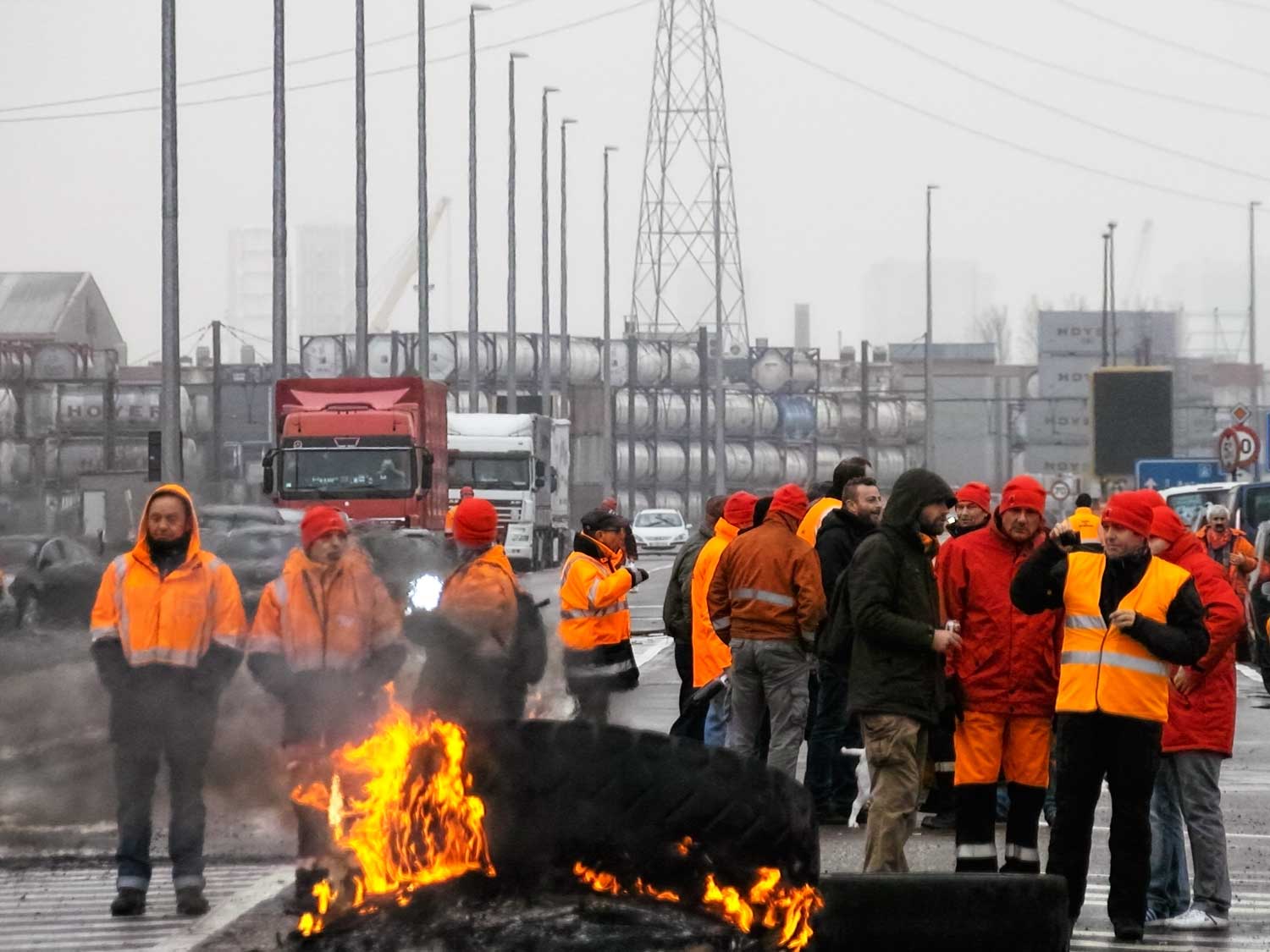
Strikes and industrial action continues to plague ports, airports, transport infrastructure and international and domestic supply chains and while much attention has been focused on UK, European and North American situations, the wave of disputes have been spreading to Asia, South Africa, Chile and Australia.

The impact of last month’s three-day strike by Dnata and Menzies ground handlers at London Heathrow, wasn’t as bad as feared, after unions reached a pay-deal with Dnata.

Starting tomorrow, 350 Menzies ground staff are expected to stage walkouts at Heathrow, which will predominately affect flights from terminals 2, 3 and 4. The industrial action by baggage handlers employed by aviation supplier Menzies will take effect from 4am, Friday 16th December, and last 72 hours. UPDATED 16th December - This strike by Menzies ground handlers has been suspended as revised offer put to members, but Unite confirms further dates for action over festive period will still go ahead, if the deal is not accepted.

Tomorrow’s action at Heathrow is just one of a wave of strikes that are sweeping the country, threatening freight operations as workers across the transport network, Royal Mail and civil service take industrial action in ongoing rows over pay and conditions.

Staggered rail strikes in The UK, by a number of unions, will disrupt operations and service integrity, which will inevitably impact freight operations, while action by Royal Mail staff may disrupt the transmission of critical documentation.

Border Force members of the Public and Commercial Services (PCS) union will walk out for four days, from 23rd December but, despite them targeting two of our major airfreight hubs - Heathrow and Birmingham - we are hopeful that their action will not have much impact on freight.

In the UK dock worker disputes at Liverpool and Felixstowe saw massive drops in vessel calls and terminal dwell times more than double. The strikes in Liverpool have come to an end after a deal was agreed, but there has been no agreed resolution to the dispute in Felixstowe and the threat of further action remains.

South Korean truckers voted to end their strike last Friday, as it entered a third week, after realising that their bid to make a government scheme on minimum freight rates permanent was failing, and fears that their action had caused "astronomical" damage to the economy.

South African workers at state-owned port and rail operator Transnet agreed a pay-deal, after a two-week strike shut down ports including Durban, Cape Town and Coega had reduced vessel calls by 60%.

In the U.S. the unresolved West Coast longshore workers agreement continues to hang over supply chains, but the looming national rail strike, which could have caused untold economic damage has been averted by legislation. Meanwhile, dock worker strikes are affecting Chilean ports and a dispute involving towage operators threatened to close Australia’s ports until the courts intervened.

However you look at it these ‘strikes’ affect supply chains – globally – and we will ensure that you are best positioned to be aware of the potential impact. The situation is not unique to the UK, or even France, and hopefully stability and consistency will be restored early in 2023. We will provide the work arounds and best fit solution during this time of uncertainty.

While we continue to monitor all points potentially affected by industrial action, our focus remains the continuity of operations, to ensure that your supply chain is protected at all times.

To learn how we work around disruption and congestion, please contact Elliot Carlile, who can advise on our preparations ahead of threatened industrial action.
The eBL is moving closer

<strong>Metro lead the way with ocean freight electronic bill of lading</strong>

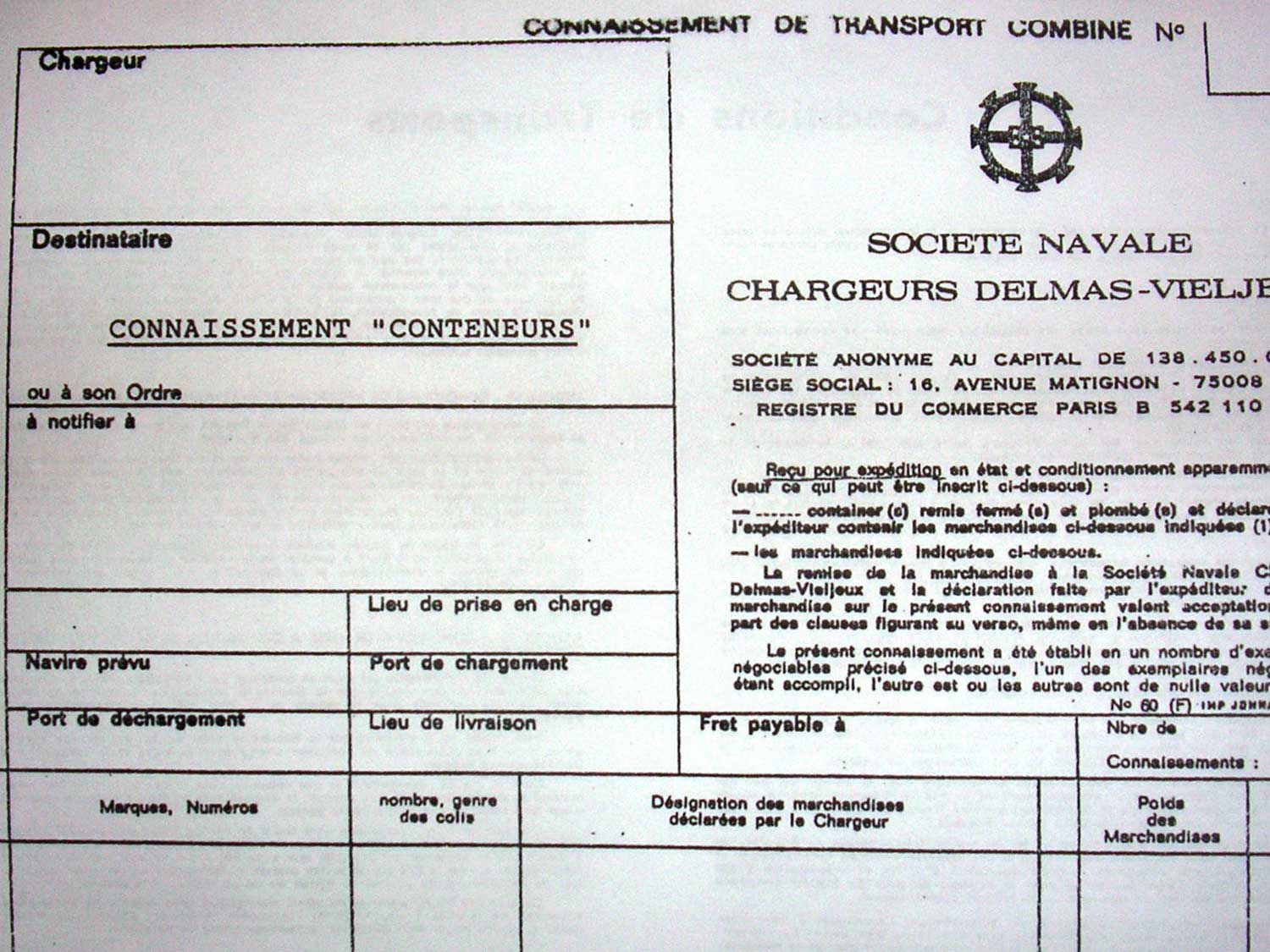
Just weeks after the Electronic Trade Documents Bill was presented before Parliament, Metro has commenced its first trial shipment with an electronic bill of lading (eBL), on Hapag Lloyd, which was a first for the German carrier too.

Following large-scale frauds and disruption to global trade due to the impact of the COVID pandemic, the digitisation of physical shipping documents is becoming much more significant, with the Electronic Trade Documents Bill, which will allow for the legal recognition of electronic versions of bills of lading, currently working its way through parliament.

Ministers at last year’s G7 meeting agreed that paper-based transactions are “a source of cost, delay, inefficiency, fraud, error and environmental impact” in a bid to move towards global adoption of electronic bills of lading (e-Bills), which Mckinsey & Company estimate could save $6.5 billion in direct costs and enable $40 billion in global trade.

Unlike the paper bill of lading, which is time consuming, risky (can be forged/lost) and expensive, the eBL is secure and extremely cost effective, with a host of added benefits:

  • Reduced costs due to savings on postage and time to handle physical paperwork
  • No risk of losing eBL
  • Removal of costs associated with a complex procedure to release without the Original BL at destination, including weeks of D&D
  • Quick and secure transaction with one click of a button
  • Eco-friendly solution with no paper and physical movement
  • Same legal protection as an Original Bill of Lading
  • eBL can be tracked online, unlike paper OBL’s

The Law Commission was tasked by the Government to set out reforms to the legal status of trade documents and following a consultation period last year, the Commission published its recommendations in March, with the Electronic Trade Documents Bill now going through the House of Lords, before returning to the House of Commons to pass into law.

The Bill of lading serves three key functions:

  1. As a receipt, confirming that the goods have been loaded on board the vessel
  2. As evidence of the contract of carriage, between the ship-owner and the shipper and/or the lawful holder of the bills
  3. As a document of title to the goods.

The electronic bill of lading (eBL) Metro are currently testing fulfils the functions of a receipt and evidence of a contract of carriage and, when the Electronic Trade Documents Bill completes its passage, the eBL will also fulfil the function of a document of title.

In the vanguard of testing this new technology, so that Metro customers will be the first to benefit, the sea freight team will undertake further measured trials, including with shipments that involve banks in the release process and also with the full variety of partner ocean carriers that offer this option.

The first ‘trial’ customer said that they were “very impressed with the process” and Hapag Lloyd commented that “handling physical paper leads to processes that are cumbersome, outdated, time-consuming and error-prone. Hapag Lloyd has partnered with Wave BL to enable secure and quick BL release, saving costs for our customers. We firmly believe the future of the supply chain is offering digital solutions that are time and money saving, backed up by secure communication protocols.”

This is the future, now. The platform just needs confidence building, evidence that it is 100% evolved and that the integrity is unquestionable. We will continue to update and reassure.

We have been utilising similar models and platforms in air freight, with our partner airlines, for many years and this is an exciting evolution in the ocean freight environment.

Metro is developing the technologies and platforms that will integrate with electronic bills of lading (eBL) and members of the bodies that drive the technology standards and frameworks for a standardised industry e-bill of lading (eBL).

Simon George, Metro’s Technical Solutions Director and a member of the illustrious UN/CEFACT forum. “Even partial eBL adoption will save £ Billions, but mass adoption of an industry-standard eBL, requires robust technology, acceptance by governments, banks and insurers as well as open collaboration."

Please contact us for further Information and we will share the latest progess and updates and how this platform can benefit your own continued global trade growth ambitions.

Auto Advance

Metro witness the launch of environmental first – reducing vehicle carbon emissions before they have ever been driven

Operating a fleet of 17 pure car and truck carriers, United European Car Carriers (UECC) is the leading RoRo provider of short sea services for cars and other rolling cargo. Leading customer, Metro, was invited to Zeeburgge, to witness the naming of the world’s 1st hybrid pure car and truck carrier.

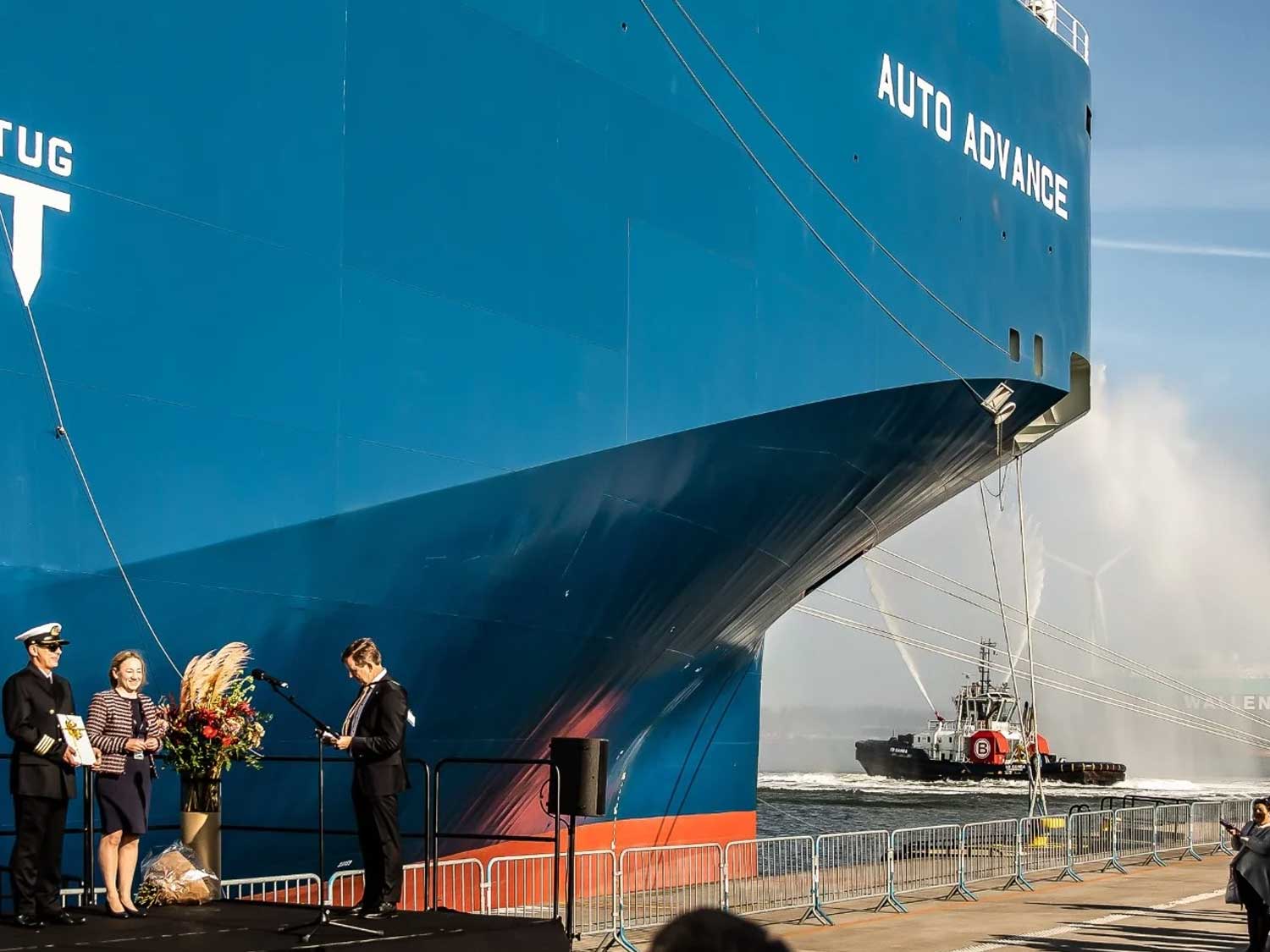
UECC, the Norwegian RoRo transporter of rolling cargo held a naming ceremony for its first dual-fuel LNG battery hybrid pure car and truck carrier (PCTC), the vessel Auto Advance, at the Port of Zeebrugge’s, ICO Bastenaken Terminal on the 26th October.

Present at the naming ceremony were Metro directors Tom Fernihough and Matt Weight, who are responsible for key automotive, construction and commercial/industrial vehicle accounts, and consequently big volume users of PCTC RoRo services.

The Auto Advance measures 28 by 169 meters in length (that’s big – think of two football fields), with capacity for 3600 vehicles, over 10 cargo decks and is said to be the world’s first vessel of its type. It will provide significant gains in energy efficiency and emissions reduction as it enters service this year to boost UECC’s efforts to decarbonise its fleet.

It is part of a new build trio of multi-fuel LNG battery hybrid PCTCs that UECC hope will make a real difference for the environment and for their business, as new green regulations are set to shift the RoRo market playing field.

LNG battery hybrid technology, together with an optimised hull design for better fuel efficiency, will enable these new builds to exceed the IMO requirement to cut carbon intensity by 40% from 2008 levels within 2030. Emissions of carbon dioxide will be reduced by around 25%, SOx and particulate matter by 90% and NOx by 85% from the use of LNG, while the new builds will also meet the IMO’s Tier 3 NOx emissions limitations for the North Sea and Baltic Sea.

Tom Fernihough. "Delighted to attend the naming ceremony of UECC's latest vessel the MV Auto Advance. A significant innovation in hybrid technology for a greener environment . Many thanks to UECC for their investment to a cleaner solution.”

Matt Weight. “Metro is committed to extending our zero-emission strategy as far down our customers’ supply chains as possible, which is why we welcome this positive move towards decarbonisation, by a key carrier partner.”

There is much more to come from Metro, on the environmental front, in the very near future which we will continue to announce as we roll out further initiatives with our partners and within the organisation. This is beyond a focus – it is our mission to ensure our customers have the slickest and most environmentally creative supply chains available at any time, regardless of the external influences.

To learn more about our commercial/industrial solutions contact Tom Fernihough, or Matt Weight for our automotive solutions and Simon George for our ECO/MVT, carbon measuring and offsetting solutions. We have the end to end movement of the most valuable cargo covered - with complete visibility and ability…

Suspension of Transit

<strong>Schedule reliability and port congestion in decline</strong>

The latest, market leading source, Sea-Intelligence schedule reliability figures show a slight decline of 0.7% in September to 45.5%, which is the first fall since reliability began to trend upwards in April and follows the year’s largest reliability increase of 5.8% in August.

The average delay for late vessel arrivals has been dropping consistently since the start of the year and In September improved once again, albeit slightly, dropping by -0.10 days, bringing the average delay to 5.81 days and is the second consecutive month that the delay has dropped below the 6-day mark since April 2021. Pre-Covid pandemic situation this would have been deemed completely unacceptable. But transits and measurements have changed over the last few years and many traders would like to slow down their products in transit in the current global environment so it is actually, by some businesses adjusting their supply chains in line with current consumer demand, considered a benefit we have observed.

With schedule reliability of 53.2%, 2M was the most reliable carrier in September 2022, followed by CMA CGM with 45.5%, with another four carriers recording schedule reliability of 40%-50% and the remainder at 30%-40%, or lower, it has been widely reported in the trade news.

Yang Ming recorded the lowest schedule reliability of 35.1%. In September 2022, once again, most of the carriers were very close to each other, with the difference between Yang Ming at the bottom and CMA CGM at second, a little over 10 percentage points.

Despite schedule reliability improvements global port congestion remains an issue with ~11% / 2.8m TEU of capacity tied up due to bottlenecks, labour shortages, industrial disputes and other post-pandemic disruptions.

The overall trend is on a downward trajectory, as congestion is starting to ease across the main hotspots in the US and Europe, though there was a small increase in vessels waiting at Chinese ports, due to weather related issues and isolated COVID lockdowns.

US East Coast port congestion is improving, with Savannah remaining the most congested port with 33 vessels recently waiting at anchor. US West Coast congestion is now almost cleared with only a handful of vessels waiting in the San Pedro Bay area.

The situation at the main European ports remained largely unchanged, although dockworkers at the Port of Liverpool began their second strike last Monday and are set to continue through this week, and with no agreement reached with the Unite union at Felixstowe, there is a risk of further industrial action at either port before Christmas.

We are working closely with our offices and network partners to monitor the situation throughout US and European ports, with contingency plans to ensure product is delivered to market, without delay, until congestion finally subsides.

To learn how we can help you avoid disruption and port congestion, or to request our regular ocean market report, please EMAIL our sea freight director, Andy Smith, who can advise on the best solutions for your ocean supply chain. 

The freight market is changing every week, across all modes – we have the latest intel and will share our recommendations on the coming months and into the New Year of 2023 – a NEW challenge approaches. You are in safe hands to ensure you have the options available to achieve your future plans. Across the board we try to future proof all aspects of global trade to ensure that you achieve, as an agile leader and ambitious partner to your business.