container ships

EC to end container shipping alliances

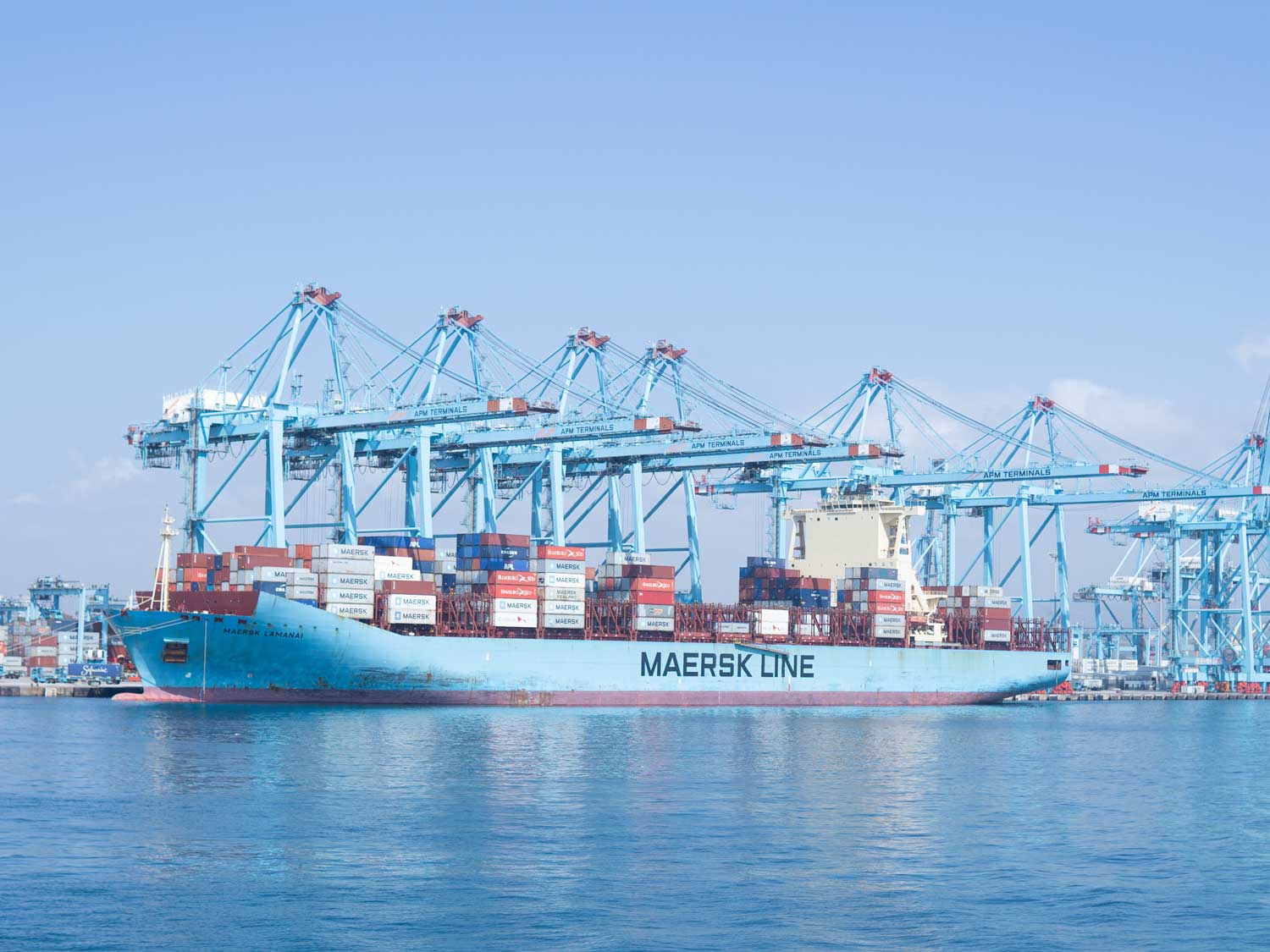
On the 9th August 2022, the European Commission (EC) issued a call for feedback on the Consortia Block Exemption Regulation (CBER) and on Tuesday announced that it will not renew the sector’s exemption to operating shipping alliances when current legislation expires on 25th  April.

The Consortia Block Exemption Regulation (CBER) was introduced in 2009, after the EC banned the old conference system, that had allowed container shipping lines to coordinate on pricing levels.

CBER allowed carriers to continue operating vessel-sharing agreements and pooling capacity, and was extended in 2014 and 2020, but the EC has now decided that CBER is not fit for purpose, as it does not fulfil the criteria of effectiveness, efficiency and EU added value.

The Block Exemption has been under review since 2020, during which time the market has experienced massive fluctuations in demand, capacity and price, driven by the initial impact of COVID, pandemic lockdown, post-COVID demand and now the cost of living crisis.

A period over which, market turmoil should have underlined the need for cooperation between carriers, but instead resulted in a transitory and exceptional phase of excess demand over effective capacity and of record profits for carriers.

The EC’s decision paper said the feedback from carriers and lobby groups showed an incomplete understanding of the CBER and claimed it had failed to bring demonstrable benefits to European consumers, as inelasticity of demand and the limited elasticity of supply reduced the likelihood that any cost efficiencies achieved by carriers would be passed on to users.

The EC refused to blame CBER for causing the chaos seen in container supply chains since 2020, but suggested its effectiveness and efficiency during this period was limited and noted that the widespread opposition from shippers, forwarders, unions and port operators to extending the regulation showed deep divisions among supply chain partners.

The CBER has notably created the impression that carriers had an advantage, while other supply chain stakeholders were treated unfairly and that there was no real level playing field in the maritime sector.

It concluded: “Overall, it appears that the restoration of trust between the stakeholders necessary to build a resilient, integrated and efficient supply chain requires ensuring that the liner shipping sector is not perceived as being subject to looser scrutiny from antitrust enforcers than other industries.”

UK review of Consortia Block Exemption Regulation

On the 19th January the UK’s Competition and Markets Authority (CMA) published its report into whether or not the Liner Shipping Consortia Block Exemption Regulation (the retained CBER) should be renewed or varied when it expires on 25 April 2024.

In its CBER review, the CMA met with key stakeholders to gather views on the operation of the retained CBER regime in the UK and is proposing replacing the retained CBER with a Liner Shipping Consortia Block Exemption Order (CBEO).

The CMA added it recommended a similar version of the existing CBER, in order to ensure the continuity of container shipping for UK businesses, because if the retained CBER was allowed to expire without replacement, carriers may be deterred from making direct calls to UK ports in favour of serving the UK by transhipment to and from European ports.

The CMA’s concern was that shipping costs for UK consumers could rise considerably without a regulation aligned to the substantially larger market on the European mainland.

With the EU now intent on ending CBER next April, it is almost certain that the UK will follow suit.

Metro leverage opportunities for our customers across all three of the shipping alliances, with individual carrier relationships that are long established and built on personal relationships, from operations to senior management and executive level.

These relationships across a portfolio of carrier partners, already give our customers access to the widest range of service offerings, port-pairings and rates and they will be maintained, however the container shipping sector is transformed next April.

We will stay close to this topic, as it develops and ensure that you are kept up to date with the most important news. 

If you have any questions or concerns relating the shipping alliances, the Consortia Block Exemption Regulation, or sea freight in general, please EMAIL Andrew Smith, Metro’s Chief Commercial Officer. 

emissions ship

Sea freight ECO initiatives and their impact on shippers

Just months after IMO 2023 launched, the International Maritime Organisation raised its carbon emissions targets, which will require more carrier investment and with the EU rolling out its emissions trading scheme from next year, shipping lines will be looking to recover a lot of costs from shippers.

The revised IMO greenhouse gas strategy, adopted this summer, bought forward the target to reach net-zero GHG emissions “close to 2050” and will be achieved through mandatory reduction in carbon emissions for both new and existing ships, with clean or low-carbon fuel alternatives, and pressure growing to impose a carbon levy on international shipping, to fund climate mitigation.

The EU Emissions Trading System (ETS) is effective from the 1st January 2024, which means container shipping lines will need to purchase emission allowances while investing in alternative fuels. And with the lines looking at a potential ETS bill of €1bn in the first year, they will be looking to pass on the increased costs.

The European Union’s Monitoring, Reporting and Verification (EU MRV) regulation requires all ships exceeding 5,000 GT to collect and report data on CO2 emissions released to and from EU and EEA ports and will serve as the basis for shipping’s inclusion in the EU emissions trading system (ETS) from the 1st January 2024.

ETS is a ‘cap and trade’ scheme where a limit (the cap) is placed on the amount to emit specified pollutants and obliges individual shipping lines to hold an allowance for each tonne of CO2 or other carbon equivalent gases they emit.

There will be no set price list for these emission allowances – instead, the price will be defined by supply and demand on the market. 

EU ETS is determined on vessels rather than cargo: docked at an EU port 100%; travelling between EU countries 100%; and between an EU port and a non-EU port 50%.

The UK has notified that they will be introducing a similar system, which would have an impact on UK domestic routes and UK-EU routes.

Total annual EU ETS-applicable emissions for the maritime industry amounted to 83.4m metric tonnes of CO2 equivalent which, at the current market value of €90 per emissions allowance (EUA), shipping emissions carried a total worth of €7.5bn for the year.

Taking into account the ETS phase-in period covering 40% of emissions in 2024, 70% in 2025 and 100% in 2026, the shipping industry could be liable for €3.1bn in 2024, €5.7bn in 2025 and €8.4bn in 2026. With container shipping potentially accounting for 30% of overall emissions, despite carrying less than 20% of seaborne trade (source: OECD).

Maersk has calculated potential Q1 2024 emissions surcharge (in EUR) per FFE @ 70 (Far East to North Europe) and 81 (North Europe to USA).

We are following ETS developments, the carriers adoption of cleaner fuel technology and any other initiatives which may offer cost and efficiency savings for our shippers.

Our MVT Eco module measures and monitors the emissions of every shipment, by every mode, with offsetting alternatives, so our customers can work towards carbon neutrality in their global supply chain. 

The MVT Eco module is under continuous development, which could include adaptation to measure liabilities under the new EU ETS regime, if this is something we think may be useful to our customers.

To request an MVT Eco demo or to discuss any of the issues raised here, please EMAIL our CCO Andrew Smith.

cars in container

Metro’s RoRo alternative is cheaper, quicker and greener

With a 3-4 month delay for car and truck RoRo (PCTC/PCC) services, automotive clients have looked to container shipping to provide an effective alternative transport solution, that also turns out to be much better for the environment.

As the automotive industry emerged from the Covid pandemic, growing demand has exposed and exacerbated many of the underlying issues that the industry faced, particularly supply chain and capacity constraints.

Globally, sales have increased massively, rising 10% in 2021, with Chinese finished vehicle exports alone exceeding 3 million units in 2022, and the industry on track to overtake 2019 levels by the end of 2023. 

However, the reduced global RoRo fleet does not have the capacity to meet this demand and carriers have been hesitant to order new ships, owing to uncertainty and stricter emissions standards that could render a ship obsolete before it is even delivered.

There are only 11 vessels on order for delivery in 2023 and even if all the RoRo vessels due for completion this year are delivered, the global fleet still could not even satisfy the demand for volume shipments out of China.

At the start of 2023 there was a 3-4 month delay in shipping RoRo on the busiest routes, so with RoRo unable to sustain their finished vehicle supply chain and a full order book, our automotive clients have looked to Metro, to use our container shipping expertise to provide an alternative transport solution.

Specially designed racking has massively simplified the securing of cars in containers, reducing time and expense, opening this cost-effective mode up to the mass movement of finished automobiles, including the most-expensive marques.

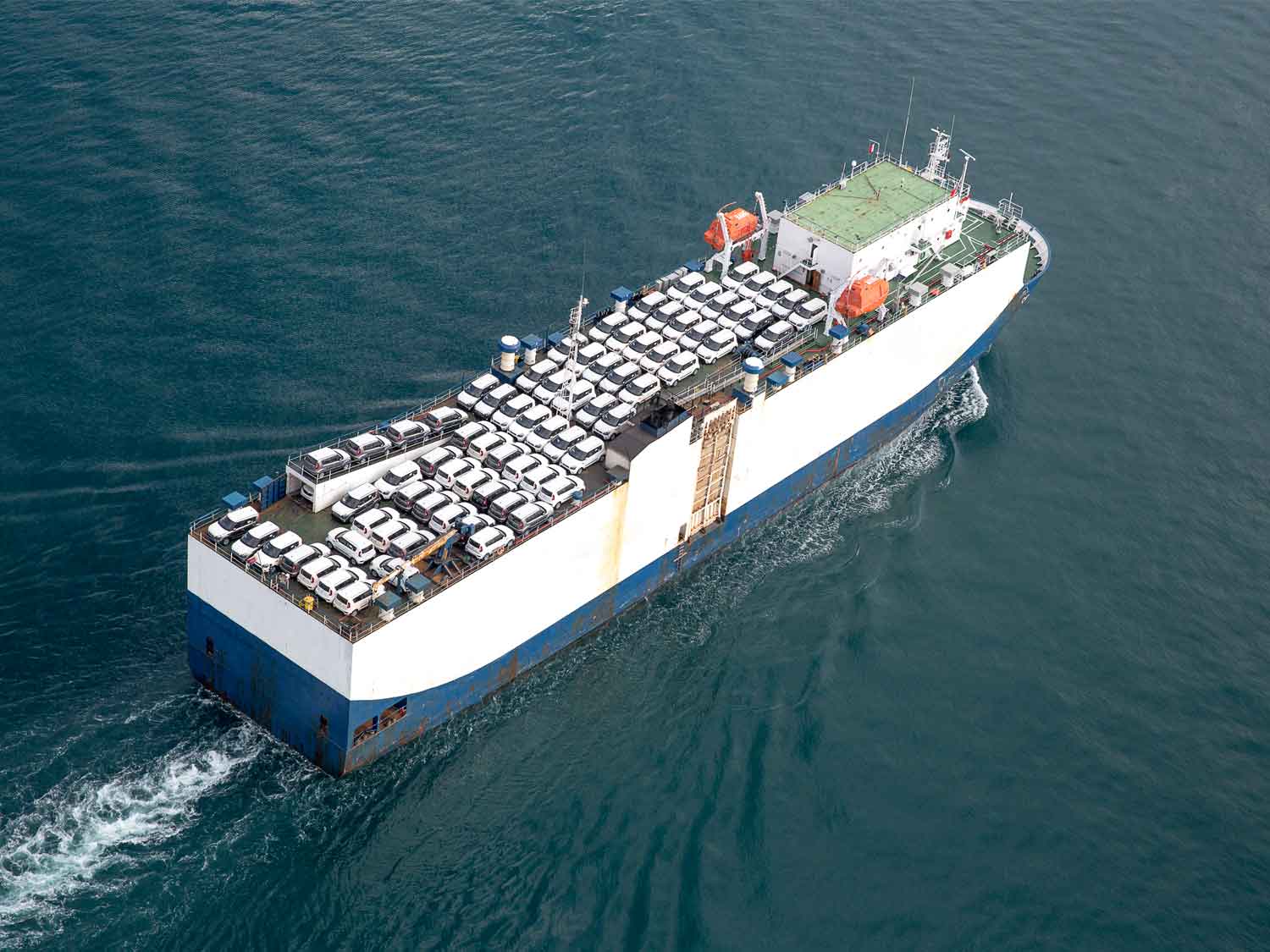
The largest Pure Car Carriers (PCC) can carry 6,000 cars, distributed across 13 decks, while the largest container ship can carry 25,000, which offers maximum economies of scale.

Containers are loaded on top of each other, so cars are effectively stacked, while on RoRo vessels there’s lots of empty space, with cars on separate decks and the total CO2 omitted on a container vessel is divided by a higher number than that of a RoRo vessel.

Using our MVT ECO CO2 tracking module to look at one indicative trade lane (Antwerp - Sydney) shows that container shipping reduces comparable emissions by 69%. In this example of a live shipment, that is a saving of 1,716 tonnes of CO2.

1,200 cars by RoRo: 2,484 tonnes CO2
1,200 cars by Container: 768 tonnes CO2

The critical unit is the gCO2/tonne-km which is much higher on RoRo than containers.

Our MVT Eco module has measured over 100,000 shipments, with a total CO2 equivalent of more than 300,000 tonnes in 2023.

Using reporting methodology that is in conformance with the Global Logistics Emissions Council (GLEC), we create low-carbon multi-modal supply chains that blend air, road, sea, inland waterways and rail, together with NGV and electric vehicles.

The MVT ECO module is available free-of-charge to customers on their MVT dashboard. To request a demo or discuss your requirements, please EMAIL Elliot Carlile.

Metro is exporting finished vehicles in containers, with significantly lower port to port freight costs, for a number of UK manufacturers. EMAIL Ian Tubbs to learn more.

Golden Week

Carriers blank Golden Week sailings

The cancellation of multiple October sailings from Asia to Europe is an attempt by the carriers to push capacity down and raise rates, but if they fail, they may not have another opportunity to significantly raise prices before Chinese New Year, next February. 

Container shipping lines across the three alliances have announced additional blank sailings ex Asia to North Europe and the Mediterranean, around the Chinese Golden Week holiday in the first week of October, and through to the end of the month.

According to data from Sea-Intelligence, the capacity operated on the Asia-Europe trade in September is 10% higher than last year and on the Asia-Med service it is 27% more and while the carriers are planning significant capacity cuts after Golden Week, we are wary of unannounced blank sailings in the coming weeks.

Overall 14% of scheduled sailings have been cancelled from mid-September to mid-October and this we expect are announcements to counter balance the lower demand during China’s Golden Week holiday.

The current blanking represents Ocean Alliance (5%) and THE Alliance (7%) with MSC blanking SWAN service weeks 38-43 removing 45k TEU of capacity.

MSC has radically cut capacity on the Mediterranean lane between weeks 40 and 43, but it is not clear whether HMM will blank any sailings of its Asia, India to Mediterranean standalone loop that launched in August.

The aggressive blanking announced by all three alliances means it may be challenging to find space for exports from China to Europe next month, which is why we recommend that you share shipping forecasts as early as possible, so we can reserve the space you need.

There will also be the knock-on effect of limited export sailings from North Europe during November and December, which underlines again the importance of shipping forecasts.

Carriers will, of course, be looking to raise rates on backhaul trades, as prices for oil have surged to $90 a barrel, with December Brent Crude now priced at around $95, driven by OPEC’s supply cuts, which have been extended to the end of the year.

The price of Rotterdam-sourced industry-standard low-sulphur fuel (VLSFO) jumped on Friday by another $8 per ton to $643 and has now increased by 22% since the end of June.

We are watching closely…

Whatever the market challenges are, our sea freight team keep our customers’ cargo moving, finding capacity and alternative services in the event of unforeseen blankings. 

Providing us with regular forecasting, helps us to understand critical dates and intended volumes, so that we can secure the right amount of capacity to keep your supply chains running. 

If you have any questions or concerns about your Asia supply chain or the developments outlined here, please EMAIL our Chief Commercial Officer, Andy Smith.