
P and O

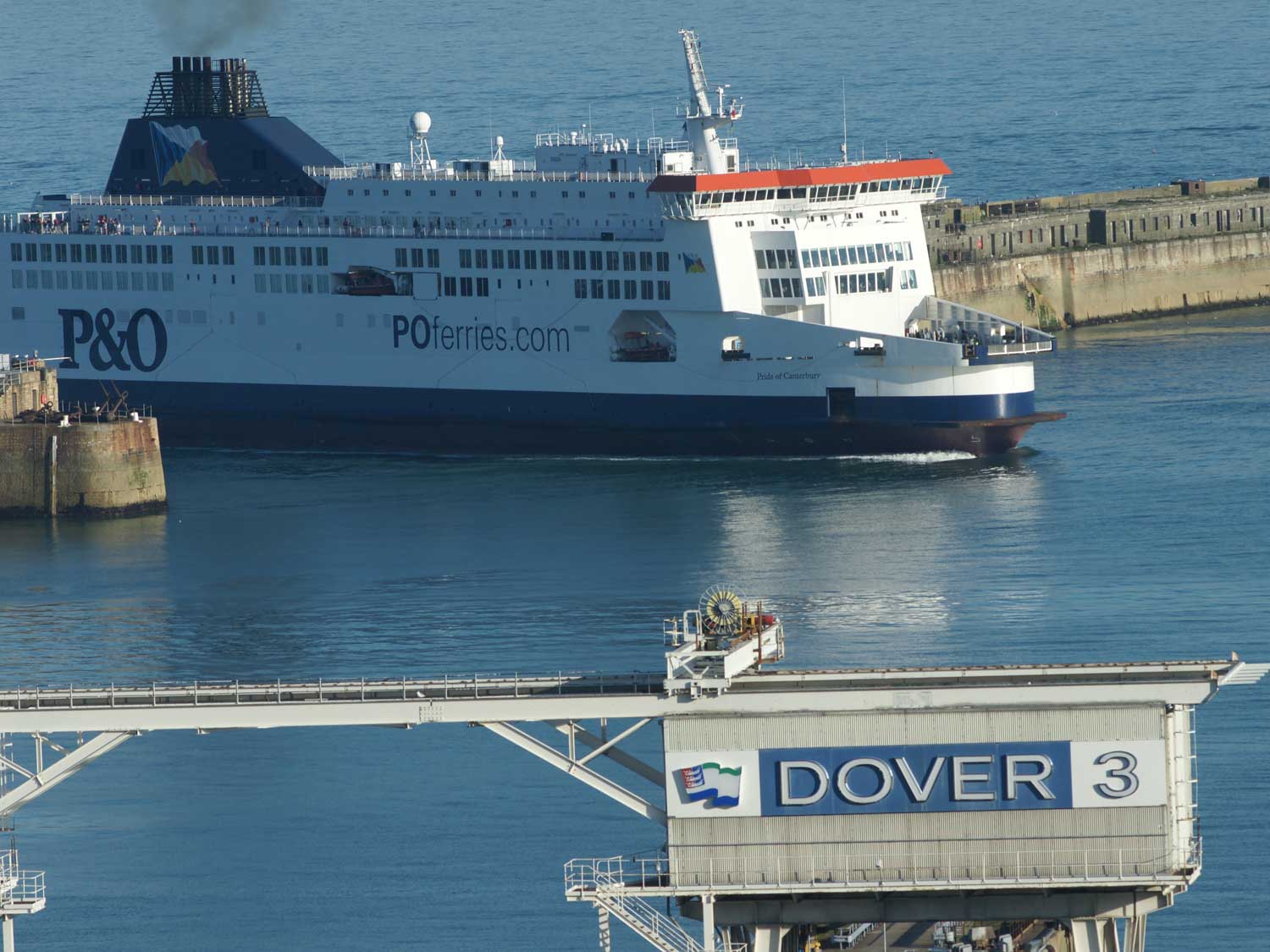
P&O inadvertently slash European Channel capacity

Freight services between the UK and Europe continue to face suspension after P&O Ferries’ Dubai-based owner, DP World laid off 800 workers last week, amid a controversial restructuring exercise. There are consequences in overland supply chains that had not been considered by most.

After announcing the immediate redundancy of 800 workers exactly a week ago, P&O said that its cross-Channel operations would be suspended “for a few days”. Today, services remain suspended between Dover and Calais, Cairnryan and Larne and Hull and Rotterdam, leaving many cross-Channel shippers few, if any, options, other than to wait for the ferry company to resume operations.

P&O linked the mass firings to the financial losses it has sustained in recent years (£100 million in 2021) and the assumption, which seems borne out by press reports, is that the agency-sourced replacement workforce will come more cheaply.

P&O Ferries carry 30% of cross-Channel trade, so any dispute that stops them operating removes a massive amount of critical capacity and will quickly lead to significant disruption.

The firing of staff with no notice has sent shockwaves through supply chains, the public and government and is showing no immediate signs of receding, which means service suspensions could be prolonged.

The company operates a fleet of 21 vessels across 11 ports and accounts for 30% of the  freight crossing the English Channel. It carries half the road trailers that pass through Dover every year and while vehicle volumes have declined 24% over the past five years, a total of 2.1 million trucks still used Dover in 2021.

The suspension of P&O’s services is yet another level of supply chain disruption for European transport operations that are already dealing with changing Brexit regulations, new UK border processes, port congestion and the continuing shortage of truck drivers.

P&O’s actions have removed a significant amount of capacity from the market and finding alternative sailings or Channel tunnel services - from carriers that don’t have the capacity to soak up all P&O’svolumes - will be very time consuming and challenging for teams that are already under extreme pressure.

Operations appear to be coping currently, but if P&O’s service suspensions persist, it is inevitable that the diversion of massive volumes to other carriers, primarily DFDS and Eurotunnel, will lead to congestion at the ports and delays in crossings for all users.

Metro has significant resource and capability focused on our customerss European supply chains, to ensure that they continue to operate effectively, despite the challenges of P&O’s service suspensions.

Our bespoke technology gives our customers supply chain visibility, of orders in transit, and our dedicated European team work closely with Eurotunnel and RoRo carriers in the primary short-sea ports including Calais, Rotterdam and Zeebrugge.

Since Brexit we have seen a reluctance of drivers to come to the UK and have consequently increased the number of vehicles carried on unaccompanied RoRo vessels, instead of road freight, favouring quieter regional ports with lots of spare capacity, including Bristol, Southampton and Tilbury to/from Zeebrugge, Antwerp and LeHavre.

To assess your situation and ensure your European traffic keeps moving, please contact us today and we will advise alternative routes to market throughout Europe. We have a huge overland operation, within our group of logistics businesses, that are delivering throughout the continent and will continue to be agile, regardless of events.

If you ship to/from Europe and need reliability and consistently cost-effective solutions, please contact Chris Carlile or Lewis White for a full review.


HGV driver

Good news; HGV driver numbers increasing

A recent surge in HGV tests by the Driver and Vehicle Standards Agency (DVSA) has massively increased the number of HGV drivers in the marketplace, with possible signs that the driver shortage crisis might finally be starting to subside.

While there were 49,000 fewer HGV drivers in the workforce in the fourth quarter of 2021 compared to the fourth quarter of 2019, a surge in testing by the Driver and Vehicle Standards Agency (DVSA) means that 27,144 HGV vocational tests were undertaken in the last quarter of 2021, representing a 53.5% increase compared with the same period in 2019. This doesn’t include drivers retiring or leaving the industry of course which need to be considered in the total figures.

Office of National Statistics (ONS) data released last week showed a gain in the number of drivers under 45 years of age, with under 45s now representing 37% of HGV drivers compared with 33.6% two years ago, and in the 34-39 age bracket, there are now more than 30,000 drivers compared with about 25,000 two years ago.

Elizabeth de Jong, director of policy at Logistics UK, said: “The new ONS data shows that attracting new entrants to the profession, and ensuring sufficient tests are available, are key to the resilience of the logistics sector.

Critics have previously pointed out that the long waiting time to take a vocational HGV test in Great Britain has been a key contributor to the driver shortage crisis, but it does now appear that the DVSA is making progress in catching up on the testing backlog, which grew out of restrictions imposed under the Covid-19 pandemic situation.

The marked rise in newly tested drivers came in addition to a further 30,000 drivers that entered or re-entered the profession in the third quarter of last year, according to the quarterly ONS statistics.

Hopes are rising that we may have reached a turning point in the UK’s HGV driver shortage crisis, but immediate action is needed to improve employment conditions, including access to quality, secure HGV parking facilities across the UK, to prevent the continued churn of HGV drivers due to the disillusionment with the poor-quality working environment.

Road transport cannot be avoided, as part of the international movement of goods, with drivers critical for container movements, international and domestic haulage.

We work with selected long-term transport partners, at strategic locations across the UK, to give us access to the widest pool of equipment and driver resource. Including rail operators and coastal feeder platforms to regional ports.

To learn more, or to discuss your situation, please contact Elliot Carlile or Simon Balfe, who leads our transport operations and will talk you through the current options to ensure consistency and reliability of first and final mile movement. Bespoke and tailored best fit services are what we deliver throughout the supply chain on an end to end valued added solution.

HGV driver

UK government funds 11,000 new HGV drivers

HGV driver numbers have shrunk by a quarter since 2019, creating a supply chain crisis that has accelerated post-Brexit, with an estimated shortage of between 40,000 and 100,000 lorry drivers, leaving gaps on shelves and triggering October’s petrol crisis.

Transport within the UK, Europe and on a global basis has been very high profile over recent years with resource shortages on every continent, which has impacted supply chains from start to finish, with hurdles at the first and final mile. Hopefully there is now some positive development within the UK. The next industry issue to overcome will be to ensure that there are enough new lorries available for the trained drivers, which are currently taking up to a year to be manufactured and delivered after ordering, due to component difficulties within the automotive sector.

The UK government has offered contracts worth £34.5m to train up to 11,000 new lorry drivers, to alleviate the ongoing supply chain squeeze caused by the pandemic and Brexit.

The government’s one-year investment amounts to more than it spent on HGV driver training over the previous eight years combined and is seen as necessary because low profit margins and endemic poaching of drivers has not incentivised the industry to invest in training, which costs approximately £4,000 per driver.

Training providers said that early indications were that rising wages and a growing public understanding of the importance of logistics professionals was encouraging people into the industry, with one Manchester-based training company receiving 4,000 applications since launching in December.

Training providers are also offering 50,000 drivers who held HGV licences but were not using them two to four-week courses to enable them to reactivate their licences and benefit from wages that can reach up to £70,000 a year in some sectors.

The problem for employers in investing in training a driver, is the chances are that that driver is going to get up and leave when offered a higher wage, which makes it very difficult to get a return on their training investment and why public funding is needed.

The number of lorry drivers fell by nearly a quarter during the pandemic, with the number of EU drivers down by one-third and many older British drivers retiring, with 308,000 drivers in the second quarter of 2019 down to 236,000 two years later.

Wages have risen 8% over the same period, to an average of £13.08 an hour, with average earnings for a driver now £35,000-£40,000 a year, which will help attract a new generation to an industry where the average age of drivers is over 50.

There is hope that the government will sustain its investment beyond the current round, which will run until the end of November, with an option to continue for a second year.

The Department for Education is keen to push the courses and get more adults to take advantage of the free courses and get on the path to well-paid careers.

We work with a number of selected long-term haulage partners across the UK to give us access to the widest pool of equipment and driver resource at the UK’s primary container ports, to offer cost-effective and efficient merchant haulage services. 

We also operate, within the group, one of the UK’s largest container hauliers and we are at the forefront of encouraging people into the industry and investing huge amounts in ensuring that we deliver customers goods at the right time and at the right cost.

To learn more or discuss your situation, please contact Elliot Carlile or Simon Balfe, who leads our UK multimodal transport operations, to talk you through the options.

businessman stressed

2021; a year of supply chain challenges

All around the world, companies have been impacted by supply chain challenges in 2021. With the pandemic’s disruption exacerbated by ‘Black Swan events', from Brexit, to the Suez Canal blockage, we have been working tirelessly to help our customers overcome these challenges and share critical information, so that they are always informed of what lies ahead.

Ensuring the right product is available for delivery, to the right customer, at the right time, in the right quantity and in the right condition becomes increasingly difficult when supply chains are pressured and unforeseen events impact operations.

To keep our customers and followers informed during 2021 we have been approached for our opinions regularly by the trade and national press, contributed to countless articles and shared breaking supply chain news, guides and insights, including:

  • 40 supply chain bulletins, to a combined audience of 32,000
  • 200 news updates on our web site attracting >100K page views
  • 1000+ social media posts, reaching over a quarter of a million users

Our first bulletin of 2021 highlighted early Brexit-related issues and outlined the rates, vessel space and equipment availability challenges that lay ahead.

A few bulletins in and we were considering the supply chain impact of the UK’s vaccine programme and, in preparation for the anticipated volume increases, were adding new personnel in key operational departments.

US port operations, particularly on the West Coast began to buckle under relentless volumes in early March, while European, North American and UK ports were anticipating a lull after the Evergreen EverGiven blocked the Suez Canal for six days, from the 23rd March. 

Lockdowns continued to ripple across Asia from April and container equipment shortages really began to bite, exacerbated by the ‘Suez Effect’, driving desperate shippers to move urgent cargo to air freight, with massive rate increases impacting many trade lanes and Metro’s Sea/Air services proving very popular with increasing numbers of smarter shippers.

May; and the same week we’re urging shippers to start planning their Christmas shipping schedules, the key Chinese port of Yantian stops accepting containers, after a coronavirus outbreak in the port area. Within weeks and the impact of the port’s closure has spread way beyond southern China, with carriers recording their worst ever transit times and rates at historic highs - 1,000% higher than 2020!

News of the heavy goods vehicle (HGV) driver shortage made mainstream news in June and Yantian finally opened, though Ningbo was to close just weeks later, after a single port worker tested positive for COVID-19, contributing to further sea freight rates increases, pushing increasing quantities of ‘distressed’ ocean cargo to air freight.

Throughout the year, while air freight has been uncertain, it has proven stable in comparison to shipping, with airlines being reactive and agile, switching on flights quickly to meet demand, where they have perceived a reasonable return on the investment and we have been ready to add charter capacity, to ensure that our customers’ expectations are met and delivery deadlines achieved.

Into the 3rd quarter and vessel space and the container equipment crunch continues, with market demand exceeding supply and rates skyrocketing. HGV drivers are considering strikes for better conditions, while demand for haulage is more than twice the 2019 level and 70% of hauliers are concerned about EU border checks due to come into force at the beginning of next year.

Metro’s technology team, meanwhile, have been integrating HMRC’s Customs Declaration Service (CDS), which will serve as the UK’s single customs platform, with our market-leading MVT supply chain platform and the CuDoS system, which automates and submits customs declarations in line with HMRC and EU regimes.

Our team also supported the development and adoption of emerging technology, across the shipping industry, by participating in the successful testing of new e-Bill of Lading (eFBL) standards, with FIATA , the trade association for 40,000 freight forwarding and logistics firms in 150 countries.

The final quarter of 2021 and the HGV driver shortage is intensified by further losses to the retail sector, factories in China are forced to close, due to power shortages, container carrier reliability drops to all-time lows, with ports subsequently omitted, to try and restore schedules.

Passenger airlines finally begin to convert and reduce the number of aircraft operated in ‘preighter’ configurations and return to flying scheduled passenger services on European, transatlantic and long-haul routes. 

As the year draws to a close, experts warn that the UK may run out of warehouse space, many shippers are still not ready for full UK border controls, manufacturing costs reach a three decade high, Omicron makes its debut and we share some Critical Christmas considerations.

This year we have also welcomed 60 new colleagues, to our Birmingham HQ and expanded our operations and platforms significantly, to ensure we deliver continued excellence, proactive communication and essential planning to customers. It’s what we do, to ensure we remain at the forefront of the industry, leading the evolution of freight and the dynamic solutions that benefit your supply chains.

However this year ends and whatever next year brings, you can rest assured that we will be available and ready to keep your supply chain running. Let’s keep talking and evolving as partners in an unpredictable environment and world. You are in safe hands!

Thank you for your support, Merry Christmas and Happy New Year.