Cut and run

The World’s biggest container line freezes out small shippers 

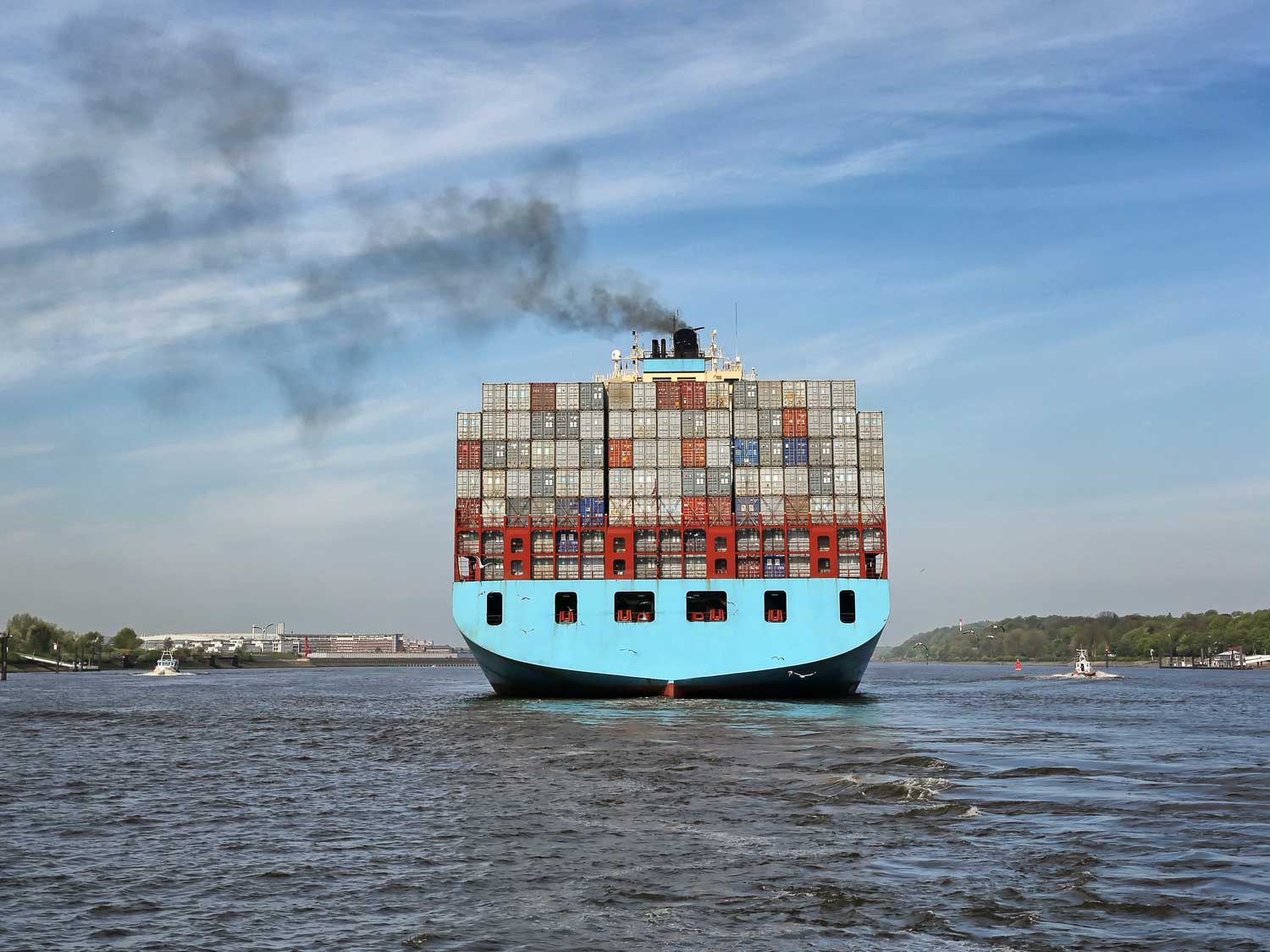
Leading shipping line, Maersk, has decided to focus on its largest volume customers, in a move that jeopardises the future of SME forwarders and leaves many shippers potentially exposed.

It is widely reported in the trade press, that small and medium-sized freight forwarders fear for their survival, following Maersk’s decision to offer them only its web-based spot market product, which is quite often unavailable on many trade lanes and routes.

Metro have secured long-term contracts with our partner carriers and shipping lines, across the three shipping alliances, but smaller forwarders, it would appear, are unable to follow suit and will face problems securing space and rates.

With Maersk, smaller forwarders can only get spot rates, which means they cannot plan a shipment in advance, because the spot quote has a very short validity. It can expire on the same day if the selected vessel runs out of space and it is not valid on the next vessel, which really restricts options for the forwarder.

While Maersk is the only carrier to focus on its biggest direct shippers (or BCO’s - beneficial cargo owners as they are termed), it is inevitable that other carriers may be considering a similar approach and the trade press is reporting feedback from sources that this is the case.

None of the shipping lines have yet made a clear statement that it planned to leave out forwarders in the future, but problems have been reported with making bookings. Smaller forwarders have been told late that there is no available space, or carriers are elevating pricing to a level that renders a shipment unviable, which raises suspicions of intention, according to trade articles.

For some medium sized forwarders, contracts have been renewed by the lines, but sometimes the rate is significantly higher, which is raising concerns that Maersk’s decision is the first step for other shipping lines to follow their strategy.

The problem for SME forwarders is that the carriers are offering bigger forwarders like Metro longer-term deals and that is immediately impacting smaller forwarders worldwide, because those kind of contracts are not now within their reach.

Without clear signals, and in a market where no shipper or forwarder can afford to shut the door on one possible carrier option, forwarders see little room to manoeuvre, but they are bracing themselves for the Maersk-type scenario they dread.

A trade source told the media this week that Maersk’s removal of contracted capacity had prompted other lines to do the same, claiming that one shipping line had “unofficially” told him that it was reducing capacity for smaller customers by 40%.

Another source concluded: “You can count main shipping lines on the fingers of your hands, but I think a few should not be able to kill thousands of freight forwarders. This is the risk.”

This is not the first time that container shipping lines have sought to cut-out freight forwarders and while previous efforts have quickly floundered, the digitalisation of the freight process, means that this time around they can offer short-term access to services via their spot rate platforms, without supporting SME forwarders.

In our view the freight forwarder is more essential than ever before, in supporting customers overcome the continuing minefield of logistical problems and in supporting carriers operate their capacity effectively.

Increasingly reliant on digital tools, carriers do not have the mindset or capability, to provide the support, feedback and service that shippers - of all sizes - need today.

We help our customers go global with ease, with advice, online services and real-time visibility of every shipment's journey. 

Shipping lines manage expensive assets and resources, that move between ports on fixed routes, but modern supply chains are fluid and need to react quickly to keep pace with demand, which is where a forwarder like Metro is invaluable in identifying requirements, finding solutions and allocating the right resource. Credibility and loyalty to our partners in the supply chain built up over decades really does make a difference.

And unlike the lines, who will favour their own services, we scan capacity opportunities globally, so that we can direct your cargo where your deadlines can be met in the most efficient and cost-effective way possible. 

Our goal is to help our customers improve productivity and profitability, to enhance their bottom-line and make them more successful.  Through unique initiatives and innovation.

Please contact Elliot Carlile or your usual Metro account manager, to discuss the best route to market and current fluid situation in the global logistics environment. We will have the answers that you need to plan your business continuity, in a challenging environment.

coronavirus4

China’s continued zero-Covid challenge for supply chains

The lockdowns and restrictions that China’s zero-Covid strategy risk, may create greater disruption than earlier waves of the pandemic, threatening already stretched global supply chains.

Beijing’s strict zero-Covid policy has curbed local outbreaks with mass testing, snap lockdowns, vigilant surveillance and extensive quarantines, but new variants such as Omicron have seen outbreaks intensify since the autumn.

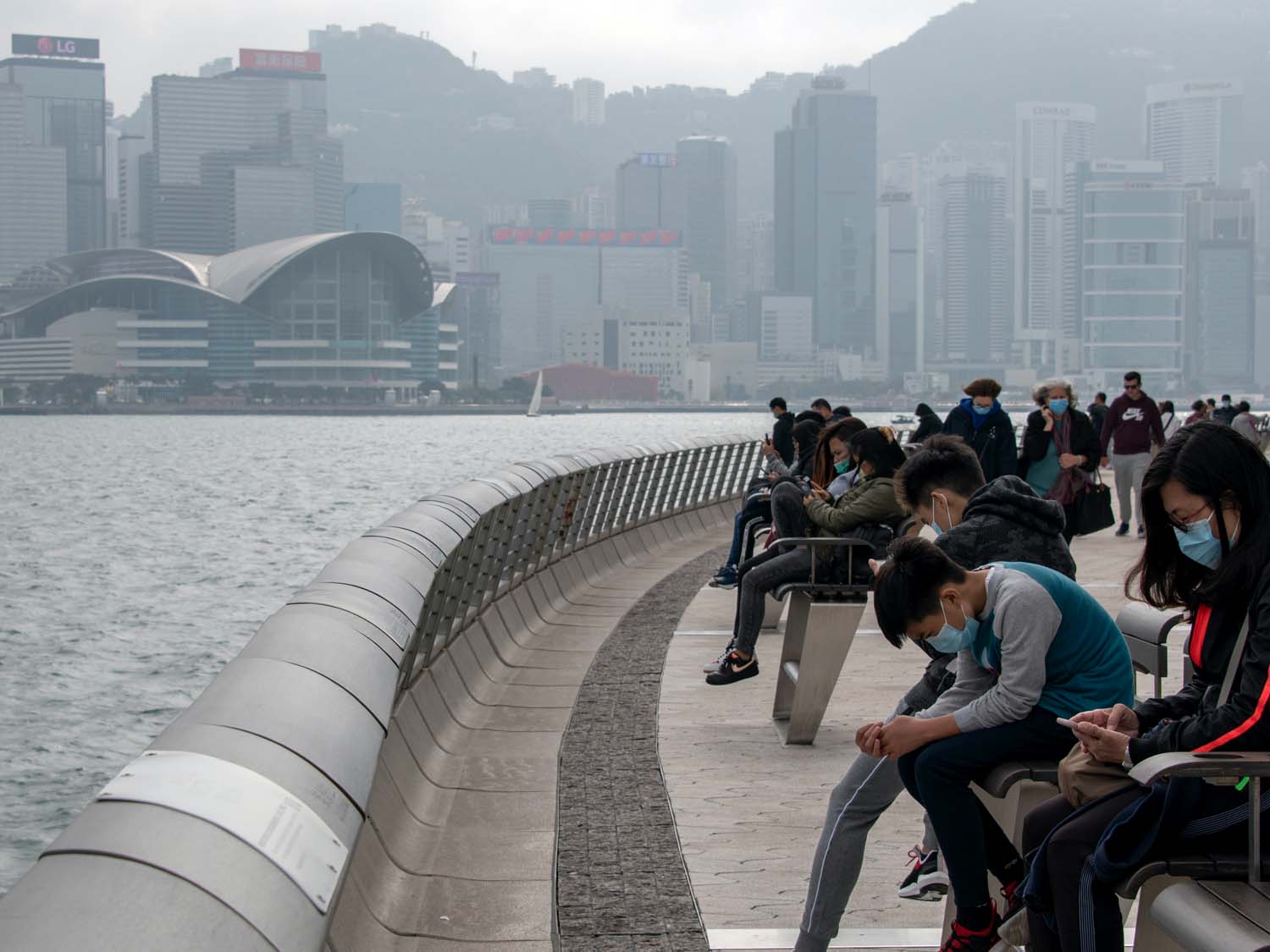
China is determined to prevent any further Omicron outbreaks, especially as it prepares to host the Winter Olympics next month. It has recently imposed restrictions to maintain its zero-Covid target, with a lockdown in the central city of Xi’an, mandatory testing in Tianjin and parts of Zhongshan, Zhuhai and manufacturing hubs close to Hong Kong. And these are just the incidents that are known and get reported. There will undoubtedly be greater influence and impact, from the invisible actions taken.

Meanwhile restrictions have been eased in Ningbo, home to the world’s third largest container port, which has been in partial lockdown for most of the opening days of 2022, making entry and exit far easier for truck drivers heading to the port’s five container terminals.

Chinese ports are being impacted by regional lockdowns, with the situation varying widely from port to port and carriers changing vessel rotations at short notice, to avoid badly impacted gateways. This evolving situation raises the potential of even further disturbance, to already delayed shipping line schedules, from the main China base ports.

The situation may be exacerbated in the coming weeks, as China enters the build-up to many seasonal factory closures during Chinese New Year and Ningbo is still clearing backlogs, with many shipments having to be re-routed to Shanghai, to meet mother vessels.

Hapag-Lloyd is omitting Ningbo on two of its Asia-Mediterranean services and reinstating the Shanghai call, even though Shanghai is already severely congested, with most vessels already delayed by around one week. Very early, on their voyages into Europe.

Supply chains can usually cope with short-term lockdowns, but added shutdowns over a few weeks cause significant problems and with Covid, the lunar new year holiday and the Olympics all coming together, risks are multiplied and magnified.

After the initial virus outbreak spread from Wuhan over the lunar new year in 2020, the Chinese government blocked transport, preventing migrant workers who had travelled over the holiday period from returning to their jobs and factories shut for several weeks.

The latest restrictions have already impacted multinational organisations, with reports of Volkswagen and Toyota shutting their Tianjin plants last week and Xi’an chipmaker Samsung unable to get staff to work because of the lockdown.

And infections may spread further after Beijing reported its first locally transmitted case of Omicron, just weeks before the opening of the Winter Olympics in the capital.

Analysts fear that if infections spread, manufacturers would be as badly hit as they were two years ago, with few companies having their supply chains outside China, because these are strategic issues, which take a lot of time to stabilise.

Rather than moving production entirely out of China, some companies are trying to build second suppliers in China, while seeking alternative sources for components, but few of these initiatives will have progressed, as geographic diversification is often complex to get in place.

Supply chains have never faced so many challenges and with the situation in China being so fluid and changing rapidly, it is more critical than ever that you have the support of dependable partners. 

Metro share the latest supply chain news and most important global developments, so that you are always informed about the best alternatives and options, to keep your supply chain optimised. 

For further information and to discuss your ongoing requirements please contact Elliot Carlile,  or your usual Metro account manager to discuss alternative routes to market and manufacturing facilities.

AIS

Metro launch enhanced tracking tool as on-time ship arrivals hit six-year low

With global shipping schedule reliability at a six-year low and just 33% of ships arriving on time, during a chaotic year for container shipping, Metro Shipping is enhancing its MVT supply chain platform, with even greater scrutiny of real-time vessel tracking.

The ability of vessels to hit their port berthing window impacts shippers and other carriers that have goods or equipment tied up on the ocean voyage, with ripple impacts along the extended supply chain.

Metro’s new ‘Vessel Tracking’ tool links directly with (AIS) transceivers on ships carrying Metro cargo, to follow real-time progress and detect any ETA change or arrival at POD

The busiest trade lane, the eastbound trans-Pacific to the US West Coast, remained the most under pressure, with on-time performance at 10.4% for November, a slight improvement from October, with an average delay of just over 13 days from Asia in November, which is double the average delay seen a year ago.

Asia–US East Coast services had the seventh-lowest reliability among container trade lanes, Sea-Intelligence data shows, reaching 18.7% in November, up from 15.5% in October. Ships arriving on the US East Coast from Asia were delayed between eight and nine days, also double the level seen in November 2020.

The Asia-North Europe trade lane saw schedule reliability hit 24.5% in November, down from 43.5% in November 2020, while the Asia-Mediterranean lane sat at 22.3% voyage reliability.

On-time performance varies widely across carriers, as ships have faced delayed berth calls and long waits at anchor due to heavy congestion across many ports globally, forcing carriers to make last-minute adjustments to try to return ships to schedule, which has affected reliability.

BBC warn that shipping delays could continue well into 2022 - READ MORE

The 2M Alliance showed the highest schedule reliability, with 46.3% of Maersk vessels hitting their berthing window, Hamburg Süd hit 40.4% and Mediterranean Shipping Co achieving 32.4% on 2,555 voyages during November.

Ocean Alliance members, though, saw generally worsening reliability, with CMA CGM drop 3.7% to 27.9% across 3,352 voyages and Cosco Shipping reliability fall to 20.2% for November on 2,863 voyages.

Don’t forget the statistic of 33% on time arrivals relates to all global container vessel movements – it is not route specific. Deep-sea and, in particular Asia/ Europe/ Asia schedules would actually fall significantly below this figure, with some quoting the majority of vessels arriving off schedule, on the longer haul lanes.

With our enhanced tracking tool, you can ‘see’ the delays and issues, so you can plan and communicate this within your business and to end clients. This is our objective – an early ‘warning system’ that allows you to adjust your supply chain accordingly. It is expected that vessels will continue to be delayed for the foreseeable future and maybe the whole of 2022.

The MVT 'Track Your Vessel' module automatically follows all ships carrying containers with our cargo on the water. The module instantly detects an ETA change or an arrival at POD and automatically updates the MVT platform.

If the ETA change is +- 7 days, the relevant Metro operations team is sent a message by MVT, to advise them that a significant change has occurred and remedial action may be required.

Our technical solutions team are constantly innovating and evolving the MVT platforms to ensure that, whatever the challenge, our customers' products are in the right place, at the right time. 

Creating unique technical and operational supply chain solutions, to address each customer’s unique situation, is what differentiates us and has provided the platform for over four decades of sustained growth.

For further information on our MVT platform and to discuss how we can enhance your supply chains, please get in touch with Eilliot Carlile,  or your usual Metro team account manager, who will advise the options available, to ensure that expectations are met despite market impact.

China exports

Long supply chains offer innovation and lower prices

Many companies believe that the logical response to Covid disruption is to shorten supply chains, but a new academic study suggests longer supply chains may actually provide more innovation and economic benefit.

A team of academics from the University of Oxford and Harvard University found supply chains – in which producers bought input goods, converted them into other goods and sold them to other producers – amplified the effects of technological improvements and price reduction.

“Longer production chains for an industry bias it toward faster price reduction, and longer production chains for a country bias it toward faster growth,” said the report.

In its findings the reports shows first, that the rate of change of an industry’s price is a function of its position in the production network. This happens because productivity improvements accumulate along supply chains. As a result, industries that rely on longer supply chains experience stronger price declines than others. 

Second, they show how this observation can help explain cross-country differences in economic growth. 

Because an industry’s position in the production network and the industrial composition of a country are slow-moving variables, aggregate growth can be predicted from the structure of a country’s production network. Intuitively, countries whose final demand relies relatively more on industries with longer supply chains should grow more quickly. 

The academics found that detailed observations across industries and countries are consistent with both predictions and help explain why some countries grow faster than others.

The study comes as firms have sought to reduce risk by shortening supply chains and researchers admitted their results were “potentially counter-intuitive”.

Doyne Farmer, professor of mathematics at Oxford University, said: “The more steps in the process, the more opportunity there is for innovation. Industries with greater supply chains do better. We have been able to predict this over long periods. It does not explain everything that happens, but the principle can be seen operating.”

The report said an industry benefited from “both its own productivity growth and the accumulation of productivity improvements in its upstream suppliers”.

“As a result, the longer its chains of production, the faster its expected rate of price reduction.”

James McNerney from Harvard's Growth Lab and lead author of the study, said: “We show that production chains accumulate the benefits of technology improvement so that long production chains facilitate faster price reduction in industries and faster GDP growth in economies.

Our experience does show that shorter supply chains offer many of the same benefits, including cost-savings, access to skills, and the flexibility to scale up, down, or in a whole different direction.

Shorter supply chains (near-shoring) may also offer better collaboration and communication due its close proximity to the client, striking an appealing middle ground between the convenience of a domestic development team and the affordability of using far-off vendors.

Near-shoring also allows businesses to conduct processes, such as warehousing and logistics services further downstream, in order to be more efficient and reduce costs. 

Extended supply chains (off-shoring) and shorter supply chains can offer benefits and often a blend of both is appealing. 

Whichever strategy customers select, we work with them to improve supply chain resilience in five key areas:

Understanding – With a thorough understanding of our customers’ requirements and objectives we create supply chain solutions that draw on all options available in the current market.

Visibility – Our cloud-based supply chain management platform, MVT, links all participants and critical time-scaled events to provide end-to-end visibility across the extended supply network, with global control down to individual SKU level.

Agility – Slower moving lines from any origin can be deferred, while priority orders can be highlighted and expedited, to increase speed to market and accelerate the cash-to-cash cycle.

Flexibility – It is simple to change supply lines, adding and monitoring new vendors, product flows and outbound order data, from any location.

Contingency – MVT’s exception alerts and rules-based solutions, correct operational non-conformities, without human intervention, or alert users to issues outside set-parameters for corrective action.

For specific information, or to discuss how our technology could support your supply chain, please contact Simon George our Technical Solutions Director or Elliot Carlile.