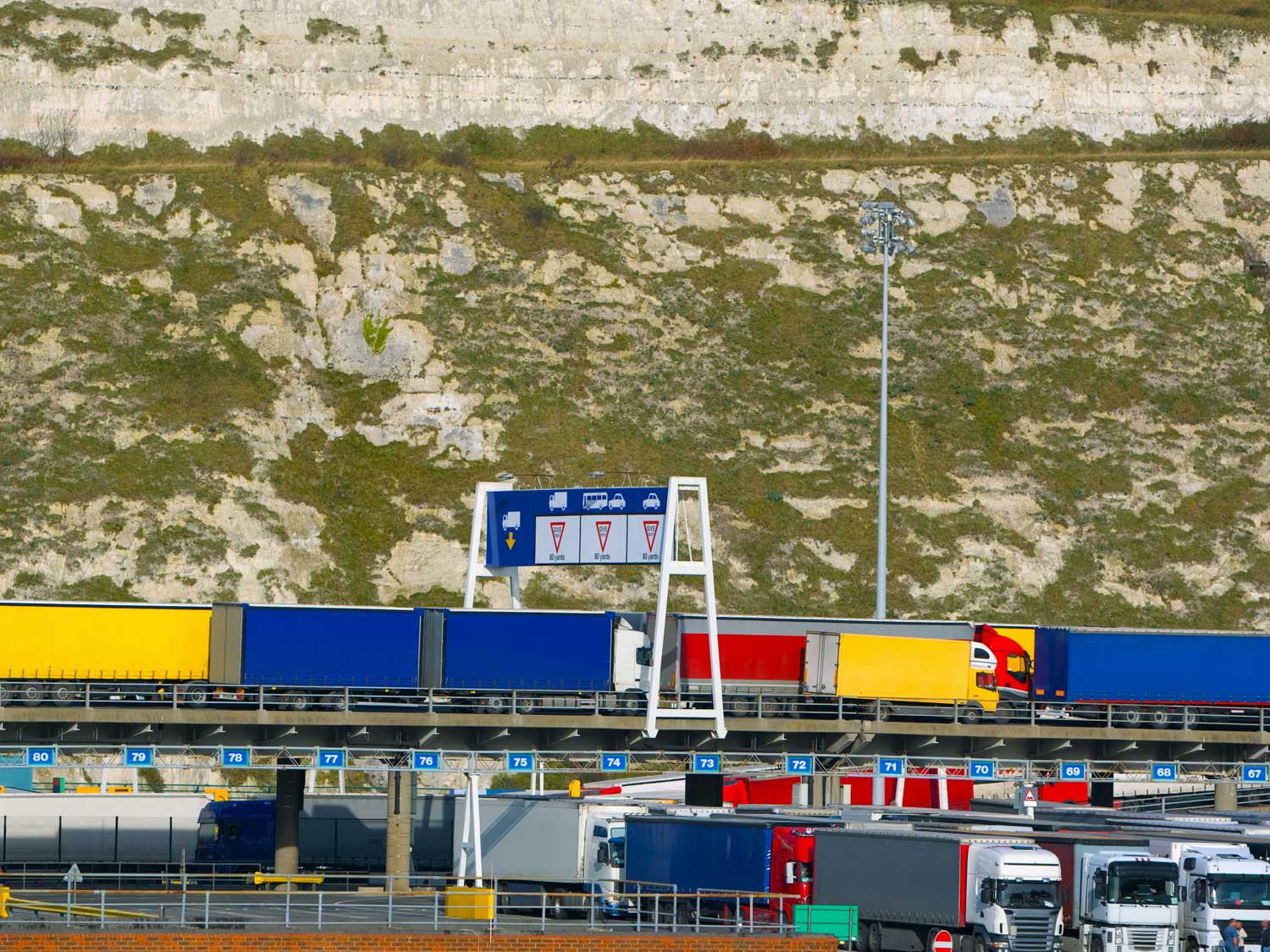
Dover queue 2

EU/UK border controls set for July put back again

The UK government has again delayed the introduction of further border controls on goods from the EU, due for implementation from July, pushing them back until the end of 2023, suggesting it did not want to add more costs at a time of fast-rising inflation.

New import controls, including on EU food products, due to begin in July of this year, have been put back for a fourth time, with the government saying "it would be wrong to impose new administrative burdens and risk disruption at ports" at a time of higher costs due to the war in Ukraine and rising energy prices.

The government said. “British businesses and people going about their daily lives are being hit by rising costs caused by Russia’s war in Ukraine and in energy prices. It would therefore be wrong to impose new administrative burdens and risk disruption at ports and to supply chains at this point. The remaining import controls on EU goods will no longer be introduced this year - saving British businesses up to £1 billion in annual costs.”

Port operators, many of whom have already built border control posts, have reacted angrily, saying the government’s announcement is a major policy change and that the facilities could become redundant, wasting millions of pounds of public and private funding.

Specifically, the following controls which were planned for introduction from July 2022 will now not be introduced:

•   Safety and security declarations on EU imports

•   Health certification and SPS checks for EU imports

•   Prohibitions and restrictions on the import of chilled meats from the EU

•   Sanitary and Phytosanitary (SPS) checks on EU imports currently at destination to be moved to Border Control Post (BCP)

Current import controls on EU goods will stay in place and traders will continue to move their goods from the EU to GB as they do now:

•   Import Customs Declaration

•   GVMS declaration

•   Pre-notification into IPAFFS for POAP, Live animals, Plant Products

The government’s statement confirmed that no further import controls on EU goods will be introduced this year and that businesses can stop their preparations for July now. In many ways this can be  considered a good thing that is positive for business; in other ways just further delays that will occur at some point that will need to be addressed.

They will now publish a Target Operating Model in the Autumn that will set out the new regime of border import controls and will target the end of 2023 as the revised introduction date for the control’s regime.

Metro are at the forefront of delivering EU customs brokerage solutions, with our automated CuDoS declaration platform and a dedicated team of over 40 customs experts.

Now available to new customers, our CuDoS customs brokerage platform is optimised continuously, in line with the regimes in force on both sides of the Channel.

Automating and submitting customs declarations and associated paperwork, CuDoS simplifies compliant border processing, in either direction. 

To discuss your situation and to learn how we automate customs declarations for businesses of all sizes, please contact Elliot Carlile to talk through the options. 
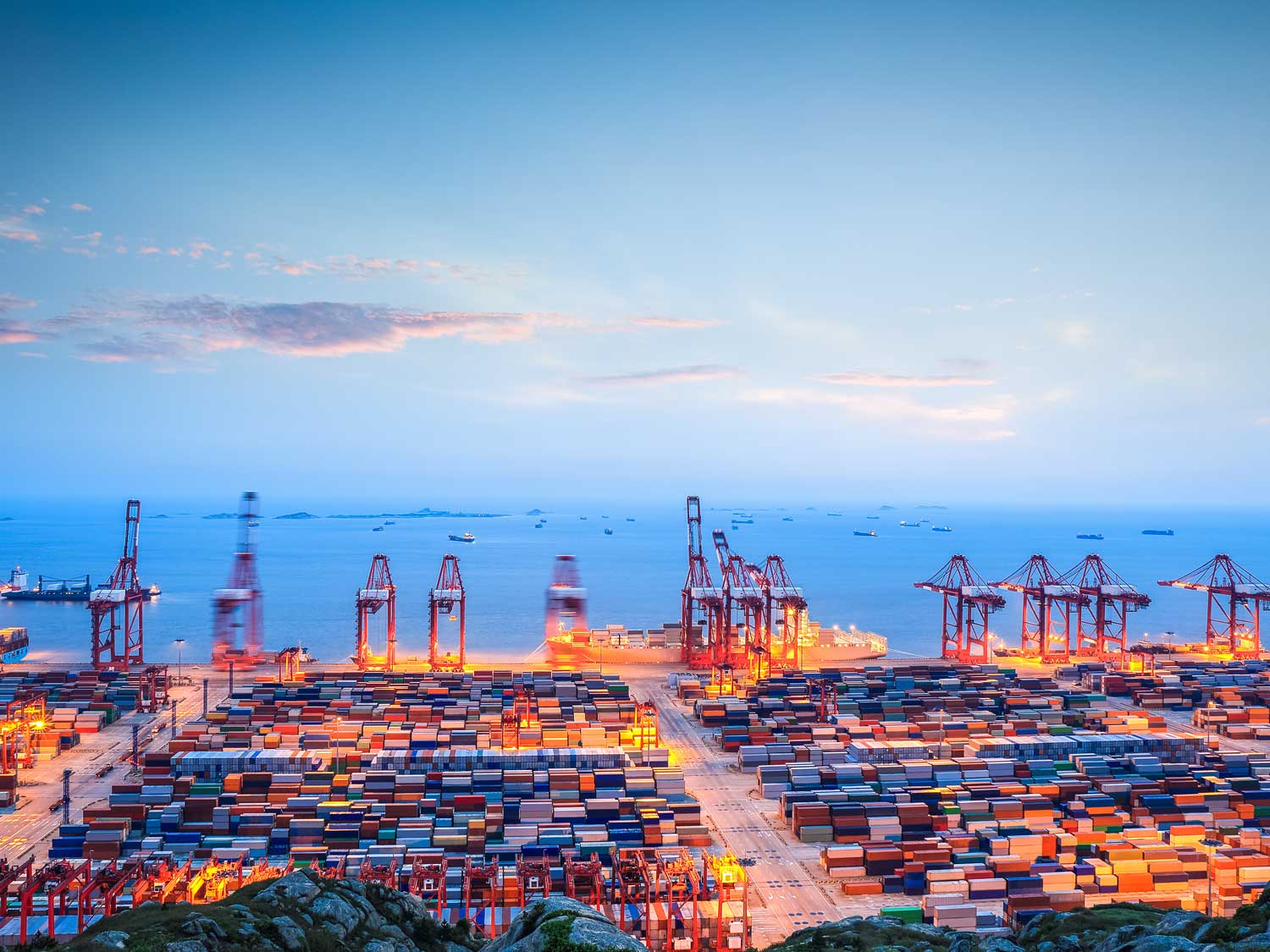
Shanghai port

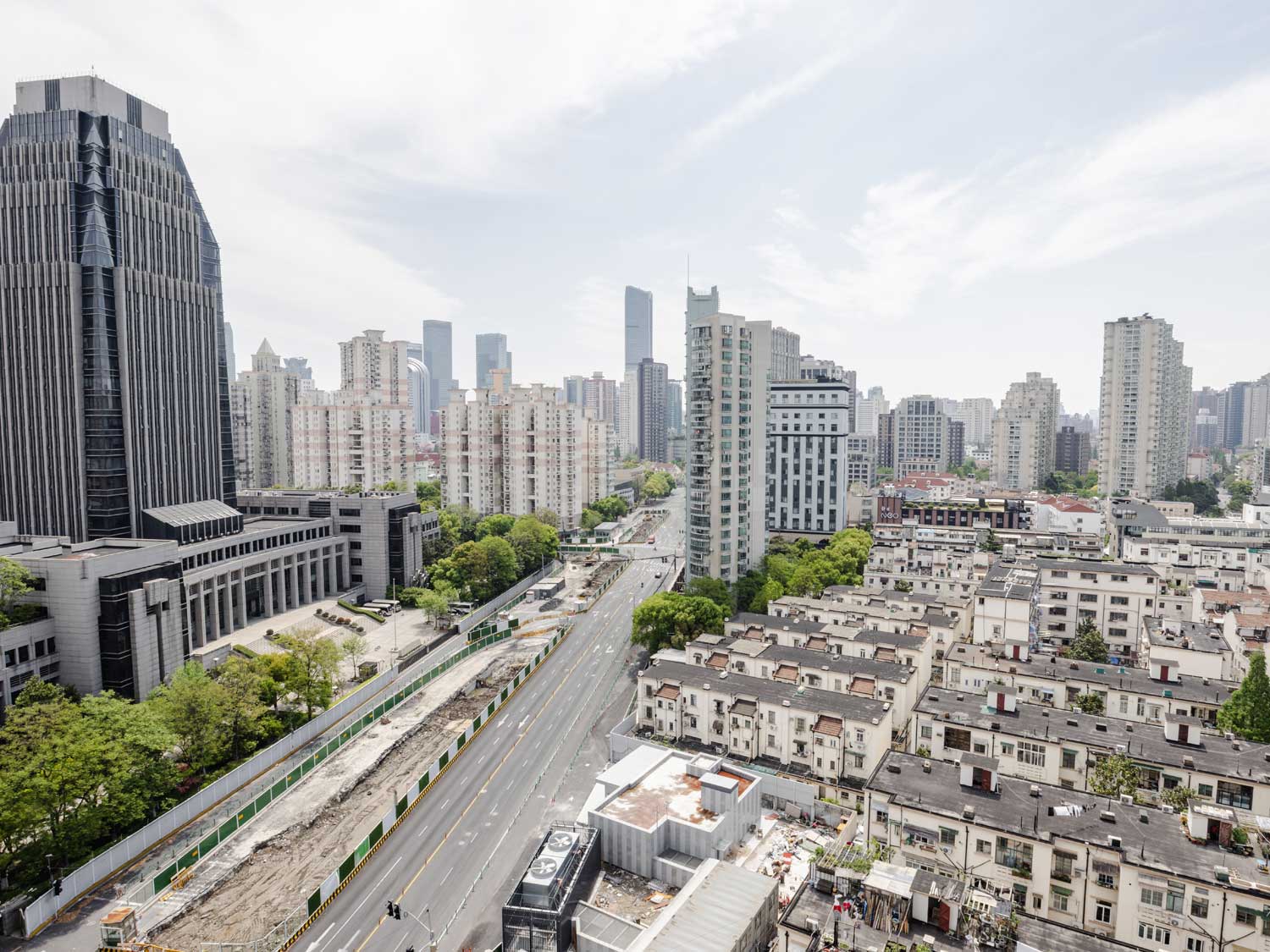
Blanked Shanghai sailings slow to materialise

As Shanghai enters the fourth week of an indefinite lockdown, container shipping lines are skipping calls at main Shanghai terminals, with more blank sailings anticipated as vessels waiting at Chinese ports double.

Until the lockdown situation is resolved, which appears challenging when putting the Omicron variant against zero-tolerance, we expect drops in export demand, port omissions and more blank sailings, as well as Shanghai-bound cargo increasingly being discharged elsewhere, while trade press reports that the number of container vessels waiting outside Chinese ports has grown by 195% since February to over 500 vessels in April.

Some carriers, including Maersk, have already stopped accepting reefer and dangerous goods cargoes into Shanghai and while the port remains operational, the severe shortage of trucking capacity means the port is slowly being filled with import cargo that cannot be collected, while widespread factory closures are likely to hit export volumes.

Ocean Network Express (ONE) confirmed that trucking remains limited, with terminals congested and while reefer yard plug capacity remains stressed, there is a possibility that reefer containers may not be discharged in Shanghai until the situation eases.

In Hong Kong the number of new COVID-19 cases dropped below 1,000 on Friday for the first time in more than two months, but Shanghai could be facing a protracted lockdown, as more new cases continue to be reported.

China has been keeping ports operational during lockdowns using a closed loop system where the workers live on site, but container yards have grown congested as trucking capacity has dropped.

Compared with the shutdown at Shenzhen’s Yantian port last July, the Shanghai lockdowns have not yet resulted in widespread blank sailings on Asia-Europe, trans-Pacific or Mediterranean services.

In Shanghai in 2022 there was a small initial blanking spike, which was entirely driven by demand to America’s East Coast, prior to the lockdown, as a result of general market turmoil and the level of blank sailings has since dropped below the 2021 level.

According to current carrier schedules there is a slight reduction in the number of blank sailings, though this is likely to reflect the carriers not yet knowing, or at least not publishing the updated schedules of the sailings they will have to blank.

The shipping lines have been cautious in blanking sailings following lockdowns, but not loading as much cargo as planned in Shanghai and not blanking any capacity could erode export freight rates, so shippers should anticipate an increase in blank sailings in the coming weeks, should the Shanghai lockdowns continue.

Lockdowns are limiting available labour for factories and supply chain infrastructure, with reports of empty-container depots being shut, and even where they are open, there is a lack of available equipment. Particularly in the north, affecting the ports of Ningbo, Qingdao, Shanghai and Tianjin.

With bookings from China significantly reduced for the coming weeks, there are bound to be more blank sailings and not just for the lack of exports, but also the operational headaches with not being able to discharge import reefer and dangerous goods containers at some terminals.

Despite talk of a “slight easing” of restrictions in Shanghai, the number of new cases of omicron continue to rise, which means the government’s strict general lockdown measures are likely to continue.

Regardless of the challenging situation in Shanghai, we are working closely with our network partners, carriers and own offices across China, to monitor the local and regional situation and find solutions for our customers, including time-sensitive shipments.

The situation develops continuously and we will keep you updated as new intelligence and insights are received from our colleagues in China. 

We maintain long-term contracts with airlines, carriers and shipping lines that secure space and rates, to provide the best alternatives and options, whatever the situation.

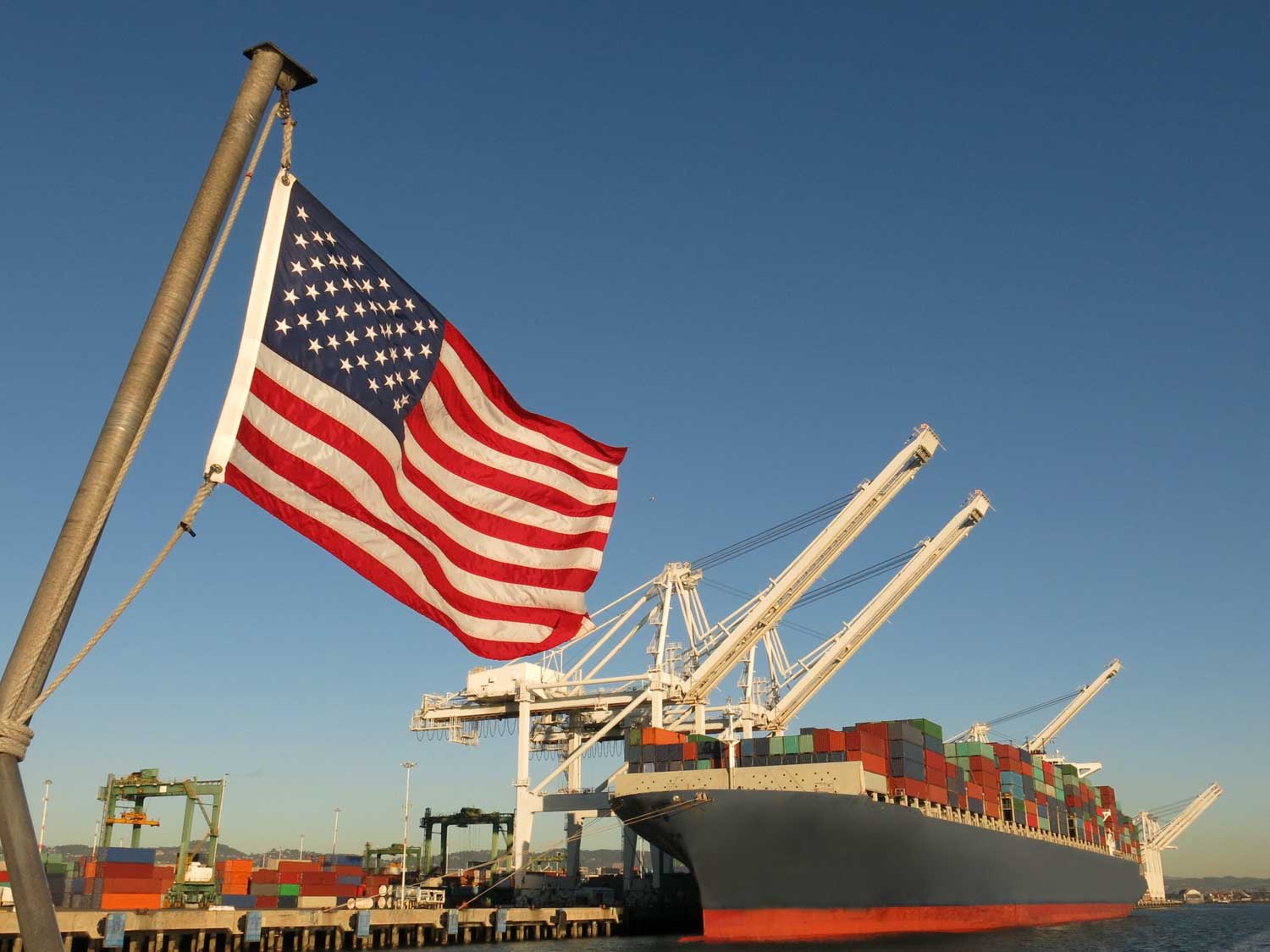
US flag and port

US east coast port congestion continues to build

Reacting to fears of labour disputes and disruption at west coast ports, many US importers diverted cargo from Asia to the east coast – only to find that Atlantic congestion may be worse than on the Pacific.

Importers on the west coast are getting their cargo quicker than their peers on the Pacific coast, with wait times of less than four days at Los Angeles and under two days at Long Beach, but nine-ten days at Charleston and three-four days at Norfolk.

Ports on the US east coast have been battling waves of congestion for the past year, with overwhelmed terminals leading to intermittent vessel backlogs outside the ports of Charleston, Savannah, New York and New Jersey, and Virginia. This is despite government intervention and assistance in alleviating the issues which are now embedded throughout The USA.

The pile-up in the east began building in the second half of last year when eastern gateways received more mega-ships on their berths, as congestion on the west coast prompted shifts of imports. 

In February, carriers warned that dwell times had gone up at several east coast ports, including Newark, Virginia and Charleston, with delays expanding by several days and some expect the situation to deteriorate further, with expectations that the east coast could be the next hot spot for congestion.

The migration of imports from Asia to the east coast gained momentum as contract negotiations between longshoremen and terminal operators, due to start next month, have previously led to labour disputes that have disrupted cargo flows.

Analysts remain hopeful that the likelihood of a strike or shut-out in California is relatively low, given the pressure on the union from the Biden administration to avoid disruption.

The problem is that while ports on the eastern seaboard do not have labour contract negotiations looming, they face many of the same issues as the west coast and in particular the lack of space and labour shortages.

MSC informed customers this month it would temporarily stop calling at the port of Charleston on its route to South Asia because of extended wait times.

Traffic is moving from the east coast to the Gulf of Mexico, increasing container imports to Houston, which increased container volumes 27% in January, with observers noting it was already getting swamped with containers.

We would ask that customers shipping to, or importing through, the west coast speak to us at the earliest opportunity so that we can review their situation and prepare their supply chain.

We have set up contingency platforms for customers to ensure that product is delivered to market in the USA, without the delays experienced with alternative providers.

For further information please call your established account manager, who will share all current options. They will take you through the alternative services and solutions, that we are able to offer, to ensure that your product reaches its destination, within vital deadlines.

Shanghai lockdown 2

COVID update: Shanghai lockdown impact

China’s economy grew faster than expected in the first quarter, expanding 4.8%, but the risk of a sharp slowdown over coming months has risen as Shanghai’s lockdown is extended indefinitely and further COVID-19 curbs may follow. 

Nearly all of Shanghai is now under lockdown, with most residents unable leave their homes, even for food, while some businesses are operating under “closed loop” conditions, where workers sleep on site.

Cargo deliveries into Shanghai Pudong Airport, meanwhile, are becoming backed up. Prior to the city’s lockdown, around 1,000 consignments would typically arrive each day, with a collection rate exceeding 80%, but because there is not enough trucking capacity, due to driver isolation rules and restrictions on vehicle access to the road infrastructure, that pick-up rate has slumped to just 10%.

In addition, many other airports throughout China, are becoming very congested and flights are having to be cancelled or diverted due to operational issues. Zhengzhou Airport (CGO) has effectively been closed for the next week, due to an influx of air freight, as a consequence to the issues in Shanghai and the surrounding region. This is having a huge impact on rates and available capacity, as well as carriers suspending inbound freight into China, due to 10-day backlogs in accessing the cargo once it has arrived. It really is quite a mess.

Cross-province road transport and the different restrictions and health requirements imposed locally, mean truck drivers are having to manage an array of policies and typically wait hours, each time they need to undertake Covid tests, with other cities becoming more reluctant to let trucks from Shanghai enter.

Shanghai International Port Group (SIPG) has denied there were more than 300 ships waiting to load or unload at the port earlier this month, insisting they are maintaining normal 24-hour operations and that the average berth waiting time for container vessels was less than one day. Real-time vessel tracking platforms tell another story!

While there has been no noticeable diversion of container ships from Shanghai so far, increasing quantities of cargo is being diverted to alternative ports, including Ningbo, Qingdao and Tianjin, and LCL shipments from Shanghai are under threat, due to cross-contamination fears in the warehouse.

Data reports in the press suggest that Shanghai container ports are experiencing “significantly reduced” volumes, with the seven-day average throughput now down 33% and as the supply chain situation in Shanghai continues to deteriorate, the container port is running out of capacity for some types of cargo, with Maersk ceasing bookings for refrigerated and dangerous cargo.

Shanghai factories that have been operating under ‘closed-loop systems’ may soon be forced to stop work due to a combination of material shortages or logistical challenges that make moving people and goods increasingly challenging, plus workers who have been contained for more than three weeks and need to be replaced.

Reduced land-side trucking capacity is expected to continue at all main ports, effectively reducing the capacity available for cargo collections and deliveries, which means factories may not meet planned delivery schedules. We recommend checking with your vendors, to clarify the status of your orders, and whether they have actually been manufactured.

We will continue to closely monitor the situation and will update as changes occur. When China does begin to lift lockdowns and supply chains start to flow freely again, we will share with all of our customers as quickly as possible, as the likely outcome after the situation is resolved, will be pent up demand for delayed goods reaching market and we suspect a congested environment from May onwards, as production is increased in line with lockdowns being lifted. More news to come…..

Metro’s cloud-based supply chain management platform, MVT, simplifies the most demanding global trading regimes, by making every milestone and participant in the supply chain transparent and controllable, down to individual SKU level. 

To discuss how our technology could support your supply chain, please contact Simon George our Technical Solutions Director or Elliot Carlile.