
US graph

<b>US freight market round-up</b>

There was no pre-CNY transpacific rush this year and with China re-opening, factories are expected to open again in the second half of February, which is why carriers have tried to maintain rates. The CNY has given US ports a respite and most are now clear, with hardly any ships waiting outside West Coast ports and very few off the East Coast and Gulf.

Asia

The traditional ex-Asia space and volume crunch around Chinese New Year was extremely muted and market capacity remained higher than previous years, so we expect blank sailings to continue, as the lines attempt to stabilise rates.

Maersk’s 2022 Q4 volumes were down 14% on 2021 and it announced on Monday the “temporary suspension” of its TP20 transpacific loop, while OOCL’s North American liftings were down 16% over the year.

Despite US retail sales performing well in 2022, amidst higher inflation, global economic turmoil is adding to the uncertainty as to how strong demand from Asia will be in the second half of this year, with the lines struggling to balance transpacific capacity, if demand does not pick up in the summer-fall peak season. 

In the current transpacific environment in which spot rates and demand have fallen dramatically, the focus is now on cutting additional fees, such as detention charges for the late return of equipment, which can add hundreds of dollars to the total transportation cost. 

Shippers want more free storage days and the container shipping lines say (off-the-record) that they’re willing to be flexible on detention if they receive compensatory freight rates.

The container shipping lines claim that their problems have been amplified because their operational and administration costs increased significantly during the pandemic, and while freight rates have been dropping, the carriers’ per-unit costs have increased. On the eastbound transpacific trade-lane the lines claim units costs are up by >40% due to vessel backlogs and inland bottlenecks that add delays and costs to the supply chain, rising prices for bunker and diesel fuel, and administrative costs.

Detention charges normally kick in after four or five days and the daily costs for chassis, which the lines lease from intermodal equipment providers, vary depending upon the contractual relationship they have with the equipment lessor. Other costs are more nebulous, such as the potential revenue that is lost when the equipment sits idle at a warehouse for days or weeks. 

Carriers tend to be more bullish about demurrage charges, which are levied by the terminals when inbound loaded containers are left on the docks after their free days.

Transatlantic

The number of blank sailings from Europe to the U.S. has been minimal despite demand and rates softening and capacity is set to increase as MSC and Maersk are adding more vessels in the Mediterranean loops in the next few weeks.

Falling volumes has assisted the easing of congestion in U.S. East Coast (USEC) and U.S. West Coast (USWC) ports, with equipment availability getting better as congestion eases. 

Low empty stacks at inland depots are becoming established in some areas, but we still recommend equipment pick-up from the Port of Loading if possible and early shipment booking.

From the U.S. to Europe there is plenty of USEC capacity available, but services from Gulf and USWC ports remain tight and the market is stable. Gulf Coast to Europe services continue to have medium to high utilisation levels, though this is softening with the reintroduction of capacity.

ILWU

During the nine-month-long impasse in negotiations, between the International Longshore and Warehouse Union (ILWU) and the Pacific Maritime Association (PMA) dockworkers have engaged in unofficial actions at ports in Southern California, Northern California, and the Pacific Northwest that, although limited in scope and duration, have nonetheless caused disruptions in cargo handling. 

Shippers will continue to route cargo away from the West Coast, until the PMA and ILWU reach a contract settlement.  

Since last Autumn, Los Angeles-Long Beach and the Northwest Seaport Alliance of Seattle and Tacoma have registered year-over-year declines in imports from Asia, while imports through major East and Gulf coast ports have increased.

Air

Capacity from Asia continues to outstrip demand, which export demand from the U.S. remains steady to all markets, with airports running at a normal pace.

Capacity is opening up further, especially into Europe and rates remain stable week over week.

We negotiate long-term and FAK contracts with shipping lines across all three alliances to secure space and rates, so that we can provide the best alternatives and options, whatever the situation.

We have avoided huge detention and demurrage costs over the last few years for our customers, through slick entry to and from the USA markets and utilising our own facilities, or partner container yards, to limit the impact.

To learn how we can support your trade with the United States, or to learn more about our ocean and air solutions, please EMAIL our Chief Commercial Officer, Andy Smith. 
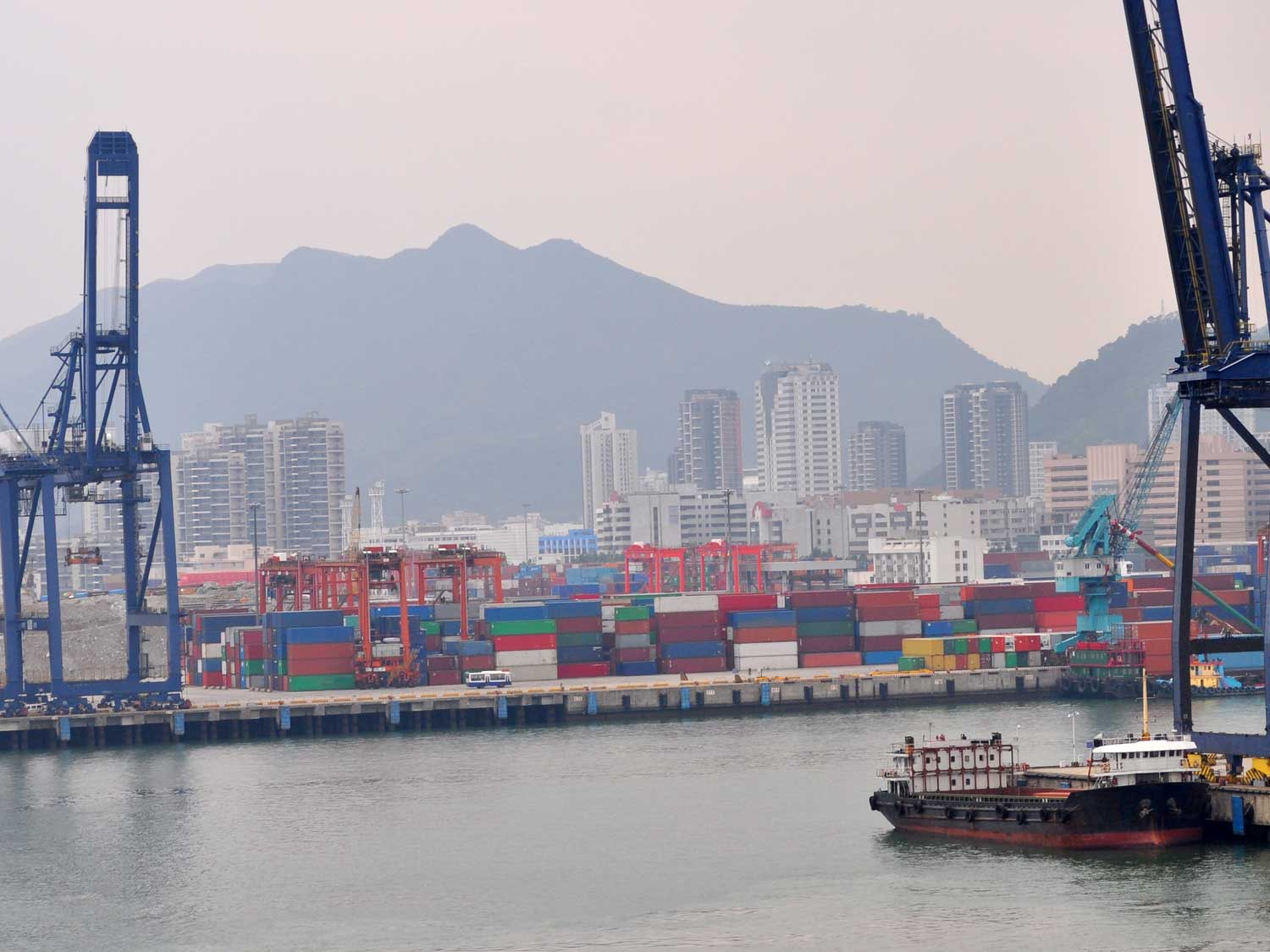
Yantian 3

<strong>Asia blanked sailings, rolled cargo and detours</strong>

Shipping lines have cancelled almost 30% of pre and post Chinese New Year sailings from Asia, with THE Alliance cutting 36% to Europe and diverting backhaul sailings around the Cape of Good Hope, which adds two weeks transit time to China. 

In a normal year, the weeks building up to China’s Lunar New Year holiday see a spike in export shipping demand from China to most global destinations, including the UK and Europe, as orders are shipped before the factories close and production halts. This year, however, there has been no demand spike and carriers across the three alliances have cut 15 westbound departures, with just 69 ships departing on a round-trip to North Europe or the Mediterranean since the beginning of the year and the start of CNY. 

In the period from 1st January to 17th February, Alphaliner calculated that the three big carrier alliances are planning to skip 27% of their originally scheduled Asia – Europe sailings.

Across the Alliances, there has been a 29% reduction in the number of 2M sailings in the first seven weeks of the year, while OCEAN Alliance has reduced the number of westbound voyages by 23% and THE Alliance has cut most sailings from the Far East to Europe, with a 36% reduction. This is partly due to the fact that their carriers are diverting more backhaul sailings from the Suez Canal to the Cape of Good Hope, which adds two weeks to vessel arrivals back in China.

The shipping lines have also been creating roll pools, so that vessels leaving during the CNY holidays have boxes to load, while factories are closed. This occurs every year but, with less demand, it is having less impact than the previous three to four years.

Despite all the cancelled sailings and diversions, Hapag Lloyd has announced a new Asia-Europe service, FE9, that is actually a slot charter agreement with an alliance competitor, CMA-CGM.

Prior to the current three alliance setup, the shipping lines operated a complex web of slot charter agreements and it seems likely that the current high sailing cancellation levels are reducing service coverage, and an obvious solution for a carrier is this type of cooperation, that we may see accelerate in the wake of the 2M break between MSC and Maersk as they part company at the end of their 10 year agreement.

The 2M break may even result in a reshuffle of alliances, as carriers reshape the industry over the coming years on all trades. Although the focus has always been on the lucrative Asian markets - the transpacific and westbound European trades are the largest volume global lanes- one thing is for sure, there will be a lot more change, as a consequence of the unravelling situation in container shipping. It looks like a case of 'from boom to bust’ – although hopefully not quite so dramatic as we saw with Hanjin in 2016.

We work closely with our partners in China to monitor which lines are rolling cargo, and use our space agreements across all alliances wisely to ensure our containers are always lifted, though expectations are that roll pools will be cleared through weeks 5 to 8.

To learn how we can help you avoid blanked sailings and rolled cargo, or to request our regular ocean market report, please EMAIL our chief commercial officer, Andy Smith, who can advise on the best solutions for your ocean supply chain. We will always deliver the most appropriate service in an ever disrupted market and provide all options available to ensure that your product reaches the right destination, at the right time and at the right cost. Considered solutions are what we achieve.

2023 Year of the Rabbit

<strong>Chinese New Year + COVID escalation = supply chain disruption in Asia</strong>

If travel for the Lunar New Year holidays increases COVID transmission, we will see large numbers of infected workers having to quarantine, which will delay their return to work and factories, hauliers, terminals and ports that would traditionally restart operations by mid-February could be shut significantly longer, with export and supply chain delays.

This Sunday, the 22nd January marks the start of the Lunar New Year and is the trigger for Chongqing-Chunyun, the Chinese New Year Migration, which is the largest annual human migration on earth, with hundreds of millions of people, working out of their hometowns, hurrying home to be with their families for the two-week holiday.

Factories and most other parts of Chinese society close down for the duration of the holiday (which is based on the lunar cycle), causing a pause in exports leaving the country, which is why traditionally we would see a spike in freight volumes - and particularly - air in the run up to CNY. 

China’s economic growth of 3% in 2022 was the weakest since 1976, prompting the abrupt lifting of China’s strict zero-Covid policy in December. Unforeseen by many although encouraged for a long time.

With the recent rapid dropping of COVID restrictions across China, workers are more free to travel than they have been since 2020, which has led, predictably, to a surge in infections and with high levels of COVID in travellers leaving China for business and vacation, countries including the UK have introduced testing for incoming flights from China. Restrictions haven’t just been ‘eased’, but they have been withdrawn entirely in some areas. This is rapid deployment of the new measures.

If New Year’s travel does lead to increased transmission across the country, which logic dictates it is hard to avoid - large numbers of infected workers will need to quarantine, delaying their return to work, with means that supply chain infrastructure and factories that would traditionally restart operations by mid-February could be side-lined for significantly longer, resulting in export order and shipping delays.

Some importers are still carrying plenty of inventory and may not be impacted, but for those with products that are selling well, they may get caught up in the shortfall and a scarcity of bestsellers.

At the end of December, China stopped publishing daily COVID transmission data, possibly to conceal negative information about the pandemic circulating. But shippers will probably know sooner than just about anybody, when they don’t get the deliveries they were expecting out of China.

We have seen many factories and manufacturing sites throughout China shutting early this year already, either because they were quiet, or to give workers an extended break. This has contributed further to the lull in container movements, in what should traditionally be a peak week prior to the CNY celebrations. 

There is, as a consequence, a huge number of shipping line schedule changes, blanking’s, suspensions and withdrawals over coming weeks and months, that will impact on vessel departures and planning reliability in China and across Asia. As a result, it could take a long time to unwind, with return eastbound voyages in March and possibly beyond.

Economists have warned over the state of the global economy in recent months and the International Monetary Fund (IMF) has urged Beijing to continue reopening its economy.

The IMF believe that if China stay the course - and do not re-impose COVID restrictions - by mid-year or there around, they will turn into a positive contributor to average global growth.

However, the full reopening of China's borders is likely to be delayed until international restrictions against China-originated travel are dropped.

On the upside with travel restrictions from and to China being relaxed the air cargo market is likely to see benefit with belly-hold capacity returning to pre-pandemic levels, as tourists look to travel once again, on passenger flights being re-introduced on routes that have been closed and which should result in reduced air freight costs, to and from the region.

As China emerges from its COVID stasis, we have fixed price and long-term capacity agreements in place with our partner carriers, to deliver resilient, consistent and reliable supply chain solutions.

Metro’s cloud-based supply chain management platform, MVT, simplifies global trading, by making every milestone and participant in the supply chain transparent and controllable, down to individual SKU level.

To discuss how our technology could support your supply chain, please contact Simon George our Technical Solutions Director or Elliot Carlile for all options relating to current freight profile movements to and from China.

Idle containership capacity hits all time high

<strong>The new logistics normal in 2023; Part 1</strong>

For almost three years shippers, forwarders and carriers, across all modes, have battled unparalleled global supply chain disruptions and, as the massive consumer driven volumes finally subsides, some suggest that the “new normal” is manifesting on a global scale.

The desire for normality and the return to a shipping environment where it is possible to forecast volumes and budgets, without having to continually amend is inevitable after so much chaos. But the new normal, also means that change is a constant variable, with supply chains vulnerable to events ranging from bad weather, industrial action, COVID infections in China and the war in Ukraine.

As unprecedented consumer demand has been lessened by rising inflation and interest rates, international transport capacity has improved markedly, with analysts Sea-Intelligence reporting that about half of all shipping congestion has been resolved, and by that measure, a full reversal to normality should come by March 2023 - providing there is no added disruption, through unexpected global events or manipulation of schedules by ocean carriers. 

Barring problems sourcing raw materials and components, many manufacturers are anticipating capability to return to pre-pandemic production volumes in 2023, at levels that flatten the 2020–22 “spikes” seen in almost every aspect of industrial activity, from inventories to production to pricing. 

Abnormal demand drove spot pricing on all modes to record highs in 2021, but those short-term rates fell throughout 2022 in a multi-modal pricing correction.

Despite the lack of the traditional peak season, the return of some measure of seasonality to shipping in 2022 was welcome and it was reassuring to see the monthly volume changes, that were typical pre-pandemic. 

Lower demand, as a result of the anticipated world recession and already occurring localised regional and country specific recessions, will allow global supply chains to progressively improve, even if some bottlenecks remain in some regions. 

Some of the lower demand from shippers is a result of excessive inventory, resulting from earlier than usual orders for imports - to work around congestion - that would typically arrive in the second half of the year, which have created bloated inventories, that are still being drawn down. 

The sea freight capacity shortage in 2021, extended to a shortage of warehousing space near ports and moved further upstream throughout 2022, constricting 3PL and shipper warehousing space as the year went on.

Normalisation in supply chains will not be a leap backwards in time. The pandemic’s disruptions and the evolutions to deal with them have been too profound.

Three years ago the majority of consumers had never shopped online and now over 30% of us are doing it regularly and we’re not going back. The same is true for businesses.

It will also be interesting to see how carriers, especially shipping lines by the ocean freight mode, react and what strategy they adopt with restricting capacity and schedules. This is currently unwinding and will effect the majority of this year dependent on what actions they implement.

As such, shippers and their forwarders must continue to innovate, because we now know that companies get in trouble when they get too comfortable with how they’ve been doing things. You need to rock your own boat, because if you don’t, someone else will. You can be assured that Metro continue to design and create new solutions that are fit for purpose regardless of the current market situation and conditions – it’s what we do!

We sub-titled this article Part 1, because someone’s bound to rock the ‘normal’ boat and Part 2 is sure to follow and explain why.

We work closely with our customers to consistently enhance supply chain efficiency and resilience in five key areas:

Understanding – Creating supply chain solutions that draw on all options available in the evolving market.

Visibility – Monitoring critical time-scaled events to provide visibility across the extended supply network, with global control down to individual SKU level.

Agility – Increasing speed to market and accelerating the cash-to-cash cycle.

Flexibility – Adapting supply lines, new vendors, product flows and order data, from any location.

Contingency – Exception alerts and rules-based solutions, automatically correct non-conformities, or alert users for corrective action.

For specific information, or to discuss how our technology could support your supply chain, please contact Simon George our Technical Solutions Director or Elliot Carlile. 

We will continue to update on market conditions regularly and always bring the latest development to your attention so that we can ensure that we always deliver and perform to your expectations.