The eBL is moving closer

<strong>Metro lead the way with ocean freight electronic bill of lading</strong>

Just weeks after the Electronic Trade Documents Bill was presented before Parliament, Metro has commenced its first trial shipment with an electronic bill of lading (eBL), on Hapag Lloyd, which was a first for the German carrier too.

Following large-scale frauds and disruption to global trade due to the impact of the COVID pandemic, the digitisation of physical shipping documents is becoming much more significant, with the Electronic Trade Documents Bill, which will allow for the legal recognition of electronic versions of bills of lading, currently working its way through parliament.

Ministers at last year’s G7 meeting agreed that paper-based transactions are “a source of cost, delay, inefficiency, fraud, error and environmental impact” in a bid to move towards global adoption of electronic bills of lading (e-Bills), which Mckinsey & Company estimate could save $6.5 billion in direct costs and enable $40 billion in global trade.

Unlike the paper bill of lading, which is time consuming, risky (can be forged/lost) and expensive, the eBL is secure and extremely cost effective, with a host of added benefits:

  • Reduced costs due to savings on postage and time to handle physical paperwork
  • No risk of losing eBL
  • Removal of costs associated with a complex procedure to release without the Original BL at destination, including weeks of D&D
  • Quick and secure transaction with one click of a button
  • Eco-friendly solution with no paper and physical movement
  • Same legal protection as an Original Bill of Lading
  • eBL can be tracked online, unlike paper OBL’s

The Law Commission was tasked by the Government to set out reforms to the legal status of trade documents and following a consultation period last year, the Commission published its recommendations in March, with the Electronic Trade Documents Bill now going through the House of Lords, before returning to the House of Commons to pass into law.

The Bill of lading serves three key functions:

  1. As a receipt, confirming that the goods have been loaded on board the vessel
  2. As evidence of the contract of carriage, between the ship-owner and the shipper and/or the lawful holder of the bills
  3. As a document of title to the goods.

The electronic bill of lading (eBL) Metro are currently testing fulfils the functions of a receipt and evidence of a contract of carriage and, when the Electronic Trade Documents Bill completes its passage, the eBL will also fulfil the function of a document of title.

In the vanguard of testing this new technology, so that Metro customers will be the first to benefit, the sea freight team will undertake further measured trials, including with shipments that involve banks in the release process and also with the full variety of partner ocean carriers that offer this option.

The first ‘trial’ customer said that they were “very impressed with the process” and Hapag Lloyd commented that “handling physical paper leads to processes that are cumbersome, outdated, time-consuming and error-prone. Hapag Lloyd has partnered with Wave BL to enable secure and quick BL release, saving costs for our customers. We firmly believe the future of the supply chain is offering digital solutions that are time and money saving, backed up by secure communication protocols.”

This is the future, now. The platform just needs confidence building, evidence that it is 100% evolved and that the integrity is unquestionable. We will continue to update and reassure.

We have been utilising similar models and platforms in air freight, with our partner airlines, for many years and this is an exciting evolution in the ocean freight environment.

Metro is developing the technologies and platforms that will integrate with electronic bills of lading (eBL) and members of the bodies that drive the technology standards and frameworks for a standardised industry e-bill of lading (eBL).

Simon George, Metro’s Technical Solutions Director and a member of the illustrious UN/CEFACT forum. “Even partial eBL adoption will save £ Billions, but mass adoption of an industry-standard eBL, requires robust technology, acceptance by governments, banks and insurers as well as open collaboration."

Please contact us for further Information and we will share the latest progess and updates and how this platform can benefit your own continued global trade growth ambitions.

Coronavirus hits car carrier fleet

<strong>RoRo shipping the new sea freight carrier ‘golden goose’</strong>

Roll-on/roll-off (RoRo) ships are designed to carry wheeled cargo, such as cars, trucks, buses, railroad cars, excavators and industrial vehicles and in this niche sector freight rates are increasing, with some routes fully booked four months out, which means if you have a wheeled cargo to move, you will book today for April 2023 sailings on some lanes!

There are different types of RoRo vessels, including ferries, cruise-ferries, pure car carrier (PCC) and pure car/truck carrier (PCTC) that transport new automobiles, trucks and large industrial vehicles, and it is the latter two that are enjoying unparalleled demand.

Car carrier charter rates have risen to new records, with rates more than doubling, which comes after seven years of weak rates and around 25 vessels scrapped early. RoRo carriers and vessel owners are now enjoying tremendous rates, which are being driven by demand for car exports and investment in construction, mining and agriculture. 

Many of the vessels in this market also carry ‘high and heavy’ cargo and out of gauge commodities needing specialist handling. Putting the sector under further pressure with current demand in a restricted market of supply.

The Ukraine war is pushing countries towards food security, which means  there is more investment in agricultural machinery, the global mining equipment market is set to grow 40% by 2030 and now that semi-conductor supply chains are operating again, the supply of finished vehicles for export has boomed. 

Six months ago a flurry of RoRo vessel orders took the car carrier order book to 77 vessels (which equated to about 10% of the global car carrier fleet), but with these vessels due for delivery from 2024 onward, they will do nothing to alleviate the current situation, which is fuelling a fresh round of RoRo construction orders, that are unlikely to fill the vessel shortfall, which could be as much as a 100 by 2024. 

The RoRo market is in crisis. Rates on the spot market are increasing, but they are meaningless, because there is no capacity available with the scheduled carriers, of which there are only five main global carriers. 

Demand is high - and increasing - and any available capacity is all taken by a limited number of big customers (FMC, Toyota, Stellantis, VAG etc) with huge volumes and even though supply will increase in two years, it will be outstripped by demand.

The primary issue for the auto industry is they can now make the product but can’t get the vehicles to the point of sale by RoRo and every market is seemingly effected, including the USA, Australia, South Africa and India, with thousands of cars stuck on quay waiting for RoRo availability that will not come, or being held at inland compounds and depots awaiting transfer to the necessary ports to handle these products, it is reported in the industry trade press.

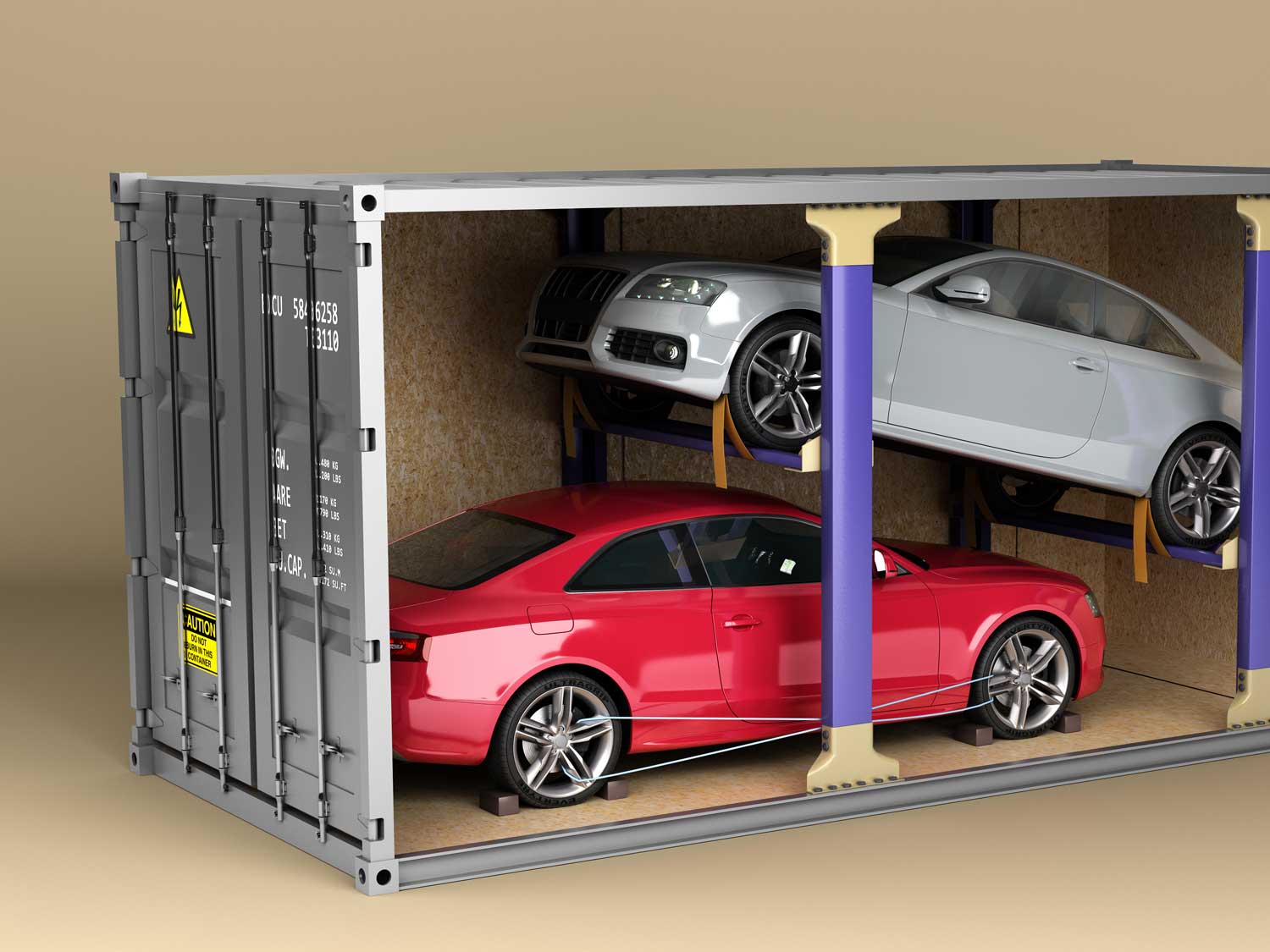
The good news for auto manufacturers is that there is a solution to their shipping headache, which is as competitive or can be even cheaper than RoRo. Shipping finished vehicles in a container.

With consumer demand for general products falling, in the wake of global inflation and rising interest rates, container shipping volumes have slumped, along with rates, creating a massive new opportunity for RoRo shippers of finished vehicles and industrial machines that can be broken down to containerise as at least it can be shipped on a  weekly container vessel.

Lack of RoRo capacity, new build vessels entering commission into the sector, and increasing rates means that containerising cars is becoming a very attractive alternative to transport vehicles on long haul lanes effectively and efficiently.

Metro has specialised in the automotive and construction vehicle sectors for over four decades. Working with many of the most respected and established global brands, our specialist teams coordinate the end to end movement of vehicles and machinery around the world, regardless of origin or destination.

Long-standing partnerships and volume agreements with the leading container shipping lines means we can offer the widest choice of services, routes and solutions for finished car and KDV movements.

To learn more, or to discuss our automotive capability, EMAIL Matt Weight now. We have the latest options and alternatives available in a dynamic market, that sometimes goes unnoticed. Matt awaits your call!

Antwerp

<strong>The EU’s Emissions Trading System will add another surcharge</strong>

The decarbonisation of global shipping is currently the subject of regulatory intervention: at the international level, with the International Maritime Organisation’s ( IMO’s) 2023 rules, designed to further reduce emissions from vessels; and at the regional level, with the EU’s Emissions Trading System (EU ETS), both of which will potentially add cost to container shipping.

This really is worth a read and ensuring that you are aware of the impact – financially and as an added layer of complexity to moving goods around the world. Since this article was published the introduction of the ETS for the maritime sector has been delayed until 2024 to give industry and the EU time to arrive at a solution.

Sustainability in any element of business has an on-cost, especially for the largest businesses. Protecting the environment doesn’t come free and those costs are typically passed on, from carriers to shippers to consumers. Longer term however it may actually reduce costs whilst having a positive impact on global warming as the technology develops and matures. Metro are huge advocates and always looking on how reductions in greenhouses gasses can be achieved through the supply chain.

But while the cost of compliance for supply chain participants may be noticeable in the short-term, they will become standardised and reduce over time.

More and more shippers want to track and reduce their emissions with service providers and are increasingly adding sustainability to their selection criteria for supply chain partners.

The demand for visibility in carbon emissions has never been higher, which is why we released our MVT ECO module earlier this year, that allows, and ensures that, our customers and shippers can monitor and offset the environmental impact of their global shipping.

The EU ETS sets a “cap” on the number of emissions that various industries may produce and requires companies to obtain allowances that equal their emissions above the cap at the end of the year. The price of such allowances may fluctuate depending on supply and demand factors.

The extension of the existing system to shipping would include all emissions from ships calling at EU ports for voyages within the EU (intra-EU) as well as 50% of the emissions from voyages starting or ending outside of the EU (extra-EU voyages), and all emissions that occur when ships are at berth in EU ports. 

Ship operators would purchase and surrender ETS emission allowances, or EU Allowances (EUAs), for each ton of CO2 emissions reported under the scope of the system.

Shipping lines will seek to pass on the cost of compliance, as they have done with other forms of environmental regulatory costs in the past. This will depend on the price of the EUAs and on whether the shipping industry’s involvement is phased-in over several years, or required 100% from day one on the 1st January 2023, as is being discussed by the European Commission and parliament.

Maersk has outlined the costs that would be passed on to its customers and while other lines continue to “closely monitor the progress of the ETS discussions”, MSC has very kindly shared its indicative EU ETS compliance costs (see picture).

From the first quarter of 2023, Maersk would have implemented a standalone surcharge on the Asia-North Europe trade of €255 per reefer, while MSC envisaged a cost of €208 for a reefer.

MSC indicative costs

For more information on the IMO 2023 and EU ETS programmes and to discuss their implications for your supply chain, please contact Andy Smith or Grant Liddell, for a collaborative approach to safeguarding your supply chain…and the environment. It's rather important after all……and we are launching a number of initiatives including electric vehicles, more carbon efficient multimodal platforms and avoidance of traditional fossil fuel driven supply chains.

Auto Advance

Metro witness the launch of environmental first – reducing vehicle carbon emissions before they have ever been driven

Operating a fleet of 17 pure car and truck carriers, United European Car Carriers (UECC) is the leading RoRo provider of short sea services for cars and other rolling cargo. Leading customer, Metro, was invited to Zeeburgge, to witness the naming of the world’s 1st hybrid pure car and truck carrier.

UECC, the Norwegian RoRo transporter of rolling cargo held a naming ceremony for its first dual-fuel LNG battery hybrid pure car and truck carrier (PCTC), the vessel Auto Advance, at the Port of Zeebrugge’s, ICO Bastenaken Terminal on the 26th October.

Present at the naming ceremony were Metro directors Tom Fernihough and Matt Weight, who are responsible for key automotive, construction and commercial/industrial vehicle accounts, and consequently big volume users of PCTC RoRo services.

The Auto Advance measures 28 by 169 meters in length (that’s big – think of two football fields), with capacity for 3600 vehicles, over 10 cargo decks and is said to be the world’s first vessel of its type. It will provide significant gains in energy efficiency and emissions reduction as it enters service this year to boost UECC’s efforts to decarbonise its fleet.

It is part of a new build trio of multi-fuel LNG battery hybrid PCTCs that UECC hope will make a real difference for the environment and for their business, as new green regulations are set to shift the RoRo market playing field.

LNG battery hybrid technology, together with an optimised hull design for better fuel efficiency, will enable these new builds to exceed the IMO requirement to cut carbon intensity by 40% from 2008 levels within 2030. Emissions of carbon dioxide will be reduced by around 25%, SOx and particulate matter by 90% and NOx by 85% from the use of LNG, while the new builds will also meet the IMO’s Tier 3 NOx emissions limitations for the North Sea and Baltic Sea.

Tom Fernihough. "Delighted to attend the naming ceremony of UECC's latest vessel the MV Auto Advance. A significant innovation in hybrid technology for a greener environment . Many thanks to UECC for their investment to a cleaner solution.”

Matt Weight. “Metro is committed to extending our zero-emission strategy as far down our customers’ supply chains as possible, which is why we welcome this positive move towards decarbonisation, by a key carrier partner.”

There is much more to come from Metro, on the environmental front, in the very near future which we will continue to announce as we roll out further initiatives with our partners and within the organisation. This is beyond a focus – it is our mission to ensure our customers have the slickest and most environmentally creative supply chains available at any time, regardless of the external influences.

To learn more about our commercial/industrial solutions contact Tom Fernihough, or Matt Weight for our automotive solutions and Simon George for our ECO/MVT, carbon measuring and offsetting solutions. We have the end to end movement of the most valuable cargo covered - with complete visibility and ability…