Dover blur

Food border checks delayed for 5th time

The UK was set to roll out new health certification requirements for medium and high-risk goods originating in the EU, such as meat and dairy, from October, but there is now official confirmation from No 10 that last week’s Financial Times report was correct and the government is postponing border controls until January 2024.

Plans to roll out controls on all goods entering Britain post-Brexit were initially meant to begin at the start of 2021, around the same time the EU introduced strict requirements on all UK food exports.

However, import controls have since been delayed four times over the past two years, with the October 2023 deadline’s move to January the fifth to be delayed. 

"Having listened to the views of industry, the government has agreed to a delay of three months for the introduction of remaining sanitary and phytosanitary controls" it said in a statement.

New physical checks on imports, due to come into effect in January, will now start in April.

According to a survey of EU suppliers by the Cold Chain Federation (CCF), the delay could avoid disruption during the Christmas trading window, with 39% of European food producing businesses supplying goods to the UK unaware of the new rules.

However, the National Farmers Union has campaigned vociferously against further postponement to checks, arguing that it is unfair to British producers, as it continues to give EU farmers a competitive advantage, while UK exporters have had to endure checks on food exports to the bloc for the past two years.

Under the new post-Brexit import rules, due to come into force from 31st October and now pushed back a further three months, export health certificates signed by a qualified certifying officer would become mandatory for every consignment of ‘medium risk’ meat, dairy and fish products exported from the EU to the UK.

The CCF had written to ministers, sharing their survey’s findings, requesting that the October implementation be moved back to the 31st January 2024, because they believe that the government needs to deliver a much wider and better resourced communications campaign, to increase awareness among EU businesses.

The CCF said that with so much stress, cost inflation and other pressures in the food supply chain this year, moving the start date to January 2024 could make a big difference.

Their survey also found that 78% of EU businesses believed costs will increase to their UK customers as a result of the new rules, and while 60% said they planned to continue servicing UK customers at the same frequency after the new rules implementation, 10% had planned to reduce the frequency and 7% planned to stop altogether.

With the current regulations for imports of foodstuffs remaining unchanged, there is a further three months to prepare your suppliers for the changeover and keep your supply chains running freely. 

We can guide you on the new import procedures and help you to educate your suppliers, with full support for all your import and export documentary needs.

Metro are at the forefront of customs brokerage solutions for the food and drink industry, with our automated CuDoS declaration platform and dedicated team of customs experts, reacting swiftly to any changes in the UK’s trading regimes.

To learn how we can simplify and automate customs declarations for your businesses, please EMAIL Andy Fitchett, Brokerage Manager, to review the options.

Truck in Switzerland

Take your customs declarations to a whole new level

Metro provide customs clearance services at all UK airports and ports of arrival and departure, including inland border points, with import and export entry processes completed within two hours.

Simply provide us with your commercial invoice, packing list and any other supporting documents and we will file your customs declarations directly with customs, using our HMRC approved CuDoS software.

The Metro Customs Document operating System (CuDoS) deploys the latest artificial intelligence (AI), machine learning (ML) and automation capabilities to optimise data capture and accelerate customs declaration processes, while reducing costs and increasing handling capacity by 25%.

Our AI and ML engines eliminate manual data entry and human errors, and because CuDoS ‘learns’ your data, it becomes smarter and accelerates tasks, for even greater efficiencies. 

CuDoS offers two hour turnaround times, from customer instruction through to document delivery, with 96% of declarations processed and submitted to HMRC within 30 minutes, and all at a market-leading 99% processing accuracy.

Metro’s customs experts have many years detailed knowledge in import and export trade compliance, rules of origin, classification codes and tax calculations.

With Metro’s CuDoS there’s no need for lengthy email chains and chasing phone calls, with document management, distribution and repository capability, providing audit trails of document movements and data-based insights, with comprehensive reports and analytics.

And while CuDoS provides 24/7 access to process and track transit, and customs processing, our customs team are available - for that personal touch - from 07:00 to 19:00 weekdays and with weekend support.

Customs Document operating System (CuDoS)
AI, ML and automation driven CuDoS optimises data driven declaration for speed, accuracy and compliance
20% reduction in headline costs and 25% increase in volumes
SLA of 98% on two hour turnaround times, from instruction to document delivery
96% of declarations processed and submitted to HMRC within 30 minutes
99% processing accuracy
Dashboard view of customs activities, tracking, and reports
Customs badges across all UK ports and airports

Imports
RoRo, container and regional ports covered
All UK airports covered
Compatible with Simplified Customs Declaration Procedures (SCDP) and special customs regimes

Exports
RoRo, container and regional ports covered
All UK airports covered
Exit Summary Declaration application
Goods Vehicle Movement Service (GVMS)
Transit documents
ATA Carnet

Metro are at the forefront of automated customs brokerage solutions, simplifying and automating customs declarations for importers and exporters, with our CuDoS declaration platform and dedicated team of customs experts ready to support businesses of all types and sizes.

CuDoS simplifies and reduces the cost of trade, creating efficiencies and ensuring customs compliance by removing human errors.

To learn how we can simplify and automate customs declarations for your businesses, please EMAIL Andy Fitchett to review the options.

HMRC 2

HMRC chasing forwarders for outstanding duty and VAT

Our trade body, the British International Freight Association (BIFA) has advised members, including Metro, to be cautious while acting as ‘indirect representatives’, as HMRC have been taking action against UK intermediaries in relation to valuation issues, under-paid duties and VAT since 2021.

BIFA said freight forwarders had been targeted by HMRC in relation to valuation issues surrounding imports into the UK, often eCommerce traffic, that were cleared on a delivered duty-paid (DDP) basis.

There are very real risks in acting as an indirect representative and our customs team would be very wary of involvement outside our customer portfolio, but Brexit has triggered an increase in forwarders offering indirect representation, many of whom have not conducted proper due diligence.

Indirect representation (IR) offered an additional revenue stream, but the UK-based entity making customs declarations to HMRC on behalf of non UK-established importers is wholly liable for taxes and duties owed.

BIFA has been vociferous in warning against IR and despite numerous articles on the dangers of being an indirect customs representative, with no other entity established in the UK, it is the agent who has acted on an indirect basis that is liable for under-paid duties and VAT, often due to inappropriate use of Postponed VAT accounting.

When supplying goods under DDP Incoterms, the shipper is responsible for customs clearance obligations and payments of import duties and taxes in the buyer's country.

Foreign-based shippers can qualify for UK VAT and EORI registration without being GB domiciled and once registered they can engage a GB Intermediary for the clearance, on direct or indirect representation.

Any import customs entry undertaken on a client’s behalf, as an indirect customs entry, leaves the intermediary jointly and severally liable for the duty and VAT exposure, while the client is solely responsible under direct representation.

Metro offer guidance for imports into the UK and export flows to the EU with R42 process, and other fiscal representation for other clearances where the goods remain in France or for indirect entries in most popular European destinations.

Metro can health-check your import and export processes to ensure you are not in risk of customs penalties and in full compliance with EU and GB legislation.

Metro’s CuDoS brokerage platform, simplifies and automates customs declarations, with our dedicated team of customs experts ready to support businesses of all types and sizes.

The CuDoS solution uses the latest artificial intelligence (AI), machine learning (ML) and automation capabilities to optimise the data capture and customs declaration processes, to create a compelling 20% reduction in headline costs and 25% increase in volumes.

Metro’s CuDoS is now achieving an SLA of 98% on two hour turnaround times, from customer submission/request through to document delivery, with 96% of declarations processed and submitted to HMRC within 30 minutes at a 99% processing accuracy.

To learn how we can simplify and automate customs declarations for your businesses, please EMAIL Andy Fitchett to review the options.

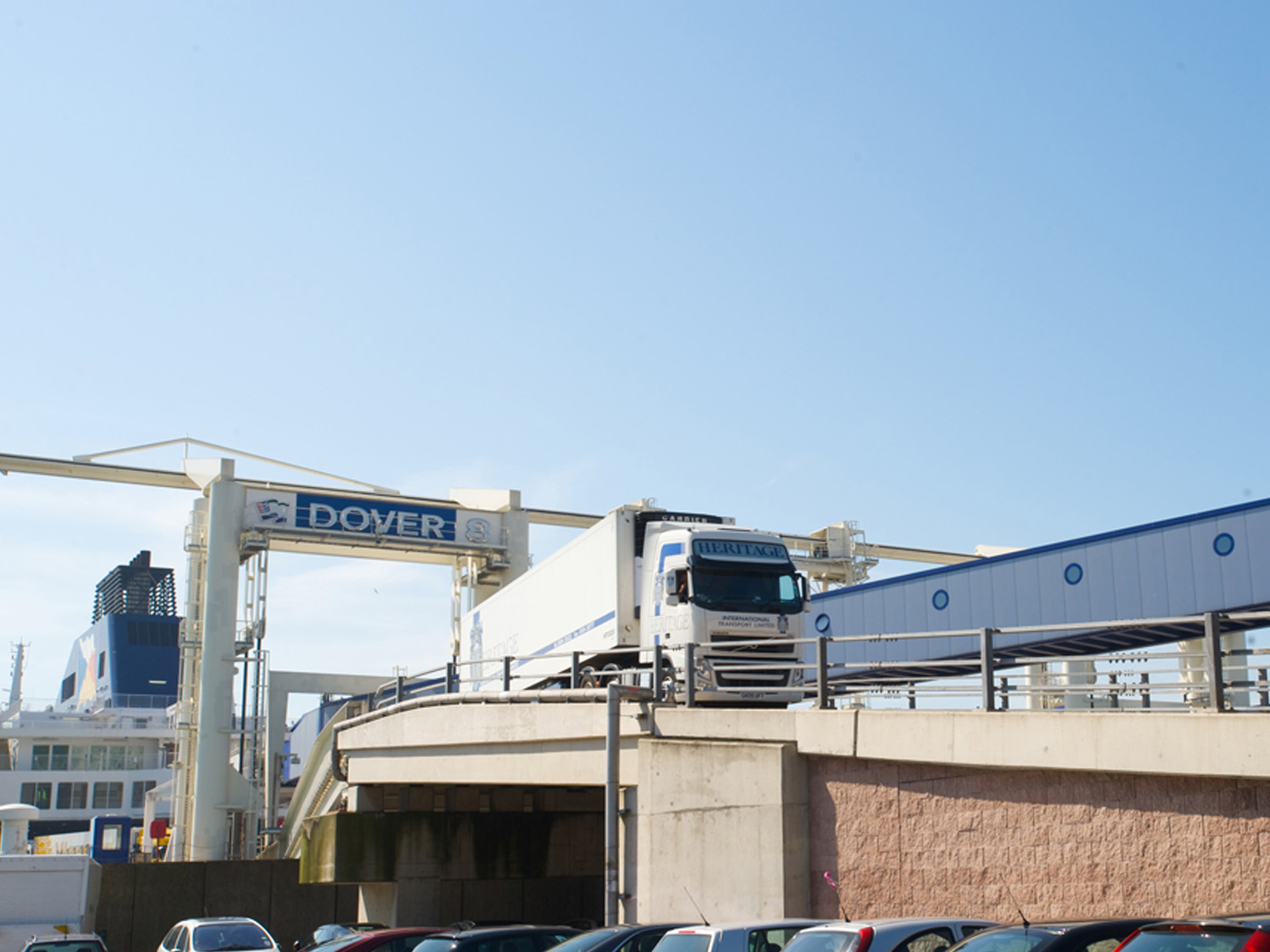
Dover truck arrival

Post-Brexit food checks deferred for 5th time

The Financial Times has reported that Brexit checks on food and food products coming to the UK from the EU, that were due to start at the end of October have been delayed by the government for the fifth time, due to fears over inflation.

The decision to suspend plans to enforce the controls, which have been applied in the other direction to British exports to the EU since January 2021, is due to inflation fears and will be announced imminently, according to the Financial Times.

Press reports said it was a “Treasury purge” of all changes that would cause disruption to the supply chain, given the sensitivity of the food market to price increases in the current economic climate.

Under the proposed controls that were due to be introduced in October, EU exporters of food products to the UK would have required “export health certificates” costing several hundred euros each and requiring a physical sign-off by a veterinary surgeon.

The food industry warned last June that plans to charge a flat-rate inspection fee of up to £43 on each consignment of food coming from the EU would drive up food prices, with the government estimating total additional costs of EU controls at £420mn a year.

The government has previously cited the COVID-19 pandemic and the war in Ukraine as reasons for delaying the new checks.

On 5th April, The Border Target Operating Model: Draft for Feedback was published by the Cabinet Office, it gave a clear time line for import controls on EU originating food products.

31st October 2023 - Export health certificates and phytosanitary certificates are introduced for medium risk animal products and plant and plant products imported to GB from the EU.

31st December 2023 - permanent waivers introduced from the requirement to submit Safety and Security declarations on certain categories of low-risk movements - fish which have been caught in UK territorial seas and landed outside of the UK.

1st January 2024 - Documentary checks and physical and identity checks at the border to be introduced for medium risk animal products, plant and plant products imported from the EU. Controls will also be applied to RoW low risk products, and pre notification no longer required for low risk plants/plant products.

31st October 2024 - Safety and Security declarations are required for EU imports. Alongside this, use of the UK Single Trade Window will remove duplication across pre-arrival datasets where possible.

A new timetable has not yet been signed off by ministers, but the start of the new regime is expected to slip into next year. It was originally supposed to have started in July 2021.

The current regulations for movements of foodstuffs remain unchanged, Metro as ever will be here to offer full support for all your import and export documentary needs.

Metro are at the forefront of customs brokerage solutions for the food and drink industry, with our automated CuDoS declaration platform and dedicated team of customs experts, reacting swiftly to any changes in the UK’s trading regimes.

To learn how we can simplify and automate customs declarations for your businesses, please EMAIL Andy Fitchett, Brokerage Manager, to review the options.