Container shipping markets in India and China are experiencing significant operational disruption, resulting in longer transit times, reduced schedule reliability, constrained equipment availability and rising freight costs.
Metro is working closely with shipping lines, terminals and inland partners to minimise disruption and identify practical alternatives for affected cargo. Customers are advised to plan shipments as early as possible and allow additional time throughout their supply chains.
India market update
The Indian container market is under sustained pressure across both export and import supply chains.
A combination of strong export demand, restricted carrier capacity, equipment shortages and ongoing congestion at key gateway ports is making vessel space increasingly difficult to secure. These conditions are contributing to vessel rollovers, revised sailing schedules, extended transit times, peak season surcharges (PSS) and highly volatile freight rates.
The India–US and Latin America trades remain under the greatest pressure, particularly for cargo moving to the US East Coast.
Freight rates and surcharges
Spot-market freight levels for India–US East Coast shipments are currently ranging from approximately USD 10,000–12,000 per 40HC, depending on port pairing, routing and available capacity.
Carriers continue to introduce Peak Season Surcharges for both spot and contract cargo. These charges increased through August, with further increases being announced for September.
On the India–US East Coast trade:
- Average August PSS levels are around USD 5,000 per 40HC
- Maersk has announced a PSS increase to USD 7,500 per 40HC, effective 1 September
- Further PSS increases remain possible across other India export markets
Rate volatility is expected to continue into September as carriers maintain tight capacity controls and place further pressure on allocations.
Port congestion and equipment availability
Active monsoon conditions are affecting port operations and inland transport across India’s west coast. The disruption is expected to continue in the near term and may cause further delays to container movements, terminal operations, rail services and road transport around major gateways.
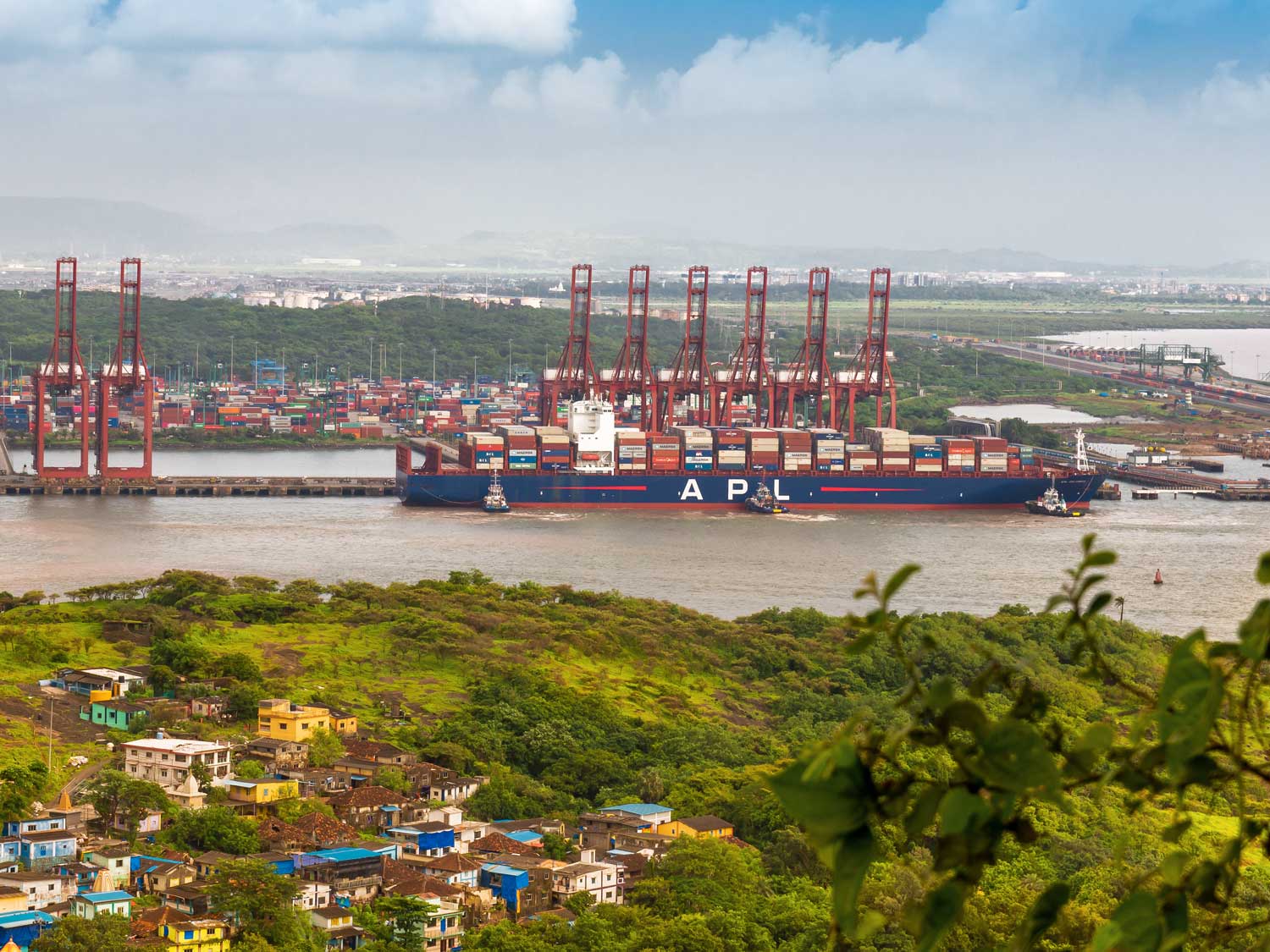
Major Indian gateways, particularly Nhava Sheva/JNPT, continue to experience congestion caused by vessel bunching, terminal capacity pressure, rail delays and limited transport equipment availability.
Key gateways potentially affected include:
- JNPT / Nhava Sheva: India’s busiest container gateway and a major export hub for US-bound cargo
- Mundra: India’s largest private container port, handling significant volumes of US-bound exports
- Hazira: An important feeder and export gateway for manufacturing cargo from Western India
Container availability, particularly for 40HC equipment, remains inconsistent at several export locations. This may delay booking confirmation and require longer lead times for exporters.
Customers should anticipate additional variability in shipment timing, particularly where cargo depends on inland positioning or feeder connections.
China port disruption
Typhoon Dolphin has created further disruption at Chinese ports following the impact of Typhoon Bavi just weeks earlier.
The storm brought heavy rain and strong winds to Zhejiang province before moving on as a tropical storm. Authorities have warned of continued risks from torrential rain, flooding and landslides, while flight cancellations and transport disruption have also affected the wider region.
Port and vessel impact
Temporary closures at Shanghai, Ningbo-Zhoushan and surrounding feeder ports disrupted cargo handling and vessel movements.
Current impacts include:
- Vessels delayed, held at anchorage or diverted to alternative ports
- Service schedules changing at short notice
- Delays of 7–21 days remaining common on affected services, with some potentially longer
- Ongoing congestion as terminals process accumulated cargo
- Localised disruption to rail, road and barge transport, despite conditions gradually improving
Port productivity is beginning to recover in some locations, but congestion and schedule disruption are expected to persist while backlogs are cleared.
Metro will continue to monitor developments closely and work with carriers and partners to secure capacity, explore alternatives and keep customers informed of material changes.