What began as a wave of tariff-driven front-loading has evolved into a broader restocking cycle, keeping container demand elevated, supporting transpacific freight rates and placing increasing pressure on inland transport networks.
While additional vessel capacity is now arriving on some Asia-US services, demand continues to outpace available space on many routes. At the same time, growing cargo volumes moving through major ports are driving higher trucking costs and creating fresh challenges beyond the quayside.
US importers accelerated purchasing during late spring to secure inventory ahead of anticipated tariff changes and higher fuel-related shipping costs. Those earlier buying decisions brought the traditional peak season forward, but stronger-than-expected consumer demand has also forced many retailers to continue replenishing inventories.
Imports from Asia finished the second quarter around 13% higher MoM, reflecting continued confidence in consumer spending despite ongoing trade uncertainty. Booking windows have consequently lengthened, with many importers now securing vessel space several weeks before departure to reduce the risk of delays.
Although some of the initial front-loading may begin to ease later in the summer, inventory rebuilding is expected to continue supporting healthy cargo volumes well into the third quarter.
Freight rates remain elevated despite more capacity
Spot pricing on both East and West Coast routes has increased by between 70% and 100% over a short period, pushing the market close to multi-year highs. Carriers have continued to layer on general rate increases and peak season surcharges, capitalising on sustained booking pressure.
There are, however, early signs that market conditions may begin to diverge between US coasts.
Additional weekly services, extra-loader vessels and increased deployment are boosting capacity into the US West Coast during July and August. This could gradually ease pressure on west coast pricing if import demand begins to moderate.
The US East Coast presents a different picture. With fewer opportunities to introduce additional vessel strings, available space remains considerably tighter and freight rates are expected to stay firmer for longer, particularly while retailers continue replenishing inventories.
For shippers, securing capacity early remains the most effective way of protecting supply chain reliability.
Congestion is moving beyond the ports
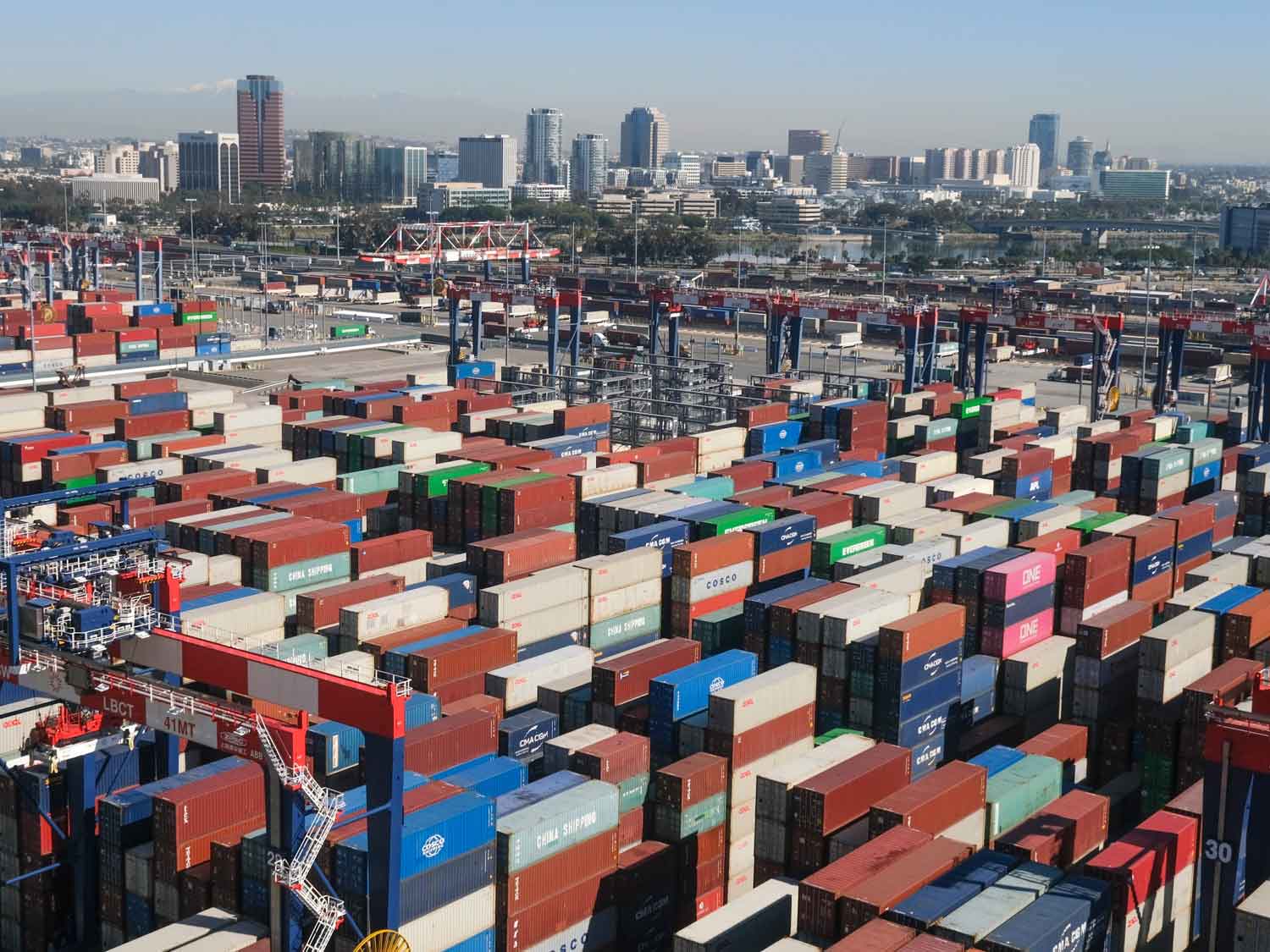
Higher container volumes moving through ports, rail terminals, distribution centres and warehouses have increased demand for domestic transport capacity, particularly around major gateway locations.
Spot road freight rates have risen sharply on port-related corridors, increasing by around 23% around Savannah and by approximately 12% around both Houston and Los Angeles compared with a year ago. Carriers are also reporting stronger freight demand from both existing and new customers as imported goods move deeper into domestic supply chains.
The result is a tightening truckload market where inland transport is becoming just as important as securing ocean capacity.
Short-term expectations
There are signals that the initial wave of front-loading will begin to slow toward late July. At the same time, increasing vessel capacity should start to rebalance supply and demand, particularly on the West Coast.
However, several factors could extend the strength of the market:
- Continued retail restocking into late summer
- Strong underlying consumer demand
- Persistent inland congestion and capacity constraints
- Ongoing geopolitical cost pressures, particularly linked to fuel
Taken together, this points to a market that may soften, but not collapse.
For US importers, the challenge is no longer limited to securing ocean space, their focus must shift to end-to-end execution. Booking earlier to secure vessel space, planning inland transport and managing inventory flows to avoid congestion at destination.
Partner with Metro across the US supply chain
Metro combines global ocean freight expertise with a rapidly expanding US network to deliver fully integrated supply chain solutions from origin to final destination. Our growing presence across North America, supported by experienced local teams, enables us to coordinate ocean freight, customs clearance, inland trucking, rail distribution and warehousing as one seamless operation.
Whether you're importing through the West Coast, Gulf or East Coast, Metro provides the local knowledge, carrier relationships and nationwide capability to keep your cargo moving when markets are under pressure.
To discuss your Asia-US shipping requirements and discover how Metro can strengthen your North American supply chain, EMAIL Andrew Smith, Metro’s Managing Director.