businessman stressed

Shippers go out of business as ocean surcharges continue to mount

Container shipping lines are becoming ever more inventive with the names they apply to the surcharges they keep adding to already over-loaded FAK rates.

The latest example is Hapag-Lloyd’s ‘value-added surcharge’ of $5,000 per 40ft, from China to the US and Canada.

The carrier told customers the new surcharge was due to “extraordinary demand from China and the resulting operational challenges along the transport chain”.

Hapag-Lloyd said the surcharge would be implemented from the 15th August and would “replace other ad-hoc surcharges like the SGF” (shipment guarantee fee), which is $1,000 per 40ft.

Some carriers, including Zim, Cosco and ONE, are already charging Asia to US west coast shippers in excess of $7,000 per 40ft for so-called ‘value-added’ products, on top of their FAK rates. Zim is also implementing a $5,000 per 40ft congestion surcharge from the 6th August for shipments to the US west coast ports of Los Angeles and Tacoma.

Last week’s Baltic Index for Asia to the US west coast actually fell by 8%, but in many cases shippers are paying at least double the Baltic Index quoted figure to secure shipment, despite having signed MQC [minimum quantity commitment] contracts with shipping lines.

For Asia to North Europe, the Baltic Index reading rose 7% this week, while the 30% spike in rates from Europe to the east coast of South America this week is likely to be a result of capacity being diverted to the ex-Asia lanes.

There is growing anecdotal evidence that carriers across a number of tradelanes are ignoring contracts and forcing shippers to accept sky-high FAK rates and hefty surcharges and there is growing concern that businesses will be unable to absorb or pass on to their customers these massive freight cost increases.

Increasingly it is reported in the national press, shippers such as Taylor Group, a heavy equipment manufacturer, are getting the ear of US politicians, and legislators don’t like what they hear.

“This situation is causing inflation to run rampant throughout the supply chain. So far, we have kept our production lines running but are facing 30% to 75% price increases from our vendors and transportation companies,” William Taylor, CEO of Taylor Group, told the Senate Commerce Committee this month.

The Biden administration is wading into ocean regulatory waters via an executive order, upping pressure on maritime regulators to crack down on illegal behaviour and work more closely with the Department of Justice (DOJ).

And for the first time in more than 20 years, Congress is on track to rewrite the shipping law that gives the Federal Maritime Commission (FMC) its direction, powers, and purview.

The escalation of federal and Congressional attention on container shipping speaks to how supply chain disruptions have moved out of the world of logistics managers and onto the front pages of general news.

Metro negotiate rate and volume agreements with a wide range of carriers across all three alliances, which means we can react quickly to market changes and offer shippers alternative services, in line with their deadlines.

Our fixed validity contracts provide supply chain security and peace of mind, but with space and equipment in such short supply, we recommend a minimum of four weeks visibility and booking window, to secure space on the vessel and get the right equipment positioned.

Dover lorry queues

Post-Brexit update: Haulier and multimodal transport market latest

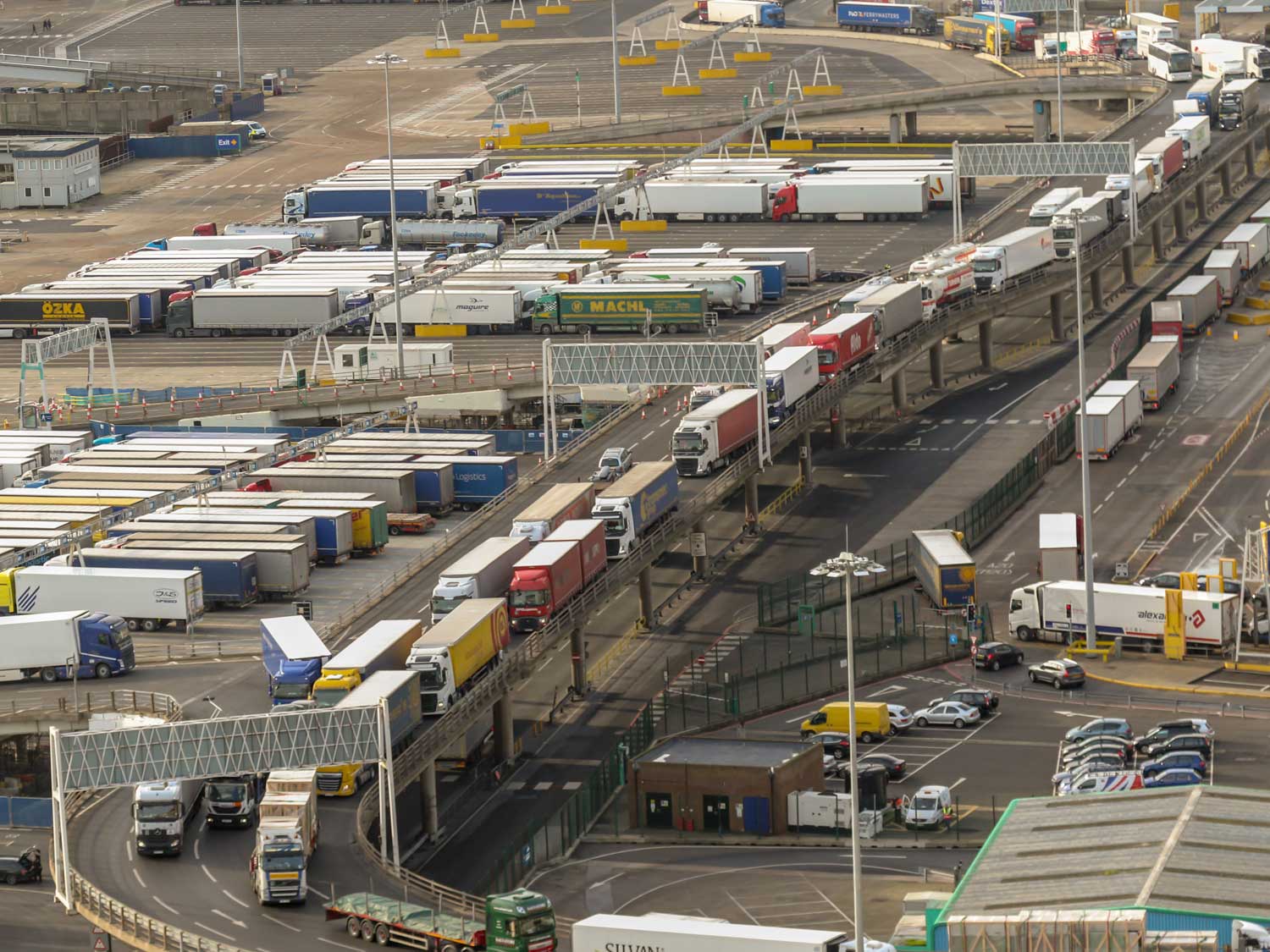
UK hauliers are under massive pressure, struggling to counter the border delays, increased administration and crippling driver shortages that have plagued the industry since Brexit and now, as they fear the full UK border checks due in January, drivers are planning a strike in August.

Surges in pandemic-driven demand are pushing hauliers to breaking point, with a study suggesting that 94% were seeing greater aftershocks from Brexit than expected and that 69% of UK haulage firms have been losing business because of post-Brexit regulation changes.

Lorry drivers in the UK are planning a nationwide strike over their working conditions, prompting warnings that this would cripple the country’s already creaking supply chains.

So far the “stay at home” action proposed for the 23rd August has attracted the support of 3,000 HGV drivers, however the Road Haulage Association (RHA) is urging drivers against taking action, saying it would make a “bad situation worse”.

The RHA is concerned that any action may heighten the effect of driver shortages, itself compounded by the ‘pingdemic’. Even the exemption of about 10,000 workers at 500 food distribution centres from quarantine does not appear to have offset the effect of the current shortage of an estimated 100,000 lorry drivers in the UK alone.

The 2021 Post-Brexit Hauliers Survey showed that more than half of haulage companies have already moved some operations to the EU and more would consider it in the future.

Over two thirds of haulage firms said they had already seen increased costs, with the rest expecting rises next year or in the near future. Many will have no choice but to pass these costs on, to keep their businesses viable. 

This fallout has already being experienced in the container haulage market over recent weeks, with container transport becoming a premium product within the domestic transport environment, as salaries are increased to match those of retailers and commercial businesses outside of the industry.

Almost a third said they were avoiding the food and drinks sector because of increased checks and administration on some products and other sectors have been impacted, including livestock farming (25%), agricultural farming (25%), gardening supplies (19%) and retail (13%).

The impact of the driver shortage has been amplified by the fact that in the three months of 2021, the uplift in demand for haulage was more than twice what it was for the same period in 2019 and in April it was 120% higher than in 2019.

Despite the massive increases in demand for domestic movements, half said fewer exports were going to the EU, and half said fewer imports were coming in. However the main freight transport operators are not UK based but are European organisations so this may not reflect the real situation as they would not necessarily have been considered, just the impact on UK domiciled haulage companies.

Increased waiting times at the border was the biggest impact cited by respondents (81%), followed by increased time spent on admin (69%), and fewer exports and imports (56% and 50% respectively).

Other challenges included longer journey times to take alternative routes, higher tariffs, changing licensing and registration requirements, with only 6% of hauliers saying they had not been impacted.

Nearly seven out of ten haulage companies said they believed they would be negatively impacted by full border checks due to come into force at the beginning of next year and the British International Freight Association (BIFA) is encouraging businesses engaged in trade between the UK and EU, to make sure that they are fully prepared for the rule changes that will be even greater than those of January 2021. This is predominantly focused around the current temporary customs processes that will change permanently in 2022.

Road transport cannot be avoided, as part of the international movement of goods, with drivers critical for container movements, international and domestic haulage.

We work with a number of selected long-term haulage partners across the UK, to give us access to the widest pool of equipment and driver resource. 

Our CuDoS customs brokerage platform is optimised continuously, in line with the regimes in force on both sides of the Channel, automating and submitting customs declarations, for simple and compliant border processing in either direction and means that our clients' EU supply chains will not be interrupted when full UK/EU border controls are implemented on the 1st January 2022.

To learn more, or to discuss your situation, please contact Elliot Carlile or Grant Liddell (or Simon Balfe who leads our UK multimodal transport operations) who can talk you through the options.

Brexit uncertainty hurting UK car industry

Automotive supply chain issues not just about semiconductors

An unexpected upturn in consumer demand is playing havoc with Europe’s automotive supply chains, as supply shortages disrupt OEM’s manufacturing productivity

Factory shutdowns were a significant contributor to poor sales in 2020 and there were fears that a shortage of semiconductors would be manufacturers undoing in 2021.

The semiconductor chips are important to the microcontroller units that underpin everything from the transmission to the airbags in modern vehicles and without sufficient supply, automakers would be forced to extend plant shutdowns - as many were.

In the UK, a shortage in semiconductors is causing major disruption, hitting car manfacturers and OEMs [original equipment manufacturers] with restricted availability of critical components and parts, meaning factories are either about to, or are already, shut down in Europe and the UK. There are many components in a vehicle and missing one of these causes delays – missing many causes serious delays to the delivery of a vehicle to the end of line.

Germany recorded a 16% increase in its first-half year car production, but such has been the scale of recent disruption that its full-year forecast has been slashed. This is Europe’s largest car and vehicle manufacturing country, with many other factories dispersed on a regional global level.

Reports suggest German manufacturers were caught by an unexpected surge in demand, having idled production early in the pandemic and were unable to scale up their supply chains and operations when needed.

Semiconductor shortages are a global issue, with OEMs typically balancing global supply to try and keep certain models being produced. This isn’t unique to the automotive sector, which is part of the issue, as higher value products pound for pound absorb the increased availability of the essential commodity which is required in most electronic devices from a car to a mobile phone.

The UK is not being slower than any other region, as the global supply chain is experiencing rolling difficulties across regions, with manufacturers having to pause production at domestic and European mainland plants due to semiconductor shortages.

It is unlikely that the semiconductor problem will be resolved in 2021 and is likely to extend into 2022.

Despite the difficulties in Europe, automotive OEMs in other regions are recovering productions, particularly in Asia, where they are in proximity to the primary semiconductor suppliers, with specialist automotive Ro/Ro carriers returning to full automotive capacity.

Metro has been working with automotive manufacturers and their primary suppliers for decades, optimising complex inbound and outbound supply chain operations, on all modes of transport.

For further information on automotive and related logistics tailored platforms that Metro deliver please talk with Tom Fernihough or Grant Liddell who will be delighted to arrange a meeting, call or presentation covering all current options available within our global network and platform.

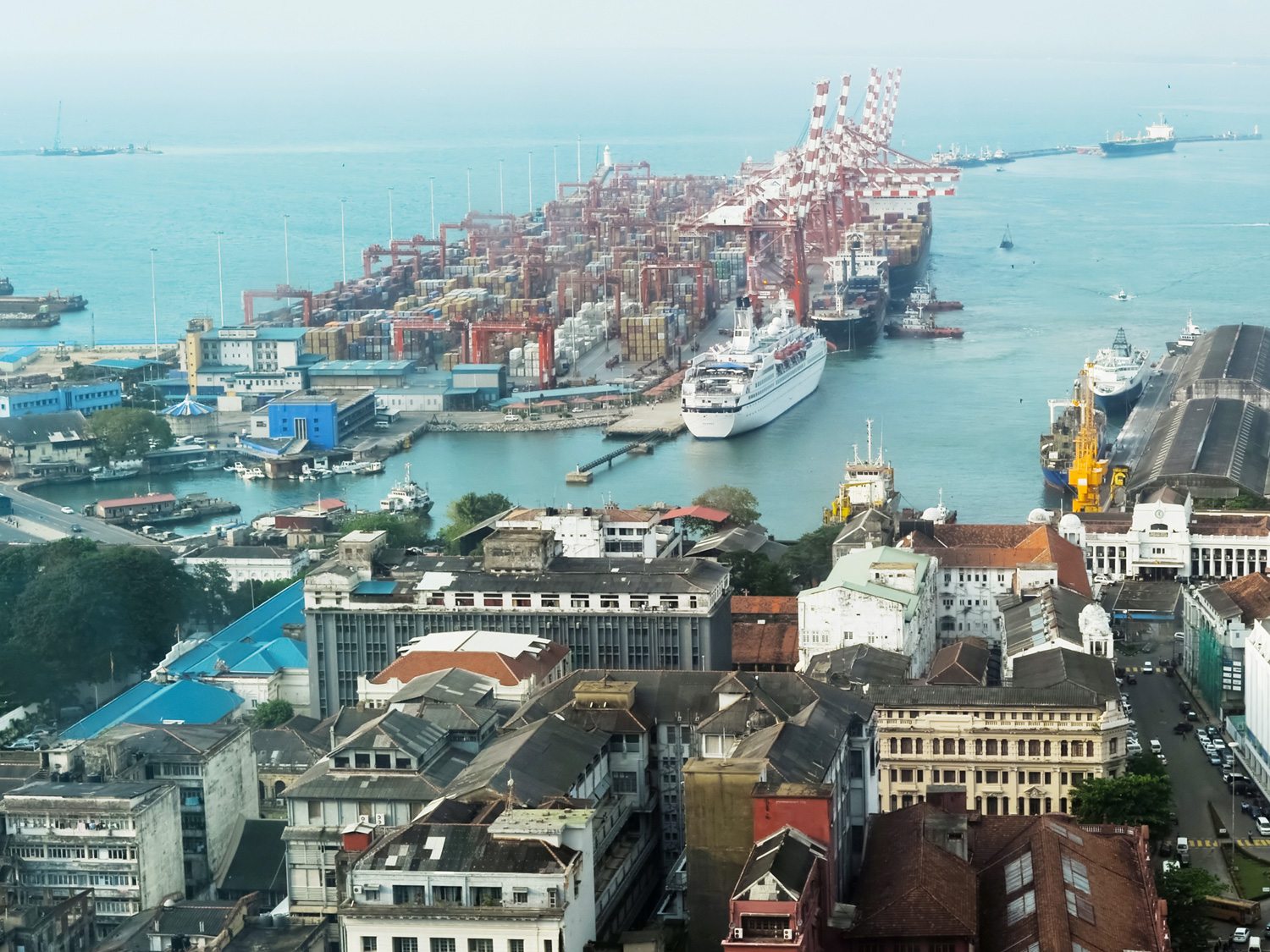
Colombo

Westbound sea freight market update

Demand for imports from Asia and the Indian subcontinent (ISC) continues to outstrip shipping line capacity, in a sign that with inventories low, second-half volumes are unlikely to let up, keeping pressure on a global supply chain infrastructure that is already buckling.

The UK’s primary container ports will be expecting a spike in imports from China, as the backlog of cargo that had built up in Yantian during the COVID-19 outbreak in May and June arrives, to add to traditional peak season volume that runs from August to October. This is also being experienced throughout Europe, The Americas and most major trading regions and is not unique to our little island – which is where the problem lies as global logistics is now an inter-related network which has ripples everywhere regardless of the source of the ‘problem’.

Peak season demand is further complicated, by massive backlogs of unshipped containers in China and the ISC, with Yantian arguably experiencing the worst backlog, though vessels are also backed up in Shanghai and Ningbo. It would seem the ‘worlds factory’ has broken its despatch bays.

An estimated 14,000 TEU of export containers are stuck at the main Bangladeshi port of Chittagong, owing to the capacity crunch involving feeder vessels and congestion feeding back from global ports, with some containers waiting to ship for up to 30 days.

Equipment shortages, congestion and berthing delays in Chittagong, have forced some carriers to halt or slow bookings from Bangladesh and rates are likely to be impacted by the instability in ports globally.

Lines have not stopped taking bookings from Chittagong, but there is caution, in the absence of confirmation of space allocation on mother vessels at transhipment ports.

All the major shipping lines have very limited space from Indian ports, with waiting period to secure bookings increasing drastically over the past few weeks and contractual bookings not being honoured.

The lines quite simply don’t have the space to meet all their bookings and are either not quoting, are trying to sell space for a premium, or have kept higher rates on selected routes to discourage new bookings.

CMA-CGM has announced the blanking of their Europe Pakistan India Consortium, EPIC and EPIC2, sailings from Western India for week 29, and weeks 28 and 29 respectively.

We have worked closely with strategic partner shipping lines for decades and despite our good working relationships and the lines best efforts to support us, we still have to accept some cargo being rolled, and have no choice but to accept blanked sailings, though our commercial team typically find space for rolled, or blanked containers, on the next available vessel.

In a worrying move for the three shipping alliances last week, the Biden administration called for the Federal Maritime Commission to crack down on excessive detention and demurrage charges. The President’s order characterised the ocean freight industry as a highly concentrated, foreign-owned, anticompetitive sector which can disadvantage American exporters and importers. 

It is expected this move will be replicated in other countries, as the repercussions of high freight and logistics costs escalate inflation, which now looks unavoidable, filtering into the cost of raw materials, consumer products and throughout the supply chain.

The White House order comes against a backdrop of skyrocketing freight rates, but the World Shipping Council, which represents the carriers, refuted the concept that the rate spike is connected to concentrated market share, noting that all available vessel capacity is deployed, ports are saturated with cargo and importers struggling to turn around containers.

It pointed to recent developments that indicate the functioning of a competitive ocean freight market, like new entrants, new services and massive vessel orders to increase supply.

Last week, the European Commission confirmed that it is "closely monitoring" the shipping industry and is looking into "any scope for intervention that can facilitate return to normal operations.”

Metro negotiate rate and volume agreements with a wide range of carriers across all three alliances, which means we can react quickly to market changes and offer shippers alternative services, in line with their deadlines.

Our fixed validity contracts provide supply chain security and peace of mind, but with space and equipment in such short supply, we recommend a minimum of four weeks visibility and booking window, to secure space on the vessel and get the right equipment positioned.