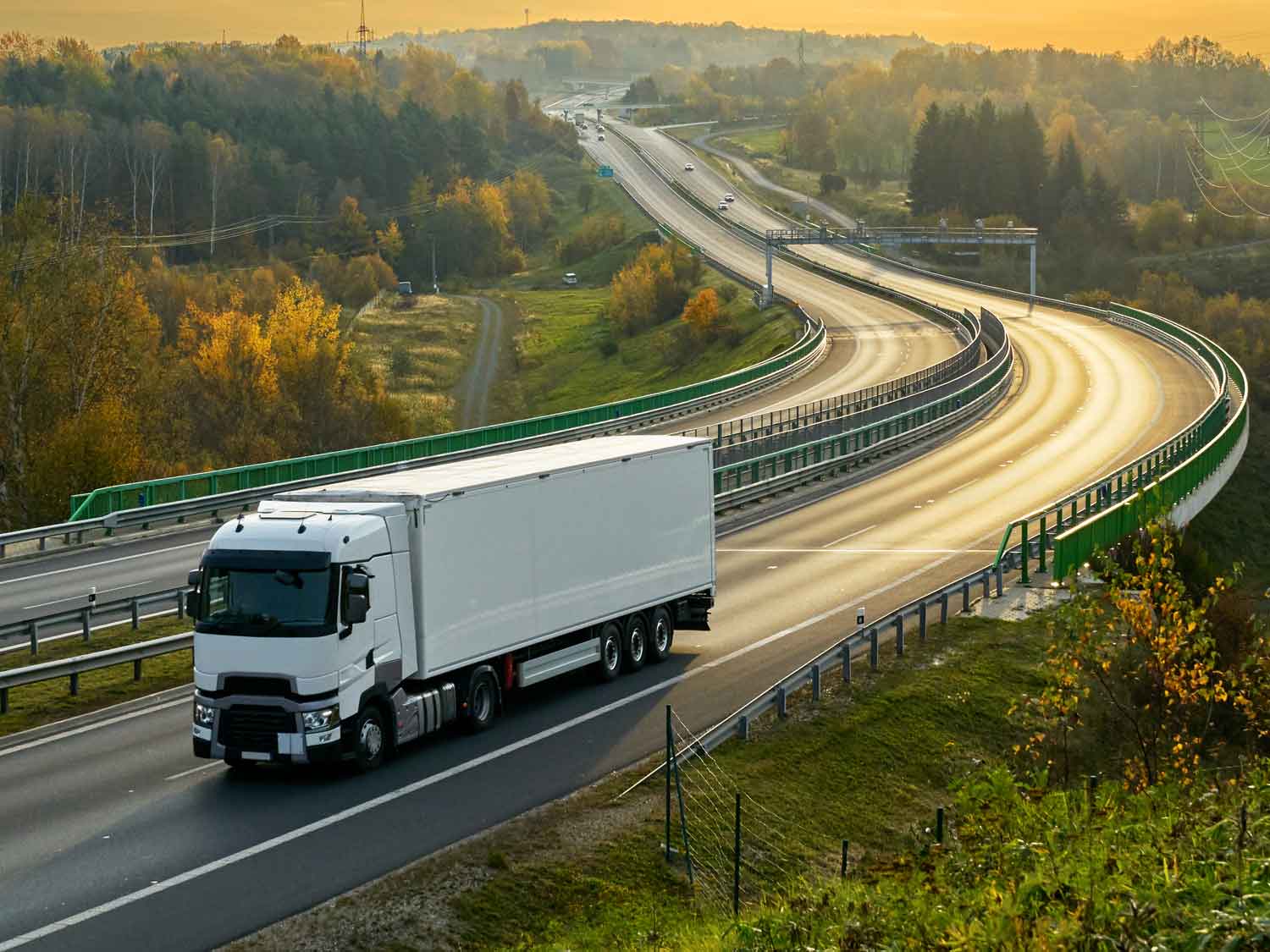
Intermodal 2

Unaccompanied freight service milestone

Short-sea container, unaccompanied trailer services and the use of quieter regional ports have enjoyed something of a renaissance since Brexit, as more complex border controls have added to congestion and delays at the busiest Channel ports.

DFDS’s Sheerness to Calais service has now moved more than 50,000 trailers since it was first launched in July 2021, an increase of 65% in daily unit volumes, while London Medway processed almost 4,000 unaccompanied trailers in a single month.

Unaccompanied freight, which sees trailers and containers shipped into regional ports without a driver, is seen as a major way of overcoming challenges with customs delays, and driver shortages.

DFDS and P&O are the main RoRo operators out of Dover to primary ports like Calais and Dunkerque, but there are hundreds of alternative RoRo services and sailings every week, that serve alternative ports like Zeebrugge, Rotterdam, London, Humberside, Liverpool, Gothenburg, Esbjerg, Santander and Porto.

Eurotunnel has been adding new rail services to meet growing demand for the unaccompanied transport of trailers and Brittany Ferries has confirmed that the amount of unaccompanied freight it is transporting on its routes between the UK and France/Spain is much higher than in previous years, with its Galicia service, operating between Santander in Spain and Portsmouth and around 40% of the freight carried has been unaccompanied trailers.

There is a good case for moving non-perishable cargo that is not on a strict deadline via unaccompanied services, because they are more reliable than accompanied freight, which are open to multiple points of failure.

Short sea unaccompanied container and trailer services offer literally hundreds of port pair, service and rate options, which allows the smart supply chain manager to flex service levels, transit time and rates for optimum services at the lowest economic rate.

For the right product and supply chain situations, short sea container shipping and unaccompanied trailers can be a smart, efficient and cost efficient alternative to standard overland services with Northern and Southern Europe. 

Many of the biggest shippers and manufacturers are established users of short sea services because they like the additional opportunities it provides over traditional road transport such as access to the rail network and the option of using the container as extended storage.

Short sea can be half the cost of road, but may be triple the transit. If you would like to explore the potential of short-sea container, unaccompanied trailer services and the benefits of quieter regional ports, EMAIL Matt Paxton-Rhodes to begin a conversation.

Metro truck at bay

New appointment further strengthens European team and platform expansion

Metro’s award-winning European solutions will be enhanced, expanded and advanced by new European Director, and industry veteran, Richard Gibbs.

Commenting on his new role, Richard said. “Metro have a familiar and dependable partner network in place, with the ability to extend overland solutions swiftly across Europe, which is critical, in supporting effective European transport and 3PL and 4PL operations to our customers.

Metro’s European service template is well established and proven to meet the needs of the most demanding supply chains; by blending the optimum mix of partners, carriers, service design, customs formalities/compliance and advanced supporting technology, to deliver transparency and consistent reliability of service.

By blending partner capacity, specialised equipment and operational excellence in this way, Metro’s European solutions can be quickly and effectively extended to support the transport of any products, components and raw materials, in any geography. Meeting the most rigid timescales and service levels.

Solutions range from time-definite courier and express van operations, to simple line-haul or specialised trailers operating daily between multiple manufacturing plants, with defined delivery deadlines and GPS tracking to provide full visibility of transit throughout Europe.

We are already seeing customers near-shoring to Turkey and the Iberian peninsula, which is increasing interest in our short-sea services, and the port pair, service and rate options they offer.

Multimodal and short sea services have so much untapped potential, including access to rail and the option of using the container in inventory planning and the option to flex service levels, transit times and rates for the optimum service at the lowest economic rate.”

To learn more about our European capability, including our road freight template, short-sea services or intermodal solutions EMAIL Richard Gibbs. He will be delighted to share the initiatives, innovation and creative approach we take to your overland movements to ensure that you can deliver your product at the right time, the right cost and in the right way wherever required within the UK or European markets. Reliably.

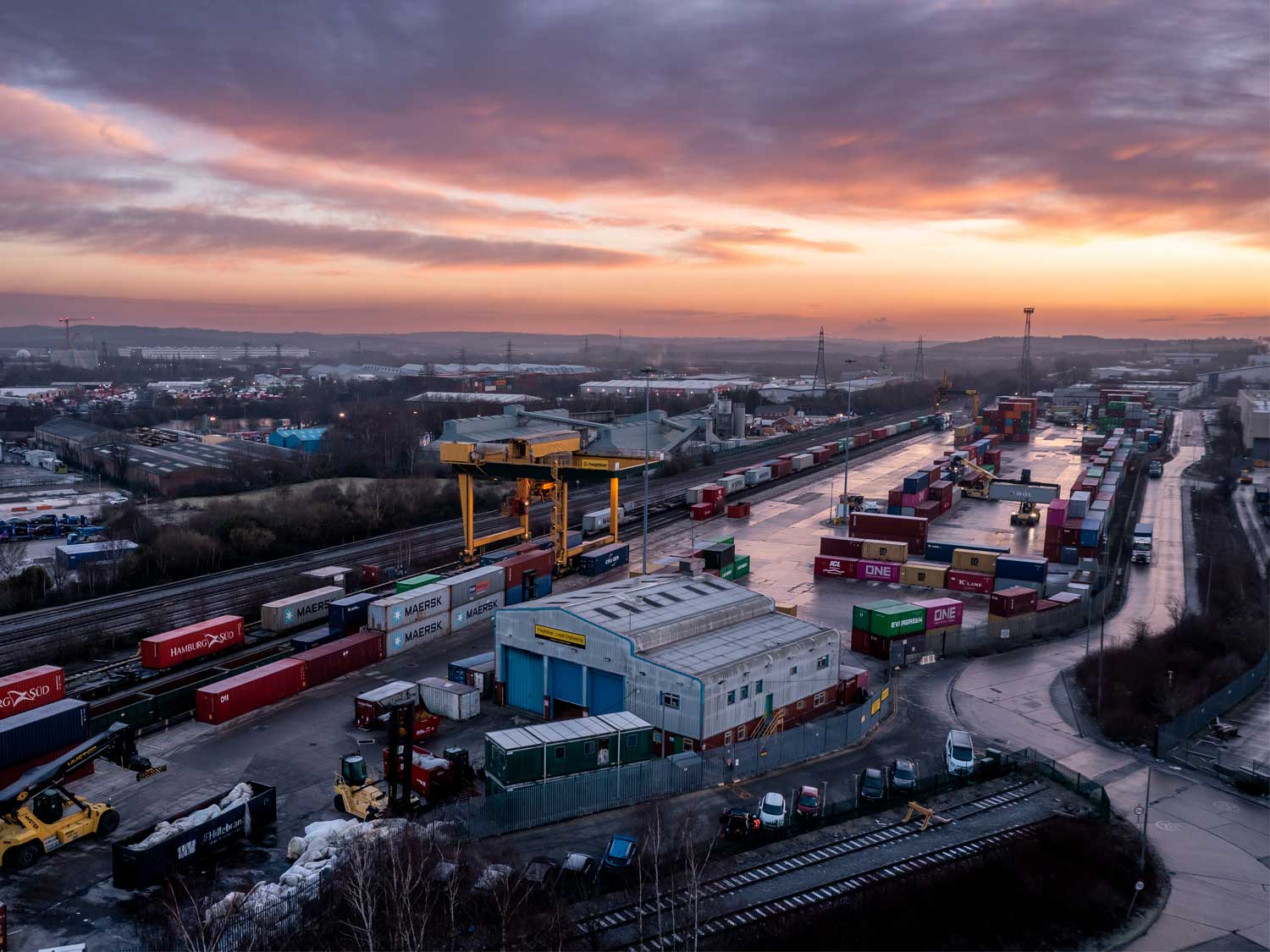
FXT at dawn

December 2022; Freight market summary review

As freight prices on every mode return to relative stability and the worst effects of inflation work though, the market is expected to rebalance, achieve ‘correction’ and ultimately recover with slow growth in 2023.

The spiking freight rates on all modes are falling away and, taking inflation into account, the global freight market is expected to grow over 27% this year, though that figure falls to -2.4%, when inflation is removed, reflecting the falling volumes and demand slumps.

AIR

More shippers and particularly those that switched modes, when vessel operating performance fell to historic lows, are busily switching back to sea freight, as ocean congestion ends and container freight rates recede towards pre-pandemic levels.

The stabilisation of sea freight rates and improvements in vessel schedule reliability is encouraging some shippers to move cargo between airplanes and ocean containers, and especially users of our supply chain management MVT platform.

With MVT it is easy to amend purchase orders and be agile in switching complete or partial orders from ships to planes, or vice versa, if SKU sales velocity change.

Despite rates on many routes continuing to soften, shippers are unlikely to delay booking and securing airfreight capacity, to wait and see how the market fares, because from an operational point of view, this would mean an enormous risk, if any market changes restricted capacity. 

Time critical movements of cargo will always be necessary and unforeseen market dynamics will undoubtedly occur resulting in demand for air freight, whether through production delays or logistics interruption – history dictates that there will always be a necessity for airfreight, and usually at very short notice as world events continue to change, sometimes dramatically.

SEA

Freight rates have continued their decline with the market struggling to keep up and the carriers resorting to ever more drastic blanking programmes, to slow the price slide, or other tactics including cancellation of whole services or suspending vessel departures entirely – which is becoming more prevalent on many major routes.

The Asia-Europe trade remains under pressure with falling spot rates, a generally soft trading environment and no sign of the market bottoming out. Although contract rates for 2023 fixed validity and capacity assurance are hardening and increasing for the longer term situation in 2023 as carriers look to recover control of the current demand slump and balance supply to match.

Carriers are expected to announce more blank sailings/ cancellations as they seek to reduce the supply equation in their favour and while residual congestion is still impacting parts of Europe and the Americas, hopes are rising in China as the government finally begin to relax their absolute zero-COVID restrictions. Although they do still remain in a toned down form.

With transpacific volumes declining, rates have been falling, with west coast spot rates reaching something approaching pre-pandemic levels (it was only 12 months ago that rate levels on the spot market were at $20,000 per FFE) and while east coast rates have dropped, some capacity has been tied up in the continuing Savannah congestion and at other ports.

Transatlantic rates are starting to soften, particularly to Europe and while there is no change to capacity expected through the end of 2022, the expected fall in volumes is reducing port congestion and vessel waiting times on both coasts.

After what seems like an eternity most ports are finally turning vessels around on schedule, although times are still tight in Savannah, Houston, Oakland and Vancouver.

ROAD

European road freight rates hit an all-time high in 2022 as rising cost pressures, supply and capacity disruptions, regulatory change and the conflict in Ukraine created a potent mix of rate influenced drivers, but are beginning to reduce after Q3 peak.

Europe’s domestic road freight market is projected to grow by just 0.7% in real terms, while the European international road freight market is projected to grow by 2.1% in 2023.

A key driver behind the stronger performance of the international section might be retail and e-commerce sales which stimulate more cross-border flows of consumer goods.

Shortages of raw materials and intermediate products, together with weakening demand and energy shortages are clouding the outlook for the manufacturing sector in Europe,

Soaring diesel prices appear to have been subdued for now in the UK and the most recent EU data shows that the average weekly diesel prices in Q3 have fallen by 1.7% quarter-on-quarter. Although still incredibly high in reality and this could change very quickly from some of the consequences of global activity and the geopolitical landscape.

This represents at the very least a stabilisation of prices across the UK and Europe, with the momentum at the end of the last quarter appearing to be downward. However as widely reported in the trade, national and international press the UK, in particular, is still seeing issues with European trade levels and supply chain demand and supply availability.

Despite the ongoing challenges, we continue to find cost-effective international transport solutions, by every mode for every shipment, including urgent and time-sensitive cargo.

Please contact the below to learn more, or to discuss any of the issues covered in this market report.

SEA - Andrew.Smith@metroshipping.co.uk

AIR - Elliot.Carlile@metroshipping.co.uk

OVERLAND - Simon.Balfe@metroshipping.co.uk

Metro are here to assist with your decision making and planning for 2023 logistics strategy and options available. We are at the forefront of the market globally and will ensure you are best positioned to succeed in 2023. Please contact us – we encourage proactive knowledge based intelligence sharing and will always deliver on your expectations.

truck stop

£100 million boost to improve HGV roadside facilities

Last year the shortage of HGV drivers forced the Government to issue temporary visas to experienced foreign drivers and also as a consequence retailers to poach drivers away from carriers and the more general logistics environment, to fill the gaps, amid fears of empty shelves before Christmas 2021.

Improved pay and conditions, and the clearing of a backlog of HGV driving tests, have boosted numbers of drivers, but there are concerns that a shortage of decent facilities will push workers to find jobs elsewhere, in more attractive roles and commercial sectors.

Logistics UK, the rebranded Road Haulage Association (RHA as was), believe that the lack of safe and secure roadside facilities for lorry drivers is a critical weakness for the industry and estimate that there is a shortage of 11,000 lorry parking spaces, which forces drivers to park in insecure lay-bys and industrial estates without access to food, toilets or showers and other amenities.

Many truckers say facilities on Britain’s roads are overpriced and in a poor state and is a significant factor in driving so many to leave the industry. Compared to mainland Europe, the UK's facilities for drivers are years behind what is available on the continent to haulage and trucking company operatives.

MP’s acknowledge that facilities need to be improved, particularly if more women are to be attracted into the sector and essential if drivers are not just recruited but retained, which is why the government has announced a £100 million boost to improve HGV roadside facilities.

The funding aims to improve security measures for drivers, boost welfare facilities like showers, rest areas and restaurants, and increase HGV parking capacity where possible.

Truck-stop and road service operators can bid for a share of the £32.5 million match-funding pot. This is in addition to the £20 million match-funding launched earlier this year from National Highways to improve roadside facilities and security for lorry drivers and their cargo. 

The Unite union which has been campaigning for better facilities for truckers, said most of the promised funding will not be allocated let alone spent until 2025.

Logistics UK said that a swift resolution is needed to ensure that the shortfall of lorry parking and facilities can be constructed and opened so that drivers have access to the hygiene and rest facilities enjoyed by workers in other sectors of the UK economy.

The move is part of the government’s '33 actions', unveiled in the summer, to address the shortage of HGV drivers and boost recruitment and retention of this essential sector, in the movement of goods domestically and internationally.

The 33 actions include making 11,000 HGV driver training places available through Skills Bootcamps, boosting the number of HGV driver tests, and launching our Future of Freight plan to encourage millions of people to make a career in logistics.

As a result, new HGV drivers are taking and passing their driving test in record numbers, with 29,384 HGV tests conducted in one 90 day period – 54% more than the corresponding period in 2019 before the pandemic.

The government’s funding scheme draws on ‘The National Survey on Lorry Parking: Part One’ which provides important evidence as to what improvements are needed and where to boost the nation’s roadside infrastructure.

Logistics UK said that the government’s survey confirmed that England’s commercial drivers are woefully under-catered for when it comes to accessing safe and secure overnight parking areas. This has been an issue for too long and is preventing the industry from recruiting and retaining the skilled workforce that it needs. The government’s stated objective to improve the situation is welcome, but industry now deserves action, so that more parking facilities are developed, at pace, where they are most needed.

We work with selected long-term transport partners, at strategic locations across the UK, to give us access to the widest pool of equipment and driver resource. Including rail operators and coastal feeder platforms to regional ports.

To learn more, or to discuss your situation and options, please contact Simon Balfe, who leads our transport operations throughout the UK, Europe and as part of any global movement across the road, rail and coastal feeder services that we deliver.