<strong>The new logistics normal in 2023; Part 1</strong>

<strong>The new logistics normal in 2023; Part 1</strong>

For almost three years shippers, forwarders and carriers, across all modes, have battled unparalleled global supply chain disruptions and, as the massive consumer driven volumes finally subsides, some suggest that the “new normal” is manifesting on a global scale.

The desire for normality and the return to a shipping environment where it is possible to forecast volumes and budgets, without having to continually amend is inevitable after so much chaos. But the new normal, also means that change is a constant variable, with supply chains vulnerable to events ranging from bad weather, industrial action, COVID infections in China and the war in Ukraine.

As unprecedented consumer demand has been lessened by rising inflation and interest rates, international transport capacity has improved markedly, with analysts Sea-Intelligence reporting that about half of all shipping congestion has been resolved, and by that measure, a full reversal to normality should come by March 2023 – providing there is no added disruption, through unexpected global events or manipulation of schedules by ocean carriers. 

Barring problems sourcing raw materials and components, many manufacturers are anticipating capability to return to pre-pandemic production volumes in 2023, at levels that flatten the 2020–22 “spikes” seen in almost every aspect of industrial activity, from inventories to production to pricing. 

Abnormal demand drove spot pricing on all modes to record highs in 2021, but those short-term rates fell throughout 2022 in a multi-modal pricing correction.

Despite the lack of the traditional peak season, the return of some measure of seasonality to shipping in 2022 was welcome and it was reassuring to see the monthly volume changes, that were typical pre-pandemic. 

Lower demand, as a result of the anticipated world recession and already occurring localised regional and country specific recessions, will allow global supply chains to progressively improve, even if some bottlenecks remain in some regions. 

Some of the lower demand from shippers is a result of excessive inventory, resulting from earlier than usual orders for imports – to work around congestion – that would typically arrive in the second half of the year, which have created bloated inventories, that are still being drawn down. 

The sea freight capacity shortage in 2021, extended to a shortage of warehousing space near ports and moved further upstream throughout 2022, constricting 3PL and shipper warehousing space as the year went on.

Normalisation in supply chains will not be a leap backwards in time. The pandemic’s disruptions and the evolutions to deal with them have been too profound.

Three years ago the majority of consumers had never shopped online and now over 30% of us are doing it regularly and we’re not going back. The same is true for businesses.

It will also be interesting to see how carriers, especially shipping lines by the ocean freight mode, react and what strategy they adopt with restricting capacity and schedules. This is currently unwinding and will effect the majority of this year dependent on what actions they implement.

As such, shippers and their forwarders must continue to innovate, because we now know that companies get in trouble when they get too comfortable with how they’ve been doing things. You need to rock your own boat, because if you don’t, someone else will. You can be assured that Metro continue to design and create new solutions that are fit for purpose regardless of the current market situation and conditions – it’s what we do!

We sub-titled this article Part 1, because someone’s bound to rock the ‘normal’ boat and Part 2 is sure to follow and explain why.

We work closely with our customers to consistently enhance supply chain efficiency and resilience in five key areas:

Understanding – Creating supply chain solutions that draw on all options available in the evolving market.

Visibility – Monitoring critical time-scaled events to provide visibility across the extended supply network, with global control down to individual SKU level.

Agility – Increasing speed to market and accelerating the cash-to-cash cycle.

Flexibility – Adapting supply lines, new vendors, product flows and order data, from any location.

Contingency – Exception alerts and rules-based solutions, automatically correct non-conformities, or alert users for corrective action.

For specific information, or to discuss how our technology could support your supply chain, please contact Simon George our Technical Solutions Director or Elliot Carlile. 

We will continue to update on market conditions regularly and always bring the latest development to your attention so that we can ensure that we always deliver and perform to your expectations.
Blanked Shanghai sailings slow to materialise

Blanked Shanghai sailings slow to materialise

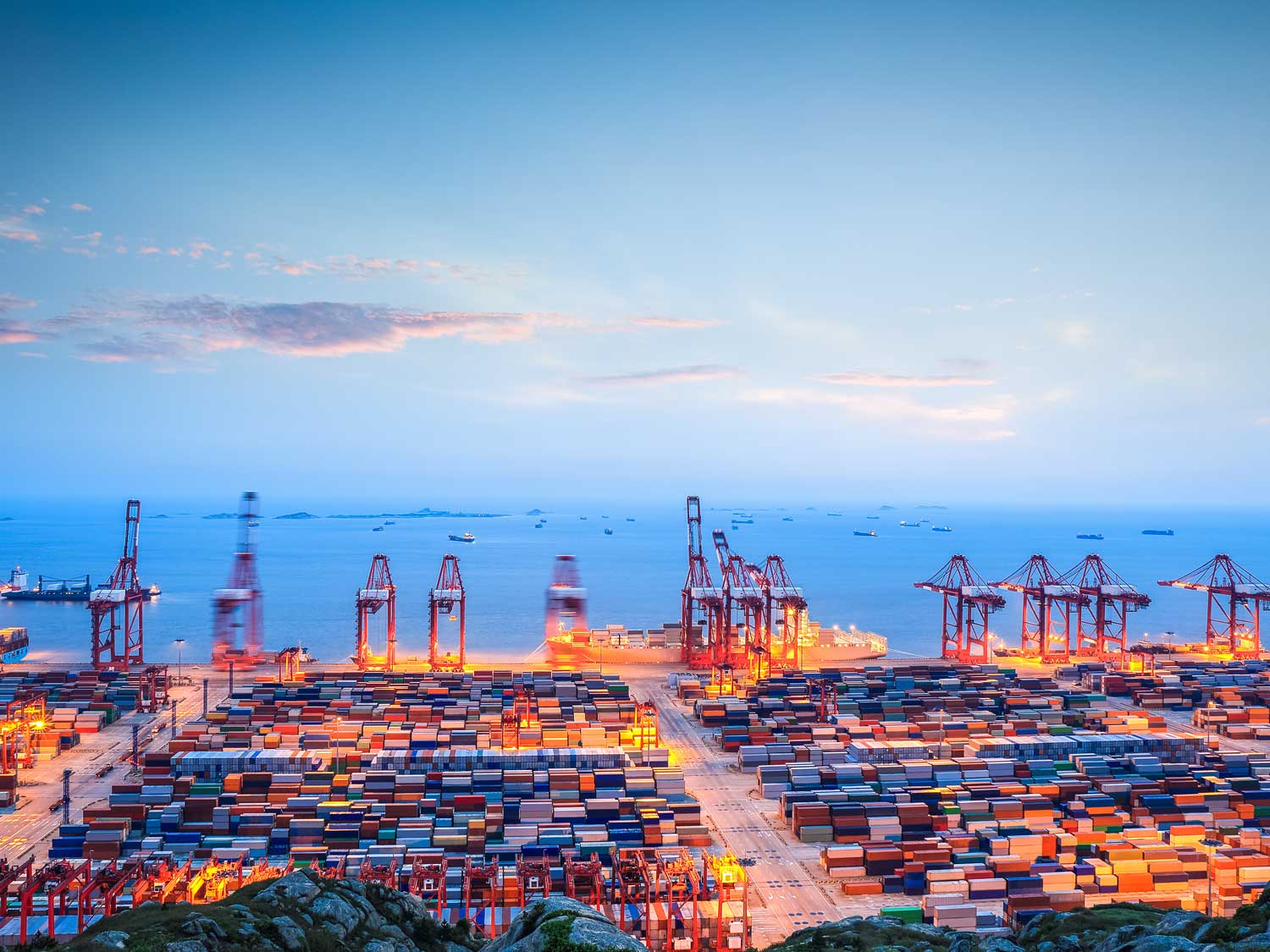
As Shanghai enters the fourth week of an indefinite lockdown, container shipping lines are skipping calls at main Shanghai terminals, with more blank sailings anticipated as vessels waiting at Chinese ports double.

Until the lockdown situation is resolved, which appears challenging when putting the Omicron variant against zero-tolerance, we expect drops in export demand, port omissions and more blank sailings, as well as Shanghai-bound cargo increasingly being discharged elsewhere, while trade press reports that the number of container vessels waiting outside Chinese ports has grown by 195% since February to over 500 vessels in April.

Some carriers, including Maersk, have already stopped accepting reefer and dangerous goods cargoes into Shanghai and while the port remains operational, the severe shortage of trucking capacity means the port is slowly being filled with import cargo that cannot be collected, while widespread factory closures are likely to hit export volumes.

Ocean Network Express (ONE) confirmed that trucking remains limited, with terminals congested and while reefer yard plug capacity remains stressed, there is a possibility that reefer containers may not be discharged in Shanghai until the situation eases.

In Hong Kong the number of new COVID-19 cases dropped below 1,000 on Friday for the first time in more than two months, but Shanghai could be facing a protracted lockdown, as more new cases continue to be reported.

China has been keeping ports operational during lockdowns using a closed loop system where the workers live on site, but container yards have grown congested as trucking capacity has dropped.

Compared with the shutdown at Shenzhen’s Yantian port last July, the Shanghai lockdowns have not yet resulted in widespread blank sailings on Asia-Europe, trans-Pacific or Mediterranean services.

In Shanghai in 2022 there was a small initial blanking spike, which was entirely driven by demand to America’s East Coast, prior to the lockdown, as a result of general market turmoil and the level of blank sailings has since dropped below the 2021 level.

According to current carrier schedules there is a slight reduction in the number of blank sailings, though this is likely to reflect the carriers not yet knowing, or at least not publishing the updated schedules of the sailings they will have to blank.

The shipping lines have been cautious in blanking sailings following lockdowns, but not loading as much cargo as planned in Shanghai and not blanking any capacity could erode export freight rates, so shippers should anticipate an increase in blank sailings in the coming weeks, should the Shanghai lockdowns continue.

Lockdowns are limiting available labour for factories and supply chain infrastructure, with reports of empty-container depots being shut, and even where they are open, there is a lack of available equipment. Particularly in the north, affecting the ports of Ningbo, Qingdao, Shanghai and Tianjin.

With bookings from China significantly reduced for the coming weeks, there are bound to be more blank sailings and not just for the lack of exports, but also the operational headaches with not being able to discharge import reefer and dangerous goods containers at some terminals.

Despite talk of a “slight easing” of restrictions in Shanghai, the number of new cases of omicron continue to rise, which means the government’s strict general lockdown measures are likely to continue.

Regardless of the challenging situation in Shanghai, we are working closely with our network partners, carriers and own offices across China, to monitor the local and regional situation and find solutions for our customers, including time-sensitive shipments.

The situation develops continuously and we will keep you updated as new intelligence and insights are received from our colleagues in China. 

We maintain long-term contracts with airlines, carriers and shipping lines that secure space and rates, to provide the best alternatives and options, whatever the situation.

COVID update: Shanghai lockdown impact

COVID update: Shanghai lockdown impact

China’s economy grew faster than expected in the first quarter, expanding 4.8%, but the risk of a sharp slowdown over coming months has risen as Shanghai’s lockdown is extended indefinitely and further COVID-19 curbs may follow. 

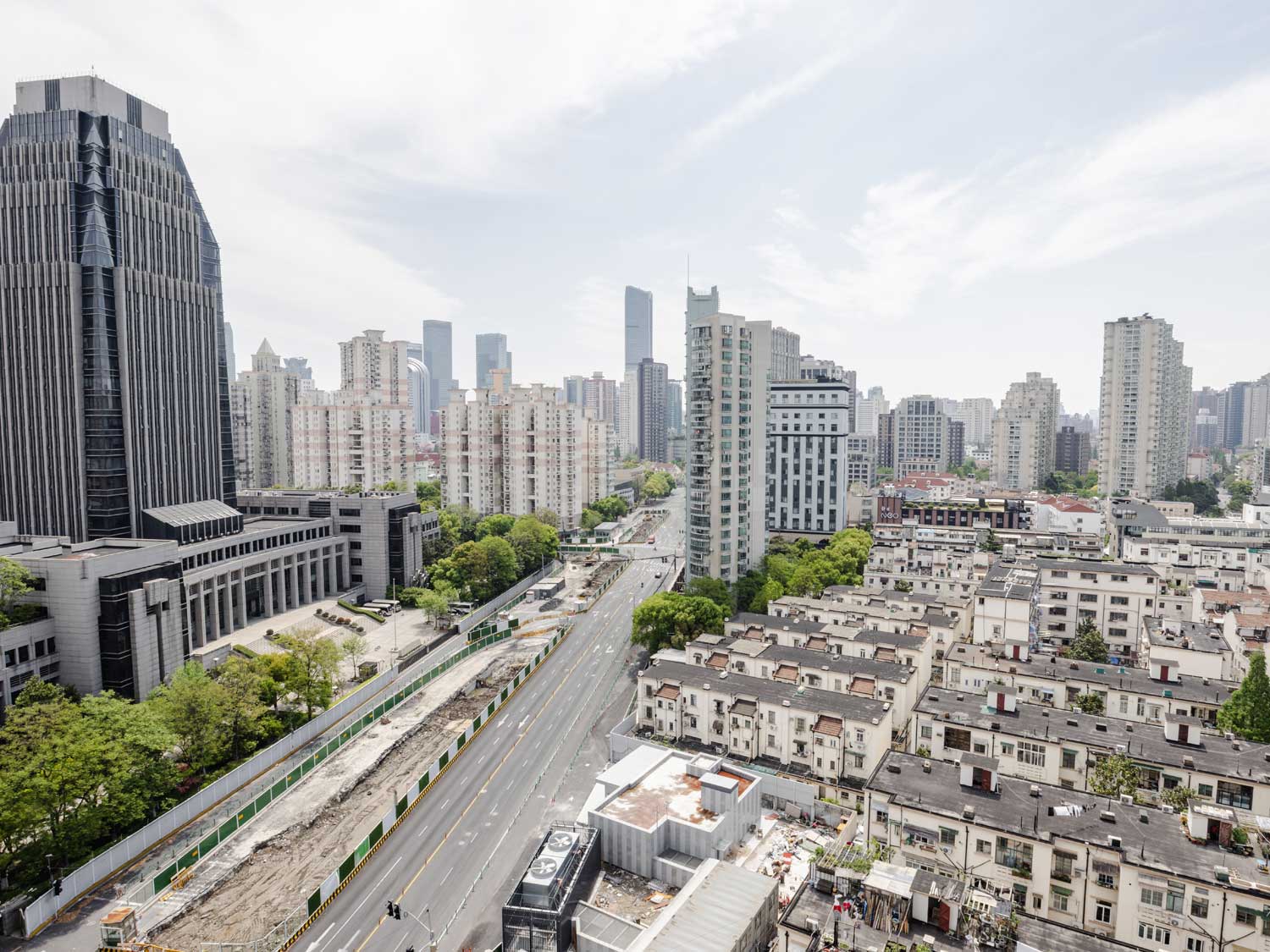
Nearly all of Shanghai is now under lockdown, with most residents unable leave their homes, even for food, while some businesses are operating under “closed loop” conditions, where workers sleep on site.

Cargo deliveries into Shanghai Pudong Airport, meanwhile, are becoming backed up. Prior to the city’s lockdown, around 1,000 consignments would typically arrive each day, with a collection rate exceeding 80%, but because there is not enough trucking capacity, due to driver isolation rules and restrictions on vehicle access to the road infrastructure, that pick-up rate has slumped to just 10%.

In addition, many other airports throughout China, are becoming very congested and flights are having to be cancelled or diverted due to operational issues. Zhengzhou Airport (CGO) has effectively been closed for the next week, due to an influx of air freight, as a consequence to the issues in Shanghai and the surrounding region. This is having a huge impact on rates and available capacity, as well as carriers suspending inbound freight into China, due to 10-day backlogs in accessing the cargo once it has arrived. It really is quite a mess.

Cross-province road transport and the different restrictions and health requirements imposed locally, mean truck drivers are having to manage an array of policies and typically wait hours, each time they need to undertake Covid tests, with other cities becoming more reluctant to let trucks from Shanghai enter.

Shanghai International Port Group (SIPG) has denied there were more than 300 ships waiting to load or unload at the port earlier this month, insisting they are maintaining normal 24-hour operations and that the average berth waiting time for container vessels was less than one day. Real-time vessel tracking platforms tell another story!

While there has been no noticeable diversion of container ships from Shanghai so far, increasing quantities of cargo is being diverted to alternative ports, including Ningbo, Qingdao and Tianjin, and LCL shipments from Shanghai are under threat, due to cross-contamination fears in the warehouse.

Data reports in the press suggest that Shanghai container ports are experiencing “significantly reduced” volumes, with the seven-day average throughput now down 33% and as the supply chain situation in Shanghai continues to deteriorate, the container port is running out of capacity for some types of cargo, with Maersk ceasing bookings for refrigerated and dangerous cargo.

Shanghai factories that have been operating under ‘closed-loop systems’ may soon be forced to stop work due to a combination of material shortages or logistical challenges that make moving people and goods increasingly challenging, plus workers who have been contained for more than three weeks and need to be replaced.

Reduced land-side trucking capacity is expected to continue at all main ports, effectively reducing the capacity available for cargo collections and deliveries, which means factories may not meet planned delivery schedules. We recommend checking with your vendors, to clarify the status of your orders, and whether they have actually been manufactured.

We will continue to closely monitor the situation and will update as changes occur. When China does begin to lift lockdowns and supply chains start to flow freely again, we will share with all of our customers as quickly as possible, as the likely outcome after the situation is resolved, will be pent up demand for delayed goods reaching market and we suspect a congested environment from May onwards, as production is increased in line with lockdowns being lifted. More news to come…..

Metro’s cloud-based supply chain management platform, MVT, simplifies the most demanding global trading regimes, by making every milestone and participant in the supply chain transparent and controllable, down to individual SKU level. 

To discuss how our technology could support your supply chain, please contact Simon George our Technical Solutions Director or Elliot Carlile.

April global logistics update; Five key supply chain disruptors

April global logistics update; Five key supply chain disruptors

Since the early days of 2020, the COVID-19 pandemic has disrupted global supply chains, creating shortages of goods, even though ships, trains, trucks and planes continued to run, to the best of their ability.

The infrastructure that supports global supply chain operations has struggled to absorb the continuing impacts emanating from COVID-19; including the need for urgent PPE, sustained spikes in consumer demand, idled factories, COVID-safe working regimes and workers getting sick or forced to work from home, through localised lockdowns, globally.

The result has been shortages of shipping containers in the right places, carrier schedules that are completely disrupted by weeks, long delivery delays, a shortage of first mile/last mile truck drivers, a sustained period of soaring freight rates and, inevitably, higher prices for consumers. And now, we have the uncertainty created by Russia’s war in Ukraine and China’s zero-COVID strategy complicating trade in the region; both of which increase supply chain uncertainty and costs.

1. China’s zero-COVID strategy

China is the world’s most important manufacturing hub and home to six of the 10 largest container ports.

While most countries have decided to learn to live with the coronavirus, China has maintained its zero-COVID policy, where even small outbreaks can shut down large population centres and slow economic activity.

In Shenzhen, some of the country’s most important manufacturers had to temporarily shut in March, in Changchun, an industrial hub that accounted for about 11% of China’s total annual car output in 2020, automakers were forced to close and now Shanghai, China’s largest city of 26 million people, is in total lockdown, with no end in sight.

The concern is that continuation of the strategy is likely to have a dampening effect on China’s domestic growth, which will translate more widely as impact on global trade; 80% of which moves on container ships.

2. Russia’s war

Energy prices have soared since Russia’s invasion of Ukraine, increasing costs for every mode of transport, with rising prices and emergency surcharges.

Food supplies are under threat because both countries are big producers of wheat and fertiliser. They are also key exporters of industrial raw materials, including nickel, lumber and neon gas, which is vital for making semiconductors, a critical component in automotive manufacturing. 

More than 2,100 US companies and 1,200 European organisations have at least one direct supplier in Russia, and the total reaches 300,000 when indirect suppliers are included. With sanctions blocking commerce with Russia, companies are scrambling to find suppliers elsewhere, as well as sea and air routings that avoid the conflict zone altogether. That is before Ukraine manufacturers which are essential to many industries, such as the automotive sector, are considered as they are unable to operate in the current conflict.

3. The impact on freight rates

At the peak of the COVID supply chain strains in October 2021, ocean carrier spot rates had risen ten-fold on a year earlier on many global lanes, including the important Asia to Europe trade.

The FAK/ Spot market cost for a 40’ container on the Asia-North Europe route has fallen since then, in the first quarter of 2022, but that’s a typical move after CNY and rates are still more than double what they were a year earlier. Largely due to blanked sailings and carrier capacity adjustments, along with continued disruption to shipping line schedules, caused by a plethora of market dynamics.

The massive reduction in passenger (belly-hold) air freight capacity in the 1st quarter of 2020, has never recovered, because the restoration of long-haul passenger services, has been patchy – at best – and now the Ukraine crisis has removed another >10% of global capacity. The impact on rates is inevitable, and that’s without factoring in emergency fuel and war surcharges, which we have seen implemented by most scheduled carriers since the beginning of March, with charter aircraft costs doubling in a month on most global routes.

Any longer-term slide back on rates will be driven by weaker import demand or a seasonal adjustment. Either way, freight rates are still several times higher than 2019 levels and are feeding into price inflation. Air freight traditionally accounts for 40% of products moved globally by value, to put these statistics into perspective.

According to research by the International Monetary Fund, “when freight rates double, inflation picks up by about 0.7%, which implies that the increase in shipping costs in 2021 could increase inflation by about 1.5% in 2022.

4. The BIG three

The leading container shipping lines, mostly based in Asia and Europe, have enjoyed some of their highest-ever profits. And even though these profits follow decades of loss and investment, politicians across all continents have taken the opportunity to blame the concentration of power in the shipping industry for dulling price competition.

In 2017, the dozen biggest container shipping lines formed three  alliances to share ships, cooperate on routes and limit excess capacity – 2M | Ocean alliance | THE Alliance – in control of about 80% of the world’s shipping container capacity.

Critics claim the arrangement is an oligopoly, as some busy trade lanes might have several competitors, but smaller gateways for goods might have just one or two.

US and European regulators have raised questions about constrained competition, and while politicians might like to complain about the carriers, the global nature of the industry means it’s mostly beyond the reach of national regulators, who are unlikely to be able to do much to control prices. 

If there was action taken, in suspending carriers for their conduct, the impact would be even greater disruption and reduction in shipping availability, which would normally result in even higher prices due to the supply versus demand market dynamics. It’s a dilemma at best, that is difficult to address, resulting in carriers being in the driving seat.

5. Why containers matter

There are about 25 million standard shipping containers, that move globally on around 6,000 container ships. They move within a fragile network of ports, terminals, inland transport and warehouses that are designed to stay synchronised.

They are the backbone of globalisation and globalised supply chains worked so well and became so slick, that they encouraged the widespread adoption of supply chain dependent strategies, like just-in-time (JIT) manufacturing which, at its purest, meant no inventory and assembly lines dependent on the next part arriving (just) in time.

But, there’s a limited supply of containers, to meet what became unpredictable demand two years ago. 

The COVID pandemic triggered unusual swings in the demand for goods as well as on-again, off-again lockdowns and the disruption left handlers of containers struggling to manage traffic, creating shortages of equipment, where and when they were needed most. 

JIT is being replaced by Just-in-case inventory management, as firms build buffer stocks, as the world continues to deal with many of the previous risks, along with a new set of geopolitical worries.

The other consideration is the fact that we are in the traditional ‘slack’ season where demand for logistics softens and the peak is yet to come – there could be even more trouble ahead…

With continuing supply chain challenges in many regions, we work closely with our network partners, carriers and own offices globally, to monitor the situation and find solutions for our customers, including the most time-sensitive and urgent shipments. 

Despite the negative tone of the above market update Metro are constantly introducing initiatives, innovation and market leading services, that deliver reliability within your logistics platforms and supply chains. Creative, tailored in design and consistent solutions based on an end outcome and your expectations.

With the continued rate and capacity pessimism, there are often new and emerging opportunities thrown up by the market, which is why we share regular intelligence and breaking news.

For the latest insights and to review your situation please contact Elliot Carlile, who will share market conditions and intelligence and explain how we will protect your supply chain in avolatile situation.